Types of Hawks: A Complete Guide
Most hawks in North America fall into two main groups: the broad-winged, soaring buteos like the red-tailed hawk, and the smaller, agile accipiters like Cooper’s hawk that hunt in forests. With over a dozen hawk species across the continent, these skilled birds of prey vary in size, shape, and hunting style. This guide covers how many types of hawks there are, the main hawk groups, common species you can see, how to tell them apart, and where hawks live.
| Hawk | Group and Key Features |
|---|---|
| Red-tailed Hawk | Buteo, broad wings, rusty tail |
| Red-shouldered Hawk | Buteo, barred, reddish shoulders |
| Broad-winged Hawk | Buteo, small, migrates in flocks |
| Swainson’s Hawk | Buteo, slim, open country |
| Rough-legged Hawk | Buteo, Arctic breeder |
| Cooper’s Hawk | Accipiter, medium, backyard hunter |
| Sharp-shinned Hawk | Accipiter, small, agile |
| Northern Goshawk | Accipiter, large, powerful |
How Many Types of Hawks Are There?
There are over a dozen species of hawks in North America, part of a larger group of birds of prey that also includes eagles, kites, and harriers. To make identification easier, hawks are commonly divided into two main groups based on body shape and hunting style. The buteos are large, broad-winged, broad-tailed hawks built for soaring high in the open sky, scanning for prey below, and they include familiar birds like the red-tailed hawk. The accipiters are smaller, with shorter, rounded wings and long tails that give them the agility to chase birds through forests and around backyards. Beyond these two main groups are related raptors such as harriers and falcons, though falcons are technically a separate group. All hawks are daytime hunters with sharp talons, hooked bills, and superb eyesight. Understanding the buteo and accipiter groups is the key to sorting out the many types of hawks, powerful relatives of the eagles in our guide to types of eagles.
Common Types of Hawks
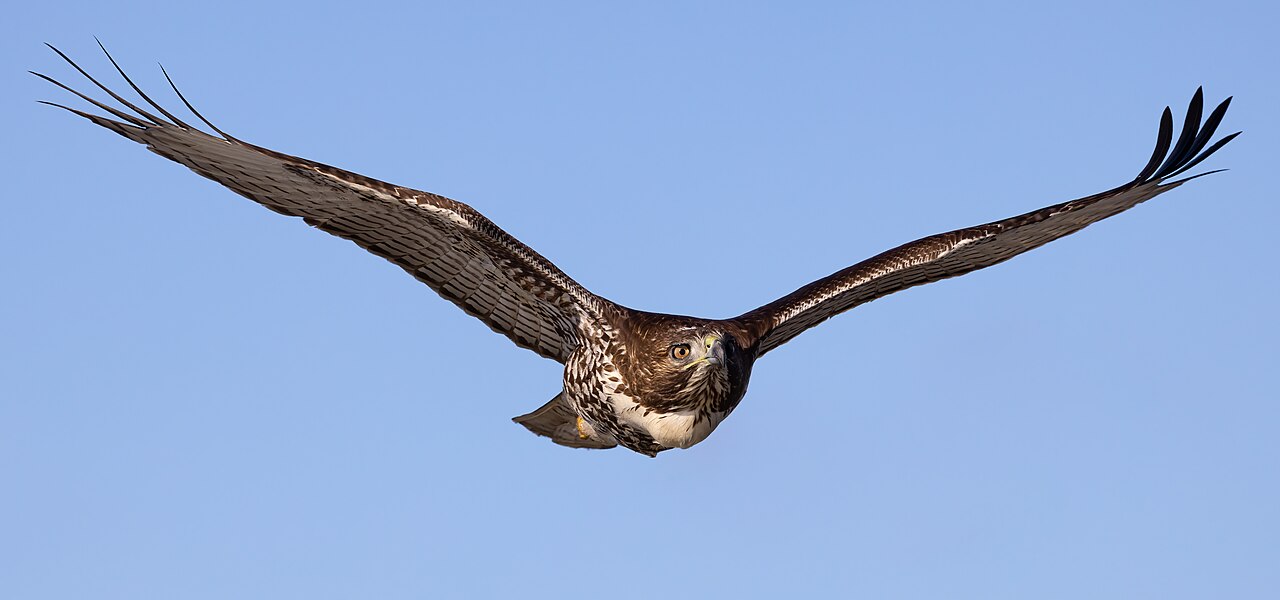
Several types of hawks are especially common and worth knowing. The red-tailed hawk is the most widespread and familiar hawk in North America, a large buteo with broad wings and, in adults, a rusty-red tail, often seen perched along highways. The red-shouldered hawk is a colorful buteo with reddish shoulders and a strongly barred body, common in woodlands near water. The small broad-winged hawk is famous for migrating in huge flocks called kettles. Swainson’s hawk is a slim buteo of open western country, and the rough-legged hawk breeds in the Arctic and visits in winter. Among the accipiters, Cooper’s hawk is a medium-sized bird-hunter that frequently visits backyards and feeders in pursuit of songbirds, while the smaller sharp-shinned hawk is very similar but tinier and more delicate. The large, powerful northern goshawk is a fierce forest accipiter of northern and mountain woodlands. Each has its own look and behavior worth learning.
How to Tell Hawks Apart
Telling hawks apart is much easier once you use their group, shape, and behavior. First decide whether the bird is a bulky, broad-winged buteo soaring in circles or a slimmer, long-tailed accipiter darting through cover, since this immediately narrows the options. Size helps distinguish similar species, such as the tiny sharp-shinned hawk versus the larger Cooper’s hawk. Look at plumage details like the red-tailed hawk’s rusty tail or the red-shouldered hawk’s barring, and note the bird’s behavior, since accipiters chase birds while buteos often perch and scan or soar. Habitat and season also matter, as some hawks are only present in winter or migration. Because many hawks are seen in flight or at a distance, focusing on overall shape and flight style is often more reliable than plumage alone. Combining group, size, shape, behavior, and habitat lets you identify most hawks you see, a rewarding skill explored alongside their meaning in our guide to red-tailed hawk symbolism.
Where Hawks Live
Hawks live in a wide range of habitats across North America, with different species favoring different settings. Buteos like the red-tailed hawk thrive in open and semi-open country, including fields, grasslands, deserts, and roadsides, where they perch on poles and trees or soar overhead searching for rodents and other prey. The red-shouldered hawk prefers wooded areas near water, while Swainson’s hawk favors open plains and prairies. Accipiters such as Cooper’s and sharp-shinned hawks are birds of forests and wooded edges, and both have adapted well to suburbs and towns, where they hunt at bird feeders. The northern goshawk keeps to large, mature northern and mountain forests. Many hawks migrate, sometimes in spectacular numbers, so migration hotspots can offer amazing views in fall and spring. From open deserts to deep forests to suburban backyards, hawks have adapted to hunt across nearly every landscape, making them one of the most visible birds of prey, as seen when people encounter one in our guide to seeing a hawk.
Buteos, Accipiters, and Other Raptors
Understanding the main raptor groups helps put hawks in context. Buteos are the classic soaring hawks, with broad wings and short, wide tails ideal for riding thermals high in the sky, and they typically hunt by watching from a perch or from the air, then dropping onto prey. Accipiters are the forest hawks, with short, rounded wings and long tails that allow rapid, agile flight through trees as they chase birds, making them the hawks most often seen raiding feeders. Beyond true hawks, other daytime raptors include the harriers, which fly low over fields with a distinctive tilting flight, and the falcons, which are sleek, fast fliers with pointed wings, though falcons are actually a separate group not closely related to hawks. Eagles are larger relatives, and kites are graceful, buoyant raptors. Knowing these groups, especially the buteo and accipiter distinction, is the foundation for confidently identifying hawks and appreciating the diversity of birds of prey.
The Red-tailed Hawk, America’s Most Common Hawk
The red-tailed hawk deserves special attention as the hawk most people are likely to see. According to the Cornell Lab of Ornithology, the red-tailed hawk is one of the most common and widespread hawks in North America, found across the continent in a huge range of habitats. It is the classic large buteo, frequently seen perched on roadside poles and fence posts or soaring in wide circles overhead, scanning for rodents and other prey. Adults are known for the rusty-red upper tail that gives the species its name, though plumage varies considerably across its range. Its piercing, raspy scream is so iconic that it is often dubbed into films as the sound of eagles and other raptors. Because it is so common and adaptable, the red-tailed hawk is an excellent hawk to learn first, providing a reference point for identifying other species, and it is the bird behind much of the meaning in our guide to red-tailed hawk symbolism, alongside the owls in our guide to types of owls.
Hawks and Bird Feeders
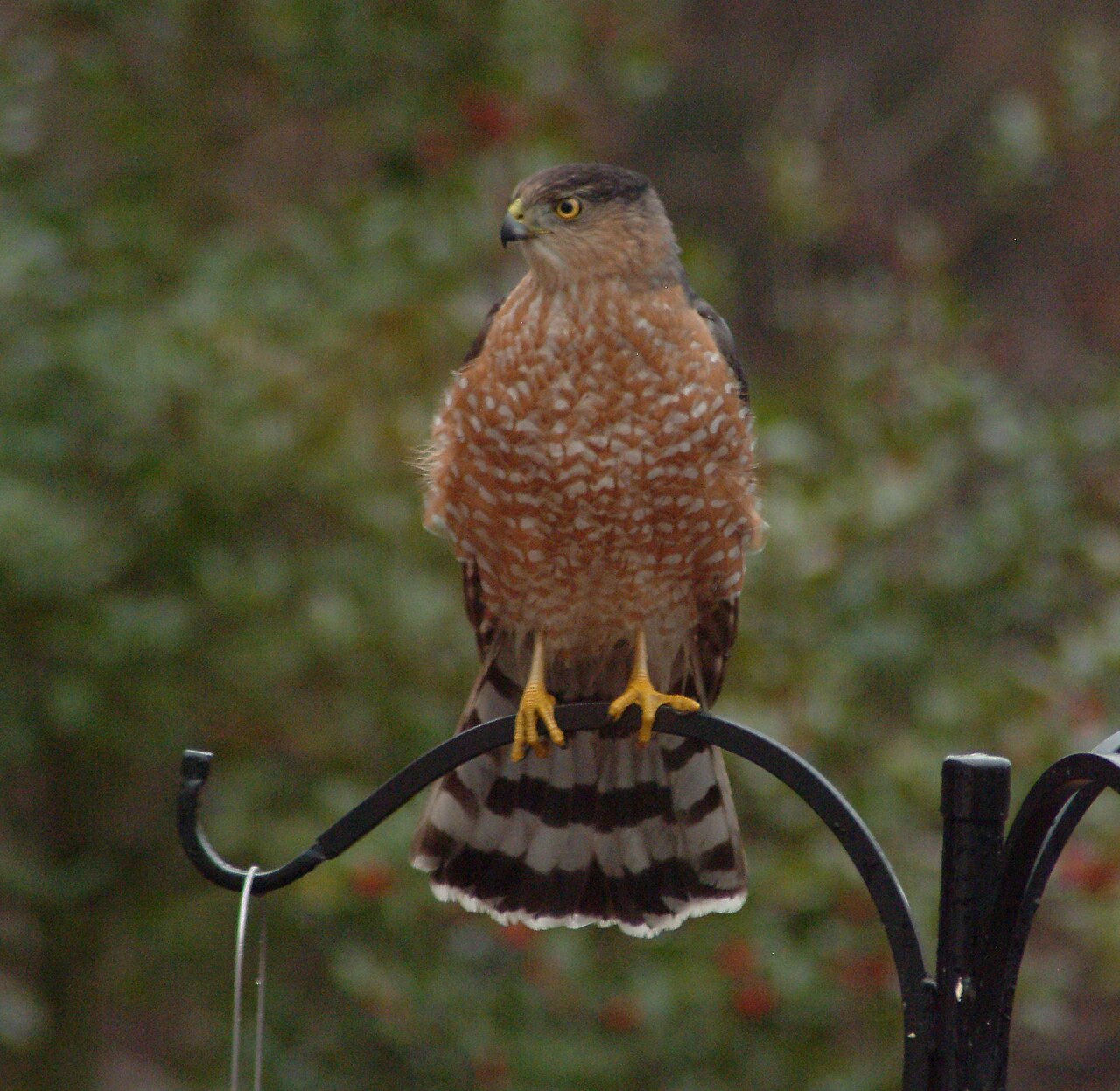
One surprising place to encounter hawks is right at your backyard bird feeder. Accipiters such as Cooper’s and sharp-shinned hawks have learned that feeders concentrate songbirds, and they will swoop in to hunt the very birds you are feeding. While this can be startling, it is a natural part of the food chain, and these agile hawks are simply doing what predators do. Seeing a hawk at your feeder is actually a sign of a healthy, active bird community. If a hawk begins visiting regularly, you can temporarily take feeders down for a week or two to encourage it to move on, though the songbirds usually adapt. Watching a Cooper’s hawk maneuver through your yard offers a dramatic, up-close look at a skilled predator, adding another dimension to backyard birding and to the wider world of meaningful birds in our guide to bird symbolism.
Related reading: types of falcons, types of vultures.
Related reading: types of hawks in Ohio, birds that look like hawks.
Related reading: types of hawks in Pennsylvania, types of hawks in Michigan.
Related reading: types of hawks in Florida, types of hawks in Georgia.
Related reading: types of hawks in Virginia, types of hawks in North Carolina.
Related reading: types of hawks in Tennessee, types of hawks in Alabama.
Related reading: types of hawks in South Carolina.
Related reading: types of hawks in Texas.
Related reading: types of hawks in Illinois.
Related reading: types of hawks in New York.
Frequently Asked Questions
How many types of hawks are there?
There are over a dozen hawk species in North America, mainly divided into broad-winged soaring buteos and smaller, agile accipiters that hunt birds in forests.
What is the most common hawk?
The red-tailed hawk is the most common and widespread hawk in North America, a large buteo often seen soaring or perched along highways, with a rusty-red tail as an adult.
What is the difference between a buteo and an accipiter?
Buteos are broad-winged, broad-tailed hawks built for soaring in the open, while accipiters have short wings and long tails for agile flight and chasing birds in forests.
What hawk hunts at bird feeders?
Cooper’s hawks and sharp-shinned hawks, both accipiters, frequently hunt songbirds at backyard feeders, using their agility to chase prey through cover.
How do you tell Cooper’s and sharp-shinned hawks apart?
They look very similar, but the sharp-shinned hawk is smaller and more delicate, while Cooper’s hawk is larger with a bigger head. Size and proportions are the main clues.
How do you identify hawks?
Decide if it is a soaring buteo or an agile accipiter, then use size, plumage, flight style, behavior, and habitat. Shape and flight are often the most reliable clues.
Where do hawks live?
Hawks live in open country, forests, deserts, grasslands, and suburbs across North America. Buteos favor open areas, while accipiters prefer wooded areas and backyards.