Types of Vultures: A Complete Guide
North America has three types of vultures: the widespread turkey vulture, the black vulture, and the rare, endangered California condor, which is the largest. These soaring scavengers play a vital role in nature by cleaning up carcasses, and they are superbly adapted for a life of finding and feeding on carrion. This guide covers how many types of vultures there are, the three North American species, how to tell them apart, where they live, and why vultures are important.
| Vulture | Key Features |
|---|---|
| Turkey Vulture | Red head, rocks in flight |
| Black Vulture | Black head, flat glide, flaps |
| California Condor | Huge, rare, numbered tags |
How Many Types of Vultures Are There?
North America is home to three species of vultures: the turkey vulture, the black vulture, and the California condor. These are all New World vultures, a group native to the Americas, and they are distinct from the Old World vultures of Africa, Asia, and Europe, which are more closely related to hawks and eagles. The turkey vulture is by far the most common and widespread, the black vulture is common in the South and expanding northward, and the California condor is a very large, critically endangered species that was brought back from the brink of extinction through intensive conservation efforts. All three are large soaring birds with broad wings and mostly bald heads, adaptations for their scavenging lifestyle. Vultures feed almost entirely on carrion, the carcasses of dead animals, playing an important cleanup role in the environment. Understanding these three species is the key to knowing North American vultures, remarkable birds that share the skies with the raptors in our guide to types of hawks.
The Three North American Vultures
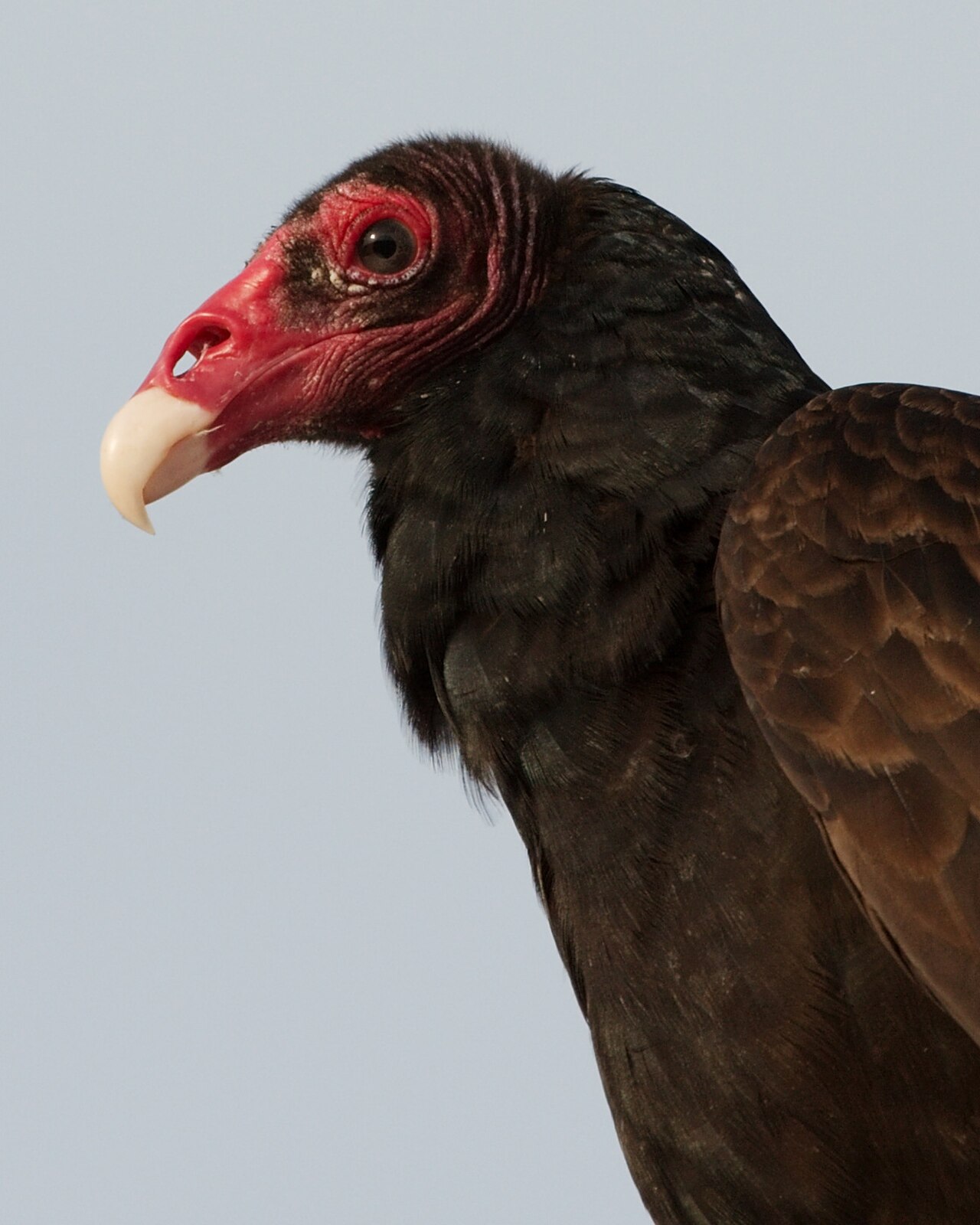
Each of the three North American vultures has its own distinctive features. The turkey vulture is the most familiar, a large dark bird with a bare red head, recognized in flight by its habit of holding its wings in a shallow V and rocking or teetering from side to side as it soars, rarely flapping. It has an extraordinary sense of smell, unusual among birds, which it uses to locate carcasses. The black vulture is a slightly smaller, stockier vulture with a bare black head, which soars on flatter wings and flaps more frequently with quick, choppy wingbeats, and it often relies on watching other vultures to find food. It is common in the South and has been expanding its range northward. The California condor is a magnificent, enormous vulture with a wingspan approaching ten feet, one of the rarest birds in the world, saved from extinction through captive breeding, and individuals often carry numbered wing tags for tracking. Together these make up North America’s vultures, as explored alongside the birds in our guide to types of eagles.
How to Tell Vultures Apart
Telling the vultures apart is straightforward once you know what to look for, focusing on head color, flight style, and size. Start with the head, since the turkey vulture has a bare red head while the black vulture has a bare black head, though this can be hard to see at a distance. Flight style is often the most useful clue: the turkey vulture holds its wings in a shallow V, called a dihedral, and rocks or teeters as it soars, rarely flapping, while the black vulture soars on flatter wings and flaps more frequently with quick, snappy wingbeats. In flight, the turkey vulture shows silvery flight feathers along the whole trailing edge of the wing, while the black vulture shows pale patches only near the wingtips. The California condor is unmistakable by its enormous size and often its wing tags. By combining head color, flight style, wing pattern, and size, you can readily identify North American vultures, a satisfying skill for these soaring birds, as explored in our guide to types of black birds.
Where Vultures Live
Vultures live in a variety of open and semi-open habitats across North America, wherever they can find carrion and soar on rising air. The turkey vulture is extremely widespread, found across much of the continent in open country, farmland, woodlands, and along roadsides, and it is migratory in the north, gathering in large flocks during migration. The black vulture is common in the southern United States, in open areas, farmland, and around towns, and it has been steadily expanding its range northward. The California condor, by contrast, is found only in a few areas of the West, including parts of California, Arizona, Utah, and Baja California, where reintroduced populations live in rugged, mountainous country. Vultures often roost communally in trees or on structures and soar during the day on thermals, rising columns of warm air, as they search for food. Because vultures are widespread and often seen soaring overhead, they are among the most familiar large birds, as detailed in our guide to bird symbolism.
Why Vultures Are Important
Vultures play a crucial and often underappreciated role in the environment as nature’s cleanup crew. By feeding on carrion, the carcasses of dead animals, vultures remove decaying material from the landscape, which helps keep ecosystems clean and can reduce the spread of disease. Their highly efficient scavenging means carcasses are consumed quickly, and vultures have remarkably strong stomach acids that allow them to safely consume material that would sicken other animals, helping to destroy harmful bacteria. This sanitation service is valuable to both wildlife and people. The importance of vultures has been highlighted in places where their populations have crashed, leading to problems with rotting carcasses and increases in other scavengers. The California condor’s near-extinction and ongoing recovery also illustrate the challenges vultures can face, including threats like lead poisoning from ammunition in carcasses. Appreciating the essential ecological role of vultures reveals why these often-maligned birds deserve respect and protection, as reflected in our guide to types of hawks. The name itself is a source of confusion, since a buzzard means a vulture in North America and a hawk in Europe, which our guide to buzzard vs vulture untangles.
The Turkey Vulture’s Remarkable Sense of Smell
The turkey vulture stands out among birds for an unusual ability that shapes its scavenging life. According to the Cornell Lab of Ornithology, the turkey vulture has an excellent sense of smell, which it uses to locate carcasses, an ability that is rare among birds. Most birds have a relatively limited sense of smell, but the turkey vulture is a striking exception, able to detect the scent of decaying animals from surprising distances, even when the carcass is hidden beneath forest canopy. This keen sense of smell allows turkey vultures to find food that other scavengers, relying only on sight, might miss, and black vultures, which have a weaker sense of smell, often follow turkey vultures to locate carcasses. As turkey vultures soar low over the landscape, they sniff the air for the gases released by decaying animals. This remarkable adaptation makes the turkey vulture especially effective at its cleanup role, one of the fascinating traits of these underappreciated birds, as explored in our guide to types of hawks.
The California Condor’s Comeback
The California condor represents one of the most dramatic conservation stories in North America, and it is worth understanding. This magnificent vulture, the largest bird in North America with a wingspan approaching ten feet, once ranged widely but declined catastrophically until, by the 1980s, only a tiny number remained in the wild. In a bold and controversial move, the last wild condors were captured to start a captive breeding program, and through intensive effort, condors were bred and gradually reintroduced to the wild in parts of California, Arizona, Utah, and Baja California. The population has slowly grown, though condors still face serious threats, especially lead poisoning from ingesting fragments of lead ammunition in carcasses they feed on. Many wild condors carry numbered wing tags so they can be monitored. The condor’s ongoing recovery illustrates both the challenges vultures face and what dedicated conservation can achieve, a powerful example among the birds in our guide to types of eagles.
Frequently Asked Questions
How many types of vultures are there in North America?
North America has three vulture species: the widespread turkey vulture, the black vulture of the South and expanding northward, and the rare, endangered California condor.
What is the most common vulture?
The turkey vulture is the most common and widespread vulture in North America, recognized by its bare red head and its habit of rocking side to side as it soars.
How do you tell a turkey vulture from a black vulture?
A turkey vulture has a red head and soars with wings in a V, rocking side to side, while a black vulture has a black head and soars on flatter wings, flapping more often.
What is the largest vulture in North America?
The California condor is the largest vulture in North America, with a wingspan approaching ten feet. It is critically endangered and was saved from extinction by conservation.
Do vultures only eat dead animals?
Vultures feed almost entirely on carrion, the carcasses of dead animals, which they find by sight and, in the turkey vulture, an excellent sense of smell.
Why are vultures important?
Vultures clean up carcasses, which helps keep ecosystems healthy and can reduce the spread of disease. Their strong stomach acids let them safely consume harmful material.
Where do vultures live?
Turkey vultures live across much of North America in open country, black vultures in the South and expanding north, and California condors in a few western areas.