Vulture Sounds: Why They Only Hiss, Grunt and Growl
Vulture sounds are limited to hisses, grunts and low growls, because New World vultures lack a working syrinx, the vocal organ that lets other birds sing. A turkey vulture cannot scream, whistle or call. What you hear at a roost or a carcass is air forced out under pressure, and the meaning is almost always the same: keep away from my food, my nest or my perch.
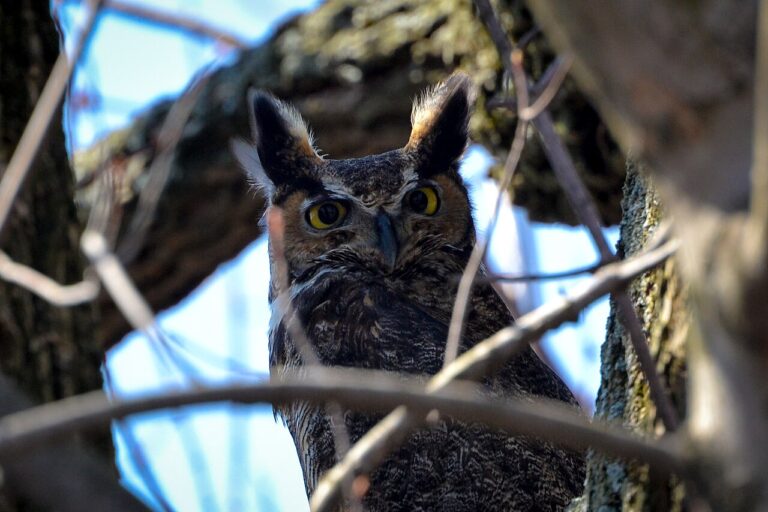
That short repertoire is genuinely useful once you know it, because it rules out most of what people attribute to vultures. The piercing scream over an open field belongs to a hawk, the eerie wail at dusk belongs to an owl, and the heavy thumping on your roof at sunrise is black vulture feet rather than any kind of call.
Vultures hiss, grunt and growl. They cannot sing or call because New World vultures have no functional syrinx. A hiss means threat or warning, a grunt means squabbling over food or contact at the roost, and nestlings hiss and wheeze when disturbed. The famous screaming heard over fields is a red-tailed hawk, not a vulture.
Why Vultures Hiss Instead of Singing
Songbirds produce sound in the syrinx, a structure at the base of the windpipe. In the New World vultures of the family Cathartidae, including the turkey vulture (Cathartes aura), the black vulture (Coragyps atratus) and the California condor (Gymnogyps californianus), that organ is reduced to the point of being useless for voice.
The result is a bird that communicates almost entirely by posture, wing position and physical displacement at the carcass. Sound plays a supporting role only. When a vulture does make noise, it is moving air across unmodulated tissue, which is why everything in the repertoire comes out raspy, breathy and low.
| Sound | Species | What it sounds like | When you hear it |
|---|---|---|---|
| Hiss | turkey and black vulture | long, snakelike air release | carcass disputes, nest defense |
| Grunt | mostly black vulture | short, dry, barking huff | feeding, roost jostling |
| Low growl | both | rolling, throaty rasp | close threat, fledgling defense |
| Nestling wheeze | both | thin, strained hiss | nest visits, May to August |
| Wing whoosh | both | heavy, sudden air rush | takeoff from a roost or carcass |
| Roof thumping | mostly black vulture | hopping, scraping, scrabbling | sunrise on rooftops and towers |
The Hiss: What It Sounds Like and What It Means
The hiss is the core vulture sound: a long, flat, snakelike exhalation delivered with the wings half open and the head lowered. Birds use it at carcasses against other vultures, against dogs and coyotes, and at the nest against anything that comes close.
It is louder and coarser than most people expect, closer to a punctured tire than to a snake. Hissing as a bird warning is not unique to vultures, and the comparison that confuses people most often is the barn owl, whose shriek and hiss carry a similar rasp. Listening to barn owl sounds side by side makes the difference obvious.
The Grunt and the Low Growl
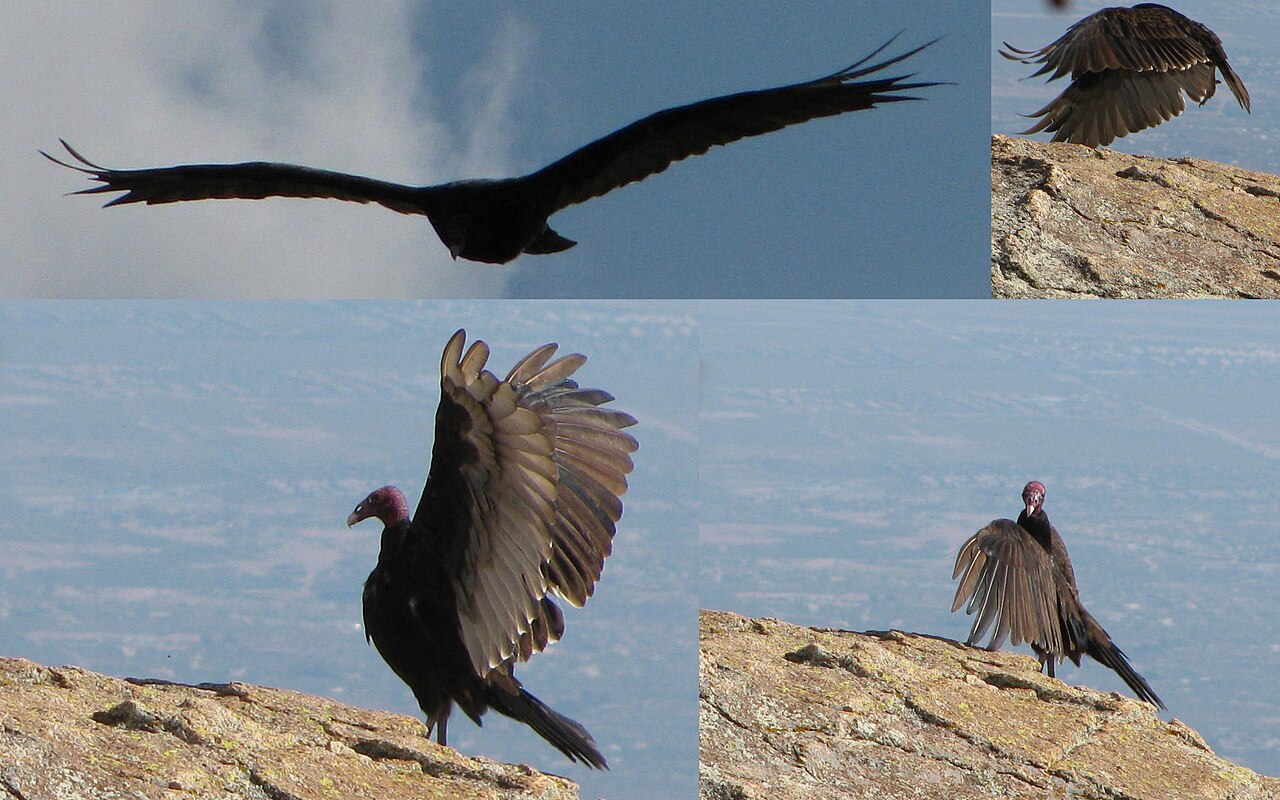
Grunts are short, dry and percussive, delivered in bursts while birds jockey for position. Black vultures grunt more than turkey vultures do, which fits their habit of arriving at carrion in aggressive family groups and shouldering larger birds aside.
The growl is rarer and lower, a rolling throaty rasp given at very close range. Adults growl at intruders near a nest, and fledglings growl before they commit to the other standard defense of the group, which is projectile regurgitation of a recent meal at the offender.
Turkey Vulture Sounds

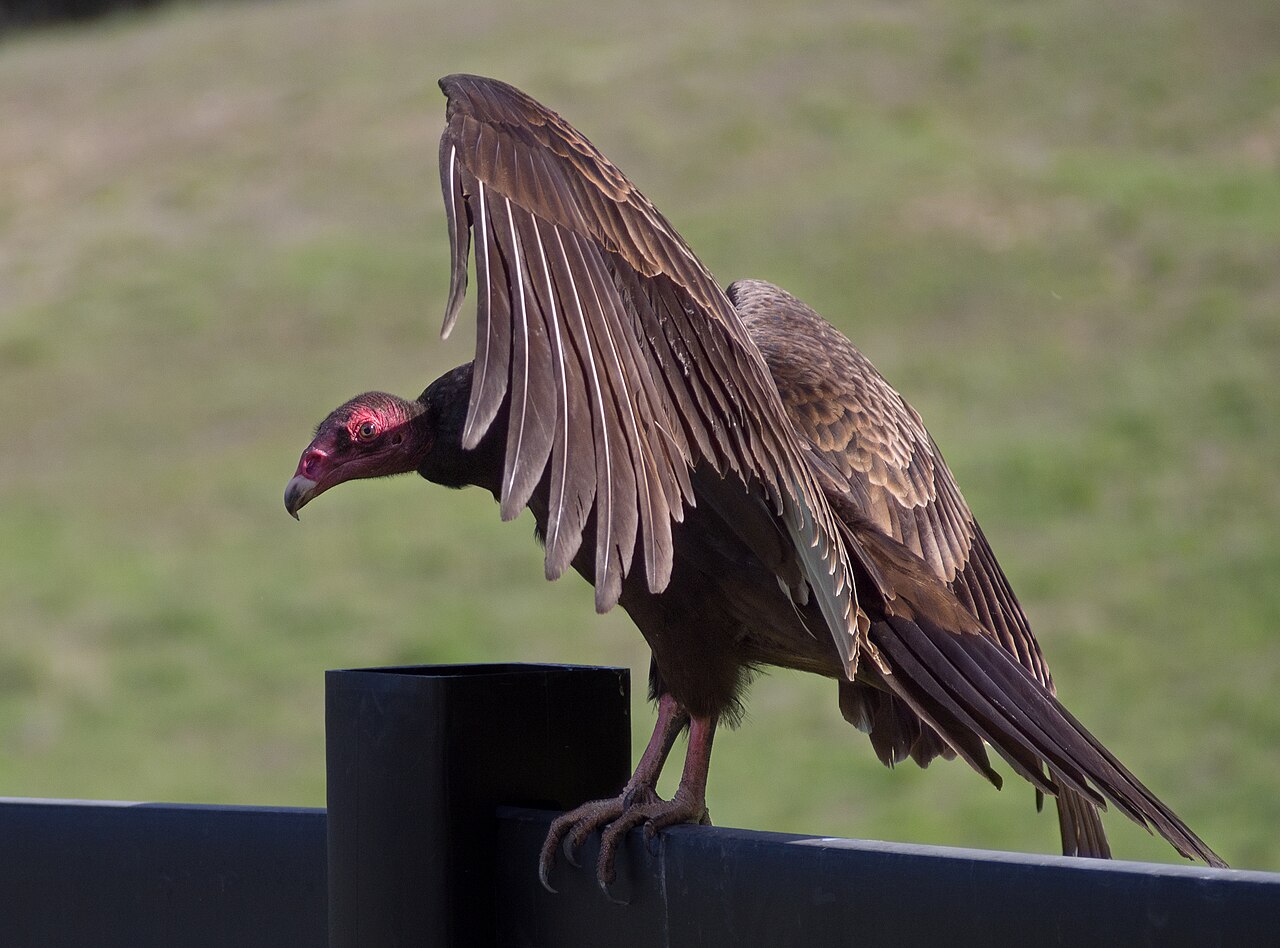
Turkey vultures are the quieter of the two common North American species. Expect hissing at a carcass, occasional grunts, and nothing at all in flight. A solitary turkey vulture passing overhead on its distinctive teetering V-shaped glide makes no sound whatsoever beyond the rush of air through its primaries.
They are also the species that finds food by smell, an unusual ability among birds, detecting the ethyl mercaptan given off by early decay. That means a turkey vulture often arrives first and alone, and silence at a fresh carcass in woodland usually means a turkey vulture rather than a group of black vultures.
Black Vulture Sounds
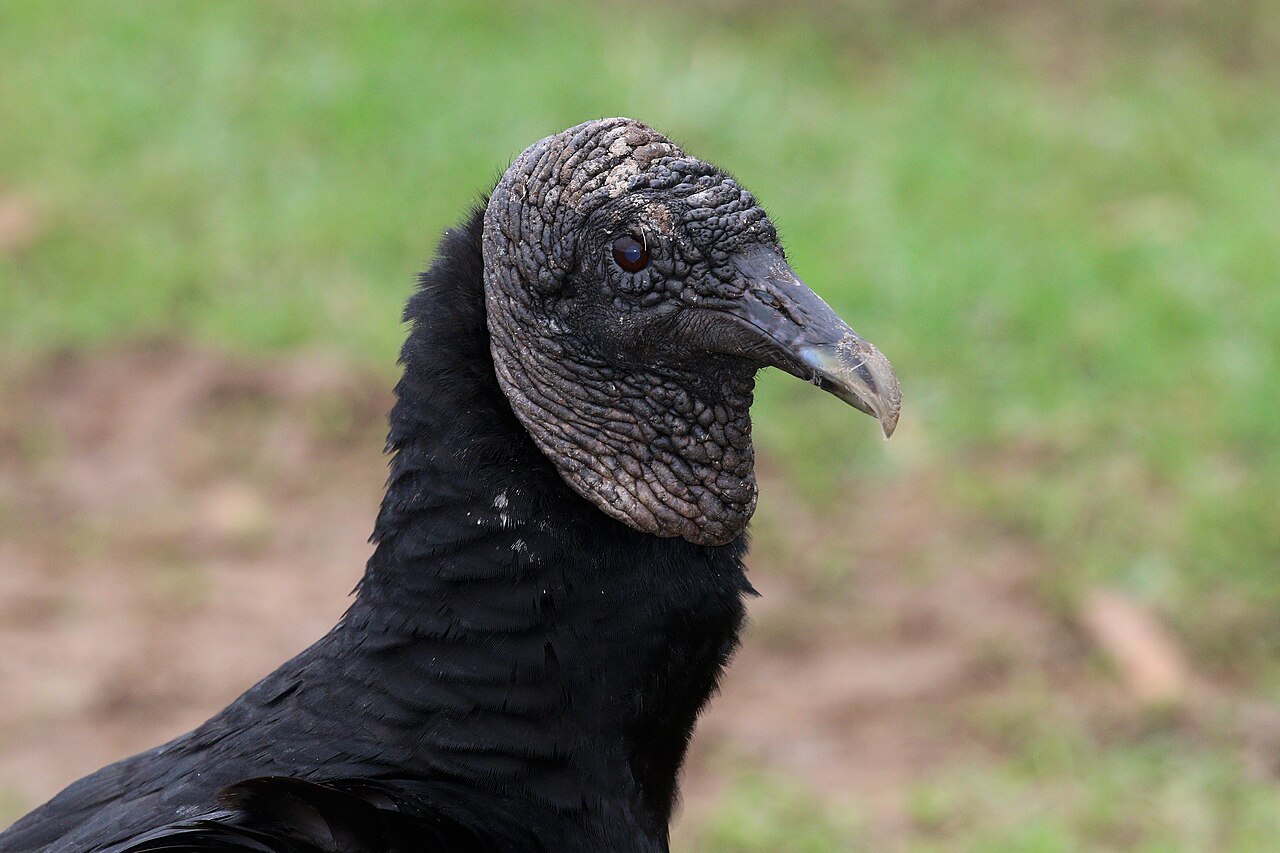
Black vultures are noisier, more social and more physical. Their grunts are sharper and more frequent, their hisses come in rapid exchanges, and a feeding group generates a steady low commotion of huffs, wing slaps and scuffling that carries a surprising distance across open ground.
Tell the birds apart overhead before judging the sound. Black vultures have shorter, broader wings held flat, white patches at the wingtips only, and a choppy flap-flap-glide. Turkey vultures hold a clear dihedral, show silvery flight feathers along the whole trailing edge, and rock from side to side.
Baby Vulture Sounds
Nestlings hiss from an early age, and it is the loudest thing about them. A disturbed chick in a hollow log, barn loft or abandoned building produces a thin, strained wheezing hiss, lunges forward, and may vomit. Both species nest on the ground or in cavities rather than building a stick nest.
Begging is quiet, mostly a soft grunting against the adult’s bill during the regurgitation that feeds the chick. Nesting runs from roughly March to August across most of the United States, so unexplained hissing from an outbuilding in early summer is worth checking before anyone opens the door.
Vulture Sounds in Flight
Vultures are silent in the air. There is no flight call, no contact note and no alarm call, which is one reason a kettle of fifty birds can spiral over a town without anyone noticing. Everything you hear from a flying vulture is mechanical.
Up close that mechanical sound is substantial. A bird launching from a fence post or a carcass produces a deep, heavy whoosh from wings spanning 63 to 72 in (160 to 183 cm) in the turkey vulture. At a communal roost, a mass departure at dawn sounds like a sudden gust running through the trees.
Courtship, Roosts and the Morning Sun Pose
Courtship is a visual performance rather than a vocal one. Several birds gather on the ground in a loose ring and hop with wings partly spread, followed by paired flight in which one bird closely follows the other. Hissing and grunting accompany the ground display but do not drive it.
Communal roosts of dozens to hundreds of birds form in tall trees, transmission towers and rooftops. At sunrise the birds hold the horaltic pose, wings spread to the sun, and the roost is mostly quiet apart from scuffling and the occasional grunt as individuals shift position.
When You Actually Hear Vultures
Three moments account for nearly all vulture noise: a contested carcass, a disturbed nest, and a crowded roost at first light. Outside those, the birds are effectively silent. Daytime is the active period, since soaring depends on thermals that do not form until the ground warms.
Seasonally, turkey vultures withdraw from the northern tier of states in winter while black vultures have been expanding steadily northward year round. In the South both species are present all year, and roof and tower roosts become most conspicuous from late fall through early spring.
What Birds Are Mistaken for Turkey Vultures?
By sound, the usual answer is the red-tailed hawk, whose long descending scream is the sound most people mentally assign to any large soaring bird. Ravens and crows also contribute, since their croaks and rattles come from the same roosts and carcasses that vultures use.
By sight, the confusion list is longer: golden and bald eagles, which soar with flat wings and far steadier flight, plus northern harriers and zone-tailed hawks, which both mimic the vulture dihedral. The sound separates them instantly, because eagles are vocal and vultures are not. Compare bald eagle sounds against silence and the identification resolves itself. For nocturnal confusion, barred owl calls and the full list of birds that sound like owls cover most of what people report. Cornell’s All About Birds guide to the turkey vulture has reference recordings of the hiss itself.
Vultures on the Roof: Noise Without Calls
Black vultures roost on flat roofs, chimneys, water towers and cell towers, and the complaint is almost never about voices. It is about the physical noise of heavy birds landing, hopping and scraping overhead at dawn, plus the damage they do by pulling at roof sealant, vent gaskets, pool covers and windshield wipers.
Both species are protected under the Migratory Bird Treaty Act, so lethal control requires a federal permit. Effective legal responses are exclusion from perches, spikes or wire on favored ledges, and an approved effigy, which is the single most reliable deterrent. Noisemakers help briefly before the birds habituate, a pattern familiar from any bird deterrent sound device, and oddities such as the bird that sounds like a machine gun show how quickly birds learn to ignore a repeated noise.
Frequently Asked Questions
What does it mean when Turkey Vultures are circling?
Usually nothing more than rising air. Vultures circle to gain altitude in thermals, a behavior called kettling, and groups of dozens may spiral over a warm field or parking lot with no carcass anywhere nearby. Circling low and tight over one spot, with birds dropping out of the ring, does suggest food below.
What animal has the most toxic stomach acid?
Vultures are the standard answer. Their stomach contents sit near pH 1, acidic enough to destroy anthrax, botulism and cholera bacteria in rotting meat that would kill most scavengers. That chemistry, not any special immune system, is what lets a vulture eat a carcass that has lain in the sun for days.
Is a vulture aggressive?
Toward people, no. Vultures threaten by hissing, spreading the wings and regurgitating, then leave. They have weak feet and no grasping talons. Black vultures can be aggressive toward very young or weakened livestock, which is a real agricultural problem, but attacks on healthy adult animals or humans are not part of their behavior.
Can a vulture pick up a 20 lb dog?
No. A turkey vulture weighs about 2 to 4 lb (0.9 to 1.8 kg) and its feet are flat and chicken-like, built for walking on carcasses rather than for carrying anything. No North American vulture can lift prey in flight at all, let alone an animal several times its own weight.
What animals are vultures afraid of?
Humans at close range, dogs, and larger raptors such as golden eagles and great horned owls, which displace them at roosts and nests. At a carcass, coyotes, bears and feral hogs push vultures off until the mammals finish. The birds yield readily rather than fight, since their defense is distance.
What does it mean when you see a black vulture in your yard?
Something edible is nearby or a roost has formed close by. Check for a dead animal under a deck or in a hedge, uncovered garbage, pet food left out, or a compost pile with meat scraps. One bird on a lawn is normal in the Southeast and no cause for alarm.