Bird Deterrent Sound: What Works and What Never Will
Bird deterrent sound works, but only under conditions most homeowners never meet. The sounds birds genuinely react to are their own distress calls and the calls of predators that hunt them, played at irregular intervals and moved around. Everything else, including every ultrasonic device sold for the purpose, is noise they learn to ignore.
That gap between what is marketed and what is measured explains most of the one-star reviews. Knowing which sounds reach which species, and how fast habituation sets in, decides whether a sound deterrent clears a roofline or just annoys the neighbors.
The most effective bird deterrent sounds are species-specific distress calls and predator calls such as hawk screeches, played at random intervals from moving speakers. Ultrasonic repellers do not work, because birds hear poorly above 12 kHz. Any sound deterrent loses effect within one to three weeks unless it is varied.
| Sound type | Frequency range | Does it work | Time to habituation |
|---|---|---|---|
| Species distress calls | 1 to 8 kHz | Yes, best option | 2 to 6 weeks if varied |
| Predator calls (hawk, owl) | 1 to 5 kHz | Moderate | 1 to 3 weeks |
| Propane cannon | Broadband blast | Yes, open land only | 1 to 4 weeks |
| Ultrasonic device | Above 20 kHz | No | Immediate, never heard |
| Wind chimes, spinners | Broadband, low volume | Marginal, mostly visual | Days |
| Recorded music or radio | Broadband | No | Days |
What Sounds Actually Deter Birds?
Only two categories of sound produce a reliable escape response: the distress or alarm call of the target species, and the call of a predator that actually hunts it in that area. Both carry information the bird is wired to act on, which generic noise does not.
The specificity matters more than the volume. A starling distress call clears starlings and leaves house sparrows unmoved, and a red-tailed hawk scream means little to a gull that has never been hunted by one. Identifying the species first is the step most people skip.
Distress and Alarm Calls: The Only Reliable Option
A distress call is the sound a bird makes while being seized by a predator. Played back at the roost, it tells every bird in earshot that this location is where conspecifics get caught, and flocks typically lift within seconds.
Commercial units cycle through libraries of these calls for pigeons, starlings, gulls, crows, and grackles. They work best at dusk against a forming roost, before the birds commit to the site, and they lose most of their power once a colony is already nesting.
Predator Sounds: Hawk and Owl Calls
Recorded raptor calls occupy an odd middle ground. They generate an immediate reaction the first few times, then fade quickly, because a predator that screams every 90 seconds and never appears stops being credible.
Pairing the sound with a moving visual raises the effect considerably: a kite or balloon in the air while the call plays holds birds off far longer than either alone. Owl calls work at dusk and dawn, hawk calls during the day, which matches when each predator actually hunts. Our guides to barn owl calls and the barred owl’s night calls cover what real ones sound like.
Blue jays exploit the same effect naturally by imitating red-shouldered hawk screams to clear a feeder, and it works on other birds for exactly as long as the bluff holds. Recordings of blue jay hawk imitations show how convincing a false alarm can be.
Do Ultrasonic Bird Repellers Really Work?
No. Bird hearing peaks between 1 and 4 kHz and drops off sharply above 8 to 10 kHz, with little usable sensitivity past 12 kHz. Ultrasonic output starts at 20 kHz, which means the bird is standing in a field of sound it cannot detect.
Independent testing, including work by the Center for Wildlife Damage Management and multiple university extension programs, has found no reduction in bird presence from ultrasonic units. The devices remain on the market because the failure is invisible: the buyer cannot hear the sound either.
Sonic vs Ultrasonic: The Difference That Decides Everything
Sonic deterrents play audible sound, usually 1 to 8 kHz, in the range birds use for their own communication. Ultrasonic deterrents play above human hearing, which is also above practical bird hearing.
If a product claims to be silent to humans and effective on birds, those two claims cannot both be true for any avian species in North America. Anything that works on birds will be audible to you and to anyone within about 100 yards (90 m).
Habituation: Why Every Sound Deterrent Stops Working
Birds learn fast. A sound that predicts no actual harm becomes background within one to three weeks, and pigeons and gulls, the two species most often targeted, habituate faster than most because they live in noisy human environments already.
The countermeasures are variation and unpredictability: randomized intervals, several different call types, speakers that get moved every few days, and periods of complete silence. A unit that fires the same clip every two minutes from the same corner is training birds to ignore it.
Wind Chimes, Pinwheels, and Spinners
These deter birds mainly through movement and reflected light, not sound. Pinwheels and reflective spinners show short-term effect on open ground such as garden beds and small lawns, and almost none on ledges or under eaves where they cannot catch wind.
Wind chimes are the weakest of the group. The sound is irregular, which helps, but it is quiet, tonal, and carries no threat information, so most birds settle within days. Treat all three as supporting measures rather than solutions.
Propane Cannons and Scare Devices for Large Areas
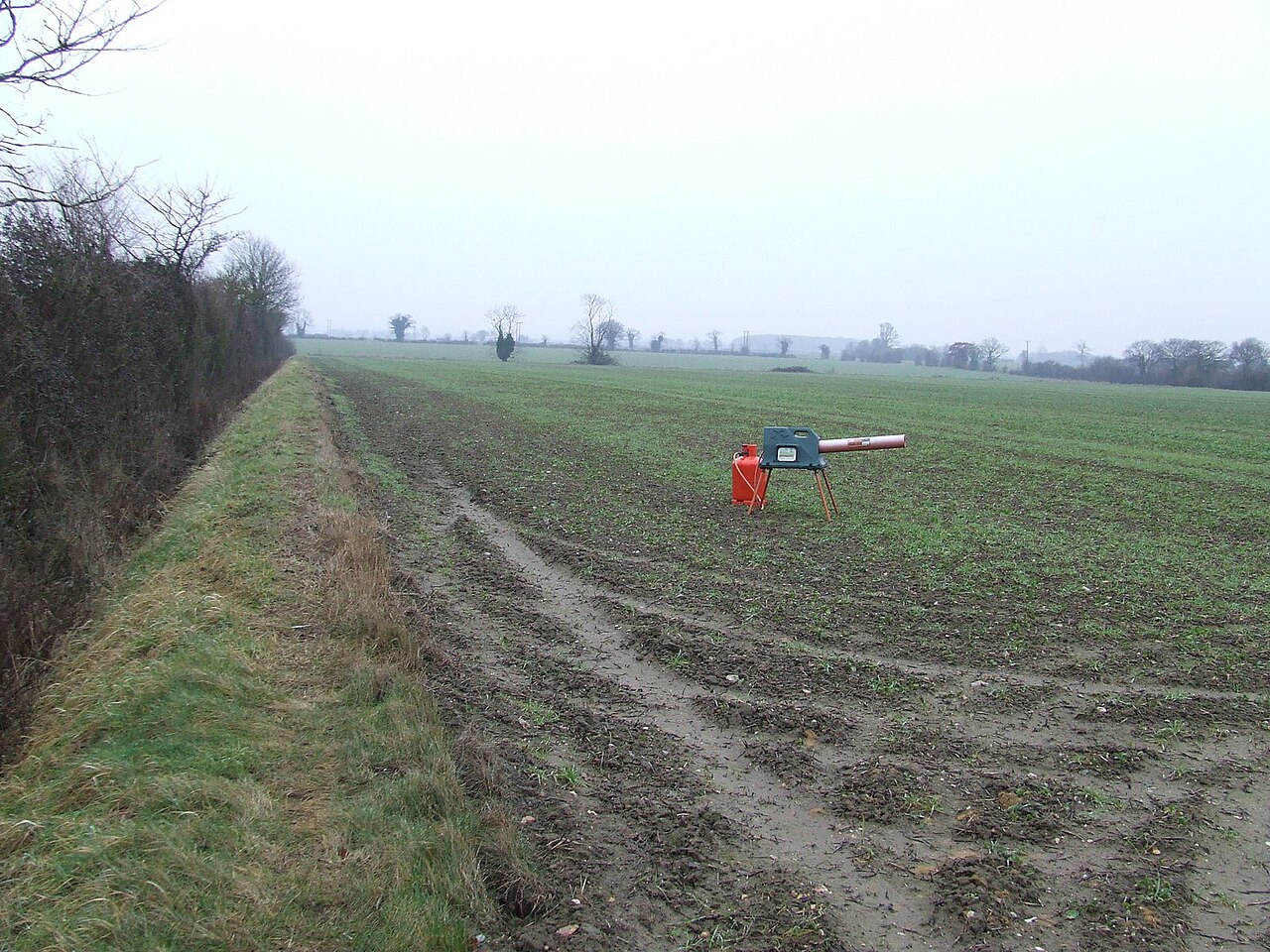
Propane cannons produce a shotgun-like blast at set intervals and remain standard in vineyards, orchards, airfields, and grain fields. They cover acreage no speaker system can reach, and at airports they are part of documented strike-reduction programs.
They are also the reason many towns have noise ordinances covering agricultural deterrents. For residential use they are neither legal nor proportionate, and they habituate like everything else unless the firing schedule is randomized and the unit is repositioned.
What Sound Do Birds Hate the Most?
The sound birds respond to most strongly is the distress call of their own species, played loudly and unexpectedly. It is not that they hate it; it signals that a member of the flock has just been caught at that spot.
Behind that come predator calls, sudden broadband blasts, and the metallic banging of human activity. Birds tolerate steady loud noise well, which is why they nest beside highways and in airport hangars. The startle comes from the change in sound, not the level.
Which Species Respond to Which Sounds
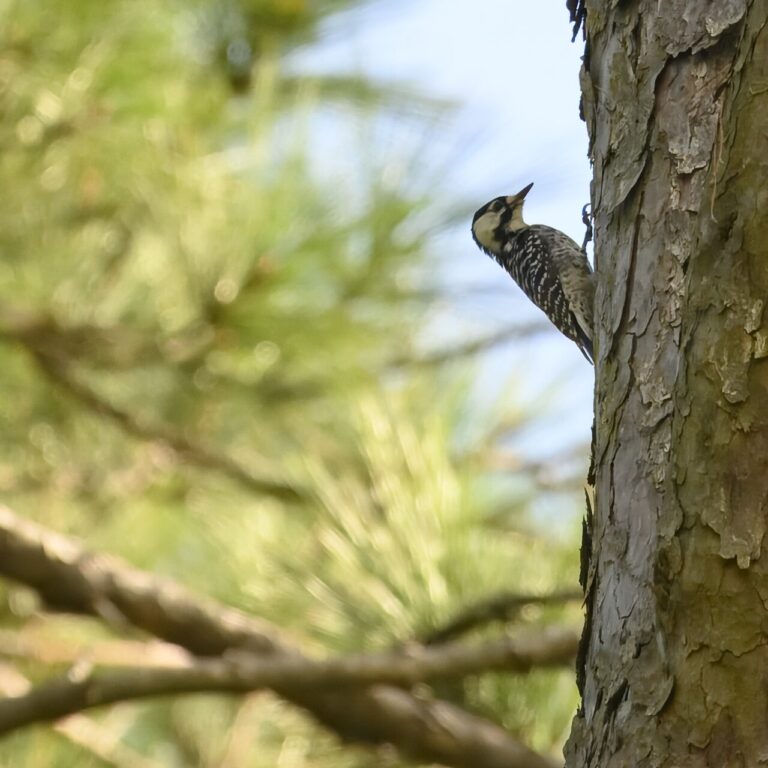
Woodpeckers drumming on siding are defending territory rather than feeding, so distress calls do little and physical barriers plus removing the resonant surface do more. Our guide to pileated woodpecker calls explains what the drumming is actually for.
Pigeons and starlings respond to their own distress calls at roosting sites, gulls respond to gull distress plus visual movement, and crows respond to crow distress better than to any predator call, because they mob predators rather than flee them. Small songbirds such as chickadees usually need no deterrent at all and are protected by federal law.
When Sound Is the Wrong Tool
Sound is a poor choice for small, enclosed, or shared spaces. On a balcony, under a carport, or on a party wall, the volume needed to move birds will reach neighbors long before it reaches the threshold that matters, and complaints usually end the experiment.
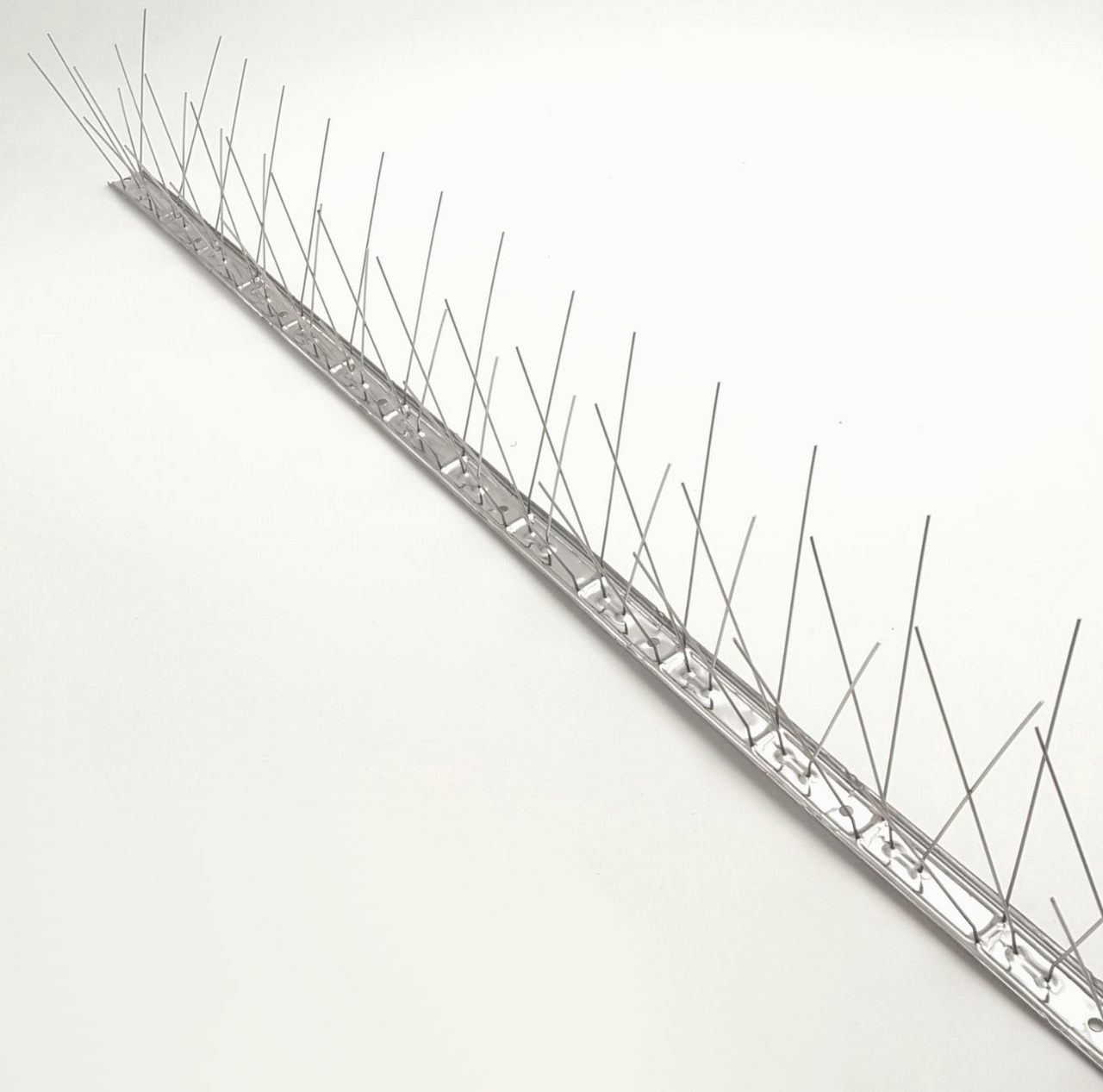
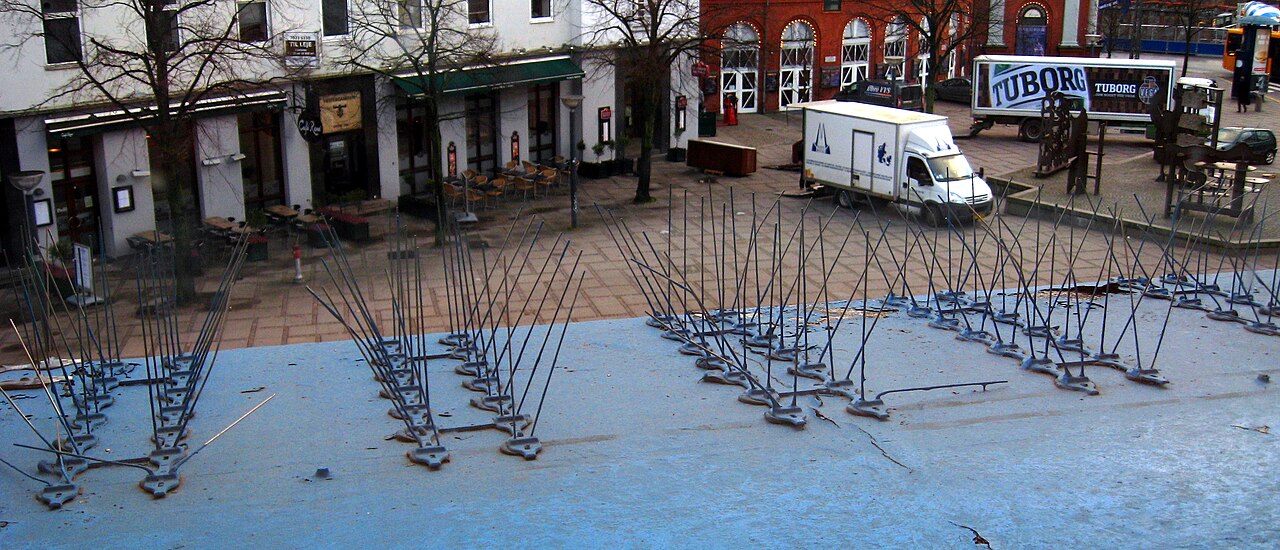
In those settings exclusion beats deterrence: netting, spikes, slope strips, and closing off cavities produce permanent results with no habituation curve. Sound belongs on open ground, large roofs, and agricultural land where physical barriers are impractical.
Frequently Asked Questions
Is there a bird deterrent that actually works?
Physical exclusion works permanently: netting, spikes, wire, and sealing entry points. Among active deterrents, species-specific distress calls combined with moving visual scares give the best results. No single device solves a bird problem alone, and any vendor promising that is selling habituation.
What is the most effective bird repellent device?
For roofs and open lots, a programmable sonic unit with a library of species distress calls and randomized timing performs best. For ledges and beams, stainless spikes or bird wire outperform every electronic option. Choose by the surface you are protecting, not by the claimed coverage area.
How do you scare birds away permanently?
You remove what attracts them: food, water, and nesting surfaces. Sealing gaps, covering waste bins, removing standing water, and netting fruit produce lasting change, while sound and visual scares only buy time. Permanence comes from habitat modification, not from a device.
What smells do birds hate the most?
Methyl anthranilate, the grape-derived compound used in commercial bird repellent gels and fogs, is the one with real evidence behind it, and it works by irritating the trigeminal nerve rather than by smell alone. Peppermint, chili, and garlic remedies show little measurable effect in field trials.
Do bird deterrent apps or phone speakers work?
Rarely. Phone speakers cannot reproduce the volume or frequency range needed, and most apps output ultrasonic tones birds cannot hear. A weatherproof speaker with genuine distress call recordings at 85 to 100 decibels is the minimum hardware that does anything at all.
Is it legal to use sound to deter birds?
In the United States the Migratory Bird Treaty Act protects nearly all native species, their nests, and their eggs, so deterrence is legal but disturbing an active nest generally is not. Rules for pigeons, starlings, and house sparrows are looser since those are non-native. Check current guidance with the U.S. Fish and Wildlife Service and your state wildlife agency before acting.