Starling Sounds: Mimicry, Murmurations, and Roof Noise
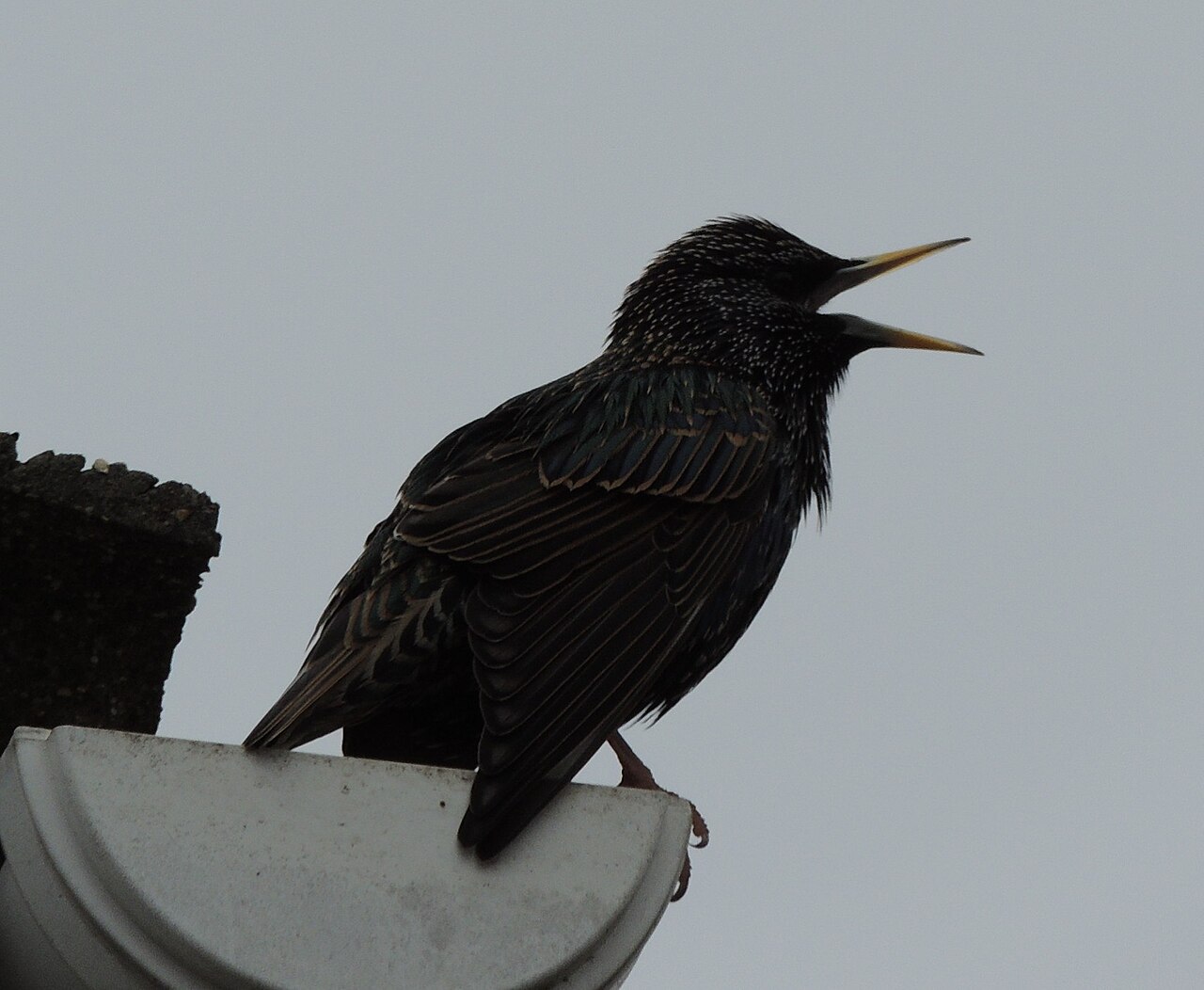
European starlings make a chaotic mix of whistles, clicks, rattles, warbles, and buzzes, and they mimic other birds, car alarms, phone ringtones, and human speech within it. A single male can hold more than a dozen imitations in his repertoire, and the whistling wolf-whistle rising note that people hear from rooftops is the sound most often reported as a starling.
The song is deliberately messy. Male starlings sing long, rambling bouts that run for a minute or more, moving through whistles, variable mimicry, complex rattles, and a final high-frequency section, and females prefer males with longer and more varied repertoires. This guide covers each sound, the mimicry, murmuration noise, how to tell starlings from blackbirds and grackles, and what the racket in the gutter means.
Starling sounds are a rambling mix of clear whistles, clicks, rattles, warbles, and buzzy notes, plus mimicry of other birds, machines, and human speech. Males sing long bouts in a set order and females prefer larger repertoires. A murmuration produces a rushing sound made by tens of thousands of wingbeats rather than by calls.
| Sound | Meaning |
|---|---|
| Rising wolf-whistle | Male song, often from a rooftop perch |
| Clicks and rattles | Middle section of the song bout |
| Mimicked calls | Learned imitations of other species |
| Harsh churr | Alarm, predator nearby |
| Chattering in a gutter | Nestlings begging in a cavity |
| Rushing roar | Wingbeats of a murmuration, not calls |
| Roost chorus at dusk | Thousands of birds calling together |
What Sounds Do Starlings Make?
The starling song is a long, continuous, unstructured-sounding bout that actually follows a consistent order. It opens with clear pure whistles, moves into a variable section built from mimicry, then a complex passage of rattles and clicks, and ends with a high-frequency burst. A full bout can run a minute or more, and males sing with the throat feathers puffed and wings flicking.
The rising whistle at the start is the sound most people identify. It slides upward, is loud and clear, and carries from rooftops, aerials, and chimneys, and because it resembles a human wolf-whistle it gets reported as a person whistling more often than any other bird sound in towns.
Away from song, starlings are noisy in a different register. A harsh churr or scream is the alarm call given at a cat or a hawk, sharp clicks are used in close contact, and the constant conversational chattering of a flock feeding on a lawn is a low ongoing murmur of clicks and short whistles. Nestlings in a cavity produce a loud rhythmic wheezing chatter audible through a wall or roof space.
Do Starlings Mimic Other Birds?
Yes, extensively, and they are among the best mimics in the bird world. Starlings copy other species’ calls, mechanical noises, and human speech, and a male’s repertoire typically includes ten to twenty imitations that he adds to throughout life. Older males have larger repertoires, which is exactly what females select for.
Commonly copied species in North America include killdeer, red-tailed hawks, meadowlarks, phoebes, jays, quail, and wood-pewees, and starlings frequently reproduce them well enough to fool experienced birders. Mechanical mimicry is just as common: car alarms, reversing beepers, phone ringtones, whistling kettles, and squeaky gates all get incorporated.
Speech mimicry is genuine and better than most people expect. Captive starlings learn words and phrases clearly, and Mozart famously kept one that had learned a passage from one of his own concertos, altered slightly, which he recorded in his expense book. Wild starlings occasionally pick up human whistled tunes near houses. The mockingbird sounds guide covers North America’s other great mimic and how the two differ.
What Does a Murmuration Sound Like?
A murmuration sounds like rushing water or distant wind, and the sound is made almost entirely by wingbeats rather than by voices. Tens of thousands of birds beating their wings within a few metres of each other produce a soft roar that swells and fades as the flock turns, and it is audible from a considerable distance on a still evening.
The word murmuration comes from that sound, not from the shape of the flock, and it is one of the older collective nouns in English. Flocks gather before dusk in autumn and winter, wheeling in coordinated shapes for twenty minutes or more before dropping into a reedbed, pier, or roost tree, and roosts of over a million birds have been recorded.
Once the flock lands, the sound changes completely into a deafening chorus of chattering, whistling, and clicking from every bird at once, which continues for some time after dark. The behaviour is thought to serve predator confusion, warmth, and information sharing about food sources, and the density of the aerial displays increases sharply when a peregrine or sparrowhawk appears.
Why Are Starlings in My Roof or Gutter?
Starlings are cavity nesters and treat a soffit, vent, gutter end, or gap under roof tiles as a hollow tree. The noise people report is nestling begging, a rhythmic wheezing chatter that runs through daylight hours and gets louder as the brood grows, along with scrabbling and the constant traffic of adults arriving.
The nesting season runs from roughly March to July, with two broods common, and the young leave the nest about three weeks after hatching. Blocking an active nest is both cruel and counterproductive, since the nestlings die in the cavity, so the practical approach is to wait out the brood and then exclude.
Exclusion after the season works reliably. Sealing gaps larger than about an inch and a half, fitting vent covers and gutter guards, and doing it in late summer or autumn prevents the following spring’s occupation. Starlings return to successful sites year after year, so an unblocked cavity is a permanent arrangement. The grackle vs starling guide covers the identification, since the two are regularly confused around houses.
What Does It Mean When a Starling Visits You?
Starlings are read symbolically as messages about community, communication, and adaptability, drawn from the flocking behaviour and the mimicry. The murmuration in particular has become a widely used image for collective action and for finding a place within a group, and modern readings lean heavily on it.
Older European folklore is thinner and more ambivalent, treating starlings mostly as ordinary birds and occasionally as noisy nuisances. Their strongest literary appearance is in Shakespeare’s Henry IV, where a character proposes teaching a starling to speak a single name, a line that had an unfortunate consequence three centuries later.
That consequence is why starlings are in North America at all. A group intent on introducing every bird mentioned by Shakespeare released about a hundred birds in Central Park in the early 1890s, and the population descended from them now numbers in the tens of millions across the continent. The story has been questioned in recent scholarship, but the introduction itself is well documented. The bird symbolism guide covers how these readings are built.
Are Starlings Good or Bad to Have Around?
Both, and the answer depends on scale. Individually, starlings are excellent insect predators, and they take large quantities of leatherjackets, cutworms, grubs, and beetle larvae from lawns and pasture, including Japanese beetle grubs. A flock working a field is doing genuine agricultural work, and they are among the birds that eat Japanese beetles in the grub stage.
The costs come with numbers. Large winter flocks damage fruit crops and consume livestock feed, roosts foul buildings and can support the fungus that causes histoplasmosis, and the birds compete aggressively for nest cavities with bluebirds, purple martins, flickers, and woodpeckers, often evicting them. That competition is the most cited ecological concern in North America.
Legally the position is unusual. As a non-native species, the European starling is not protected under the Migratory Bird Treaty Act in the United States, unlike almost every other bird likely to nest in a roof. That makes control legal, though exclusion remains far more effective than removal, because vacated cavities are simply reoccupied.
How Do You Tell a Starling From a Blackbird or Grackle?
Shape settles it fastest. Starlings are chunky and short-tailed with a triangular silhouette in flight and pointed wings, and they walk with a purposeful waddle rather than hopping. Common grackles are much longer, with a heavy bill and a long keel-shaped tail, and red-winged blackbirds are slimmer with a longer tail and a conical bill.
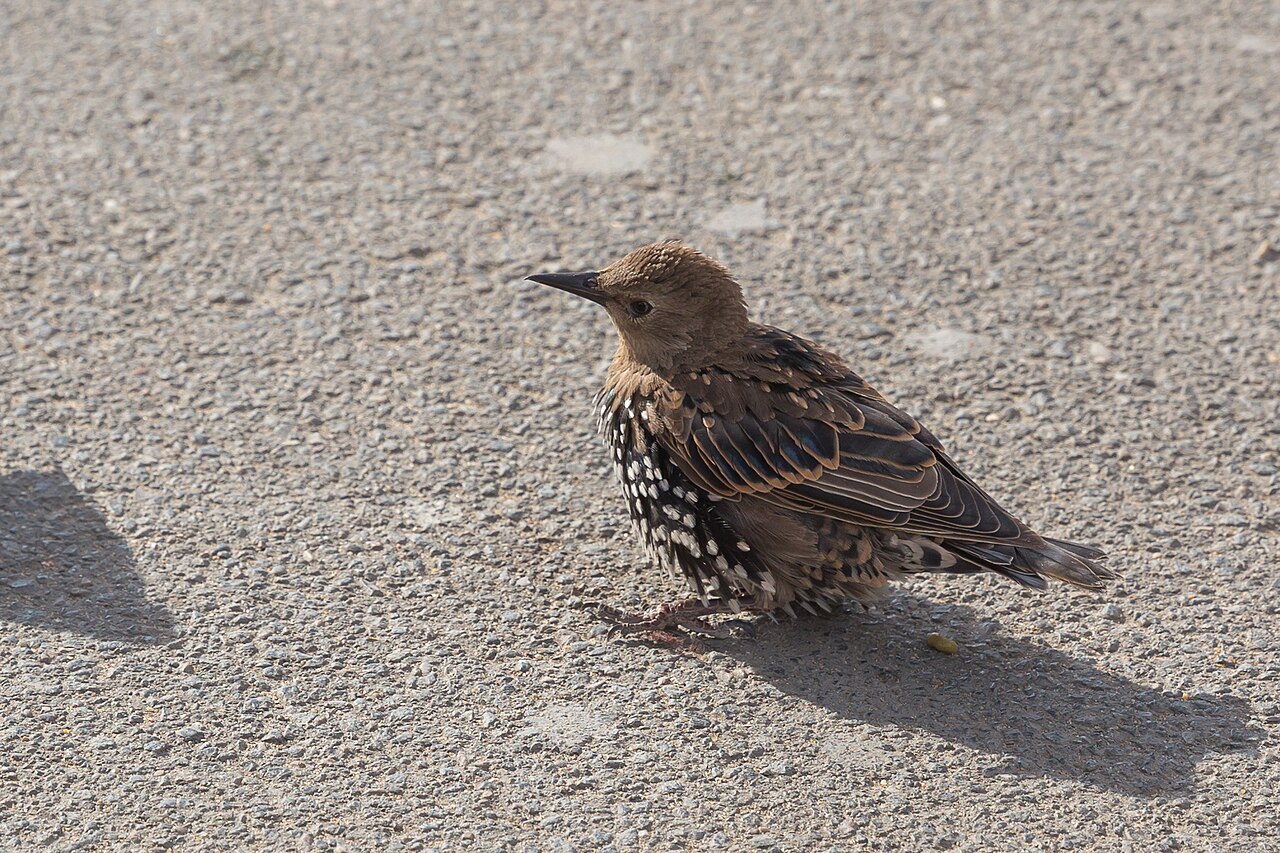
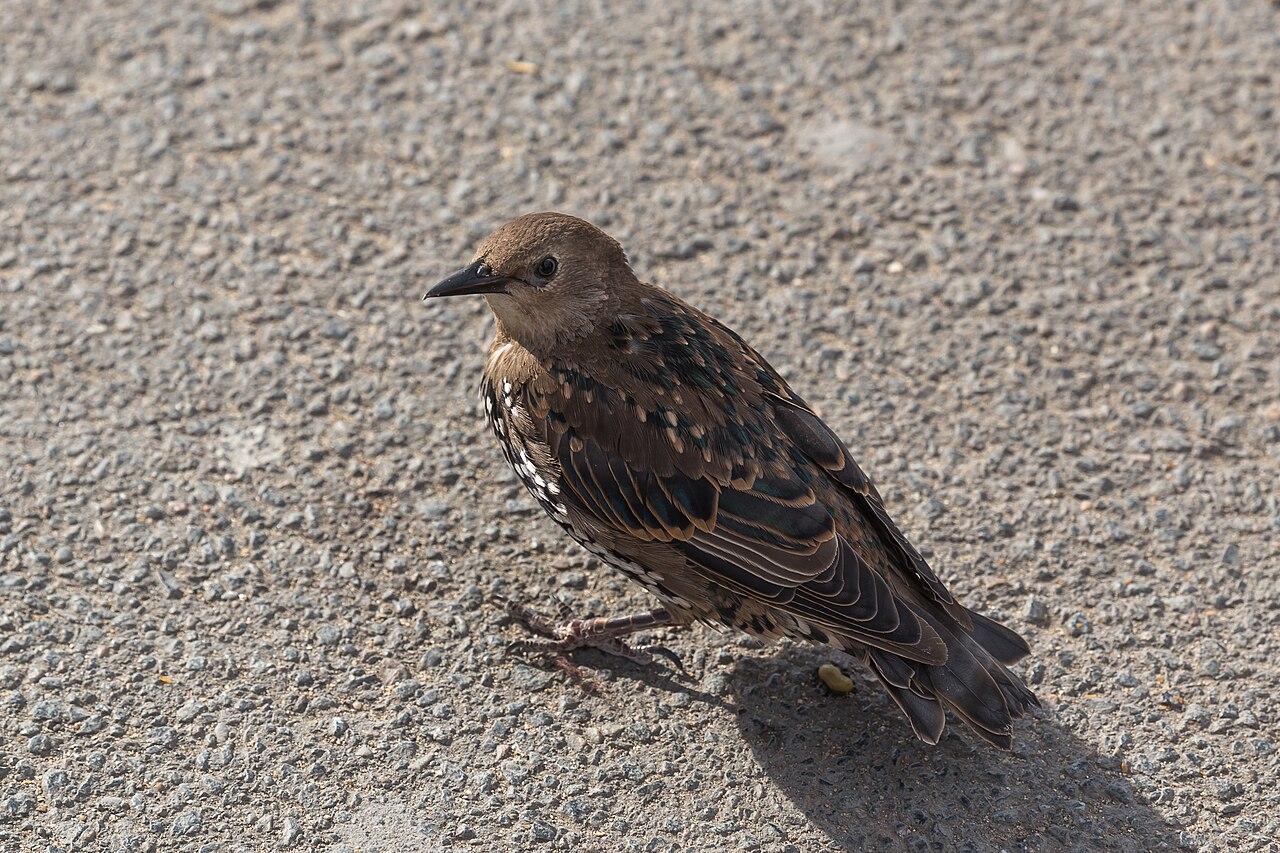
Plumage changes seasonally in a way that confuses people. In summer, adult starlings are glossy black with purple and green iridescence and a bright yellow bill. In winter, fresh feather tips give them a heavily white-spotted appearance and the bill turns dark, so the same bird looks like two different species across the year.
Flight and flocking behaviour give a third check at distance. Starlings fly fast and direct with rapid shallow wingbeats and short glides, and their flocks are dense, tightly packed, and constantly changing shape. Grackle flocks are looser and more strung out, and blackbird flocks sit somewhere between the two. A tight ball of birds twisting over a field at dusk is starlings; a ragged line crossing a road is more likely grackles.
Voice is the other clue. Grackles produce a harsh rusty-hinge squeal and sharp chack notes, and red-winged blackbirds a distinctive conk-la-ree. Neither mimics. A black bird producing whistles, clicks, and imitations of other species from a rooftop is a starling. The crow sounds guide covers a third black bird regularly lumped in with them.
Where Do Starlings Sleep at Night?
In communal roosts, which is why murmurations form at all. Outside the breeding season starlings gather each evening in reedbeds, dense trees, bridges, piers, industrial structures, and city buildings, sometimes in enormous numbers, and disperse at dawn to feeding areas that can be many miles away.
Roosting together conserves heat on cold nights, reduces individual predation risk, and appears to transfer information, with birds that fed poorly following better-fed neighbours out in the morning. The trade-off is noise, droppings, and vulnerability if a predator finds the roost, and roost sites shift through a winter.
During the breeding season the pattern changes: paired birds roost at or near the nest cavity, and only non-breeders and failed breeders continue using communal roosts. Roost numbers therefore build sharply from late summer, peak in midwinter, and collapse in early spring. Cornell Lab of Ornithology (allaboutbirds.org) maintains recordings of the full range of starling vocalisations for anyone trying to match a sound.
Frequently Asked Questions
What sounds do starlings make?
Clear rising whistles, clicks, rattles, warbles, buzzy notes, and mimicry of other birds, machines, and speech, delivered in long bouts. Alarm is a harsh churr, and nestlings produce a rhythmic wheezing chatter.
Do starlings mimic other birds?
Yes, and they are among the best mimics in the bird world. A male typically holds ten to twenty imitations, commonly killdeer, hawks, and meadowlarks, plus car alarms, ringtones, and in captivity human speech.
What does a murmuration sound like?
Like rushing water or distant wind, produced by tens of thousands of wingbeats rather than by calls. Once the flock lands the sound becomes a deafening chorus of chattering that continues after dark.
Why are starlings nesting in my roof?
They are cavity nesters and treat soffits, vents, and gaps under tiles as hollow trees. Wait until the brood fledges, then seal gaps over about an inch and a half, since they return to successful sites every year.
What birds are mistaken for starlings?
Common grackles and red-winged blackbirds. Starlings are chunkier and short-tailed with pointed wings, walk rather than hop, and are the only one of the three that mimics other species.
Is it good to have starlings in your yard?
Mixed. They remove large numbers of lawn grubs and cutworms, but large flocks damage fruit and feed, and they aggressively evict bluebirds, martins, and flickers from nest cavities.
Where do starlings sleep at night?
In communal roosts in reedbeds, dense trees, bridges, and city structures outside the breeding season, sometimes over a million birds. Breeding pairs roost at the nest cavity instead.