Starling Sound: What Every Whistle, Rattle and Click Means
A starling sound is rarely one sound. The European Starling (Sturnus vulgaris) runs through whistles, rattles, clicks, warbles and stolen imitations in a single stream, which is why the bird outside your window can seem like three species at once. Once you know the five building blocks, the whole performance becomes readable.
This bird is the most accomplished mimic in most American backyards, and it uses that skill year round, not just in spring. Below is what each starling noise means, how the flock sounds differ from the solo bird, and which species people confuse with it by ear.
Starlings make a long, rambling song of clear whistles, dry rattles, sharp clicks and harsh squeals, stitched together with imitations of other birds, car alarms and human speech. Males sing from high perches for up to a minute at a time. Flocks add a constant chattering hum that carries for hundreds of feet.
| Sound | What it sounds like | When you hear it |
|---|---|---|
| Whistled song | Long, sliding wolf whistle | Males, late winter through summer |
| Rattle | Dry wooden shaking, like a stick on a fence | Song sequences, roost squabbles |
| Mimicry | Hawk screams, killdeer, car alarms, speech | Woven into any long song |
| Chatter | Bubbling static from many birds at once | Winter roosts and feeding flocks |
| Alarm call | Harsh, grating cheer or squeal | Cat, hawk or human too close |
| Nestling begging | Raspy buzzing from a wall or vent | April through July |
What Kind of Sound Do Starlings Make?
A singing male starling produces a loose, unstructured medley that can run 30 to 60 seconds without an obvious repeat. It typically opens with pure whistles, shifts into a section of variable warbles and mimicry, adds a burst of clicks and rattles, and closes with a high, thin trill. Nothing about it is tidy, and that shapelessness is the best identification clue you have.
The bird almost always sings in the open, on a wire, antenna, chimney or bare treetop, with the throat feathers spiked out and the wings twitching in slow circles. If the sound and the wing waving happen together, you have a starling and not the bird it is imitating.
The Five Starling Noises and How to Tell Them Apart
Whistles are the clearest part, often a rising or falling slur that people mistake for a person whistling at a dog. Rattles are dry and mechanical. Clicks are short and percussive, like two pebbles knocked together. Squeals are harsh and unpleasant, used in disputes. The fifth category is everything the bird has copied from its neighborhood.
Listen for how quickly these swap. A cardinal will repeat one phrase several times before switching. A starling rarely holds any single element for more than a few seconds, which makes rapid, unpredictable change the signature of the species.
Can Starlings Mimic Human Voice?
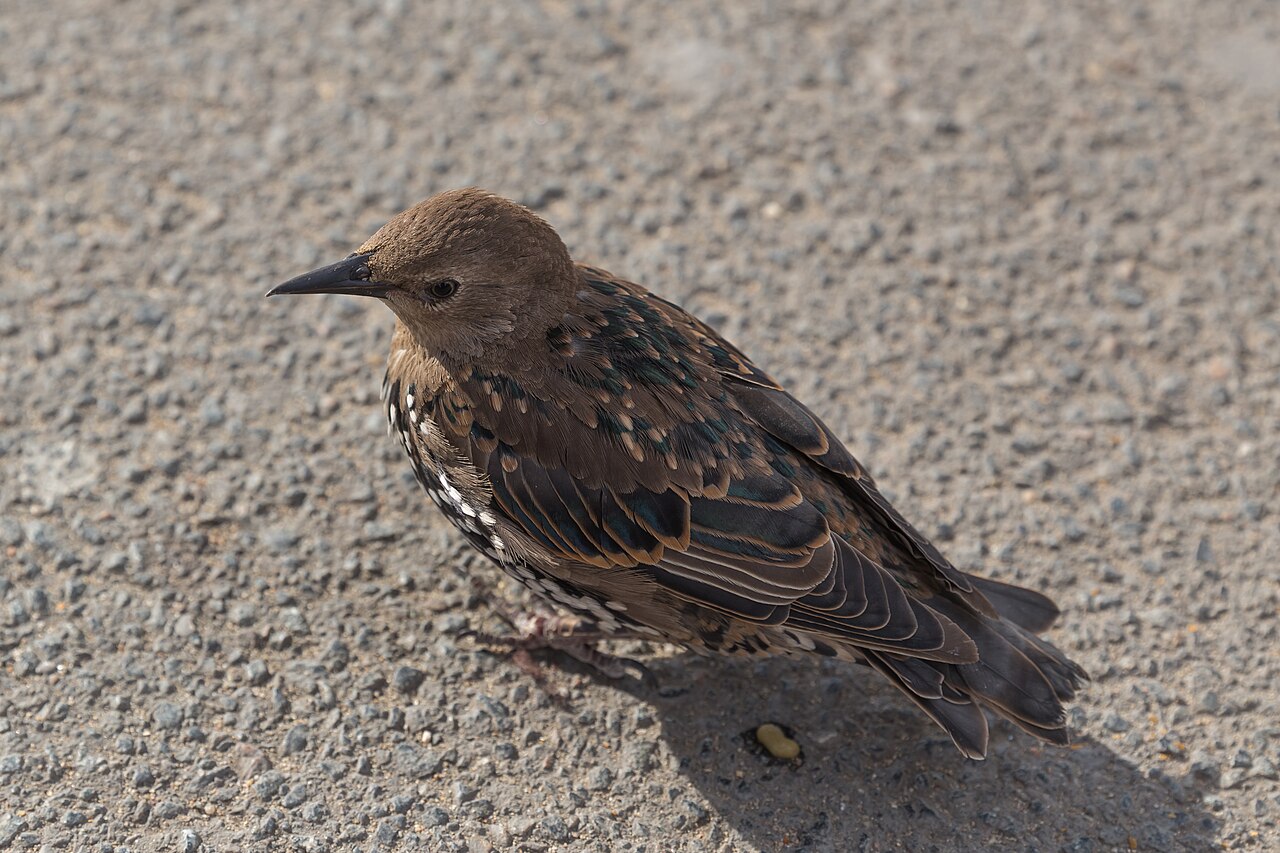
Yes. Starlings can mimic human voice, and captive birds have produced clear words and short phrases with a buzzy, slightly electronic quality. Mozart famously kept one that sang a mangled version of his own melody. Wild birds rarely copy speech, simply because they spend little time close enough to hear it repeatedly.
What wild starlings do copy constantly is other birds and machinery: Killdeer, Eastern Wood-Pewee, Red-tailed Hawk, meadowlarks, car alarms, reversing trucks and squeaky gates. A single male may hold 15 to 20 imitations, and a hawk scream from a low rooftop is far more likely to be a starling than a hawk.
What Does a Flock of Starlings Sound Like?
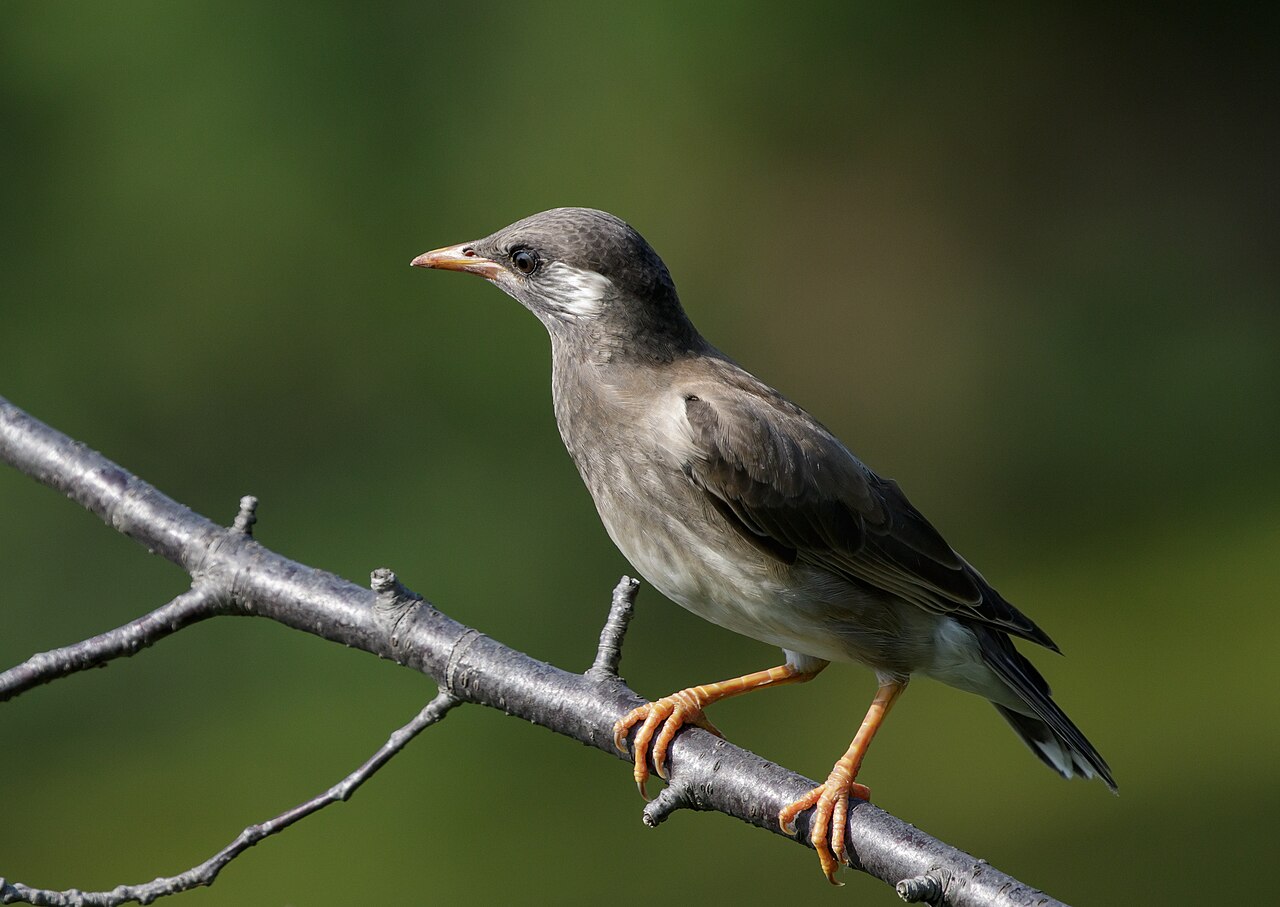
A feeding or roosting flock makes a dense bubbling chatter with no individual voice standing out, closer to running water or radio static than to song. Large winter roosts of several thousand birds generate a wall of sound audible from a quarter mile away, punctuated by the sudden whoosh of wings when the group lifts.
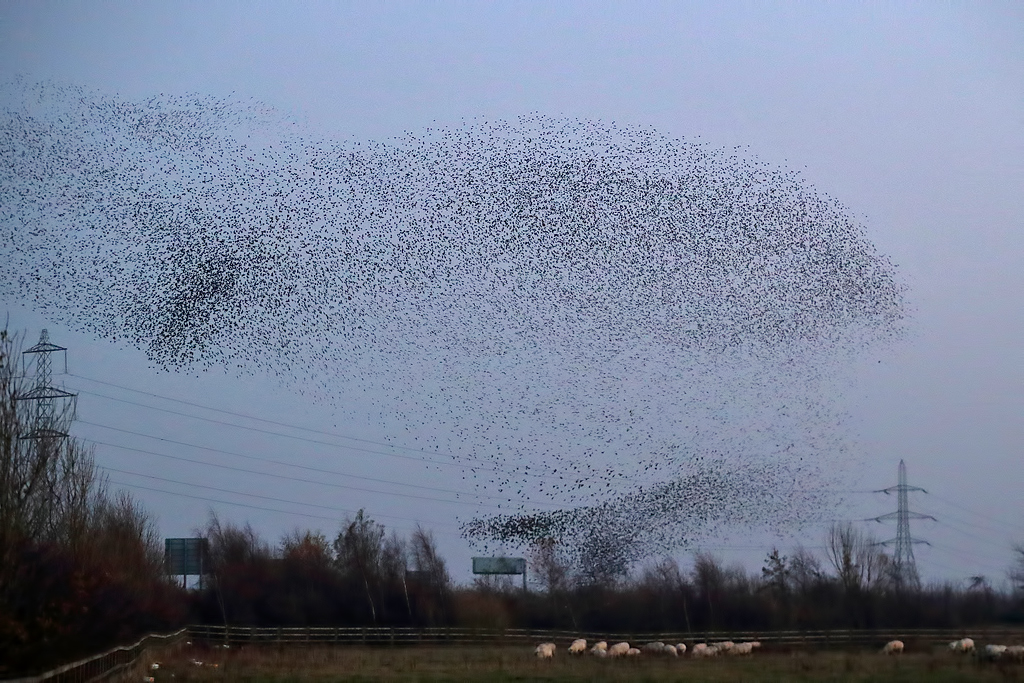
During a murmuration the calling actually drops. The birds go comparatively quiet while maneuvering and the dominant sound becomes the rush of tens of thousands of wingbeats, a low rustling roar that surprises people who expected noise.
Starling Sounds in Winter Compared With Spring
Winter starlings are social rather than territorial, so the mix leans toward chatter, contact calls and roost arguments. Song still occurs on mild days, because male starlings sing in every month of the year, but it is scattered rather than sustained.
From February onward, males claim nest cavities and the long whistled song dominates, delivered from a fixed perch near the hole for hours a day. If the whistling suddenly becomes constant at one spot on your house, a pair has chosen a vent or soffit gap.
Male Starling Sounds Versus Female
Males do nearly all of the long song and all of the sustained whistling. Females give calls, alarm notes and short chatter, and they occasionally produce brief song fragments, but they do not perform the lengthy advertising sequence from an exposed perch.
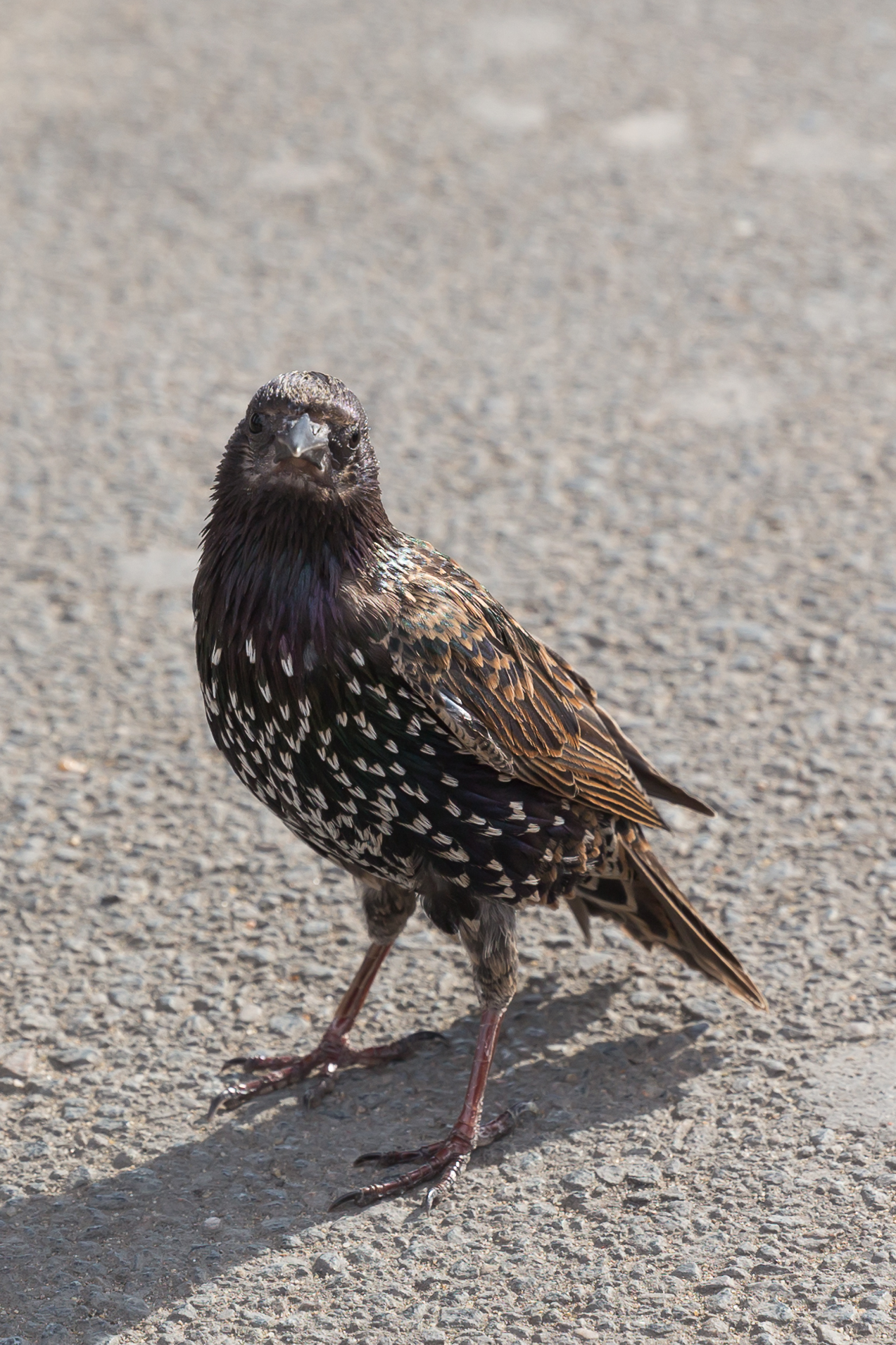
In the hand or through binoculars the bill base confirms it during breeding season: blue-gray in males, pink in females. By voice alone, a bird delivering a minute of mixed whistles and imitations is almost certainly male.
What Birds Are Mistaken for Starlings?
By ear, the common mix ups are Northern Mockingbird, Gray Catbird and Brown-headed Cowbird. The mockingbird repeats each copied phrase three or more times in a row, which starlings never do. The catbird sounds rougher, lower and includes its trademark mew, as covered in our guide to the catbird call.
By sight, blackbirds and grackles cause the confusion, though both are longer tailed and glossier. Starlings are chunky, short tailed and triangular in flight, and in winter they wear heavy white spotting that neither blackbird shows.
Why Are Starlings Despised?
Starlings are despised mainly because they are not native and they win. Roughly 100 birds released in New York City in 1890 became an estimated 85 million across North America, and they take nest cavities from bluebirds, Purple Martins, flickers and Tree Swallows by force.
They also concentrate. A roost of 50,000 birds fouls buildings, strips fruit crops and creates a genuine aircraft hazard, which is why they hold federal status as an unprotected species in the United States.
Are Starlings Bad Birds to Have Around?
A handful of starlings in a yard is not a problem, and they eat large numbers of Japanese beetle grubs, cutworms and crane fly larvae. Trouble starts with volume: a flock that takes over feeders will clear suet and cracked corn in minutes and push smaller birds out entirely.
The practical fix is feeder choice rather than removal. Starlings cannot feed upside down and dislike small perches, so upside down suet feeders, tube feeders with short perches and a switch to safflower or nyjer will quietly relocate them without affecting wrens, chickadees or finches.
What States Do Starlings Live In?
All 50 states. European Starlings occur across the entire Lower 48 year round, north through most of Canada into southern Alaska, and south into northern Mexico. They also reach Hawaii, although numbers there remain small.
Northern breeders move south for winter while southern populations stay put, so the birds in a January roost in Texas are not necessarily the ones nesting there in May. Detailed range maps and reference recordings are available from the Cornell Lab of Ornithology.
What Is Special About a Starling Bird?
Two things: the syrinx and the flock. A starling has unusually fine muscular control over both sides of its vocal organ, letting it produce two independent sounds at once and copy noises that most songbirds cannot reproduce.
The flock behavior is the other. Murmurations of tens of thousands of birds turn without a leader, each bird tracking about seven neighbors, which produces the rolling shapes seen over reed beds and city centers at dusk. Our broader catalog of recorded starling calls covers each vocalization separately.
How to Record and Identify a Starling Sound Yourself
Point a phone at the bird from 20 to 30 ft (6 to 9 m) and record at least 30 seconds. Short clips are the usual reason an identification app fails on this species, because a three second sample may contain only a stolen hawk scream or a single whistle.
Then check the perch. A mimic singing from an exposed wire or antenna with drooping, rotating wings is a starling. One singing from dense cover or a low shrub is more likely a mockingbird or a thrasher, the same distinction that separates jay calls from the many birds that copy them.
Frequently Asked Questions
What is a flock of starlings called?
A murmuration, which refers specifically to the swirling aerial flocks at dusk. Smaller groups are also called a chattering, a cloud or a scourge of starlings. Murmuration is the term in general use, and it describes the sound as well as the shape, since the word itself means a low continuous murmur.
What is the most invasive bird in the world?
The European Starling is on every short list, alongside the House Sparrow and the Common Myna. From 100 released birds in 1890 it spread across North America in about 60 years, and it is now established in Australia, New Zealand, South Africa and South America as well.
Do starlings make noise at night?
Rarely after full dark. Roosts stay noisy through dusk and start again before sunrise, so the loudest periods are the hour on either side of darkness. Continuous singing at 2 a.m. under a streetlight is far more likely to be a mockingbird.
Where can I hear a starling sound mp3?
The Macaulay Library at the Cornell Lab and xeno-canto both host free, verified recordings sorted by call type and region. Use recordings labeled by location, since starling dialects vary and a British recording may not match the imitations you hear in Ohio.
What does a starling sound like in a chimney or attic?
Scratching and fluttering against metal or brick, plus a dry raspy buzzing from nestlings that grows louder over about three weeks. Adults add sharp alarm squeals when you approach the wall. The sound is more mechanical and scratchy than the soft cooing of a trapped pigeon.
Why do starlings suddenly go silent?
A predator. A Cooper’s Hawk or Sharp-shinned Hawk passing over shuts down a feeding flock within a second, and the silence usually lasts 30 seconds to a couple of minutes. The same reaction follows a cat appearing in the open, much like the hush that spreads when an owl calls nearby after dusk.