What Do Woodpeckers Eat? Complete Diet Guide
Woodpeckers eat mainly insects, especially wood-boring beetle larvae and ants, along with nuts, seeds, berries, and tree sap depending on the species and season. They use their strong bills to dig insects out of wood and their long, barbed tongues to extract them. Many woodpeckers also eat acorns, suet, and fruit, and some drill for sap. This guide covers exactly what woodpeckers eat, how they find food, what to feed them at feeders, and how their diet changes by season.
| Food | Examples | Notes |
|---|---|---|
| Insects | Beetle larvae, ants, caterpillars | The main diet |
| Nuts and seeds | Acorns, sunflower, peanuts | Especially fall and winter |
| Suet | Fat, insect and fruit blends | Top feeder food |
| Fruit and berries | Berries, wild grapes | Seasonal |
| Tree sap | Drilled sap wells | Mainly sapsuckers |
What Do Woodpeckers Eat?
Woodpeckers are best known as insect specialists, and insects make up the core of most woodpeckers’ diets. They are especially fond of the larvae of wood-boring beetles, along with ants, which some species eat in large numbers, as well as caterpillars, spiders, and other invertebrates hidden in and under bark. Beyond insects, most woodpeckers round out their diet with plant foods, including nuts like acorns and beechnuts, seeds, berries, and fruit, particularly in fall and winter when insects are scarce. According to the Cornell Lab of Ornithology, woodpeckers as a group eat a mix of insects, fruit, nuts, and sap that varies by species, making them fairly flexible feeders. This adaptable diet is a big reason woodpeckers can live year round in cold climates. For the birds behind the drilling, see our Downy Woodpecker guide.
How Woodpeckers Find Food
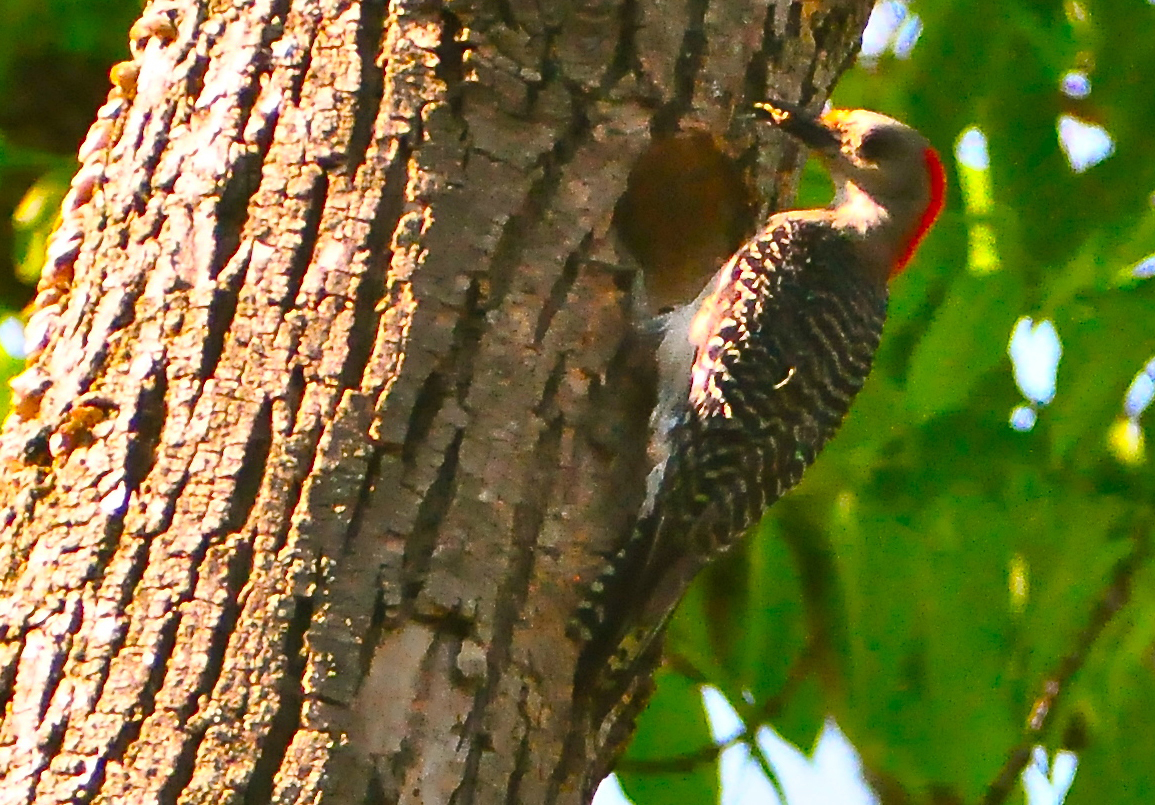
Woodpeckers have remarkable tools for reaching food other birds cannot. Using their strong, chisel-like bills, they hammer into bark and dead wood to expose insects and their larvae, and they can hear or feel prey moving inside the wood. Once a tunnel is opened, a woodpecker deploys its extraordinarily long, barbed, sticky tongue, which in some species wraps around inside the skull and can extend far beyond the bill tip, to spear and pull out grubs from deep in the wood. This combination of a powerful bill and an extendable tongue lets woodpeckers exploit a food source, wood-boring insects, that few other birds can reach. They also glean insects from bark surfaces, catch some in the air, and forage on the ground for ants, showing real versatility in how they hunt.
What Woodpeckers Eat at Feeders
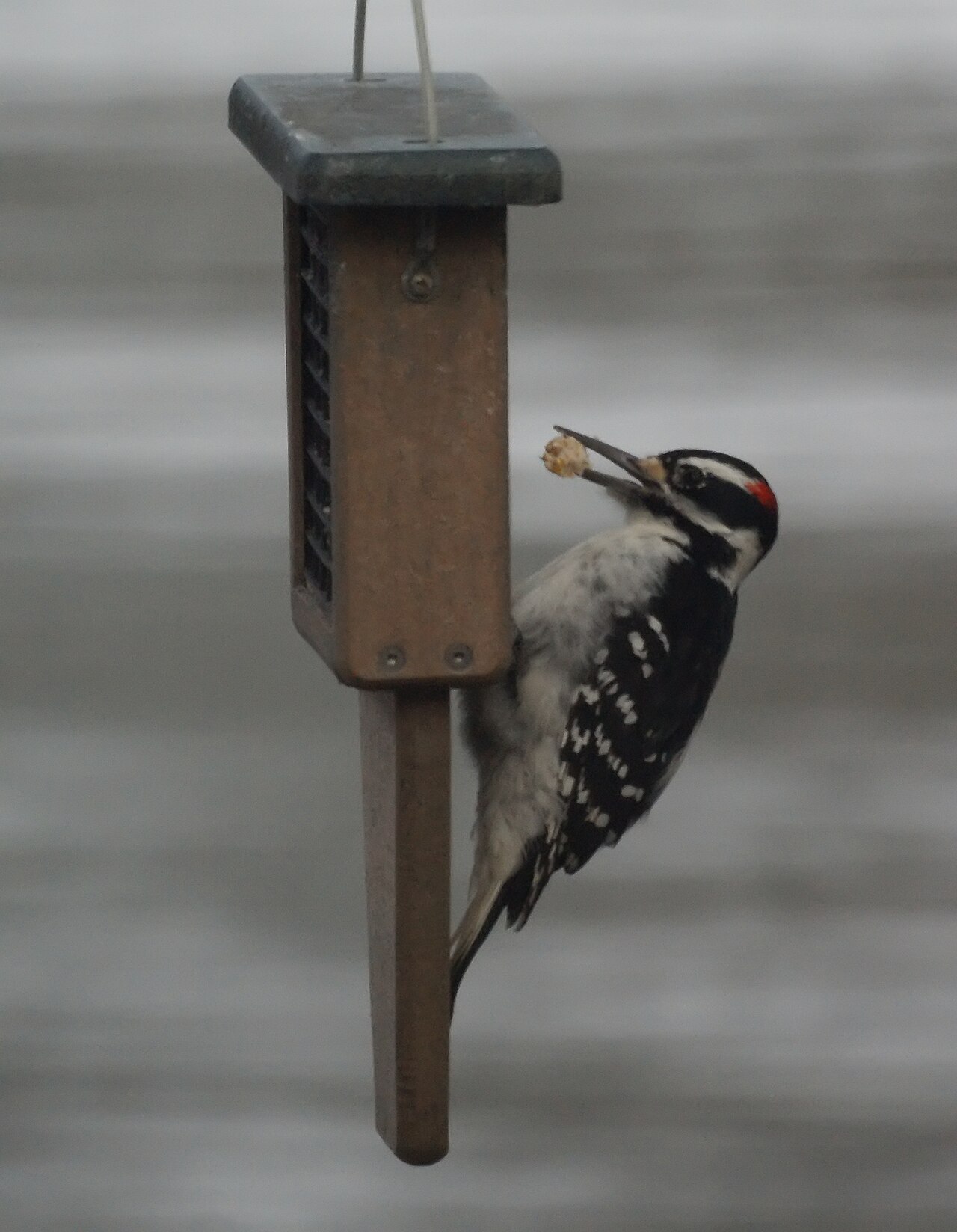
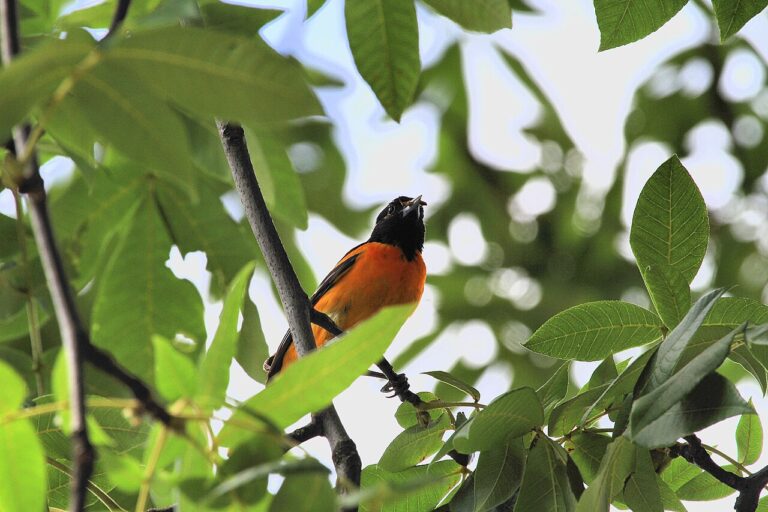
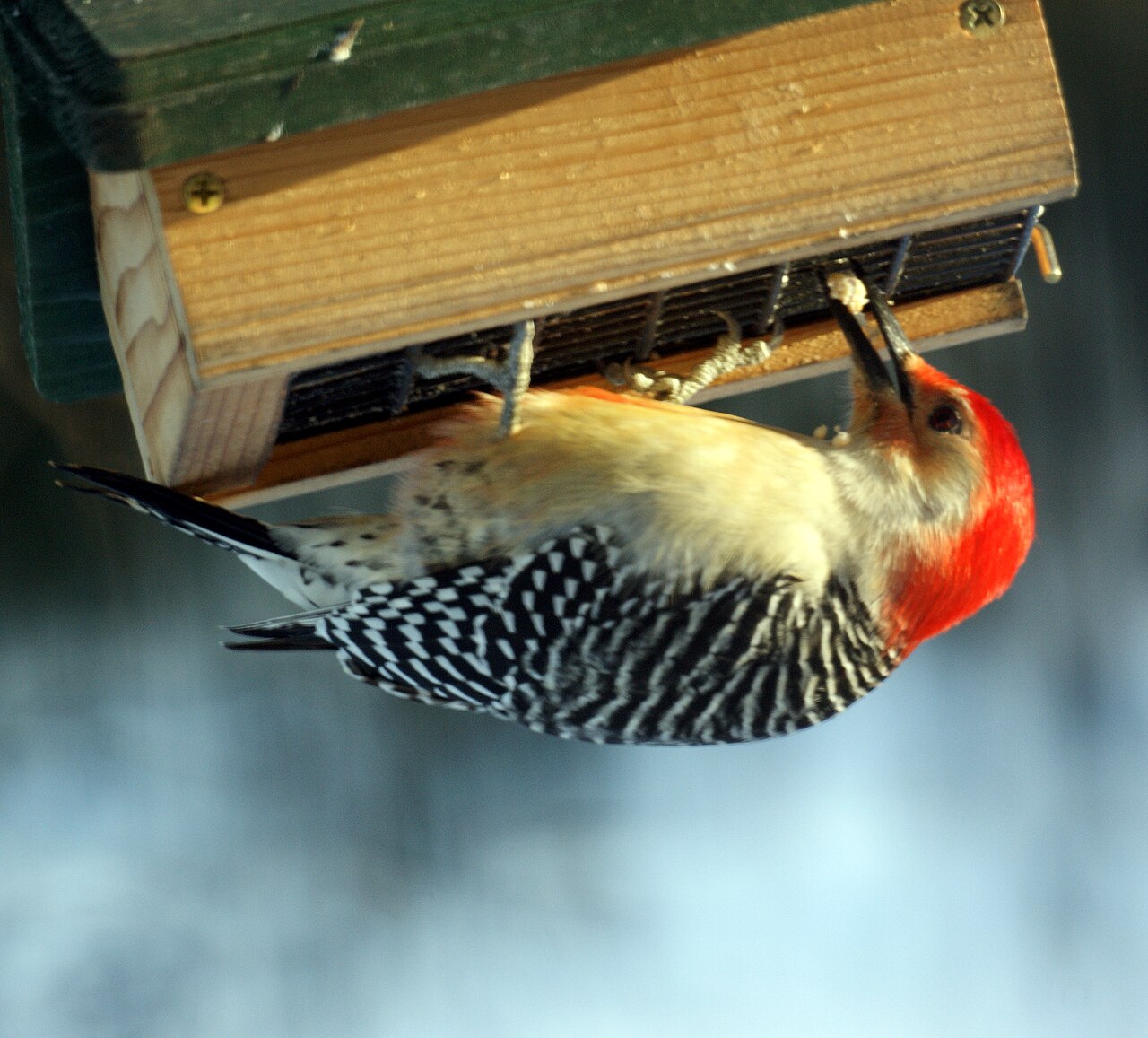
Woodpeckers are welcome backyard visitors, and a few foods reliably draw them in. Suet is by far the top choice, since its high fat content mimics the energy-rich insects woodpeckers crave and is eagerly taken year round, especially in cold weather. Beyond suet, woodpeckers readily eat sunflower seeds, peanuts and peanut butter blends, and cracked nuts, and larger species will visit for these. Some woodpeckers also take fruit and even sip from nectar or jelly feeders meant for orioles. Offering suet in a proper cage feeder, along with sunflower and peanuts, is the surest way to attract woodpeckers to your yard. For the best options, see our guides to the best suet feeders and the best bird seed.
Do Woodpeckers Eat Nuts and Seeds?
Yes, plant foods are an important part of many woodpeckers’ diets, especially outside the breeding season. Acorns and other nuts are a major food for several species, and some woodpeckers famously store nuts for winter, wedging acorns into bark crevices or drilled holes to cache them. At feeders, woodpeckers take sunflower seeds, peanuts, and tree nuts eagerly, using their bills to hammer seeds open against bark. Berries and wild fruit also feature in the diet, particularly in fall migration and winter. This willingness to eat nuts, seeds, and fruit alongside insects is what makes woodpeckers so adaptable and allows them to remain in northern areas through winter, when a purely insect diet would not be enough. It also makes them easy to attract with the right feeder foods.
What About Tree Sap?
One group of woodpeckers has a special taste for sap. Sapsuckers, a type of woodpecker, drill neat rows of small holes called sap wells in tree bark and return to feed on the oozing sap and the insects it traps. These sap wells are important not just for the sapsuckers but for other wildlife, since hummingbirds, other birds, and insects also feed at sapsucker wells, especially in early spring before flowers bloom. Most other woodpeckers do not specialize in sap, but they will opportunistically drink it if available. This sap-drilling behavior shows yet another way woodpeckers have adapted to exploit trees for food, from the insects inside the wood to the sap flowing beneath the bark, making them one of the most tree-dependent and resourceful bird families.
How Woodpecker Diets Change by Season
Like many birds, woodpeckers shift their diet with the seasons. In spring and summer, insects dominate, since the abundance of beetle larvae, ants, and caterpillars provides the protein needed for breeding and feeding young. In fall, woodpeckers take advantage of ripening nuts, acorns, and berries, and some cache food for the months ahead. In winter, when insects are hard to find, woodpeckers rely more heavily on stored nuts, any dormant insects they can dig out, and backyard suet and seed, which is why feeders are especially valuable in the cold months. This seasonal flexibility, leaning on insects in warm months and nuts, seeds, and suet in cold ones, is exactly what allows woodpeckers to be year-round residents. Keeping suet and seed stocked through winter, as covered in our guide on attracting birds to your feeder, gives them reliable support when they need it most.
Which Woodpeckers Visit Backyards
Several woodpecker species are common backyard visitors, and knowing them helps you cater to their diets. The downy woodpecker is the smallest and most frequent, followed by the larger hairy woodpecker, and in much of the East the red-bellied woodpecker is a regular, colorful guest. Northern flickers, which often feed on ants on the ground, and larger species like the pileated woodpecker visit some yards too. All of these are drawn to suet, and most will also take sunflower seeds, peanuts, and nuts, so a well-stocked yard can host a variety of woodpeckers. Offering different foods increases the range of species you attract, and you can read more about one of the most colorful backyard woodpeckers in our Red-Bellied Woodpecker guide.
Gardening to Feed Woodpeckers Naturally
Beyond feeders, the landscape itself can feed woodpeckers, and a bird-friendly yard supports them year round. Native trees and shrubs that produce nuts, acorns, and berries provide natural food, while leaving dead trees or large dead branches standing, where it is safe to do so, gives woodpeckers a rich source of wood-boring insects to dig out. Avoiding pesticides preserves the beetle larvae, ants, and caterpillars that woodpeckers depend on. Berry-producing natives add fall and winter fruit to their menu. A yard that combines these natural food sources with a suet feeder offers woodpeckers the best of both worlds, and it supports many other birds at the same time, as covered in our guide to plants that attract birds.
Do Woodpeckers Eat Fruit?
Yes, many woodpeckers eat fruit and berries, especially in late summer, fall, and winter when this food is abundant and insects are harder to find. Wild grapes, dogwood and holly berries, elderberries, and other fruits all feature in the woodpecker diet, and some species will visit fruit or jelly offered at feeders. Red-bellied woodpeckers in particular have a broad diet that includes a good deal of fruit. This fruit-eating habit adds yet another layer to the woodpecker’s flexible menu, sitting alongside insects, nuts, seeds, and sap. For backyard birders, this means berry-producing native plants can help attract and support woodpeckers naturally, complementing the suet and seed offered at feeders and giving these adaptable birds even more reason to stay.
Related reading: types of woodpeckers.
Frequently Asked Questions
What do woodpeckers eat?
Mainly insects, especially wood-boring beetle larvae and ants, plus nuts, seeds, berries, and fruit. Many also eat suet at feeders, and sapsuckers drink tree sap.
What is the best food to attract woodpeckers?
Suet is the top choice, since its high fat mimics the insects woodpeckers crave. Sunflower seeds, peanuts, and cracked nuts also attract them well.
How do woodpeckers get insects out of wood?
They hammer into bark and wood with their strong bills, then use a very long, barbed, sticky tongue to spear and pull larvae and insects out of the tunnels.
Do woodpeckers eat nuts and seeds?
Yes, especially in fall and winter. They eat acorns and other nuts, sunflower seeds, and peanuts, and some species cache nuts in bark for later.
Do woodpeckers eat suet?
Yes, suet is a favorite. Its high fat content is ideal for woodpeckers, and they take it eagerly year round, especially in cold weather. Offer it in a cage feeder.
Which woodpeckers eat tree sap?
Sapsuckers drill rows of holes called sap wells and feed on the sap and trapped insects. Other woodpeckers may sip sap opportunistically but do not specialize in it.
What do woodpeckers eat in winter?
In winter they rely on stored nuts, dormant insects dug from wood, and backyard suet and seed, since live insects are scarce. This is why feeders help them most in cold months.