Why Are Robin Eggs Blue? Color, Meaning, and Hatching
Robin eggs are blue because of a pigment called biliverdin that the female deposits on the shell as it forms. Biliverdin comes from the breakdown of red blood cells, and it tints American Robin eggs their famous plain, unspeckled sky blue, the shade we call robin’s egg blue. Researchers believe the blue color may protect the developing embryo from sunlight and signal the female’s health to her mate. This guide explains exactly why robin eggs are blue, what the color means, how many eggs robins lay, how long they take to hatch, and how to tell them from other blue eggs.
| Question | Answer | |
|---|---|---|
| Why blue? | Biliverdin pigment on the shell | |
| Exact color | Plain sky blue, no speckles | |
| Eggs per clutch | 3 to 5, usually 3 to 4 | |
| Time to hatch | About 12 to 14 days | |
| Who incubates | The female | |
| Broods per year | Often 2, sometimes 3 |
Why Are Robin Eggs Blue?
Robin eggs are blue because of a single pigment called biliverdin. As the eggshell forms inside the female, biliverdin, a greenish-blue pigment produced when old red blood cells break down, is deposited evenly across the shell, giving the egg its uniform sky blue color. Because the pigment is spread evenly rather than in spots, robin eggs come out plain and unspeckled, unlike the marked eggs of many other birds. This is the same pigment family responsible for blue and green eggs across many bird species. The intensity of the blue can vary slightly from female to female and even from egg to egg, but the result is always that distinctive, even robin’s egg blue. Interestingly, the same biliverdin pigment that colors the shell is also produced in the bodies of many animals, including humans, where it appears in bile, so the beautiful blue of a robin egg comes from a very ordinary biological process turned to a striking natural purpose.
What Color Are Robin Eggs Exactly?
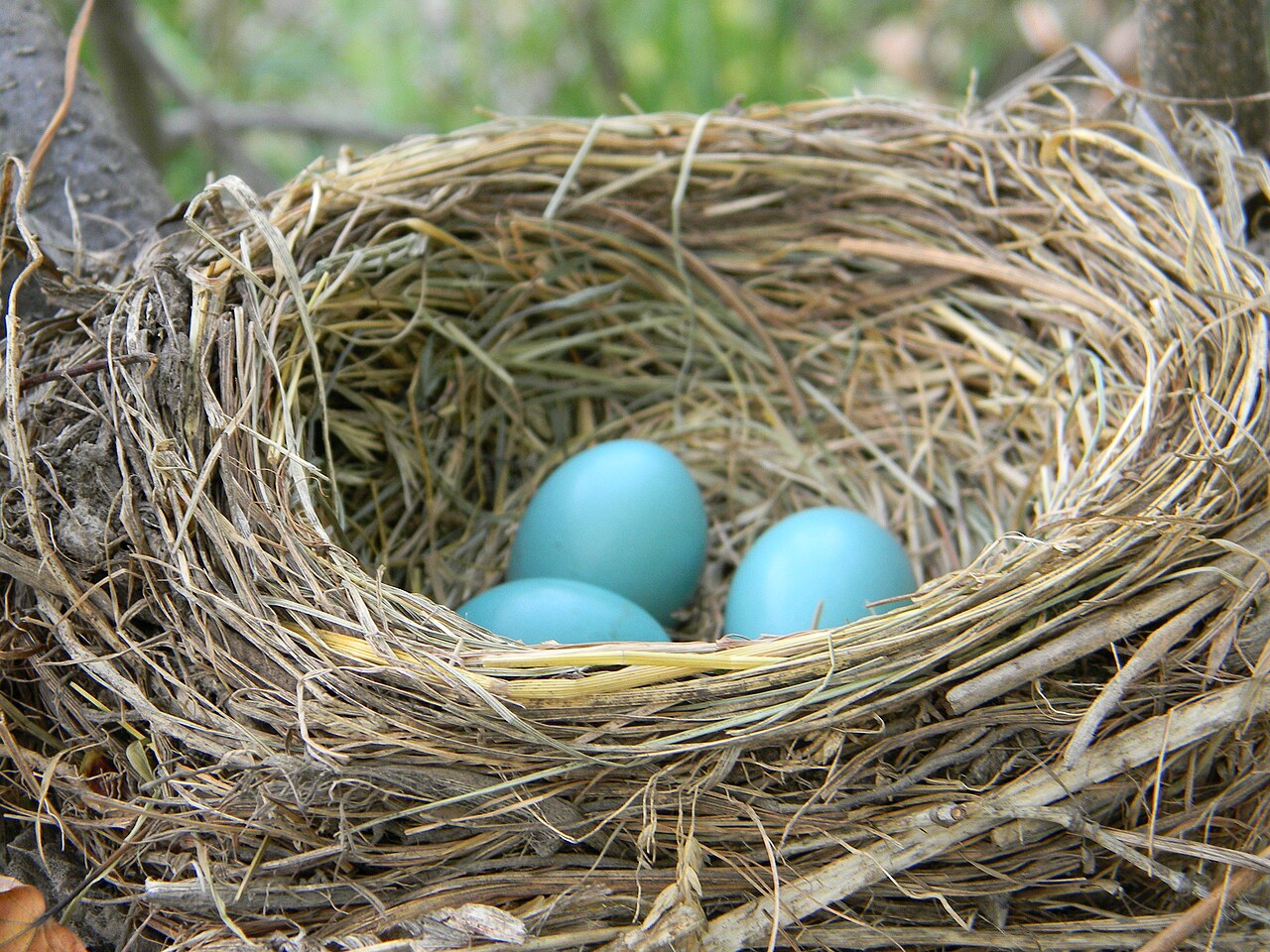
Robin eggs are a light, slightly greenish sky blue with no markings at all, a color so recognizable that robin’s egg blue is a standard name in paint charts and design. The eggs are small, roughly an inch long, with a smooth surface. The complete lack of speckling is the single most useful identification feature, since it separates robin eggs from the speckled or blotched eggs of most other backyard birds. If you want to compare robin eggs against the full range of backyard bird eggs, our guide to bird egg identification lays them out side by side.
Why Did Robins Evolve Blue Eggs?

Scientists are still studying why robins and many other birds lay blue eggs, and there are two leading ideas, which may both play a role. The first is sunlight protection. Research suggests the blue-green pigment helps shield the developing embryo by filtering harmful ultraviolet light while still letting in enough warmth, a useful balance for eggs laid in open cup nests. The second idea is that egg color signals the female’s health and quality to her mate, since producing strong blue pigment takes resources, and studies have found that males may invest more effort in feeding chicks from more vivid blue eggs. The Cornell Lab of Ornithology notes that eggshell color across birds likely reflects a tradeoff between camouflage, protection, and signaling. Whatever the exact reason, the robin’s blue has become one of the most familiar colors in nature.
How Many Eggs Do Robins Lay?
A robin clutch is usually three to four eggs, sometimes up to five, laid one per day in the early morning. The female then incubates the full clutch. Because robins often raise two broods in a season, and sometimes three where summers are long, a single female may lay a dozen or more eggs across one year. This high output helps offset the heavy losses young robins face, since many eggs and fledglings fall to predators and weather before reaching adulthood. For the nest that holds these eggs, see our guide to the robin nest.
How Long Do Robin Eggs Take to Hatch?
Robin eggs take about 12 to 14 days to hatch. The female does nearly all of the incubating, keeping the eggs warm and turning them, while the male helps feed and defend the territory. Once the eggs hatch, the naked, helpless chicks grow astonishingly fast on a diet of worms and insects, leaving the nest only about 13 days later. That means the entire journey from the first egg to a fledgling leaving the nest takes only around four weeks. To follow the chicks after hatching, see our guide to the baby robin.
Blue Jay Eggs vs Robin Eggs and Other Blue Eggs
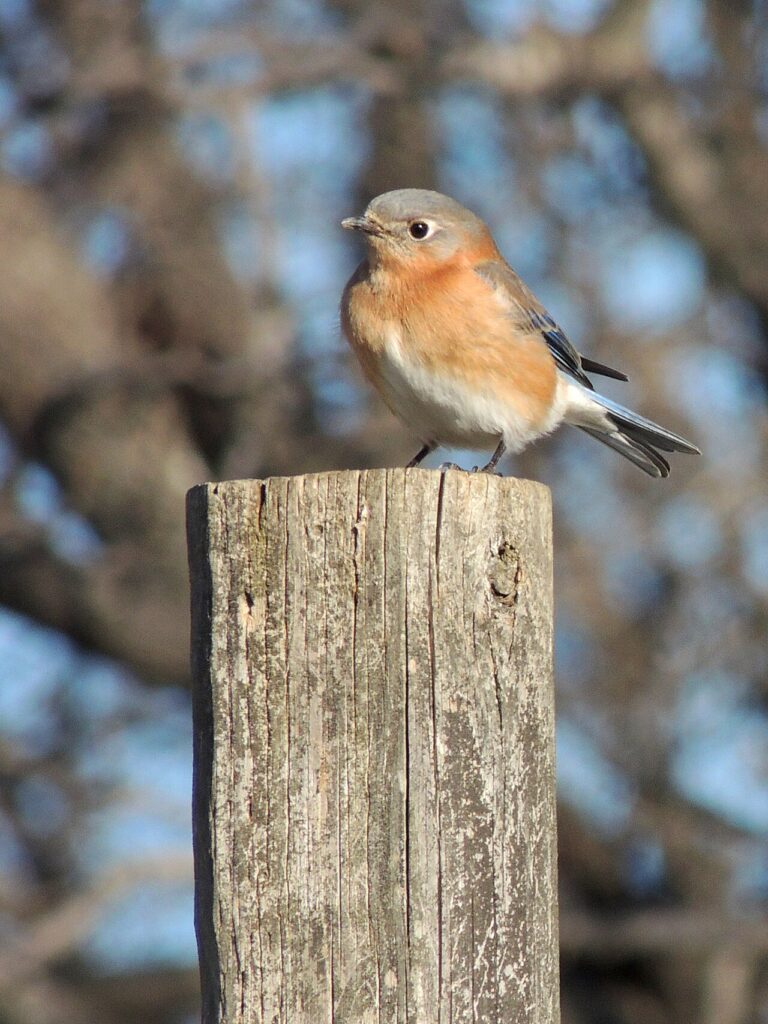
Because robin eggs are so famously blue, people often wonder how to tell them from other blue or bluish eggs. The key is speckling and shade. Robin eggs are plain, even sky blue with no markings. Blue Jay eggs, by contrast, are bluish to buff or greenish and clearly speckled with brown, so any spotting rules out a robin, as detailed in our guide to the blue jay nest. Eastern Bluebird eggs are pale blue and unspeckled like a robin’s but noticeably smaller and laid inside a cavity or nest box, not an open mud cup, so location settles it, as covered in our Eastern Bluebird guide. Between color, speckling, size, and nest type, robin eggs are usually easy to confirm.
What to Do If You Find a Robin Egg
If you find a robin egg on the ground, the best thing to do in almost all cases is to leave it alone. An egg out of the nest has usually been removed by the parents because it was infertile or damaged, or it fell and is no longer viable, and cold eggs rarely survive. It is also illegal in the United States to collect or possess the eggs of native birds like robins under the Migratory Bird Treaty Act. If you find an intact egg and can clearly see which active nest it came from, you can gently return it, but you should never try to incubate a wild egg yourself, since it requires precise conditions and permits. Admiring it where it lies, or photographing it, is the safest and most respectful choice.
Are Robin Eggs Always Blue?
American Robin eggs are essentially always some shade of that famous blue, but the exact tone can vary. Most are the classic even sky blue, while some lean slightly greener or paler depending on the individual female and the amount of pigment she deposits. First-time or stressed females sometimes lay eggs with a bit less color, and a very rare egg may look almost white if pigment is lacking, though this is unusual. What you will not see on a normal robin egg is speckling or spotting, since the biliverdin is laid down evenly. It is worth remembering that many other birds also lay blue or bluish eggs, so blue alone does not guarantee a robin. The combination of an even, unspeckled sky blue color, a roughly one inch size, and a mud-based open cup nest is what confirms an American Robin egg. When those clues line up, you can be confident of what you have found, and our guide to bird egg identification helps with the trickier cases.
Frequently Asked Questions
Why are robin eggs blue?
Because of a pigment called biliverdin, produced when old red blood cells break down, which is deposited evenly on the shell as it forms. The even coating gives robin eggs their plain, unspeckled sky blue color.
What does robin’s egg blue mean?
Robin’s egg blue is the specific light, slightly greenish sky blue of an American Robin egg. Scientists think the color may protect the embryo from sunlight and signal the female’s health to her mate.
What color are robin eggs exactly?
A light, slightly greenish sky blue with no speckles or markings at all. The complete lack of spotting is the best way to identify them.
How many eggs do robins lay?
Usually three to four per clutch, sometimes up to five, laid one per day. Robins often raise two or three broods a year, so one female may lay many eggs in a season.
How long do robin eggs take to hatch?
About 12 to 14 days, with the female doing nearly all of the incubation. The chicks then leave the nest around 13 days after hatching.
How can I tell robin eggs from blue jay eggs?
Robin eggs are plain, unspeckled blue. Blue jay eggs are bluish to buff and clearly speckled with brown, so any spotting means it is not a robin egg.
What should I do if I find a robin egg on the ground?
Leave it alone in almost all cases, since an egg out of the nest is usually not viable, and collecting native birds’ eggs is illegal. Never try to incubate a wild egg yourself.