Hummingbird Nest: Size, Materials, Eggs, and Where to Look
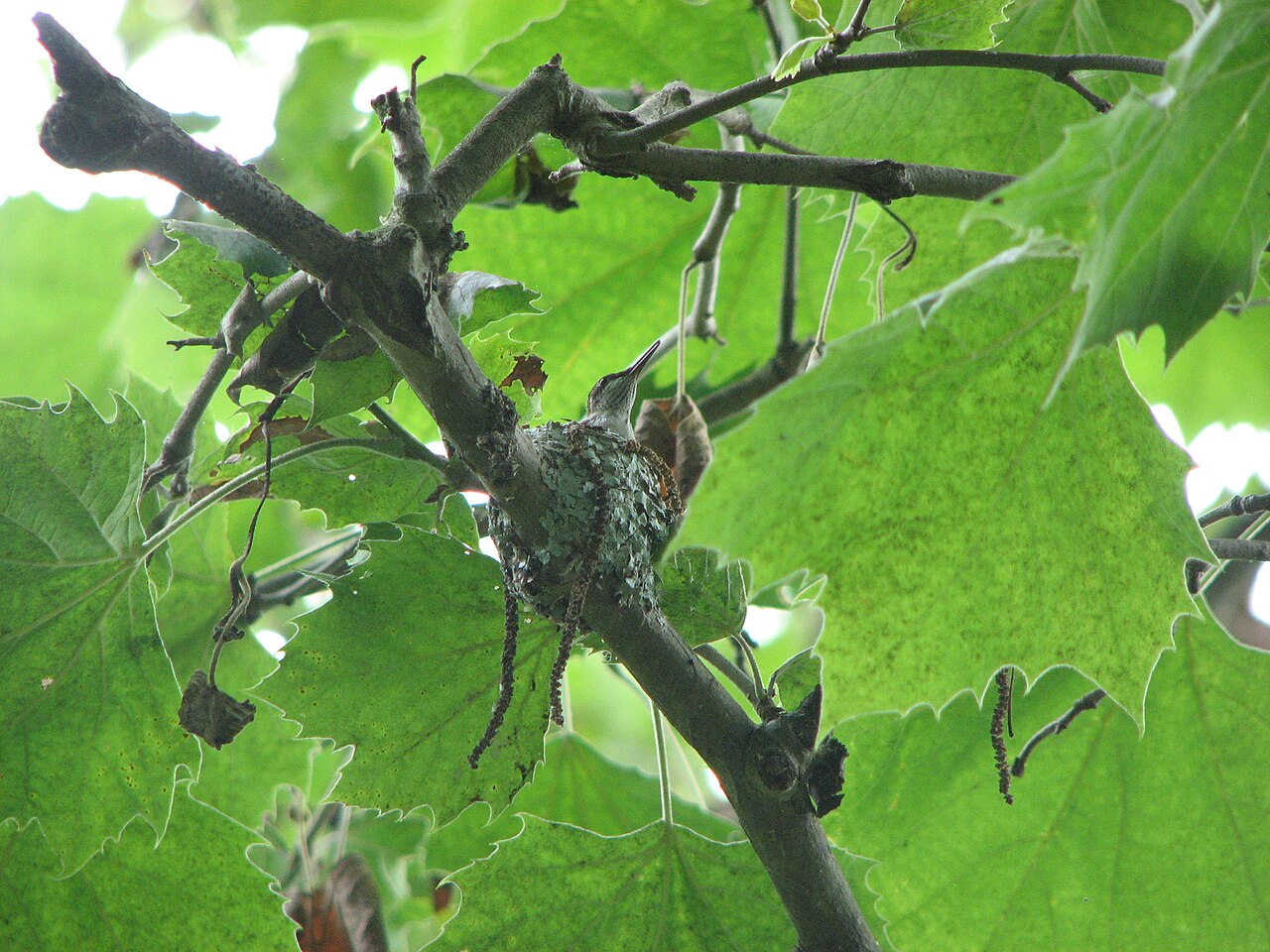
A hummingbird nest is about the size of a walnut, roughly 1.5 in across and an inch deep, built from plant down and spider silk and camouflaged on the outside with lichen and flakes of bark. It holds two white eggs the size of navy beans, and it is so small and so well disguised that most people walk past one without seeing it.
The spider silk is the engineering detail worth knowing. It makes the nest elastic, so the walls stretch as the two nestlings grow from the size of a bumblebee to nearly adult size without the structure failing. This guide covers what a nest looks like, where to find one, the eggs and timeline, the surprising predator-protection strategy some species use, and what to do if you find one in your yard.
| Quick Facts | Hummingbird Nest |
|---|---|
| Size | About 1.5 in across, 1 in deep, walnut-sized |
| Materials | Plant down, spider silk, lichen, bark flakes |
| Clutch | Almost always 2 white eggs, about 0.5 in |
| Incubation | 15 to 18 days, female only |
| Nestling period | 18 to 28 days |
| Male involvement | None at any stage |
What a Hummingbird Nest Looks Like
The nest is a tiny, tight cup, typically 1.5 to 2 in in outside diameter with an interior barely an inch across. From below it reads as a bump or knot on a branch rather than as a structure, which is exactly the point.
Construction runs in layers. The inner cup is soft plant down from thistle, dandelion, cattail, or fern fuzz, bound together with spider silk and sometimes caterpillar silk. The outside is then decorated with lichen, moss, and small bark flakes, attached with more silk so the nest matches the branch it sits on.
The camouflage is remarkably effective. Many people who watch a female fly repeatedly to the same spot still cannot locate the nest, and most found nests are discovered in winter after leaves drop rather than during the breeding season. Our guide to bird nest identification places it alongside the larger structures people find more easily.
Spider Silk: The Engineering Trick
Spider silk does two things that no plant material can. It works as an adhesive, letting the female attach the nest firmly to a thin branch and bind loose down into a coherent cup, and it is elastic, which is the part that matters as the season progresses.
A hummingbird nest starts sized for two eggs and ends up holding two nearly full-grown nestlings. Because the silk stretches, the walls expand outward as the young grow instead of splitting, and by fledging the cup can be noticeably wider and shallower than when it was built. A rigid nest of that size would fail.
Collecting the silk is dangerous work. Females gather it from webs and from spiders directly, and there are documented cases of hummingbirds becoming entangled and dying in larger webs. It is a real risk taken for a material with no substitute, which is why leaving spider webs intact in a garden genuinely helps nesting hummingbirds.
Where Hummingbirds Nest
Most species choose a thin, downward-sloping branch of a tree or large shrub, typically 10 to 40 ft above the ground though nests as low as 3 ft occur. The branch is usually slender enough that a squirrel or jay approaching it would be obvious.
Cover from above matters as much as height. Females favor sites with a leaf, larger branch, or overhang directly above the nest, which shelters the eggs from rain and hides the site from birds hunting from above. Nests over streams, driveways, paths, and open ground are common, since an approach lane free of foliage lets the female arrive fast and direct. For a closely related question, see our guide to orange and black bird. For a closely related question, see our guide to birds with long beaks. For a closely related question, see our guide to national bird of el salvador.
They also use unexpected structures. Nests turn up on wind chimes, extension cords, string lights, clothesline wire, porch light fixtures, and looped rope, all of which offer the thin support and overhead cover the birds are looking for. Ruby-throated hummingbirds favor deciduous trees such as oak, birch, and maple, while Anna’s hummingbirds on the west coast readily nest in ornamental shrubs and vines close to houses.
Hummingbird Eggs
The clutch is almost invariably two eggs, laid a day or two apart. They are pure white with no markings, roughly 0.5 in long, and weigh about half a gram, which is commonly compared to a navy bean or a small jelly bean.
Relative to the bird, they are enormous. A hummingbird egg represents a substantial fraction of the female’s body weight, and producing two of them in quick succession is a serious metabolic undertaking for an animal that must also feed almost constantly to stay alive.
White eggs are typical of cavity and concealed nesters, since camouflage coloring is unnecessary where the nest itself is hidden and where the female is on them nearly continuously. Occasional clutches of one or three occur but are uncommon, and second and even third broods within a season are normal in warmer regions. Our guide to house finch eggs covers a species that takes the opposite approach with heavily marked eggs.
Incubation and Raising Young
The female does everything. Male hummingbirds take no part in nest building, incubation, feeding, or defense, and in most species the pair association ends immediately after mating. She selects the site, builds the nest, lays, incubates, and feeds the young alone.
Incubation runs 15 to 18 days, and she sits for most of it, leaving only for brief feeding trips. Hatchlings emerge naked, blind, and weighing about a third of a gram, and she feeds them regurgitated nectar mixed with small insects and spiders, since sugar alone cannot build tissue.
Insects are the part most people miss. Nestling hummingbirds need protein, and the mother spends much of her day catching gnats, fruit flies, aphids, and small spiders. A garden with no insects cannot raise hummingbirds no matter how many feeders it has, which is the strongest argument against insecticide use in a yard where they nest. Young fledge at 18 to 28 days and the female may continue feeding them for a week or two afterward.
Nesting Near Hawks: The Protection Strategy
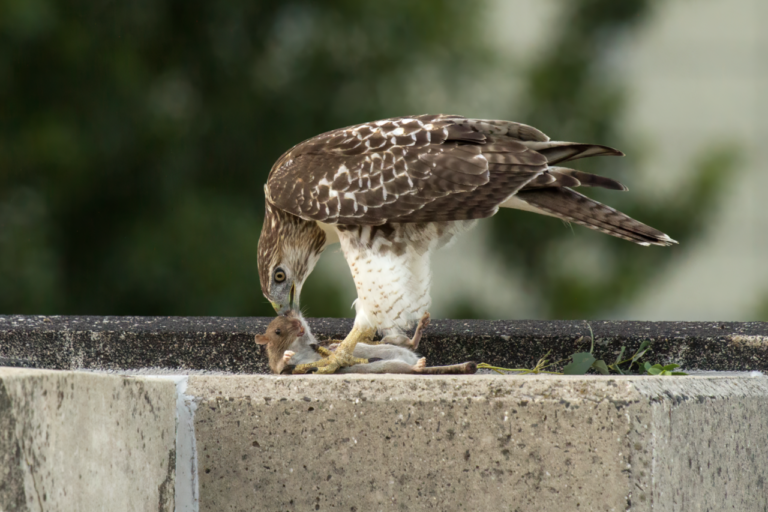
One of the more remarkable findings in hummingbird research is that some species deliberately nest close to hawks. Studies of black-chinned hummingbirds in Arizona found nest survival dramatically higher directly beneath and around active hawk nests than in comparable sites further away.
The mechanism is indirect. The main predators of hummingbird nests are jays, which hunt by searching foliage from above. Hawks hunt jays, so jays avoid the airspace around an active hawk nest, and that avoidance creates a cone of relative safety underneath in which hummingbird nests survive at much higher rates.
Hummingbirds themselves are too small and too agile to interest most hawks, so the arrangement costs them little. It is a striking example of a species exploiting a predator’s presence as protection, and it explains nest placements that otherwise look reckless.
What to Do If You Find a Nest
Watch from a distance and leave it entirely alone. Hummingbirds are protected under the Migratory Bird Treaty Act, which makes it illegal to disturb, move, or possess an active nest, its eggs, or its young without a federal permit. Even empty hummingbird nests may not be collected in the United States.
Practical accommodations are usually simple. Postpone pruning that branch until autumn, avoid running a sprinkler onto the nest, keep ladders and power tools away from the immediate area, and do not set up a camera or tripod close enough to make the female hesitate before returning.
Distance matters more than intention. A female interrupted repeatedly may abandon eggs, and every minute she spends waiting to approach is a minute the eggs are cooling. Twenty feet with binoculars gives you everything you want to see. If a nest is genuinely in danger, from construction or a fallen branch, contact a licensed wildlife rehabilitator or your state wildlife agency rather than intervening yourself, and our guide to the cardinal nest covers the same legal framework for a larger species.
Encouraging Hummingbirds to Nest in Your Yard
Nesting material is the lever most people never pull. Leave spider webs undisturbed, let native plants that produce seed down go to seed, including thistle, cattail, and milkweed, and leave lichen on branches and rocks rather than scrubbing it off. These three things supply the entire nest.
Structure comes next. Small trees and large shrubs with thin horizontal or drooping branches provide the sites they prefer, and a mix of heights with some open flight lanes suits them better than dense uniform planting. Native trees such as oak, birch, and maple in the east, and ornamental shrubs in the west, all serve.
Then supply food for both stages. Nectar plants such as bee balm, cardinal flower, salvia, trumpet vine, and columbine feed the adults, and clean feeders supplement them, but the insects are what feed the young. Skipping insecticide entirely is the single most important choice, since a yard with no gnats, aphids, and small spiders cannot support a brood. Our guides to attracting hummingbirds and to the female hummingbird cover the birds doing all of this work.
Related reading: Baby Hummingbird.
Frequently Asked Questions
What does a hummingbird nest look like?
A tiny cup about 1.5 in across and 1 in deep, roughly walnut-sized, built from soft plant down bound with spider silk and camouflaged outside with lichen, moss, and bark flakes. From below it looks like a knot or bump on a branch rather than a nest.
Where do hummingbirds build their nests?
Usually on a thin downward-sloping branch 10 to 40 ft up, with a leaf or branch directly overhead for shelter, often above a stream, path, or open ground. They also use wind chimes, string lights, extension cords, and clothesline wire.
How many eggs do hummingbirds lay?
Almost always two, laid a day or two apart. The eggs are pure white, about 0.5 in long, and weigh roughly half a gram, commonly compared to navy beans. Incubation takes 15 to 18 days and the female does it alone.
Do male hummingbirds help with the nest?
No. Males take no part in building, incubating, feeding, or defending in any North American species. The female selects the site, builds the nest with spider silk and plant down, incubates, and raises the young entirely on her own.
Why is spider silk important in a hummingbird nest?
It works as adhesive and it stretches. The nest starts sized for two eggs and must hold two nearly full-grown nestlings, and elastic silk lets the walls expand instead of splitting. Leaving spider webs intact in a garden genuinely helps nesting females.
Can I move a hummingbird nest?
No. Hummingbirds are protected under the Migratory Bird Treaty Act, and disturbing, moving, or possessing an active nest, eggs, or young without a federal permit is illegal. Even empty nests may not be collected. Postpone pruning and keep well back instead.
Do hummingbirds reuse their nests?
Sometimes. Some females build a new nest on top of an old one or repair a previous structure, particularly Anna’s hummingbirds, while many build fresh each time. Second and third broods within a season are normal in warmer regions.