What Is a Group of Hummingbirds Called? Charm and More
A group of hummingbirds is called a charm, and it is one of the older and more genuinely appealing collective nouns in English. A group of hummingbirds is also called a bouquet, a glittering, a hover, a shimmer, and a tune, all modern coinages that play on the birds’ iridescence and their wingbeat hum. Ornithologists simply say flock or group, and in practice they rarely need to, because hummingbirds are among the least sociable birds in North America.
Charm carries a nice ambiguity: it means both a delightful quality and, in its older sense, a magic spell or an incantation, and it derives ultimately from the Latin carmen, meaning song. Applied to a cluster of iridescent birds hovering around flowers, either reading works. What the term does not describe is any real social behavior, since hummingbirds are fiercely territorial and a group at a feeder is a fight rather than a flock. This guide covers every term and what hummingbird gatherings actually are.
A group of hummingbirds is called a charm, the traditional collective noun. Modern lists also offer a bouquet, a glittering, a hover, a shimmer, and a tune. Hummingbirds are highly territorial and do not flock, so a group at a feeder is competition rather than a social gathering. Baby hummingbirds are called chicks, and a nest holds just two.
| Question | Answer |
|---|---|
| Main collective noun | Charm of hummingbirds |
| Other listed terms | Bouquet, glittering, hover, shimmer, tune |
| Scientific term | Flock or group |
| Do they flock? | No; territorial and largely solitary |
| Baby hummingbird | Chick; a nest holds two |
| Nest size | About the size of a walnut half |
| Origin of charm | From Latin carmen, meaning song or spell |
Why Is a Group of Hummingbirds Called a Charm?
A group of hummingbirds is called a charm because of the birds’ jewel-like appearance and the enchanting effect of seeing several at once, and the word carries both its modern sense of delightfulness and its older sense of a magic spell. Charm comes through Old French from the Latin carmen, meaning a song, a verse, or an incantation, and the connection to sound is not accidental: the collective noun for finches is also a charm, and there it refers explicitly to the blended twittering of a flock.
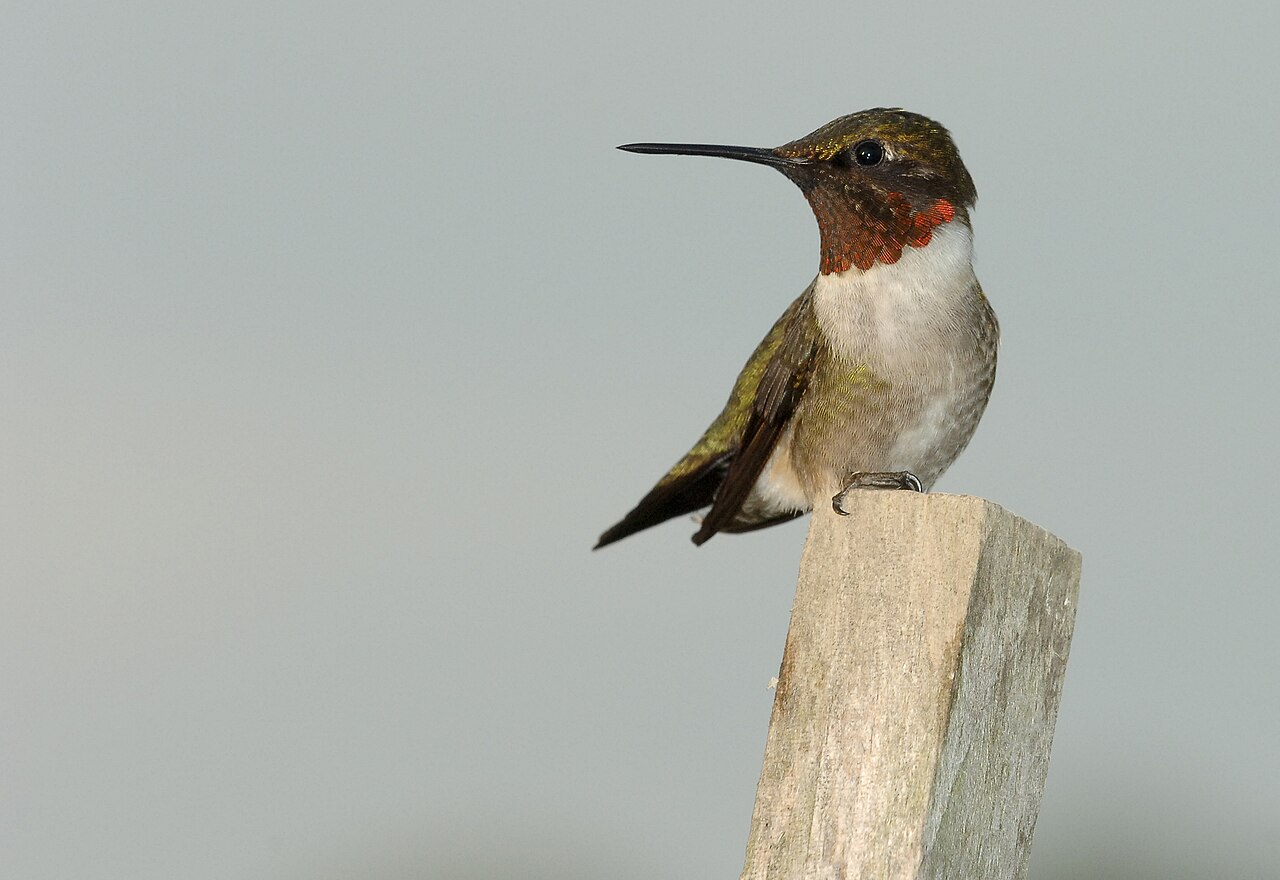
Applied to hummingbirds, the visual reading has taken over. Hummingbird iridescence is not pigment but structural color, produced by microscopic layers in the feather barbules that interfere with light, which is why a ruby-throated hummingbird’s gorget flashes brilliant red at one angle and looks black at another. A group of them moving in sunlight genuinely produces an effect that the word charm suits.
The term is not medieval in origin as applied to hummingbirds, since European compilers of collective nouns never saw one; hummingbirds occur only in the Americas. Charm was borrowed from the finch usage and extended, and the more recent additions to the list, glittering and shimmer in particular, follow the same visual logic. The hummingbird guide covers the species most likely to appear in a North American yard.
Do Hummingbirds Flock?
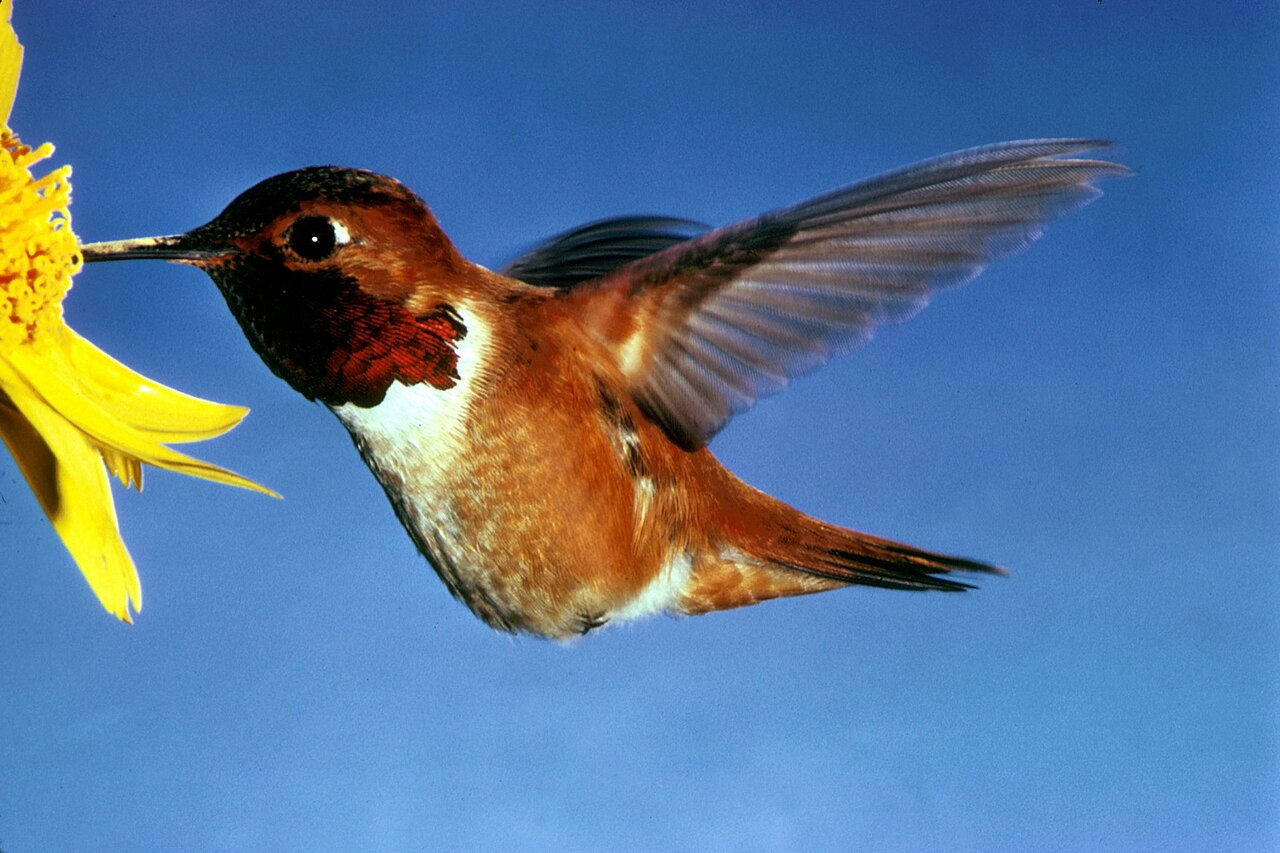
No, hummingbirds do not flock, and this is the central fact that makes their collective nouns purely ornamental. Hummingbirds are among the most aggressively territorial birds in North America, and a male ruby-throated or rufous hummingbird will defend a feeding territory against every other hummingbird that enters it, chasing, diving, and occasionally striking rivals with bill and feet.
The aggression is driven by energy economics. A hummingbird has the highest metabolic rate of any bird, with a resting heart rate around 250 beats per minute rising to over 1,200 in flight, and it must feed every 10 to 15 minutes through the day. Losing access to a reliable nectar source is genuinely life-threatening, so defending one is worth fighting over. Sharing offers no benefit whatsoever.
Even during migration hummingbirds travel alone rather than in flocks, which is remarkable given the distances involved. Ruby-throated hummingbirds cross the Gulf of Mexico in a single 500-mile nonstop flight lasting 18 to 22 hours, and each bird does it by itself, navigating without any guidance from experienced adults. Young birds make their first migration alone, with no parent to follow.
What Does It Mean When You See a Lot of Hummingbirds?
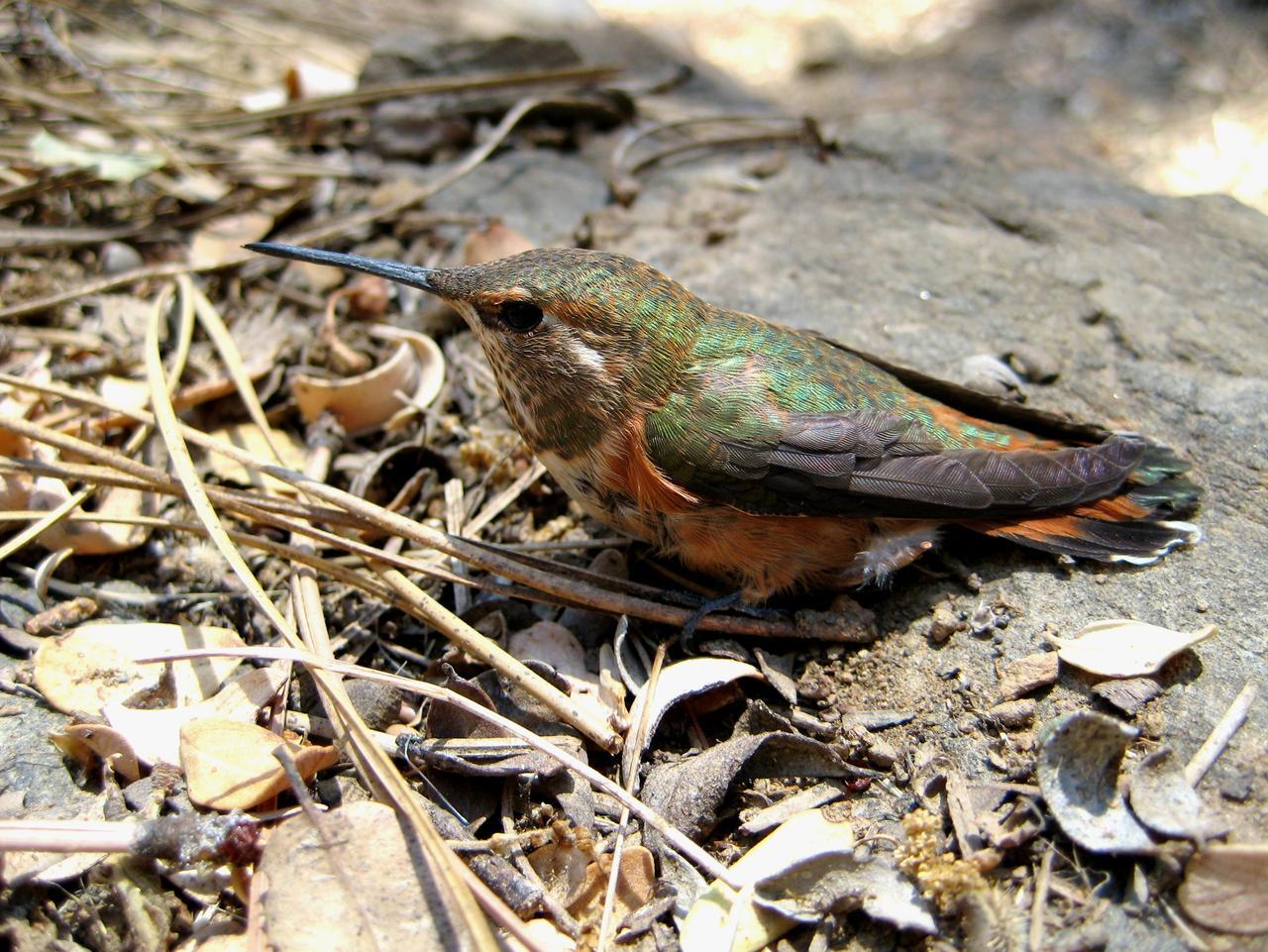
Seeing many hummingbirds at once almost always means one of three things: migration is underway, the local breeding season has just produced fledglings, or your feeders have reached the point where one bird can no longer defend them all. All three are seasonal and all three are good signs rather than anything unusual.
Late summer and early autumn produce the biggest numbers in most of the United States. Adults and newly independent juveniles are all feeding heavily to build fat reserves for migration, a ruby-throated hummingbird nearly doubling its weight before the Gulf crossing, and southbound migrants from further north pass through. August and September are peak months across the East, and the feeder traffic during those weeks can be startling to someone used to two or three birds.
Feeder saturation is the other explanation and it is one you can create deliberately. A single dominant bird can defend one or two feeders in sight of each other, but not five spread around a property out of one another’s view. Putting up multiple feeders at a distance, or grouping several close together so no bird can guard them all, converts a defended monopoly into a free-for-all and dramatically increases how many birds you see. The feeder placement guide covers the spacing that works.
What Is a Group of Baby Hummingbirds Called?
Baby hummingbirds are called chicks or nestlings, and there is no special collective noun, largely because a hummingbird nest holds only two. Nearly all hummingbird species lay exactly two eggs, each about the size of a coffee bean and weighing well under a gram, and the female raises them alone with no help from the male whatsoever.
The nest itself is a marvel of construction: a cup roughly the size of half a walnut, built from plant down and spider silk, camouflaged with lichen glued to the outside, and elastic enough to stretch as the chicks grow. The spider silk is what makes the expansion possible. Nests are typically saddled on a small downward-sloping branch and are extraordinarily difficult to find.
Chicks hatch blind and naked after 14 to 18 days of incubation and fledge at around three weeks. This short, well-hidden nesting period is why people almost never see baby hummingbirds: by the time a young bird appears at a feeder it is fully grown and looks essentially like an adult female. A bird at your feeder that seems small is a normal adult, not a baby. The baby hummingbird guide and the hummingbird nest guide cover the nesting cycle in detail.
Do Hummingbirds Ever Gather?
Hummingbirds do gather under two conditions, and neither is social. The first is resource concentration: a flowering tree in full bloom, a large stand of nectar plants, or a well-stocked bank of feeders can draw more birds than any single individual can defend, producing what looks like a flock and is actually a truce enforced by numbers.
The second is the lek. Some tropical hummingbird species, particularly hermits, gather at traditional display sites where males sing and display together to attract females, returning to the same spot year after year. A lek can hold a dozen or more males, and this is the closest hummingbirds come to genuine group behavior. North American species do not lek.
Roosting is always solitary. At night hummingbirds enter torpor, a state of profound metabolic suppression in which heart rate drops from over 1,000 beats per minute to around 50 and body temperature falls sharply, cutting energy use by up to 95 percent. A torpid hummingbird can take several minutes to become responsive, and birds found seemingly dead on cold mornings are frequently just torpid. Each bird does this alone, on its own perch.
What Are the Other Collective Nouns for Hummingbirds?
Besides charm, hummingbirds are given a bouquet, a glittering, a hover, a shimmer, a tune, and occasionally a troubling of hummingbirds. Most of these are twentieth century or later coinages by writers extending the tradition to species the medieval compilers never encountered, and they compete with each other rather than each having a defined use.
Bouquet plays on the association with flowers, hover on the birds’ unique flight, and glittering and shimmer on the iridescence. Tune connects back to the sound, both the hum of the wings, produced at 50 to 80 beats per second in ruby-throated hummingbirds, and the chip notes and songs the birds actually make. A troubling of hummingbirds is the odd one out and appears to be a joke about their aggression, which at least has the merit of being accurate.
None of these terms is used in ornithology, and the Cornell Lab of Ornithology (allaboutbirds.org) treats collective nouns generally as folklore rather than terminology. Charm is the one to know because it is the oldest, the most widely recorded, and the answer any quiz expects. The rest are pleasant inventions that circulate mainly in listicles.
Why Are Hummingbirds So Territorial?
Hummingbirds are territorial because their energy margins are razor-thin. A ruby-throated hummingbird weighs about three grams, roughly the weight of a penny, and burns energy at a rate that would require a human to eat something like 150,000 calories a day to match proportionally. It visits one to two thousand flowers daily and cannot go long without feeding.
That metabolic reality makes a reliable nectar source the single most important thing in a hummingbird’s life, and defending one is worth substantial risk. Males establish feeding territories on arrival in spring and defend them through the breeding season, and females hold separate territories around their nests. Aerial chases, dive displays, and physical strikes are all normal, and hummingbirds will attack birds far larger than themselves, including hawks and crows that approach a nest.
The upside for anyone watching is that the aggression makes hummingbirds far more entertaining than their size suggests. Dive displays, in which a male climbs high and plunges past a perched female or rival, produce species-specific sounds: the Anna’s hummingbird generates a sharp chirp with its tail feathers at the bottom of a dive, reaching speeds that in terms of body lengths per second exceed a peregrine falcon’s stoop. The Anna’s hummingbird guide covers that display in detail, and the guide to attracting hummingbirds covers turning a territory dispute into a yard full of birds.
Collective Nouns for Hummingbirds and Other Small Birds
Small birds attracted some of the prettiest collective nouns in English, and most are as ornamental as the hummingbird’s. Finches share the charm, goldfinches get a charm as well, larks get an exaltation, sparrows a host, swallows a flight or a gulp, and starlings a murmuration, which is the rare case of a term describing something genuinely spectacular and real.
Murmuration is worth the comparison because it shows what a collective noun looks like when the birds cooperate. European starlings gather in flocks of hundreds of thousands that wheel and fold in coordinated waves at dusk, a self-organizing system in which each bird tracks roughly seven neighbors. There is nothing remotely comparable among hummingbirds, and the vocabulary reflects a wish rather than an observation.
The comparison also explains why some collective nouns feel earned and others do not. A murmuration of starlings and a gaggle of geese describe things anyone can watch. A charm of hummingbirds describes a lovely idea about birds that spend their lives chasing each other away from flowers. That does not make it a bad word, only one worth understanding correctly. The group of crows guide covers another bird whose collective noun rests on folklore rather than behavior.
Frequently Asked Questions
What is a group of hummingbirds called?
A group of hummingbirds is called a charm. Other terms in circulation include a bouquet, a glittering, a hover, a shimmer, and a tune, all modern coinages. Ornithologists simply say flock or group.
What is a flock of hummingbirds called?
A charm, though hummingbirds do not genuinely flock. They are highly territorial, and a group at a feeder is competing rather than associating. Even during migration they travel alone.
What are baby hummingbirds called?
Chicks or nestlings. There is no collective noun because a nest holds only two eggs. The nest is about the size of half a walnut, built of plant down and spider silk so it can stretch as the chicks grow.
Why do we not see baby hummingbirds?
Because nests are tiny, camouflaged with lichen, and extremely hard to find, and the chicks fledge at about three weeks. By the time a young bird visits a feeder it is fully grown and looks like an adult female.
What does it mean when you see a lot of hummingbirds?
Usually migration, newly fledged juveniles, or feeders that have outgrown one bird’s ability to defend them. Late summer and early autumn produce the biggest numbers as birds fatten for migration.
Do hummingbirds live in groups?
No. They are solitary and territorial, roost alone, and migrate alone. Some tropical species gather at leks to display, but no North American species does, and roosting is always individual.
Why are hummingbirds so aggressive?
Because their metabolism leaves no margin. A hummingbird must feed every 10 to 15 minutes and visits one to two thousand flowers a day, so a reliable nectar source is worth defending against every rival.