Anna’s Hummingbird: Identification, Range, and Behavior Guide
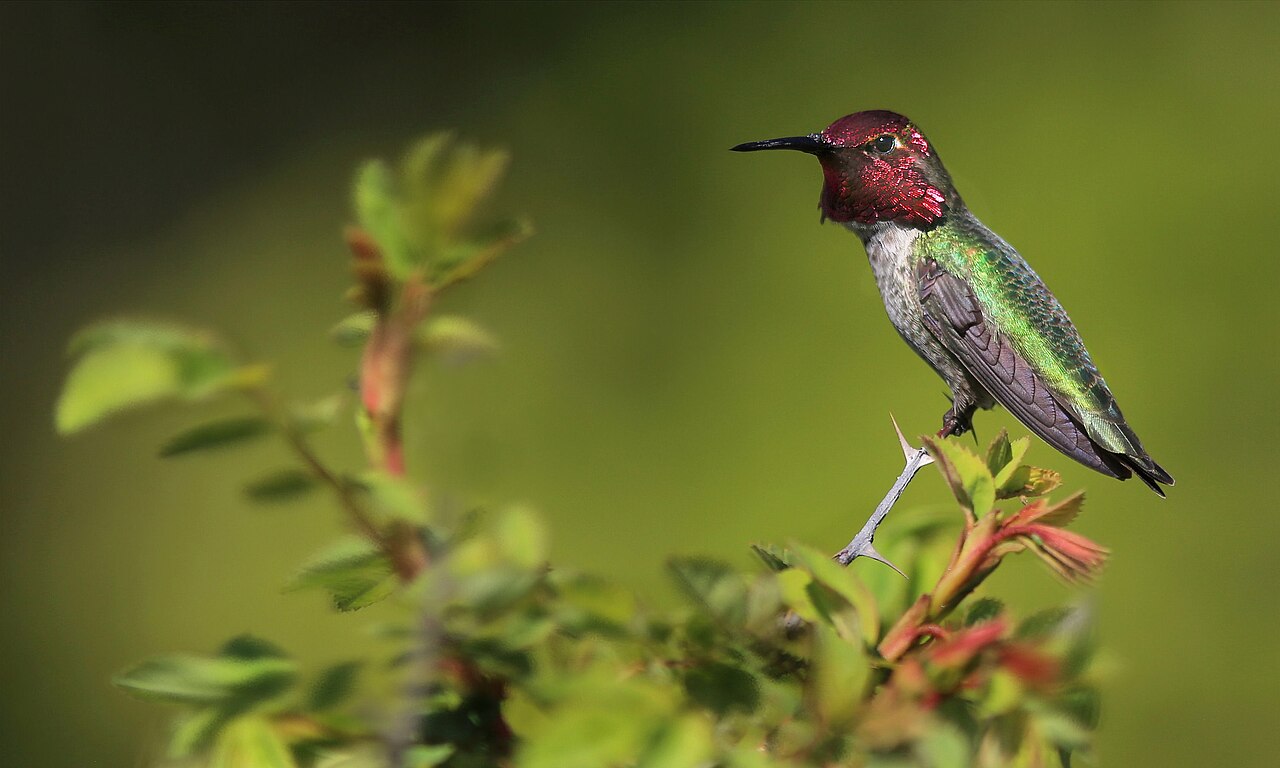
Anna’s hummingbird is the hummingbird most Pacific coast residents see at their feeders in the dead of winter, a striking exception among North American hummingbirds since nearly every other species retreats to Mexico or Central America once temperatures drop. Males carry an iridescent rose pink to magenta gorget that extends up and over the entire crown of the head rather than staying confined to the throat, a feature unique among common US hummingbird species and the source of the bird’s unmistakable, jewel-like appearance in good light. Named after Anna Masséna, Duchess of Rivoli, this adaptable species has expanded its range substantially over the past century, closely tracking the spread of backyard feeders and exotic ornamental flowering plants.
| Trait | Detail |
|---|---|
| Scientific name | Calypte anna |
| Length | 3.9 to 4.3 in |
| Weight | 3 to 6 g |
| Range | Pacific coast, California north to British Columbia |
| Habitat | Gardens, chaparral, urban parks, woodland edges |
| Migration | Largely non-migratory, year round resident |
How to Identify an Anna’s Hummingbird
Adult males show iridescent rose pink to deep magenta feathering covering the entire crown and throat, a combination called a full hood that flashes brilliantly in direct sunlight but can appear dark, almost black, from other angles. The body is otherwise a fairly plain grayish green, with no rufous or orange tones anywhere in the plumage, a useful distinction from western species like the rufous hummingbird.
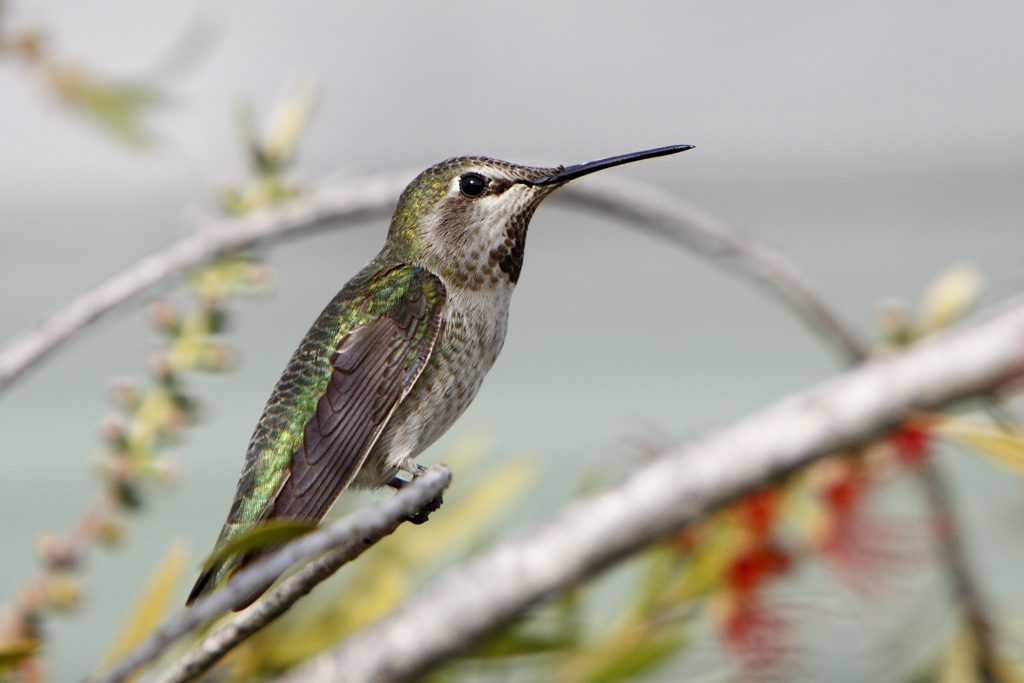
Females lack the full iridescent hood, instead showing a plain gray throat with only a small central patch of rose or red spotting in many individuals, along with the same grayish green back and crown shown by males. Juveniles resemble females closely until young males begin developing their first iridescent throat feathers during their initial fall and winter, sometimes showing a patchy, partially colored throat that can look unusual until the full adult hood comes in.
Body size runs slightly larger and stockier than many other North American hummingbirds, and the tail is proportionally shorter, giving Anna’s hummingbird a somewhat bulkier silhouette at rest compared to the more slender profile of a ruby throated or black chinned hummingbird. The bill is also slightly shorter and straighter than in many other species, well suited to the mix of native and ornamental garden flowers found throughout its range.
Range and Non-Migratory Behavior
Anna’s hummingbird is a year round resident through most of coastal and inland California, extending north through Oregon and Washington into British Columbia, and south into Baja California. Unlike nearly every other North American hummingbird species, most individuals do not undertake a true long distance migration, instead making only short seasonal movements tied to elevation and local flower availability.
This species’ range has expanded dramatically since the early 1900s, moving well north and inland of its historic core range in southern California and Baja, a shift widely credited to the spread of ornamental flowering plants and backyard nectar feeders that provide reliable food through the winter months when native flowers are scarce.
Some individuals do shift to lower elevations or milder microclimates during particularly harsh winter cold snaps, but this local movement is a far cry from the multi thousand mile migrations undertaken by species such as the rufous hummingbird or ruby throated hummingbird each year.
The Male Dive Display
During courtship, male Anna’s hummingbirds perform one of the most dramatic display flights of any North American bird, climbing up to 130 feet above a perched female before folding their wings and plunging in a near vertical dive. At the bottom of the dive, the male fans his tail feathers to produce a loud, distinctive chirping sound, generated mechanically by air rushing through the modified outer tail feathers rather than vocally.
This display, along with an accompanying high pitched song delivered from a nearby perch, serves both to attract females and to warn off rival males from a defended territory. According to the Cornell Lab of Ornithology, the dive represents one of the fastest measured movements relative to body size of any bird, with acceleration forces during the pullout comparable to those experienced by fighter pilots.
Researchers studying this display have used high speed cameras to confirm that the male reaches speeds exceeding 60 miles per hour during the steepest part of the dive, an extraordinary figure for a bird weighing only a few grams, and one that helps explain why the display has become a frequent subject of nature documentaries and slow motion video analysis.
Diet and Feeding Behavior
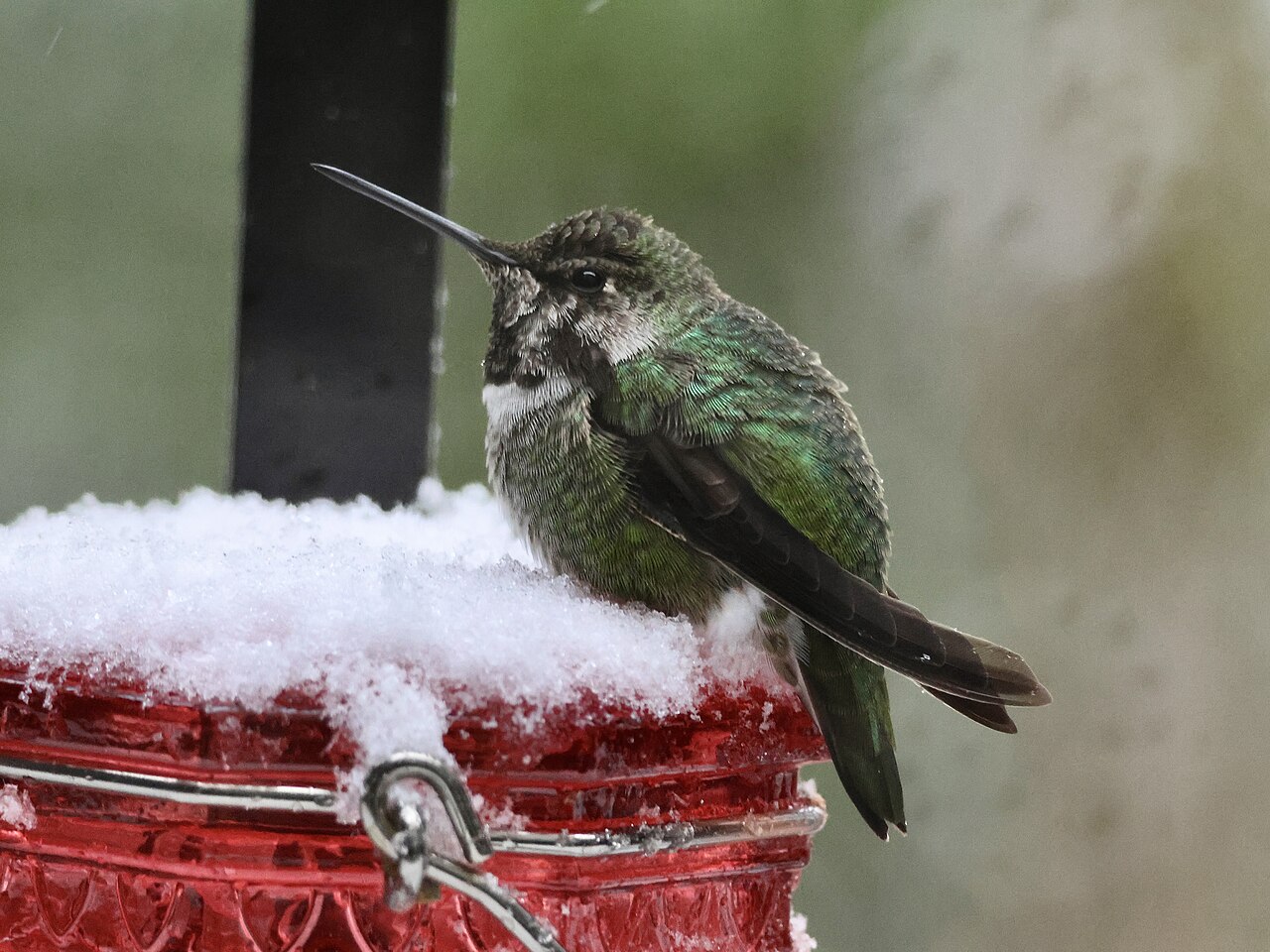
Nectar from native and ornamental flowers makes up much of the diet, supplemented by small insects and spiders that provide critical protein, especially important during the breeding season, which can begin as early as December in mild coastal climates. Anna’s hummingbird is notably willing to feed on a wide variety of exotic garden plants beyond the native flowers used by more range restricted hummingbird species.
Backyard feeders filled with a standard sugar water mixture are heavily used by this species, particularly in winter when natural nectar sources become scarce, making feeder maintenance an important part of supporting local populations through the colder months.
This dietary flexibility, combined with a tolerance for urban and suburban habitat, has allowed Anna’s hummingbird to thrive in cities and towns across its range in a way that many more specialized hummingbird species have not, making it one of the most commonly encountered hummingbirds in West Coast backyards.
Like other hummingbirds, Anna’s hummingbird can enter torpor overnight, a hibernation-like state in which body temperature and metabolic rate drop dramatically to conserve energy during long, cold nights. This ability is especially important for a species that overwinters farther north than any other common North American hummingbird, since torpor allows the bird to survive nights that would otherwise burn through its limited fat reserves entirely.
Nesting Behavior
Females build a small cup nest of plant down, feathers, and spider silk, often placed in a shrub or low tree and sometimes decorated with lichen for camouflage. Breeding can begin remarkably early compared to other hummingbirds, with nest building recorded as early as December in parts of California, taking advantage of the mild coastal winter climate and available feeders.
Clutches typically contain 2 eggs, incubated solely by the female for about 14 to 19 days, with chicks fledging roughly 3 weeks after hatching. As with all hummingbirds, males play no role in nest building, incubation, or chick rearing after mating.
Because the breeding season starts so early and can extend well into summer, a single female may successfully raise 2 or even 3 broods across a favorable year, a higher number than most other North American hummingbird species typically manage given their shorter breeding windows.
Anna’s Hummingbird vs Similar Species
The full iridescent hood covering both crown and throat is the most reliable way to separate an adult male Anna’s hummingbird from other western species such as the black chinned hummingbird, which shows color confined to the throat alone. Female and juvenile Anna’s hummingbirds can be trickier, but their larger size and plain grayish green plumage, lacking any rufous tones, help rule out species like the rufous or Allen’s hummingbird.
Range and season also provide a useful clue in areas of overlap, since Anna’s hummingbird is present year round across most of its range, while species such as the rufous hummingbird pass through the same region only briefly during spring and fall migration, making a winter sighting along the Pacific coast far more likely to be an Anna’s hummingbird than any migratory species.
Anna’s vs Rufous and Black-Chinned Hummingbirds
Anna’s is the green and gray hummingbird whose male wears rose pink over the whole head rather than only the throat, and it is the only one of the three that holds the Pacific coast through winter instead of migrating. A full pink hood on a bird sitting at a feeder in January is enough to settle it on its own.
The Rufous Hummingbird is the copper orange bird that passes through in spring and late summer and takes over feeders while it is there, breeding as far north as southern Alaska. The Black-chinned Hummingbird is plainer than either, with a black throat that reveals a narrow purple band only in direct light, and it favors desert washes and canyons across the interior West where Anna’s is more a bird of gardens and coastal chaparral.
Frequently Asked Questions
Do Anna’s hummingbirds migrate?
Most individuals do not undertake a true long distance migration, remaining year round residents across much of their Pacific coast range with only short seasonal movements tied to local flower availability.
What does an Anna’s hummingbird look like?
Adult males show an iridescent rose pink to magenta hood covering the entire crown and throat, while females show a plain gray throat with only limited rose spotting.
Why do Anna’s hummingbirds dive so dramatically?
Males perform a steep courtship dive from as high as 130 feet, producing a loud chirp with their tail feathers at the bottom to attract females and warn off rival males.
Where do Anna’s hummingbirds live?
They are year round residents through most of coastal and inland California, extending north into Oregon, Washington, and British Columbia, and south into Baja California.
When do Anna’s hummingbirds nest?
Breeding can begin as early as December in mild coastal California, much earlier than most other North American hummingbird species.
How big is an Anna’s hummingbird?
Adults measure 3.9 to 4.3 inches long and typically weigh between 3 and 6 grams, slightly larger and stockier than many other North American hummingbirds.
Should I keep my hummingbird feeder up in winter for Anna’s hummingbirds?
Yes, in mild coastal climates where this species overwinters, feeders provide an important supplemental food source when native flowers become scarce.