Rufous Hummingbird: Identification, Range, and Migration Guide
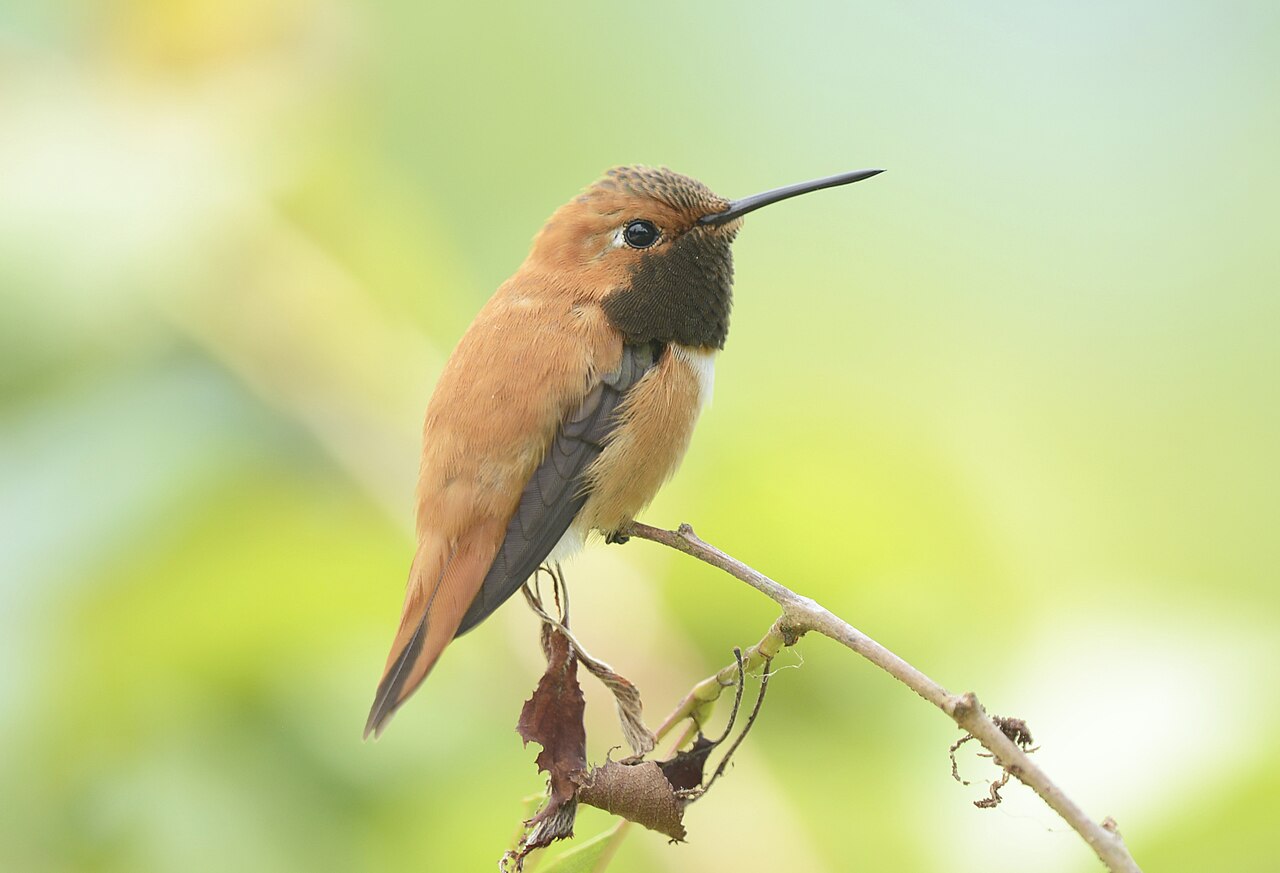
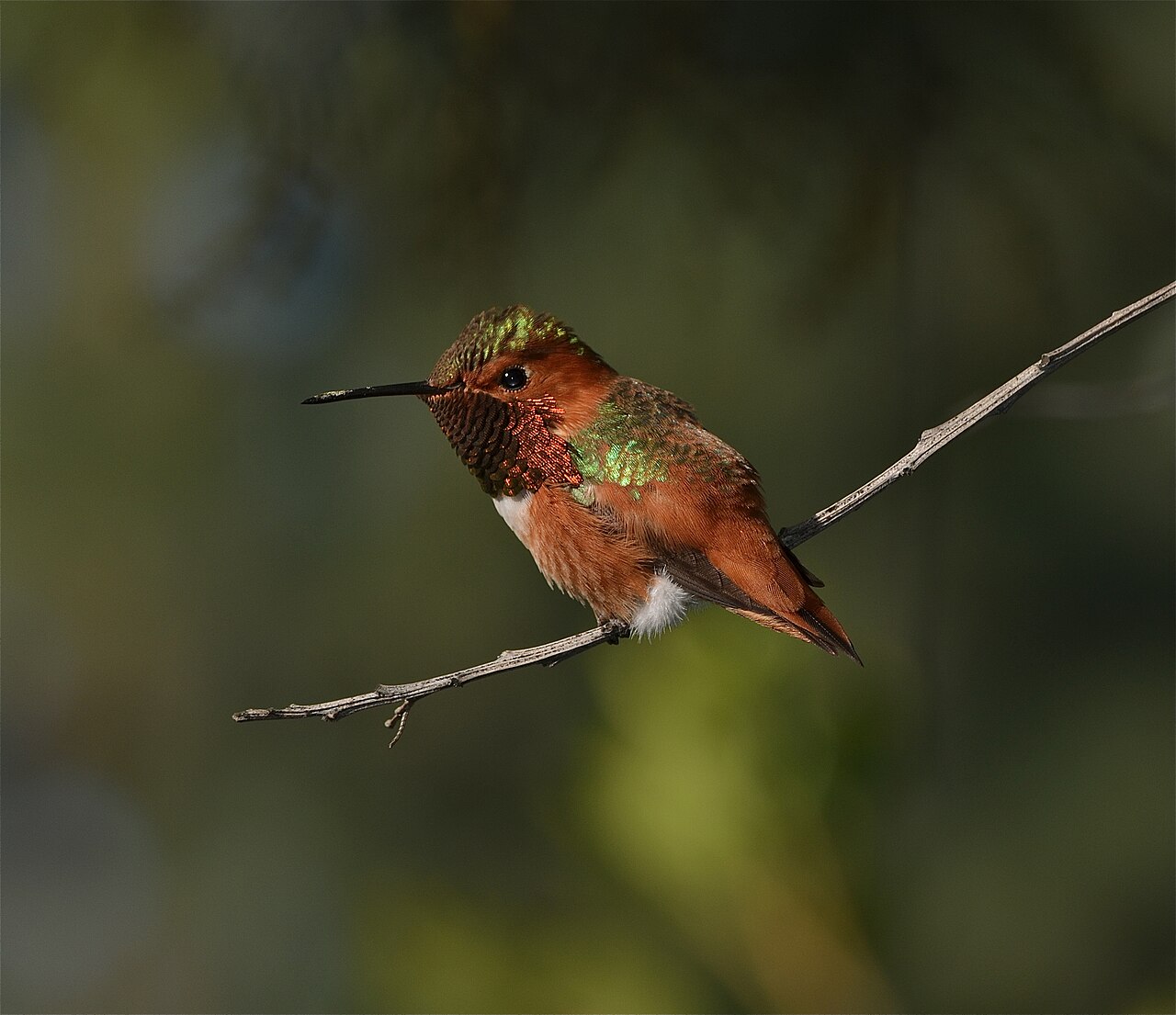
The rufous hummingbird packs an outsized personality into one of the smallest bodies in the hummingbird world, combining a blazing orange coat with a level of aggression at feeders that seems entirely disproportionate to its size. Adult males are almost entirely fiery orange rufous across the back, sides, and tail, with an iridescent orange red throat that can glow like a hot coal in direct sunlight, while females and juveniles show a greener back with rufous limited mainly to the sides and tail base. Beyond its striking color, this species holds a genuine world record, completing the longest migration relative to body size of any bird on the planet, a round trip that can exceed 3,900 miles between breeding grounds in the Pacific Northwest and Alaska and wintering grounds in Mexico.
| Trait | Detail |
|---|---|
| Scientific name | Selasphorus rufus |
| Length | 3.5 in |
| Weight | 2 to 5 g |
| Range | Pacific Northwest to Alaska in summer, Mexico in winter |
| Habitat | Open woodland, meadows, mountain forest edges, gardens |
| Migration distance | Up to 3,900 miles round trip |
The Rufous Hummingbird is the copper orange hummingbird of the Pacific Northwest, the only one that breeds as far north as southern Alaska and the most aggressive of any at a feeder. Adult males are rufous across the back and tail with a scarlet orange gorget; females show green backs and rufous flanks.
How to Identify a Rufous Hummingbird
Adult males are almost unmistakable, showing bright orange rufous plumage across the back, flanks, and tail, paired with an iridescent orange red gorget that can flash gold or green depending on the angle of light. This nearly all-orange coloring separates males clearly from most other North American hummingbirds, with the closest similar species being the Allen’s hummingbird, which shares the same rufous tones but shows a green rather than rufous back.
Females and juveniles are considerably more challenging, showing a green back, rufous colored sides and tail base, and a throat that may carry only a few scattered iridescent orange or red spots rather than a full gorget. This plumage overlaps closely with female Allen’s hummingbirds, and definitive identification in the field often requires close study of tail feather shape, a distinction usually left to experienced banders rather than casual observers.
Regardless of sex, rufous hummingbirds tend to appear notably compact and stocky in flight, with a slightly shorter tail than some related species, and an overall impression of restless, high energy movement even while perched, rarely sitting still for more than a few seconds at a time. A rare but documented color variation, in which a male shows a green rather than rufous back much like an Allen’s hummingbird, adds an extra layer of difficulty to field identification in areas where both species overlap during migration.
The Longest Migration Relative to Body Size
Rufous hummingbirds breed farther north than any other hummingbird species in the world, with some individuals nesting in southern Alaska, thousands of miles from their wintering grounds in central Mexico. The full round trip migration can cover more than 3,900 miles, an extraordinary distance for a bird that weighs only a few grams and measures barely 3.5 inches long.
Migration follows a distinctive clockwise loop rather than a simple back and forth path. Birds travel north along the Pacific coast in spring, timed to catch the peak bloom of early season flowers, then shift inland to migrate south through the Rocky Mountains in late summer and fall, following high elevation wildflower blooms that peak later in the season at higher altitudes.
According to the Cornell Lab of Ornithology, this loop migration strategy allows rufous hummingbirds to track shifting nectar availability across an enormous geographic range throughout the year, a feat of navigation and timing that remains an active area of ongoing research.
Aggressive Feeder Behavior
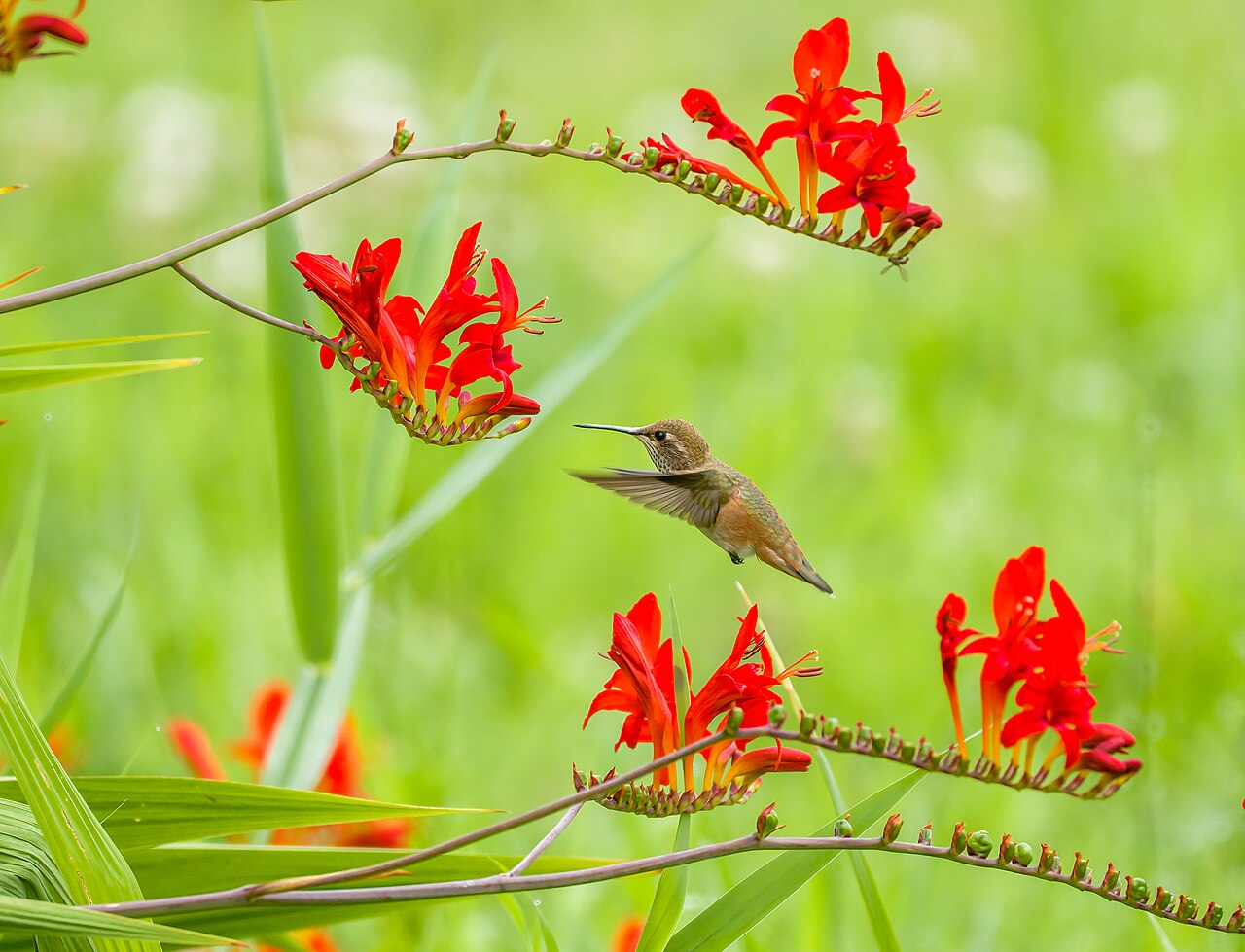
Rufous hummingbirds have a well earned reputation as the bullies of the hummingbird world, aggressively defending feeders and flower patches against birds many times their own body mass, including other hummingbird species and even larger songbirds passing through the same territory. This aggression is especially pronounced during migration, when birds passing through unfamiliar territory compete intensely for limited nectar resources along the route.
This behavior can sometimes discourage other, less pugnacious hummingbird species from visiting a yard while a rufous hummingbird is present, leading some birders to offer multiple feeders spaced well apart to reduce the ability of a single aggressive bird to monopolize the entire food supply.
Even on the breeding grounds, males aggressively patrol territories containing productive nectar sources, chasing off rivals with high speed dives and sharp chattering calls, behavior that can seem disproportionately fierce for a bird that weighs barely more than a couple of paper clips.
Where Are Rufous Hummingbirds Most Common?
Breeding range extends from northern California and the Pacific Northwest north through British Columbia into southern Alaska, making this species the northernmost breeding hummingbird in the world. Preferred breeding habitat includes open woodland edges, mountain meadows, and shrubby clearings, often at higher elevations than many other western hummingbird species.
Winter range centers on central and western Mexico, though small numbers regularly turn up along the Gulf Coast and in the Southeast during fall and winter, likely representing birds that took a wrong turn during their southbound migration rather than an established alternate wintering population.
During spring migration, rufous hummingbirds can appear in yards and gardens well outside their eventual breeding range as they move steadily northward along the coast, making this one of the more widely observed migratory hummingbirds across much of the western United States even for birders who live outside its core breeding territory.
Diet and Feeding Behavior
Nectar from a wide variety of wildflowers, particularly red and orange tubular blooms, forms the core diet, supplemented by small insects caught in flight or gleaned from foliage for essential protein. Because migration timing is closely tied to wildflower bloom schedules, rufous hummingbirds are considered important pollinators across much of their mountain and coastal range, overlapping in places with species such as the broad-tailed hummingbird and calliope hummingbird.
At backyard feeders, standard sugar water at the typical 1 to 4 ratio is readily accepted, and feeders can be an important resource during the demanding spring and fall migration periods when natural nectar availability may be inconsistent along the route. Gardeners hoping to support migrating birds can also plant a sequence of red and orange tubular flowers timed to bloom across spring, summer, and early fall, extending the natural food supply well beyond what a single planting season would otherwise provide. For a broader overview of the family, see our hummingbird guide.
Rufous Hummingbird Nesting: Farther North Than Any Other Hummingbird
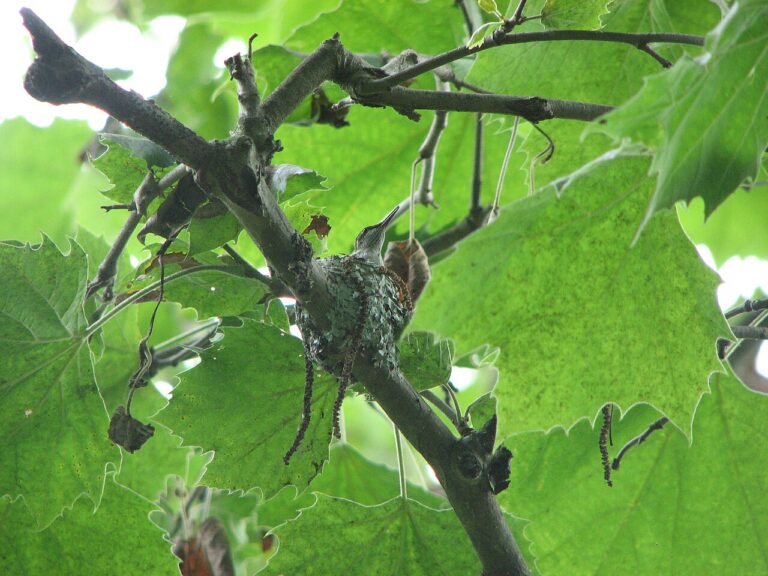
Females build a small, well insulated cup nest of plant down and moss bound with spider silk, often placed on a horizontal branch in a conifer or shrub. Clutches typically contain 2 eggs, incubated solely by the female for about 15 to 17 days, with chicks fledging roughly 3 weeks after hatching.
As with other hummingbirds, males take no part in nest building or chick rearing, instead focusing their energy on defending a feeding territory and courting additional females during the relatively brief breeding window available at northern latitudes.
Population Trends and Conservation
Rufous hummingbird populations have declined steeply in recent decades, with surveys compiled by Partners in Flight showing losses among the steepest of any North American landbird, estimated at more than 2 percent per year over the long term. Habitat loss along both breeding and wintering grounds, along with shifts in flowering plant timing potentially linked to a changing climate, are considered likely contributing factors.
Because this species depends on a precisely timed sequence of wildflower blooms across thousands of miles of migration route, any disruption to that timing at any single stage of the journey, whether on breeding grounds, wintering grounds, or stopover habitat along the Rocky Mountains, can have an outsized impact on overall population health compared to less migratory species.
Conservation groups increasingly emphasize protecting high elevation meadow habitat used during fall migration, alongside continued backyard feeder support, as practical steps individuals can take to help offset some of the pressure facing this rapidly declining species.
Rufous vs Allen’s Hummingbird: How to Tell Them Apart
Range separates these two far more reliably than plumage does. Allen’s Hummingbird breeds along a narrow strip of coastal California and southern Oregon, while the Rufous breeds from northern California north through British Columbia into south central Alaska. Away from that coastal overlap, an orange hummingbird in the West is a Rufous.
Where they do overlap, adult males are the only birds that can be called in the field, and even then the mark is subtle. A typical adult male Rufous has a solid rufous back, while an adult male Allen’s has a green back with rufous confined to the rump, flanks and tail. The trap is that a minority of male Rufous also show green backs, so a green backed bird inside the overlap zone is not automatically an Allen’s. The definitive character is the width and notch of the second outermost tail feather, which in practice means a bird in the hand or a very good photograph of a spread tail.
Females and immatures of the two species cannot be separated in the field at all. Records outside the breeding range are logged as Rufous or Allen’s for exactly that reason, and the Cornell Lab treats the pair the same way in its own identification notes.
How to Identify a Female Rufous Hummingbird
A female Rufous has a green crown and back, cinnamon rufous flanks, a white throat finely speckled with bronze green, and a rufous base to the tail with white tips on the outer feathers. She is noticeably duller than the male and she is the bird most people actually see at a feeder, since females and immatures outnumber adult males through most of the migration window.
Three checks do most of the work. Look for rufous in the flanks and at the base of the tail, because a female Ruby-throated or Black-chinned has clean gray white sides with no orange in them. Look for the small central spot of orange red on the throat, which many adult females show and no female Black-chinned does. Then check the date and the place, because a female Rufous in the East is almost always a fall or winter bird.
Are Rufous Hummingbirds in Michigan and the Eastern States?
Yes, and the Rufous is the hummingbird you are most likely to find in the East outside the breeding season. Every autumn a scatter of them turns up from Michigan and Ontario down through the Gulf states, and a share of those birds stay into December and January at feeders that are left running through the cold.
These are not lost birds in the usual sense. A regular proportion of the population migrates east and southeast rather than south, and the Gulf coast winter population has grown as more people keep feeders up past the first frost. If a hummingbird appears at an eastern feeder in November, leaving the feeder out and unfrozen is the correct response, and the bird is far more likely to be a Rufous than a late Ruby-throated.
How the Rufous Differs From Anna’s and Black-Chinned Hummingbirds
The three western feeder hummingbirds are told apart by color and by season more than by size. The Rufous is the copper orange one, the most aggressive at a feeder, and the only one that breeds as far north as Alaska. Anna’s Hummingbird is green and gray with a rose pink gorget that covers the whole crown as well as the throat, and it is the one that holds the Pacific coast all winter instead of migrating. The Black-chinned Hummingbird is the plainest of the three, with a velvety black throat that reveals a thin purple band only in direct light.
At a shared feeder the behavior sorts them as fast as the plumage does. A Rufous will hold a feeder against birds twice its weight and chase Anna’s and Black-chinned off repeatedly through the day, which is why feeders in the Northwest often go quiet for every species except this one during the migration peak.
Frequently Asked Questions
How far do rufous hummingbirds migrate?
Some individuals complete a round trip of more than 3,900 miles between breeding grounds in Alaska or the Pacific Northwest and wintering grounds in Mexico, the longest migration relative to body size of any bird.
Why are rufous hummingbirds so aggressive?
They fiercely defend feeders and flower patches against competitors, including much larger birds, a behavior especially pronounced during migration when resources along the route are limited.
How can you tell a rufous hummingbird from an Allen’s hummingbird?
Male rufous hummingbirds have a rufous colored back, while male Allen’s hummingbirds have a green back, though females of both species require closer study to distinguish reliably.
Where do rufous hummingbirds breed?
They breed farther north than any other hummingbird, from northern California and the Pacific Northwest through British Columbia into southern Alaska.
What does a rufous hummingbird eat?
It feeds on nectar from a wide variety of wildflowers along with small insects, and readily visits backyard feeders filled with standard sugar water.
When do rufous hummingbirds migrate through the US?
Spring migration follows the Pacific coast northward, while fall migration typically passes south through the Rocky Mountains, following seasonal wildflower blooms.
How big is a rufous hummingbird?
Adults measure about 3.5 inches long and weigh only 2 to 5 grams, among the smallest hummingbirds found in North America.