Broad-Tailed Hummingbird: Identification, Range, and Behavior Guide
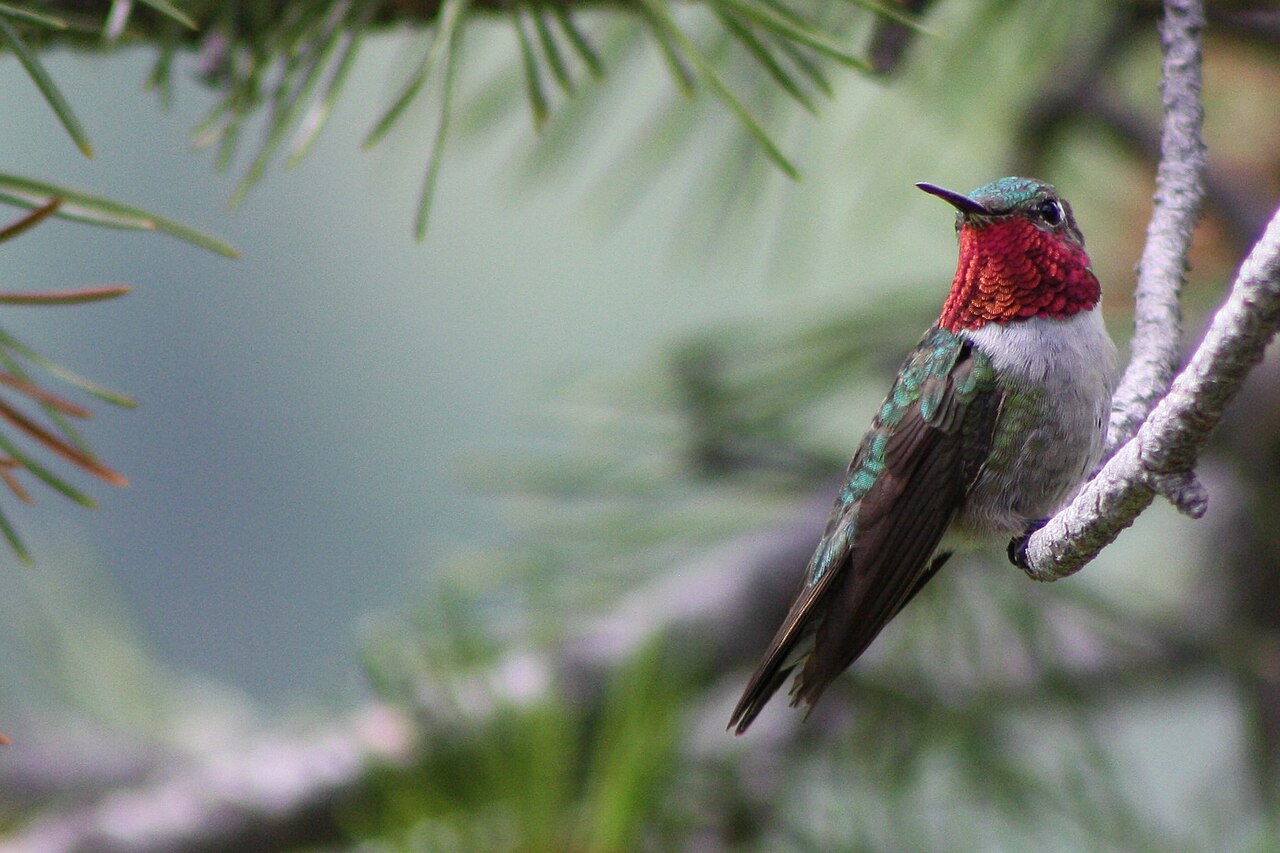
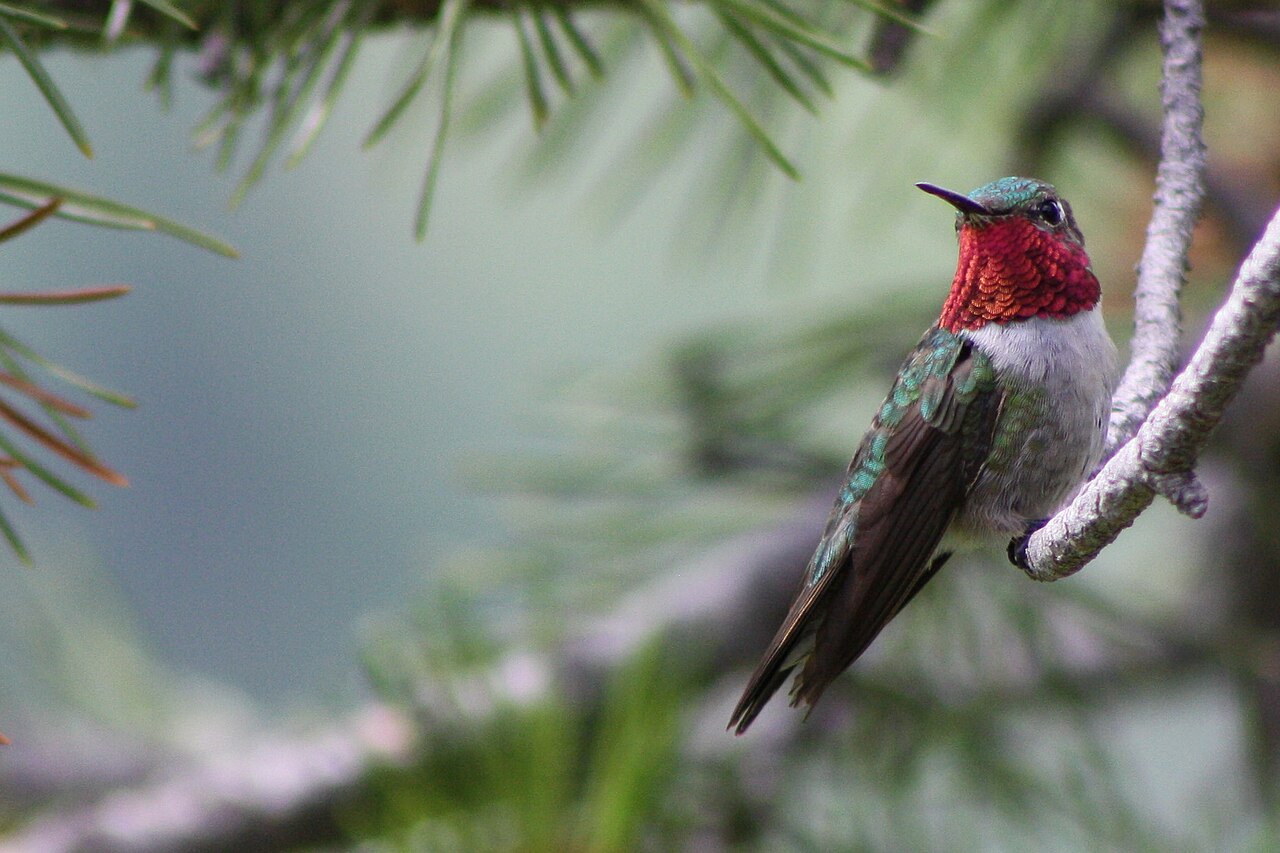
Long before you spot a broad tailed hummingbird perched in a Rocky Mountain meadow, you will likely hear one coming. Adult males produce a distinctive, high pitched metallic trill with their wings in flight, a mechanical sound rather than a vocal call, that carries clearly across mountain clearings and alerts birders to an approaching bird well before it comes into view. Males show a brilliant rose pink to magenta gorget set against a green back and white chest, while females display a more subtly spotted throat and buffy sides. As the signature hummingbird of high elevation meadows across the interior West, this species has evolved a remarkable tolerance for the freezing overnight temperatures common at the altitudes where it breeds, making it one of the hardiest hummingbirds found anywhere in North America.
| Trait | Detail |
|---|---|
| Scientific name | Selasphorus platycercus |
| Length | 4 to 4.5 in |
| Weight | 3 to 4 g |
| Range | Rocky Mountains, Great Basin, southern Rockies into Mexico |
| Habitat | Mountain meadows, aspen groves, high elevation forest edge |
| Elevation | Breeds up to 10,000 feet or higher |
How to Identify a Broad-Tailed Hummingbird
Adult males show an iridescent rose pink to magenta gorget, a metallic green back and crown, and clean white underparts, an overall combination that can look superficially similar to a calliope hummingbird at a quick glance but is noticeably larger bodied on closer inspection. The wings, when in flight, produce the species’ signature high, insect-like trill, generated mechanically by modified wingtip feathers rather than through the syrinx.
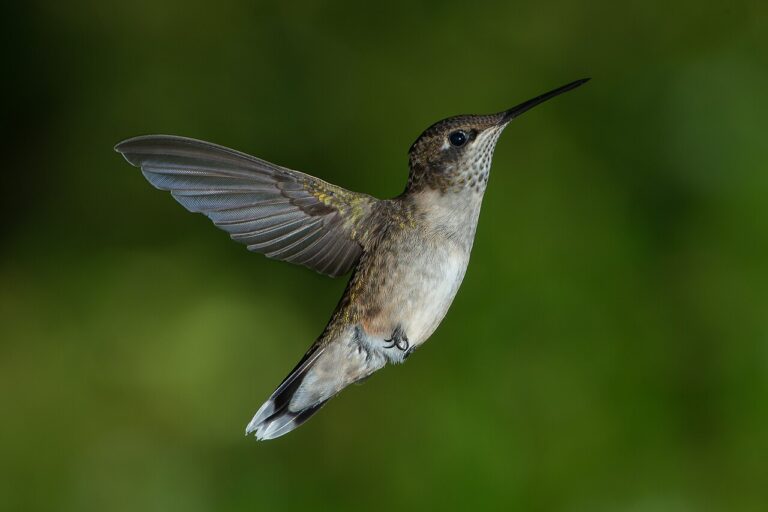
Females and juveniles lack the iridescent gorget, instead showing a whitish throat lightly spotted with green or bronze, buffy colored sides, and rounded outer tail feathers tipped in white. This plumage can resemble female rufous hummingbirds in areas of range overlap, though the broad-tailed hummingbird’s slightly larger size and mountain meadow habitat preference offer useful supporting clues.
Both sexes show a fairly stocky, broad-chested build compared to some other western hummingbirds, consistent with the species’ common name, and the tail itself appears noticeably broad and rounded when fanned during hovering flight, another useful confirming feature once observers know to look for it. Bill length runs moderate compared to other Selasphorus hummingbirds, well suited to the tubular mountain wildflowers that make up much of the species’ natural diet.
The Wing Trill: A Unique Sound
The male broad tailed hummingbird’s wing trill is produced by air passing through narrowed, tapered outer primary feathers during rapid wingbeats, creating a continuous, insect-like buzz audible from a considerable distance in quiet mountain habitat. This trill is present in every wingbeat during normal flight, not just during a special display, making it one of the most reliable ways to detect the species’ presence even without a direct visual sighting.
According to the Cornell Lab of Ornithology, this trill likely serves both as an incidental byproduct of wing shape and as a genuine signal used in territorial and courtship contexts, since males appear to modulate their flight in certain situations in ways that emphasize the sound. Females and juveniles lack the specialized feather shape and do not produce the same trill.
Interestingly, molt timing affects the trill’s presence throughout the year, since males that have recently replaced their outer primary feathers may temporarily produce a quieter or altered sound until the new feathers reach their full, characteristically tapered shape, a subtle detail that experienced birders sometimes use to estimate a bird’s molt stage in the field.
Range and High Elevation Habitat
Broad tailed hummingbirds breed throughout the Rocky Mountains and interior ranges of the western United States, from Idaho and Wyoming south through Utah, Colorado, Arizona, and New Mexico into the mountains of Mexico. Within this range, the species favors mountain meadows, aspen groves, and forest edge habitat, frequently breeding at elevations exceeding 10,000 feet where few other hummingbird species regularly nest.
Winter range centers on Mexico and Central America, with birds departing high elevation breeding grounds as early night frosts become more frequent in late summer and early fall. Spring arrival is closely timed to the emergence of early blooming mountain wildflowers that provide the first reliable nectar source after a long winter at lower elevations.
Elevation migration within a single season is also common, with some individuals moving to progressively higher meadows as snow melts and wildflowers bloom later at higher elevations, effectively extending the usable nectar season by following the retreating snowline upslope over the course of the summer.
Surviving Freezing Mountain Nights
Breeding at such high elevations exposes broad tailed hummingbirds to overnight temperatures that regularly drop below freezing, even during the height of summer, a serious challenge for a bird with such a tiny body and correspondingly high surface area to volume ratio. To survive these conditions, the species relies heavily on torpor, entering a controlled, hibernation-like state overnight in which body temperature and metabolic rate drop dramatically to conserve limited fat reserves.
This nightly torpor is far deeper and more frequently used than in many lower elevation hummingbird species, reflecting the genuinely harsher overnight conditions these birds regularly face throughout the short high mountain breeding season. Body temperature during deep torpor can fall to within a few degrees of the surrounding air temperature, an extraordinary physiological shift for a warm blooded animal that would otherwise need to burn through its fat reserves within hours of exposure to such cold.
Diet and Feeding Behavior
Nectar from mountain wildflowers such as scarlet gilia, penstemon, and various columbine species forms the core diet, supplemented by small insects caught in flight, an essential protein source during the demanding high elevation breeding season. This species plays a significant pollination role for several mountain wildflower species that have co-evolved tubular flower shapes matched closely to the hummingbird’s bill length.
At backyard feeders within its mountain range, standard sugar water at a 1 to 4 ratio is readily accepted, and feeders can provide an important supplemental resource during unusually cold or late spring conditions when natural wildflower bloom may be delayed.
Because high elevation breeding sites offer a comparatively short growing season, broad tailed hummingbirds must feed almost constantly during daylight hours to build and maintain the fat reserves needed both for nightly torpor and for the eventual fall migration south, leaving little margin for error if weather disrupts feeding for more than a day or two at a stretch.
Nesting Behavior
Females build a compact, well insulated nest of plant down and bark strips bound with spider silk, often placed on a horizontal conifer branch and sometimes reused or rebuilt on top of a previous year’s nest. Clutches typically contain 2 eggs, incubated solely by the female for about 16 to 19 days, with chicks fledging roughly 3 weeks after hatching.
Given the short high elevation breeding season, most females raise only a single brood per year, in contrast to lower elevation hummingbird species that may attempt two or more broods when conditions allow.
Nest placement often favors sites with some overhead cover from conifer branches, providing a degree of protection from both overnight radiative heat loss and occasional late season snow or hail, both realistic hazards at the elevations where this species typically nests.
Broad-Tailed Hummingbird vs Similar Species
Within its mountain range, the broad tailed hummingbird overlaps with both the rufous hummingbird and the calliope hummingbird during migration, making careful identification worthwhile for birders hoping to sort out all three species at a single mountain feeder. The wing trill, present only in this species among the three, is often the single fastest way to confirm a broad tailed hummingbird without needing a clear look at plumage detail.
Size also helps separate the group, since the calliope hummingbird is noticeably smaller and shorter tailed than either the broad tailed or rufous hummingbird, while the rufous hummingbird’s warmer, more orange toned plumage contrasts with the broad tailed hummingbird’s cleaner green and white coloring in both sexes.
Frequently Asked Questions
Why does a broad tailed hummingbird make a trilling sound?
The trill is produced mechanically by air passing through specially shaped outer wing feathers during flight, occurring on every wingbeat rather than as a special call, and can be heard clearly across a quiet mountain clearing.
Where do broad tailed hummingbirds live?
They breed throughout the Rocky Mountains and interior western United States, often at elevations above 10,000 feet, and winter in Mexico and Central America after leaving their high altitude breeding grounds each fall.
How do broad tailed hummingbirds survive cold mountain nights?
They enter torpor, a controlled hibernation-like state that lowers body temperature and metabolic rate overnight to conserve limited fat reserves during freezing conditions.
What does a broad tailed hummingbird look like?
Males show an iridescent rose pink gorget, green back, and white underparts, while females have a spotted whitish throat and buffy sides without the iridescent throat patch.
What does a broad tailed hummingbird eat?
It feeds on nectar from mountain wildflowers such as scarlet gilia and penstemon, along with small insects, and readily visits backyard feeders in its range.
How big is a broad tailed hummingbird?
Adults measure 4 to 4.5 inches long and weigh between 3 and 4 grams, slightly larger and stockier than many other western hummingbirds.
When do broad tailed hummingbirds nest?
Nesting typically occurs from late spring through mid summer, timed to the short window of favorable weather and wildflower bloom at high elevation breeding sites.