Types of Turkeys: A Complete Guide
There is one species of wild turkey in North America, but it comes in several subspecies, including the eastern, Osceola, Rio Grande, Merriam’s, and Gould’s wild turkeys. These large, impressive gamebirds are famous for the male’s fanned tail, gobbling call, and iridescent plumage. This guide covers how many types of turkeys there are, the main subspecies, how to tell them apart, where they live, and facts about turkeys.
| Turkey | Key Features |
|---|---|
| Eastern Wild Turkey | Most widespread, chestnut tail tips |
| Osceola (Florida) | Florida only, dark wings |
| Rio Grande | Central states, tan tail tips |
| Merriam’s | Western mountains, pale tips |
| Gould’s | Southwest, largest, white tips |
| Ocellated Turkey | Mexico only, colorful |
How Many Types of Turkeys Are There?
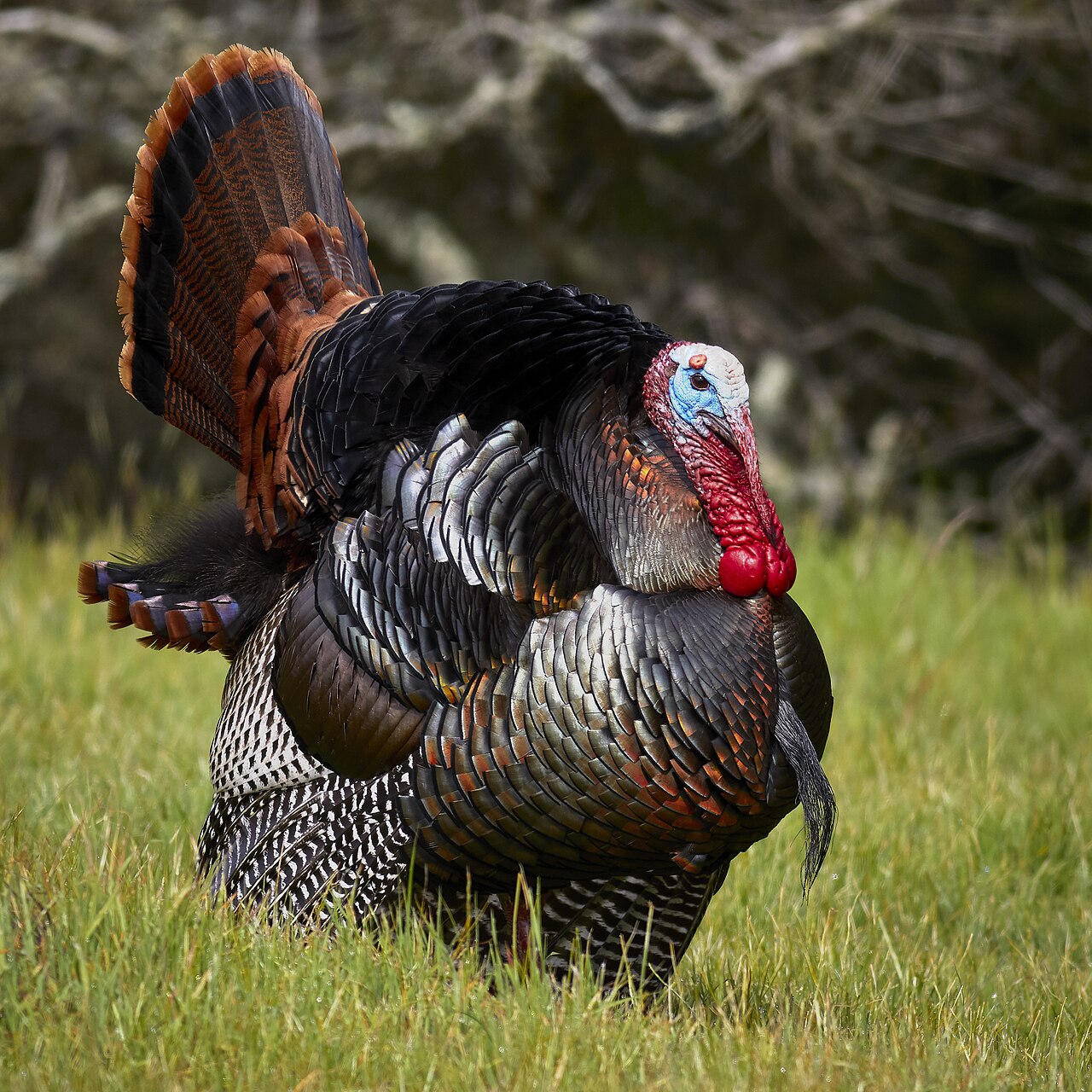
When it comes to wild turkeys, there is a single species in North America, the wild turkey, but it is divided into several subspecies that differ in appearance and range. The five subspecies found in the United States are the eastern, Osceola or Florida, Rio Grande, Merriam’s, and Gould’s wild turkeys, and a sixth, the ocellated turkey, is a distinct and colorful species found only in the Yucatan region of Mexico and nearby areas. In addition, the familiar domestic turkey is descended from wild turkeys and comes in various breeds. Wild turkeys are large, ground-dwelling gamebirds, among the biggest birds in North America, and the males, called toms or gobblers, are known for their iridescent bronze and green plumage, fanned tails, wattled heads, and loud gobbling calls used in courtship. Females, called hens, are smaller and duller for camouflage. Understanding the subspecies is the key to knowing wild turkeys, remarkable birds covered in our guide to what turkeys eat.
The Main Turkey Subspecies
Each wild turkey subspecies has its own features and range. The eastern wild turkey is the most widespread and abundant, found across the eastern United States, with chestnut-brown tips on its tail feathers. The Osceola, or Florida wild turkey, is found only in peninsular Florida and is darker, with more black in the wings. The Rio Grande wild turkey lives in the central and southern plains and has tan or buff tail tips. Merriam’s wild turkey inhabits the western mountains and has pale, whitish tips on its tail and rump feathers. Gould’s wild turkey, found in the Southwest and Mexico, is the largest subspecies, with distinctive white tail tips. Beyond the United States subspecies, the ocellated turkey of Mexico is a strikingly colorful, smaller species with iridescent, peacock-like plumage and blue heads with orange nodules. Together these make up the turkeys, ground gamebirds related to the birds in our guide to types of pheasants.
How to Tell Turkeys Apart
Telling turkey subspecies apart relies mainly on geographic range and subtle plumage differences, especially the tail. Since there is only one wild turkey species in the United States, the subspecies are distinguished by where they occur and by the color of the tips of their tail and rump feathers. The eastern wild turkey, in the East, has chestnut-brown tail tips, while Merriam’s, in the western mountains, has pale whitish tips, and the Rio Grande, in the central plains, has tan tips. The Osceola is limited to Florida and is darker overall, and Gould’s, in the Southwest, is the largest with white tips. Because the subspecies overlap and interbreed in some areas, and because range is such a strong clue, knowing your location is often the easiest way to identify which subspecies is present. The ocellated turkey, by contrast, is unmistakable and found only in Mexico. By combining range with tail and rump coloring, you can identify wild turkey subspecies, as explored in our guide to state birds.
Where Turkeys Live
Wild turkeys live in a variety of habitats across North America, generally favoring a mix of forest and open areas. They are typically found in mature woodlands interspersed with fields, clearings, and open ground, where they can forage on the ground for nuts, seeds, berries, and insects while using trees for roosting at night and for cover. The eastern wild turkey occupies forests and woodland edges across the eastern United States, the Rio Grande turkey favors more open country and river woodlands in the central plains, Merriam’s lives in ponderosa pine and mountain forests of the West, the Osceola is tied to Florida’s woodlands and swamps, and Gould’s inhabits the mountains of the Southwest and Mexico. Wild turkeys have made a remarkable comeback across much of their range after historic declines, and they are now common in many areas, sometimes even venturing into suburbs. Because turkeys need both trees and open feeding areas, this mix of habitat is key to where they thrive, as detailed in our guide to attracting birds.
Facts About Turkeys
Wild turkeys are fascinating birds with several remarkable traits. Despite their large size and heavy bodies, wild turkeys are strong fliers over short distances and can run quickly, and they roost in trees at night for safety. The male, or tom, puts on an elaborate courtship display, fanning his tail, puffing out his feathers, and gobbling loudly, while the bare skin of his head and neck can change color with his mood, showing red, white, and blue. Turkeys have excellent eyesight and hearing, making them wary and challenging to approach. They are social birds that often move in flocks, and they feed on a varied diet of plant matter and small creatures. Wild turkeys also have a notable history, having been an important food source and, famously, a bird that Benjamin Franklin admired. Their impressive recovery from near disappearance in some regions is a conservation success. These qualities make wild turkeys truly remarkable, as reflected in our guide to bird symbolism.
The Eastern Wild Turkey, the Most Widespread Subspecies
The eastern wild turkey deserves special attention as the turkey most people encounter. According to the Cornell Lab of Ornithology, the wild turkey is a large game bird native to North America, and the eastern subspecies is the most widespread and numerous. Found across the entire eastern United States and beyond, the eastern wild turkey occupies hardwood and mixed forests interspersed with fields and clearings, where it forages on the ground and roosts in trees at night. This is the subspecies encountered by most people in the East, and it has been central to the wild turkey’s remarkable comeback, having been reintroduced and managed successfully across much of its former range after historic declines from overhunting and habitat loss. The eastern wild turkey is a large, impressive bird, the male gobbling and displaying in spring to attract mates. Its abundance and wide distribution make it the classic wild turkey, providing the foundation for understanding the whole species, as explored in our guide to what turkeys eat.
The Remarkable Comeback of the Wild Turkey
One of the great conservation success stories in North America is the recovery of the wild turkey. In the past, wild turkey populations were devastated by unregulated hunting and the clearing of forests, and by the early twentieth century, turkeys had disappeared from much of their historic range, with numbers reduced to a small fraction of their former abundance. Through dedicated wildlife management, including habitat restoration, protective regulations, and extensive reintroduction programs that trapped wild birds and released them into suitable areas, wild turkey populations rebounded dramatically. Today, wild turkeys are once again common across much of North America, occupying not only forests and farmland but sometimes even venturing into suburban areas, a testament to the effectiveness of these efforts. This recovery has restored a magnificent native bird to landscapes where it had been lost. The wild turkey’s comeback stands as an inspiring example of successful conservation, showing what focused management can achieve, as reflected in our guide to bird symbolism.
Frequently Asked Questions
How many types of turkeys are there?
There is one wild turkey species in North America with five subspecies in the United States: eastern, Osceola, Rio Grande, Merriam’s, and Gould’s, plus the ocellated turkey of Mexico.
What is the most common wild turkey?
The eastern wild turkey is the most widespread and abundant subspecies, found across the eastern United States, with chestnut-brown tips on its tail feathers.
What is the difference between wild turkey subspecies?
The subspecies differ mainly by range and the color of the tail and rump feather tips, from the eastern’s chestnut tips to Merriam’s whitish tips.
What is an ocellated turkey?
The ocellated turkey is a distinct, colorful turkey species found only in the Yucatan region of Mexico and nearby areas, with iridescent, peacock-like plumage.
Can wild turkeys fly?
Yes, despite their large size, wild turkeys are strong fliers over short distances and can run quickly. They roost in trees at night for safety from predators.
What do the colors on a turkey’s head mean?
The bare skin of a male turkey’s head and neck can change color, showing red, white, and blue depending on its mood, especially during courtship displays.
Where do wild turkeys live?
Wild turkeys live in woodlands mixed with fields and open areas across North America, foraging on the ground and roosting in trees, with different subspecies by region.