Types of White Birds: A Complete Guide
Several types of white birds live in North America, including the great egret, snowy egret, mute swan, snow goose, and American white pelican. Strikingly white plumage makes these birds stand out dramatically against water, sky, and greenery. This guide covers the main types of white birds, common species you can see, how to tell them apart, where they live, and why some birds are white.
| White Bird | Key Features |
|---|---|
| Great Egret | Tall, white heron, yellow bill |
| Snowy Egret | White heron, black bill, yellow feet |
| Mute Swan | Large, orange bill, curved neck |
| Snow Goose | White goose, black wingtips |
| American White Pelican | Huge, white, big bill pouch |
| Ring-billed Gull | White and gray, ringed bill |
| White Ibis | White, curved red bill |
| Cattle Egret | Small white egret, in fields |
The white birds of North America are the Great, Snowy and Cattle Egrets, Mute and Trumpeter Swans, Snow Goose, American White Pelican, White Ibis and several gulls and terns. Bill and legs separate them: a dagger bill on long legs means egret, a pouched bill means pelican.
The Main Types of White Birds
There are many white or mostly white birds in North America, spanning several families. Among the most elegant are the white herons and egrets, including the tall great egret, the smaller snowy egret, and the cattle egret, as well as some white forms of other herons. The waterfowl include the large white swans, such as the mute, trumpeter, and tundra swans, and the snow goose, a white goose with black wingtips, covered in our guide to types of geese. The huge American white pelican is another striking white bird, and among seabirds and waterbirds there are white gulls and terns. Wading birds like the white ibis, with its curved red bill, and the whooping crane, one of the rarest birds, add to the group. Even some doves and other birds can appear whitish. Together these make up the birds people think of as white birds, ranging widely in family and habitat, many of them wetland birds like those in our guide to types of herons.
Common Types of White Birds
Several types of white birds are especially notable. The great egret is a tall, elegant all-white heron with a yellow bill and black legs, common in wetlands. The snowy egret is a smaller white egret with a black bill and bright yellow feet, known for its delicate plumes. The cattle egret is a stocky little white egret often seen in fields near livestock. Among waterfowl, the mute swan is a large white bird with an orange bill and a curved neck, and the snow goose is a white goose with black wingtips that gathers in huge flocks, as covered in our guide to types of swans. The American white pelican is an enormous white bird with a huge bill and pouch, soaring gracefully despite its size. The ring-billed gull and other gulls are white and gray, and the white ibis is a white wading bird with a curved red bill. Each brings its own striking white beauty.
How to Tell White Birds Apart
Telling white birds apart is easier when you use size, shape, and bill and leg features. Start with the overall size and body shape, since white birds range from small egrets and gulls up to huge swans and pelicans, and their silhouettes differ greatly, from the long-legged, long-necked herons to the bulky pelicans and swans. For the white egrets, which are often confusing, look at the bill and feet, as the great egret has a yellow bill and black feet while the smaller snowy egret has a black bill and yellow feet. Note the bill shape and color, such as the white ibis’s curved red bill, the pelican’s huge pouched bill, and the swan’s orange or black bill. Habitat and behavior help too, since some white birds wade in shallow water, others swim, soar, or graze in fields. By combining size, shape, and bill and leg details, you can identify most white birds, a rewarding skill for these eye-catching species, as explored in our guide to types of gulls.
Where White Birds Live
White birds live in a variety of habitats across North America, though many are associated with water. The white egrets and herons frequent marshes, swamps, ponds, lakeshores, and coastal wetlands, wading in shallow water to hunt, while the cattle egret has adapted to feed in fields and pastures. Swans and the snow goose favor lakes, ponds, marshes, and bays, with the snow goose gathering in enormous flocks during migration and winter. The American white pelican breeds on inland lakes and winters on coasts and southern waters, often feeding cooperatively. Gulls and terns occur along coasts and inland waters, and the white ibis lives in southern marshes and wetlands. Some white birds, like the whooping crane, are restricted to specific areas due to their rarity. Because so many white birds are tied to wetlands and water, these habitats are the best places to find a variety of them, though some, like gulls and cattle egrets, range more widely, as detailed in our guide to bird symbolism.
Why Are Some Birds White?
White plumage in birds serves various purposes, and understanding them adds interest to white birds. Unlike the red and yellow colors that come from pigments in the diet, white is produced by the absence of pigment in the feathers combined with the way they scatter light, so white feathers reflect all wavelengths. White coloring can offer several advantages depending on the bird. For some waterbirds and seabirds, white plumage may help with camouflage against a bright sky when viewed from below by prey, or it may reflect heat in sunny, open environments. In some species, clean white plumage can play a role in courtship and signaling health. It is also worth noting that occasionally individual birds of normally colored species appear white or partly white due to conditions like albinism, which involves a lack of pigment, or leucism, which causes pale or patchy plumage. These unusual white individuals can attract great attention. This variety of reasons behind white plumage adds to the fascination of white birds, as reflected in our guide to types of herons.
White Egrets, the Classic White Birds
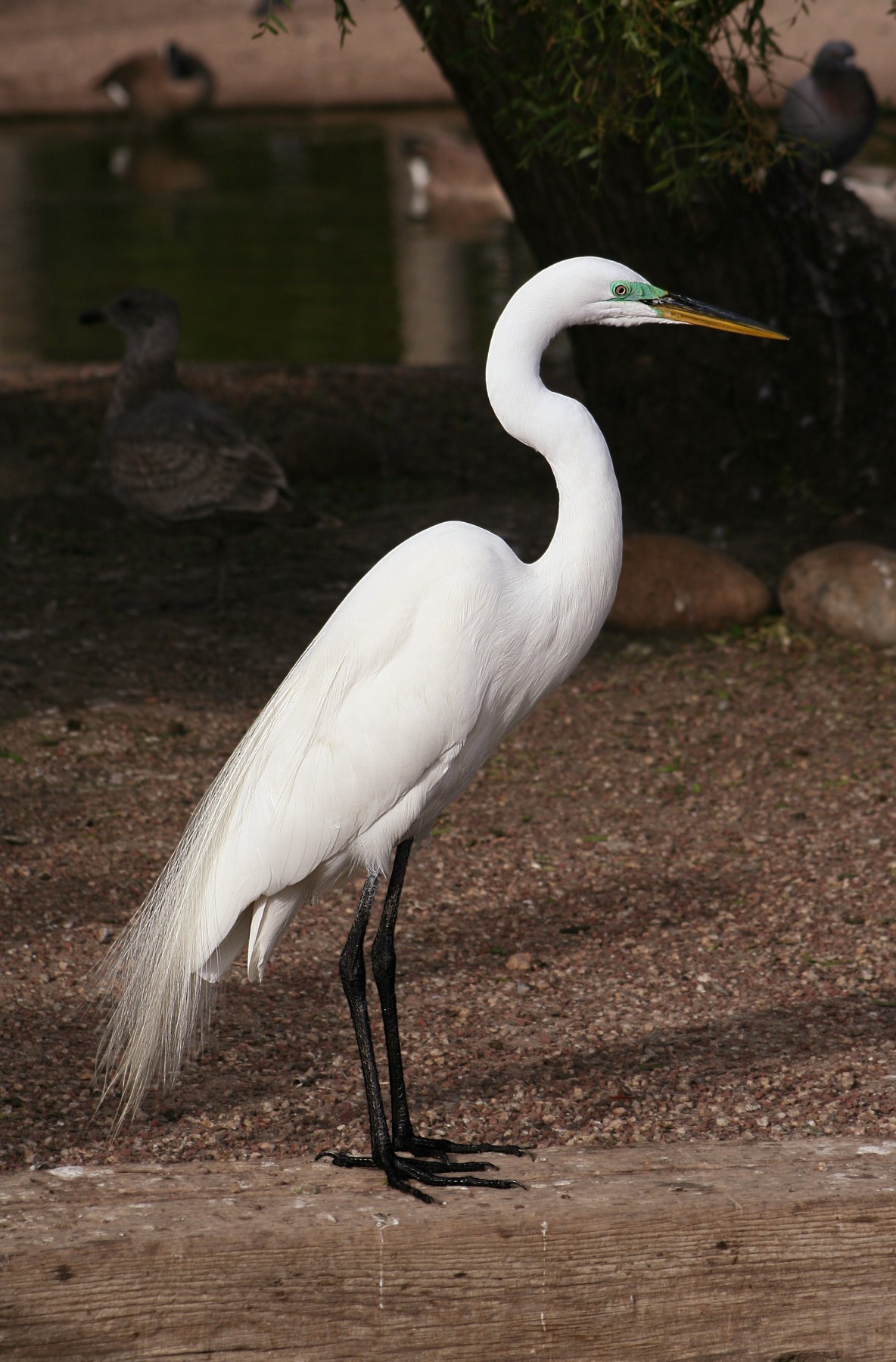
The white egrets are among the most familiar and elegant white birds, and they are worth a closer look. According to the Cornell Lab of Ornithology, the great egret is a large white heron with a yellow bill and black legs, while the snowy egret is a smaller white heron with a black bill and yellow feet. These two egrets are often seen wading gracefully in wetlands, hunting fish and other prey with patient, deliberate movements, their brilliant white plumage standing out against the water and greenery. The great egret is the taller and more stately of the two, while the snowy egret is daintier and more active, sometimes shuffling its bright yellow feet to stir up prey. Both egrets were once hunted heavily for their beautiful plumes, which were used to decorate hats, leading to conservation efforts that helped save them and even inspired the early bird protection movement. Today these lovely white herons are a common and welcome sight in wetlands, among the most beloved white birds, as explored in our guide to types of herons.
Unusual White Birds, Albinism and Leucism
Beyond the birds that are naturally white, occasionally an individual of a normally colored species appears strikingly white or pale, and understanding why is fascinating. Two conditions are usually responsible. Albinism is a genetic condition in which a bird cannot produce melanin pigment at all, resulting in entirely white plumage along with pink eyes, skin, and bill, and truly albino birds are quite rare and often face challenges like poor eyesight. Leucism is a more common condition in which a bird has reduced pigmentation, producing plumage that is pale, washed out, or patchy white, while the eyes usually remain normally colored. A leucistic robin, cardinal, or blackbird, for example, might appear partly or mostly white, causing puzzlement for observers. These unusual white individuals often draw great attention and can be difficult to identify, since their normal colors and patterns are altered. Recognizing albinism and leucism helps explain these surprising white birds, adding another intriguing dimension to the world of white plumage, as reflected in our guide to bird symbolism.
What Is the Name of a Small White Bird?
A small white bird depends heavily on habitat. At the coast, the likeliest answers are Snowy Egret, a slender white heron with black legs and startling yellow feet, or a tern, which is white with a black cap and pointed wings and hovers before plunging into the water. Sanderlings run along the surf line and look nearly white against wet sand.
Inland, small white birds are usually Cattle Egrets, which follow livestock and mowers across fields and are stockier and shorter-billed than other egrets. A genuinely small all-white songbird is unusual, and reports of one often turn out to be a leucistic individual of a common species, most often a House Sparrow, robin or grackle with patchy or complete white plumage.
White Birds in Flight: How to Tell Them Apart
In flight the neck settles most identifications. Herons and egrets fly with the neck folded back into an S against the shoulders, with slow deep wingbeats and trailing legs. Swans, geese, pelicans, ibises and storks all fly with the neck extended straight out, which is the single most reliable long-distance distinction in the group.
Then use black in the wing. A large white bird with black wingtips over open country is a Snow Goose or an American White Pelican, the pelican far broader-winged and often soaring in formation. Wood Storks and White Ibises show black across the trailing edge of the wing rather than only at the tip. A pure white bird with no black at all and a folded neck is almost certainly a Great or Snowy Egret. Audubon’s Great Egret account covers the size and flight profile the others are judged against.
Frequently Asked Questions
What are the different types of white birds?
Common white birds include the great egret, snowy egret, cattle egret, mute swan, snow goose, American white pelican, ring-billed gull, and white ibis.
What is the tall white bird in wetlands?
The great egret is a tall, elegant all-white heron with a yellow bill and black legs, commonly seen wading in marshes, ponds, and other wetlands.
How do you tell white egrets apart?
Look at the bill and feet. The great egret has a yellow bill and black feet, while the smaller snowy egret has a black bill and bright yellow feet.
What is the large white water bird with a big bill?
The American white pelican is an enormous white bird with a huge bill and throat pouch. Despite its size, it soars gracefully and often feeds cooperatively in groups.
Why are some birds white?
White comes from a lack of pigment and how feathers scatter light. It can aid camouflage against the sky, reflect heat, or play a role in courtship, depending on the bird.
What does it mean when a normally colored bird is white?
An unusually white bird of a normally colored species may have albinism, a lack of pigment, or leucism, which causes pale or patchy plumage. Such birds are rare.
Where do white birds live?
Many white birds live in wetlands, such as egrets, swans, and ibises, while others range more widely. Wetlands and water are the best places to find a variety of them.