Types of Orange Birds: A Complete Guide
Several types of orange birds live in North America, most famously the Baltimore oriole and the American robin, along with the orchard oriole, Blackburnian warbler, and American redstart. Bright orange plumage makes these birds especially vivid and eye-catching. This guide covers the main types of orange birds, common species you can see, how to tell them apart, where they live, and why some birds are orange.
| Orange Bird | Key Features |
|---|---|
| Baltimore Oriole | Flame orange, black hood |
| Bullock’s Oriole | Orange, black cap, western |
| Orchard Oriole | Deep chestnut-orange |
| American Robin | Orange breast, gray back |
| Blackburnian Warbler | Fiery orange throat |
| American Redstart | Black with orange patches |
| Varied Thrush | Orange and black, western |
| Rufous Hummingbird | Orange, tiny, feisty |
The Main Types of Orange Birds
There are many orange or orange-marked birds in North America, spanning several families. Among the most brilliant are the orioles, including the flame-orange Baltimore oriole, the western Bullock’s oriole, and the deep chestnut-orange orchard oriole, covered in our guide to types of orioles. The American robin, one of the most familiar birds, has a warm orange breast, and among the warblers, the Blackburnian warbler has a fiery orange throat while the American redstart flashes orange patches in its wings and tail. The varied thrush of the West is boldly patterned in orange and black, and the tiny rufous hummingbird is a feisty orange gem. Other birds, like the male house finch, can show orange tones depending on diet, and some tanagers and the male summer tanager can appear orangey. Together these make up the birds people think of as orange birds, ranging widely in family and habitat, many of them brilliant, as explored in our guide to the American robin.
Common Types of Orange Birds
Several types of orange birds are especially notable. The Baltimore oriole is the classic orange bird of the East, the male a brilliant flame orange with a black hood, covered in our guide to the female Baltimore oriole. Bullock’s oriole is its western counterpart, orange with a black cap and throat, and the orchard oriole is a deeper chestnut-orange. The American robin is perhaps the most familiar orange-breasted bird, common in yards across the continent. The Blackburnian warbler has a stunning fiery orange throat and face, and the American redstart is a black bird with bright orange patches. The varied thrush of western forests is boldly marked in orange and black, resembling a robin with extra pattern, and the rufous hummingbird is a tiny, aggressive orange hummingbird of the West. The male house finch can also appear orange depending on its diet. Each brings its own vivid orange beauty, as explored in our guide to the house finch.
How to Tell Orange Birds Apart
Telling orange birds apart is easier when you use size, shape, and the extent and location of orange. Start with the amount of orange, since orioles like the Baltimore oriole are extensively orange with black, the American robin has an orange breast but a gray back, and the American redstart is mostly black with orange patches. Note the shape and size, as orioles have slender, pointed bills, robins are larger thrushes, warblers like the Blackburnian are tiny with thin bills, and the rufous hummingbird is minute. Look at specific features, such as the oriole’s black hood or cap, the Blackburnian warbler’s fiery throat, or the varied thrush’s orange wing bars and breast band. Habitat and behavior help too, from orioles high in trees to robins on lawns and hummingbirds at flowers. By combining size, shape, and the pattern of orange, you can identify most orange birds, a rewarding skill, as explored in our guide to types of red birds.
Where Orange Birds Live
Orange birds live in a variety of habitats across North America, depending on the species. The orioles favor open woodlands, parks, and leafy suburbs, with the Baltimore oriole in the East and Bullock’s oriole in the West, present mainly in the warmer months before migrating south. The American robin is extremely widespread, found in yards, parks, woodlands, and fields across the continent, often year-round. The Blackburnian warbler breeds in northern and mountain forests and migrates to the tropics, while the American redstart favors woodlands and edges. The varied thrush lives in moist western forests, and the rufous hummingbird breeds in the Northwest and migrates through the West. Many orange birds, especially the orioles and warblers, are migratory, present in North America mainly during the breeding season. Because several orange birds, like orioles and robins, visit yards and gardens, they can often be seen near homes, especially with the right offerings, as detailed in our guide to types of yellow birds.
Why Are Some Birds Orange?
The orange color in many birds, like red and yellow, comes from carotenoid pigments obtained through the diet, and understanding this explains a lot about orange birds. Birds cannot produce these orange pigments themselves, so they acquire them by eating carotenoid-rich foods such as fruits, berries, and insects, then deposit the pigments into their growing feathers. Orange often results from a combination or concentration of these pigments, sitting between red and yellow on the spectrum, which is why a bird’s diet can influence the exact shade and brightness of its orange coloring. Bright orange plumage is frequently used in display, helping birds attract mates and signal their health and quality, since a vividly colored bird may be a well-fed one. This is well illustrated by orioles, whose brilliant orange makes them highly conspicuous. The connection between diet and color is a fascinating aspect of orange birds, adding to the appeal of species like those in our guide to the female oriole.
The Baltimore Oriole, the Classic Orange Bird
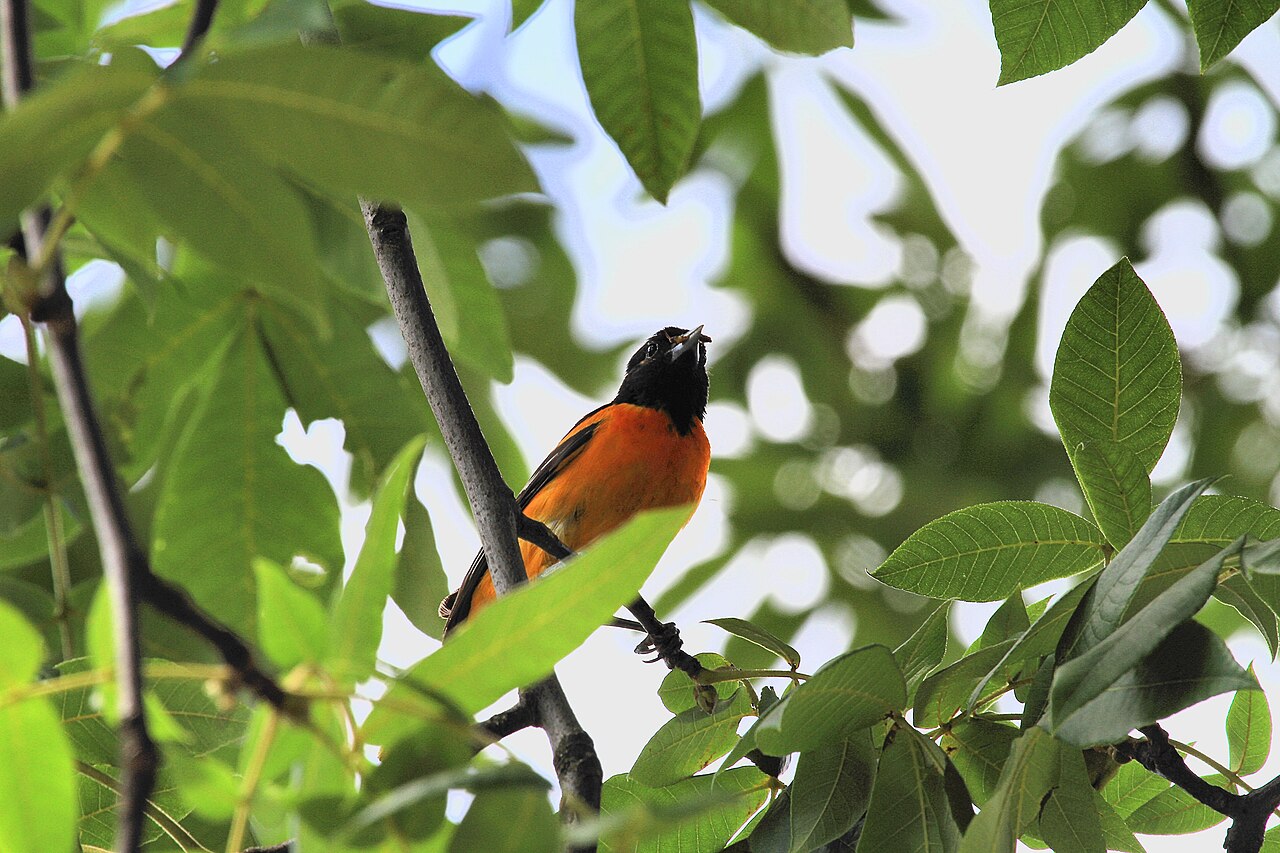
The Baltimore oriole is the orange bird most people picture, and it is worth a closer look. According to the Cornell Lab of Ornithology, the male Baltimore oriole is a brilliant orange and black bird, and the orange color of many birds comes from carotenoid pigments obtained through their diet. The male Baltimore oriole’s flame-orange plumage, set off by a black hood and wings, makes it one of the most stunning birds of eastern North America, a flash of brilliant color high in leafy trees in spring and summer. Orioles are strongly attracted to the color orange and to sweet foods, which is why offering orange halves and grape jelly is such an effective way to draw them to a yard. They weave remarkable hanging, pouch-like nests suspended from branches. The Baltimore oriole migrates to the tropics for winter, so its arrival in spring is eagerly anticipated. Because it is so brilliantly orange and beloved, the Baltimore oriole serves as the classic example of an orange bird, providing a foundation for recognizing the whole group, as explored in our guide to types of orioles.
Attracting Orange Birds to Your Yard
Many orange birds are a delight to attract, and doing so is very achievable with the right approach. Orioles, the most brilliantly orange birds, are famously drawn to the color orange itself and to sweet foods, so offering fresh orange halves, grape jelly, and nectar in oriole feeders, especially in spring when they arrive, is one of the best ways to bring their vivid color to your yard. Planting native fruit-bearing trees and shrubs provides natural food that attracts orioles, robins, and other orange birds, and berry plants are especially appealing to robins and thrushes. Keeping an insect-friendly, pesticide-free yard supports the warblers and other insect eaters. A clean source of water for drinking and bathing appeals to virtually all birds, including orange ones. For the tiny rufous hummingbird, nectar feeders and tubular flowers are key. By combining orange offerings, native plantings, insects, and water, you can enjoy a variety of vivid orange birds, brightening your yard, as detailed in our guide to the American robin.
Frequently Asked Questions
What are the different types of orange birds?
Common orange birds include the Baltimore oriole, Bullock’s oriole, orchard oriole, American robin, Blackburnian warbler, American redstart, varied thrush, and rufous hummingbird.
What is the most common orange bird?
The American robin, with its orange breast, is one of the most familiar orange birds, while the Baltimore oriole is the classic brilliant orange bird of the East.
What bird is bright orange?
The male Baltimore oriole is a brilliant flame orange with a black hood, one of the most vividly orange birds in North America. Bullock’s oriole is its western counterpart.
How do you tell orange birds apart?
Use size, shape, and the extent of orange. Orioles are extensively orange, robins have an orange breast and gray back, and redstarts are black with orange patches.
Why are some birds orange?
Orange color usually comes from carotenoid pigments in the birds’ diet, which they deposit in their feathers. Diet can affect the exact shade and brightness of the orange.
How do you attract orange birds?
To attract orioles, offer orange halves and grape jelly in spring, since they are drawn to the color orange and sweet foods. Robins are drawn to lawns and berry plants.
Where do orange birds live?
Orange birds live in woodlands, parks, gardens, and forests across North America. Orioles favor leafy areas, robins are widespread, and many are migratory.