Female Baltimore Oriole: Identification Guide
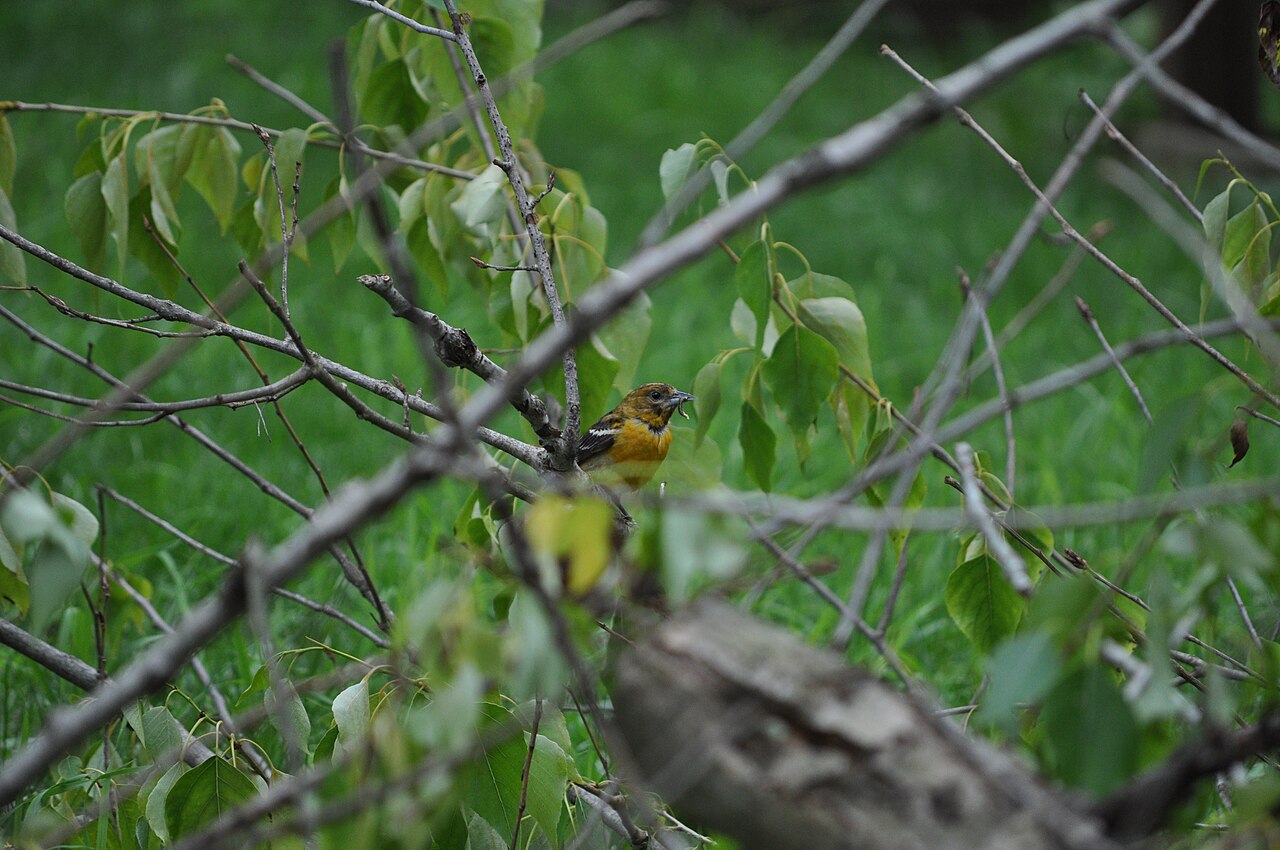
The female Baltimore oriole is a yellow-orange bird with grayish wings, white wingbars, and an olive-brown back, lacking the male’s solid black hood. Though less vivid than the brilliant orange male, she is still a beautiful bird, and her coloring can vary from yellowish to quite orange. This guide covers what a female Baltimore oriole looks like, how she differs from the male, how to identify her, her behavior and nesting, and where and when to see her.
| Feature | Female Baltimore Oriole |
|---|---|
| Color | Yellow-orange, olive back |
| Wings | Grayish with white wingbars |
| Head | No solid black hood |
| Bill | Long, pointed, pale |
| Belly | Yellow to orange |
What Does a Female Baltimore Oriole Look Like?
A female Baltimore oriole is an attractive yellow-orange bird, softer in color than the flaming orange male but still quite lovely. She is generally yellowish-orange on the underparts and rump, with an olive-brown or brownish back and head, and grayish wings marked with two white wingbars. Unlike the male, she does not have a solid black hood, though some older females can develop darker, blotchy markings on the head and become noticeably more orange with age. She has the long, pointed, spike-like bill typical of orioles, usually pale in color. Overall her appearance ranges from a fairly plain yellowish bird to a richer orange one, depending on the individual and her age. This combination of yellow-orange coloring, grayish wings with white wingbars, and the absence of a full black hood is the key to recognizing her, as covered in our guide to types of orioles.
Female vs Male Baltimore Oriole
The difference between female and male Baltimore orioles is clear, thanks to the male’s striking pattern. The adult male Baltimore oriole is a brilliant flame orange with a solid black hood covering the head and upper back, black wings with an orange shoulder patch and white wingbar, and a black tail with orange corners, an unmistakable and dazzling bird. The female, by contrast, is a softer yellow-orange with an olive-brown back and head, grayish wings, and no solid black hood. This makes the sexes easy to tell apart, since the male’s black hood and vivid orange are distinctive. Young males resemble females at first and gradually develop adult plumage over time, so a bird intermediate in appearance may be a young male maturing. The male’s bold coloring is used in courtship and territory defense, while the female’s more subdued plumage helps conceal her, especially while she tends her remarkable nest.
How to Identify a Female Baltimore Oriole
Identifying a female Baltimore oriole involves recognizing her yellow-orange coloring and oriole shape while ruling out similar birds. Look for the yellowish to orange underparts, the olive-brown back, the grayish wings with two white wingbars, and the long, pointed, pale bill, along with the absence of a solid black hood. Her size and slim, pointed-billed oriole shape help too. Be aware of a few possible mix-ups: the female orchard oriole is smaller and a more greenish-yellow overall, without as much orange, and female Bullock’s orioles in the West are similar but tend to be grayer with a paler belly. Female and immature orioles of different species can be genuinely tricky, so range is helpful, since the Baltimore oriole is the expected species in the East. Some female tanagers can also look yellowish but have different bill shapes. Focusing on the yellow-orange color, the wingbars, and the pointed bill makes the female Baltimore oriole identifiable, a rewarding skill covered in our guide to the female oriole.
Female Baltimore Oriole Behavior and Nesting
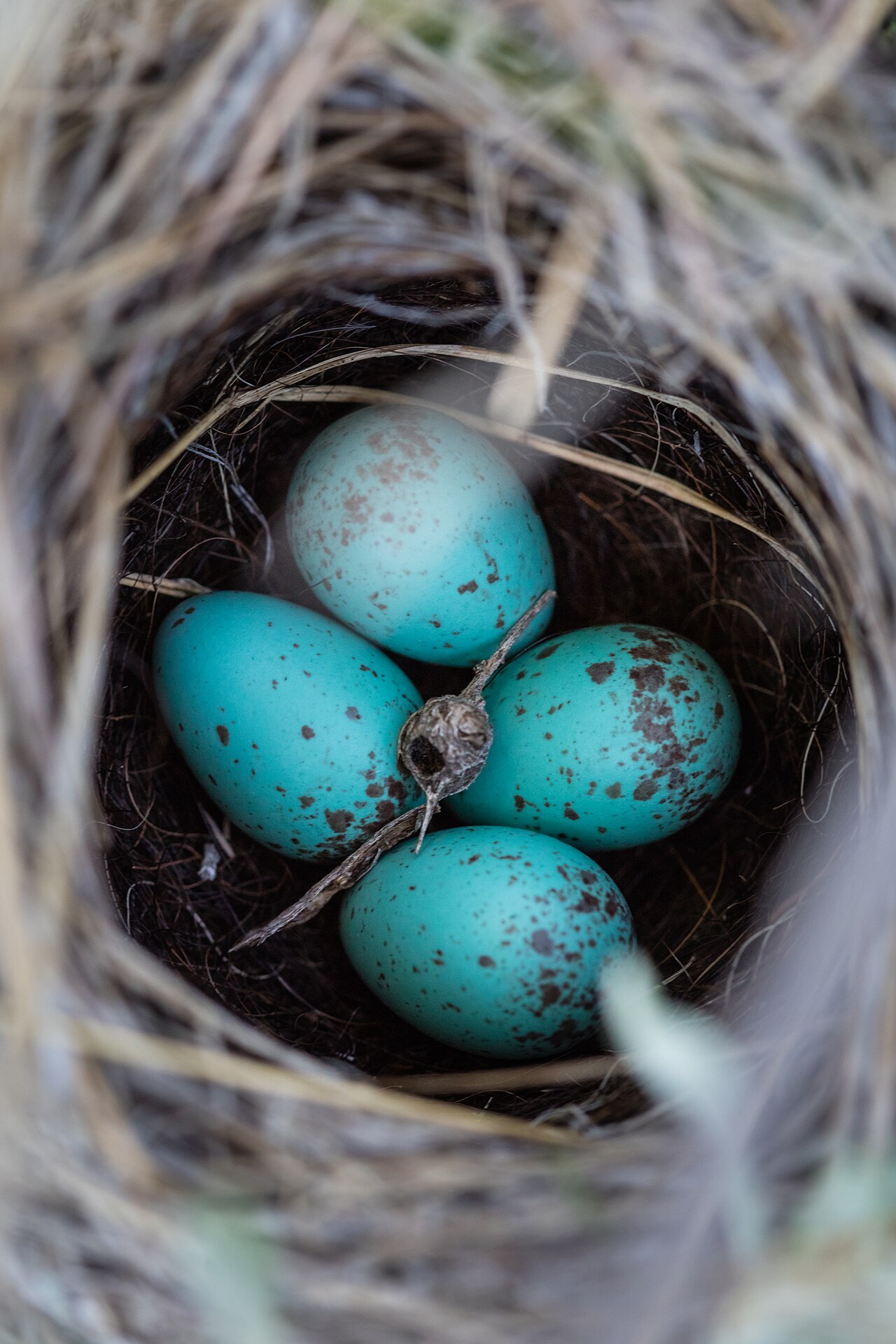
The female Baltimore oriole is the architect behind one of the most remarkable nests in North America. It is the female who weaves the oriole’s famous hanging nest, an intricately woven pouch suspended from the tip of a slender branch, often high in a tall shade tree. Using plant fibers, grasses, and other materials, she skillfully knots and weaves this deep, sock-like structure, which sways safely out of reach of many predators. She then lays and incubates her eggs within it, and both parents help feed the young. Baltimore orioles are drawn to fruit and nectar as well as insects, and the female, like the male, will visit feeders offering oranges, grape jelly, and nectar, especially in spring. Her weaving skill and her fondness for sweet foods make the female Baltimore oriole a fascinating bird to observe, and providing the right offerings can bring her into view, as reflected in our guide to attracting birds.
Where and When to See Female Baltimore Orioles
Female Baltimore orioles are found across the eastern and central United States during the breeding season, alongside the males. Look for them in open woodlands, forest edges, parks, riverside groves, and leafy suburban areas with tall shade trees, since Baltimore orioles favor open settings with scattered large trees rather than deep forest, often foraging high in the canopy. They are present mainly in the warmer months, arriving in spring and departing by fall to spend the winter in the tropics, from Mexico through Central America and northern South America. Spring is an especially good time to see females, both as they arrive and when they are drawn to feeders with oranges and jelly before settling into nesting. Because orioles often stay high in trees, offering fruit and nectar at feeders is one of the best ways to bring the female into clear view. Patient watching of tall, leafy trees in the right season rewards birders with sightings of this lovely bird, as detailed in our guide to the best bird foods.
Female Baltimore Oriole Plumage Explained
The softer coloring of a female Baltimore oriole is well documented by ornithologists. According to the Cornell Lab of Ornithology, female Baltimore orioles are yellow-orange and lack the male’s solid black hood, and it is the female who weaves the oriole’s distinctive hanging pouch nest. Her more subdued plumage, with an olive-brown back and grayish wings, provides camouflage while she tends this remarkable nest, whereas the male’s brilliant orange and black is used for display. Female Baltimore orioles are also notably variable, with older females often becoming more orange and developing darker head markings over time, which can make some females quite colorful. The white wingbars and the absence of a full black hood remain reliable clues to her identity. Understanding this variability and the female’s central role in nest-building makes her easier to identify and appreciate, a pattern of duller females also seen in our guide to the female oriole.
The Baltimore Oriole’s Woven Nest
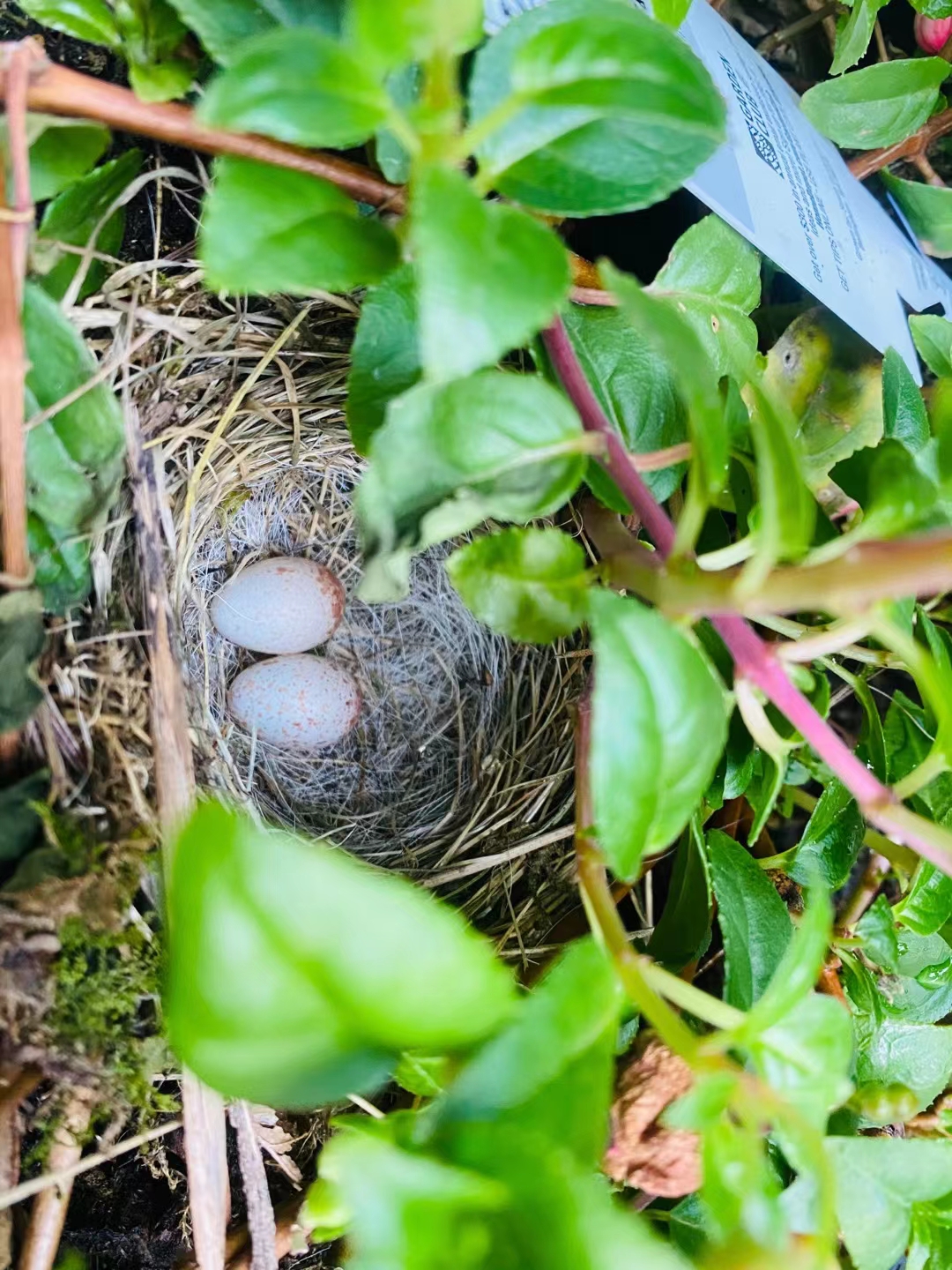
The hanging nest of the Baltimore oriole is one of the most impressive structures in the bird world, and the female is its sole builder. She weaves a deep, sock-like pouch that hangs from the tip of a slender branch, often high in a tall shade tree such as an elm, maple, or cottonwood, using plant fibers, grasses, and other flexible materials. Knotting and weaving the strands together, she creates a strong, flexible nest that sways in the breeze yet safely cradles the eggs and young out of reach of many predators. This skillful construction can take days of work, and the finished nest is a marvel of natural engineering. Finding one of these woven pouches hanging in a tree is a good sign that Baltimore orioles have nested nearby. Appreciating the female’s remarkable nest-building deepens admiration for these brilliant birds, which can be drawn to yards with the right offerings, as detailed in our guide to the best bird foods.
Frequently Asked Questions
What does a female Baltimore oriole look like?
A female Baltimore oriole is a yellow-orange bird with an olive-brown back, grayish wings with white wingbars, and a long pointed bill, lacking the male’s solid black hood.
How can you tell a female Baltimore oriole from a male?
The male has a solid black hood and brilliant flame-orange body, while the female is a softer yellow-orange with an olive-brown back, grayish wings, and no full black hood.
Are female Baltimore orioles orange?
Female Baltimore orioles range from yellowish to quite orange, and older females can become noticeably more orange with darker head markings, though never as vivid as the male.
How do you tell a female Baltimore oriole from a female orchard oriole?
The female orchard oriole is smaller and a more greenish-yellow overall with less orange, while the female Baltimore oriole is larger and more yellow-orange.
Do female Baltimore orioles build the nest?
Yes, the female weaves the oriole’s famous hanging pouch nest, an intricately woven structure suspended from a slender branch, and she incubates the eggs within it.
Do female Baltimore orioles come to feeders?
Yes, female Baltimore orioles visit feeders offering oranges, grape jelly, and nectar, especially in spring, just as the males do, since orioles love sweet foods.
Where do female Baltimore orioles live?
Female Baltimore orioles live in open woodlands, parks, and leafy suburbs with tall shade trees across the eastern and central United States in the warmer months.