Types of Chickadees: A Complete Guide
There are seven types of chickadees in North America: the black-capped, Carolina, mountain, chestnut-backed, boreal, Mexican, and gray-headed chickadees. These tiny, energetic birds with black caps and bibs are favorites at feeders across the continent. This guide covers the types of chickadees, how to tell them apart, where they live, and how to attract them.
| Chickadee | Key Feature |
|---|---|
| Black-capped Chickadee | Widespread, black cap and bib |
| Carolina Chickadee | Southeast, neat bib edge |
| Mountain Chickadee | White eyebrow stripe |
| Chestnut-backed Chickadee | Rich chestnut back |
| Boreal Chickadee | Brown cap, northern forests |
| Mexican Chickadee | Limited US range, southwest |
| Gray-headed Chickadee | Rare, far north Alaska |
How Many Types of Chickadees Are There?
There are seven species of chickadees in North America, all small, active birds belonging to the tit family, known for their black or dark caps and bibs and their curious, acrobatic behavior. The most familiar are the black-capped chickadee of the northern and central states and the Carolina chickadee of the Southeast, two very similar species. The mountain chickadee lives in the western mountains, the chestnut-backed chickadee along the Pacific coast, and the boreal chickadee in the far northern coniferous forests. The Mexican chickadee reaches the United States only in a small area of the Southwest, and the gray-headed chickadee is a rare bird of the far north in Alaska. Chickadees are beloved for their tameness, their cheerful calls, and their readiness to visit feeders. Understanding the chickadees begins with these species, and the most widespread is covered in our guide to the black-capped chickadee.
Common Chickadees and How to Tell Them Apart
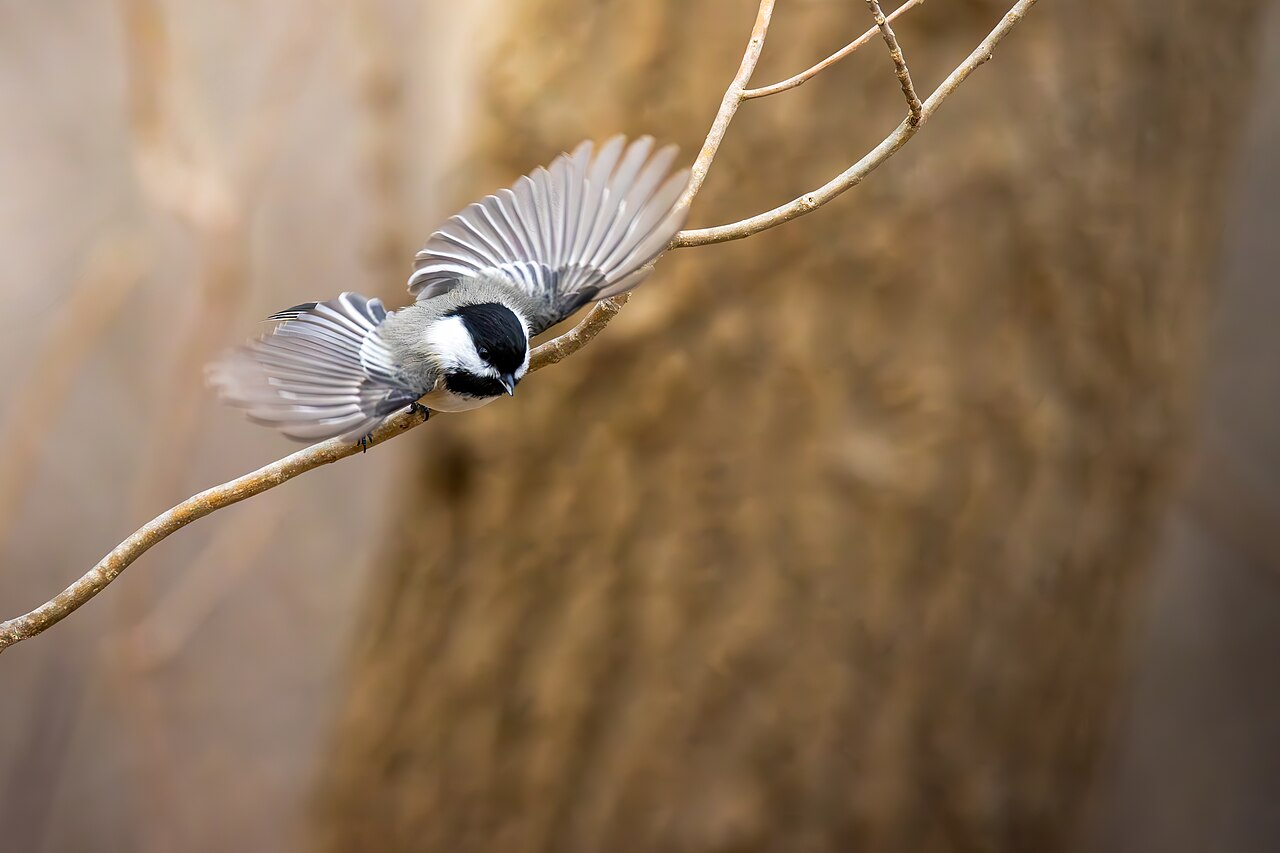
Several chickadees are especially worth knowing. The black-capped chickadee is widespread across the northern United States and Canada, with a black cap, black bib, white cheeks, and buffy sides, and white edging on the wing feathers. The Carolina chickadee of the Southeast looks very similar but is slightly smaller with a neater bib edge and less white in the wing, and the two can be hard to separate where their ranges meet. The mountain chickadee of the western mountains has a distinctive white eyebrow stripe through the black cap. The chestnut-backed chickadee of the Pacific coast is unmistakable, with a rich chestnut-brown back and sides. The boreal chickadee of northern forests has a brown cap instead of black, and the Mexican and gray-headed chickadees are limited in the United States. Range is often the best first clue, since most areas have only one or two species. Each chickadee has its own subtle look, as explored in our guide to types of nuthatches.
Where Chickadees Live
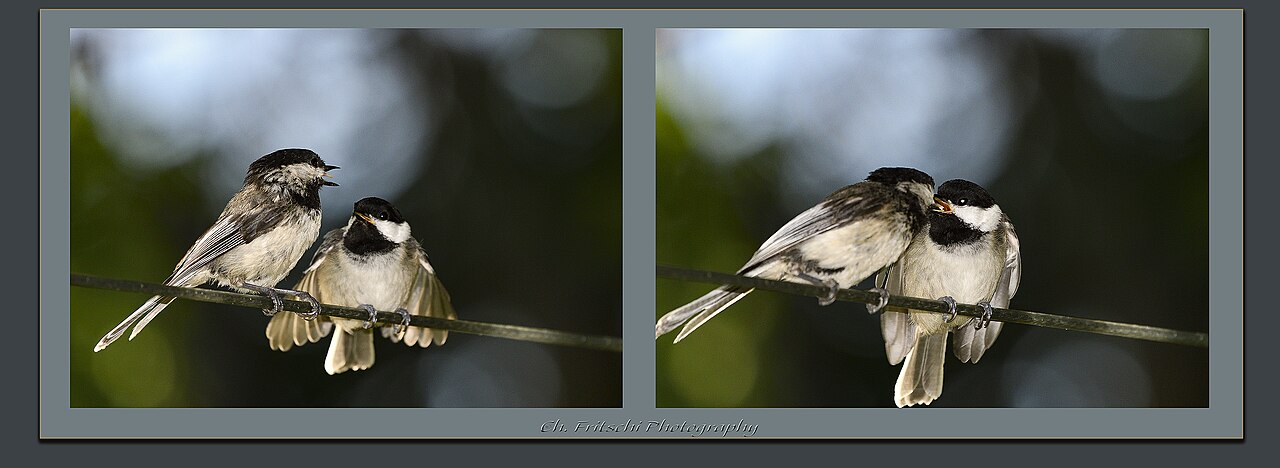
Chickadees live across nearly all of North America, with different species occupying different regions and habitats. The black-capped chickadee ranges across the northern and central United States and much of Canada, favoring woodlands, forests, and suburban yards, while the Carolina chickadee occupies the southeastern states in similar habitats. The mountain chickadee inhabits coniferous forests of the western mountains, and the chestnut-backed chickadee lives in the moist coniferous forests along the Pacific coast. The boreal chickadee is a bird of the northern boreal coniferous forests across Canada and Alaska, and the Mexican chickadee reaches only mountain forests of the far southwestern United States. The gray-headed chickadee is a rare resident of remote far-northern Alaska. Most chickadees are year-round residents that do not migrate, though some northern birds may move south in some winters. Because at least one chickadee species lives almost everywhere on the continent, they are among the most familiar of birds, as detailed in our guide to attracting birds.
How to Attract Chickadees
Attracting chickadees to your yard is easy and rewarding, since they are among the most feeder-friendly of all birds. Black oil sunflower seed is a top choice, and chickadees will readily visit tube feeders, hopper feeders, and platform feeders to grab seeds, often flying off with one at a time to open elsewhere. They also relish suet, especially in the cooler months, and will take peanuts and peanut butter offerings. Providing a source of clean water for drinking and bathing helps attract them, and chickadees are cavity nesters that readily use nest boxes of the appropriate size, so putting up a small nest box can attract a breeding pair. Planting native trees and shrubs provides natural food in the form of insects and seeds, as well as cover. Because chickadees are tame and curious, they are often among the first birds to discover a new feeder. By offering sunflower seed, suet, water, and nest boxes, you can enjoy chickadees year-round, as reflected in our guide to the best bird seed.
Fascinating Chickadee Behavior
Chickadees are not only cute and tame but also remarkably clever, which adds to their appeal. According to the Cornell Lab of Ornithology, chickadees hide food and can remember thousands of hiding places to retrieve later, an impressive feat of memory. This food-caching behavior helps chickadees survive harsh winters, since they store seeds and insects in autumn and recover them when food is scarce. Chickadees are also known for their complex calls, and their namesake “chick-a-dee” call carries information, with more “dee” notes signaling greater danger from a predator. They are highly social in winter, forming flocks that often include other species like nuthatches, titmice, and woodpeckers, with the chickadees frequently acting as the alert system for the group. Their curiosity and boldness make them among the first birds to investigate a new feeder or a person standing quietly. These fascinating behaviors make chickadees a joy to watch, as explored in our guide to the white-breasted nuthatch.
Chickadees and Nest Boxes
Chickadees are cavity nesters, and understanding this helps you attract them to breed in your yard. In the wild, chickadees nest in holes in dead or rotting wood, sometimes excavating their own cavity in soft, decaying wood and sometimes using an old woodpecker hole or a natural cavity. They readily accept nest boxes of the appropriate small size, especially those with an entrance hole around one and one-eighth inches, which keeps out larger competitors. Placing a nest box in a wooded or partly wooded yard, ideally with some cover nearby, can attract a breeding pair, and some people add a bit of wood shavings to the box to mimic natural nesting material. The female builds the nest, often using moss as a foundation and lining it with soft fur and plant material. Watching a pair of chickadees raise a family in a nest box is a rewarding experience, as reflected in our guide to the downy woodpecker.
Appreciating Chickadees
Chickadees are among the most beloved of all backyard birds, and appreciating them adds to the pleasure of birding. Their tameness, curiosity, and cheerful calls make them favorites at feeders across the continent, and their remarkable intelligence, from caching food to their information-rich calls, makes them endlessly fascinating to watch. Learning which chickadee species occurs in your region, and enjoying their acrobatic feeding and social winter flocks, deepens your connection to your local birds. Because at least one chickadee species lives almost everywhere in North America, and because they are so bold and approachable, they offer wonderful opportunities to observe bird behavior up close, even for beginners. Taking the time to watch chickadees, offer them food and nest boxes, and appreciate their charm and cleverness makes backyard birding more rewarding throughout the year.
Related reading: what do chickadees eat.
Frequently Asked Questions
How many types of chickadees are there?
There are seven types of chickadees in North America: the black-capped, Carolina, mountain, chestnut-backed, boreal, Mexican, and gray-headed chickadees.
What is the most common chickadee?
The black-capped chickadee is the most widespread and familiar chickadee across the northern and central United States and Canada, while the Carolina chickadee is common in the Southeast.
How do you tell chickadee species apart?
Range is often the best clue, since most areas have only one or two species. Look also for features like the mountain chickadee’s white eyebrow or the chestnut-backed’s brown back.
What is the difference between a black-capped and Carolina chickadee?
They look very similar, but the Carolina chickadee is slightly smaller with a neater bib edge and less white in the wing. Where their ranges meet, they can be hard to separate.
Do chickadees migrate?
Most chickadees are year-round residents that do not migrate, though some northern birds may move south in certain winters when food is scarce in their usual range.
How do you attract chickadees?
Offer black oil sunflower seed, suet, and peanuts at feeders, provide clean water, and put up a small nest box. Chickadees are tame and readily visit yards.
Where do chickadees live?
Chickadees live across nearly all of North America, with different species in different regions, from the black-capped in the North to the Carolina in the Southeast.