Types of Tanagers: A Complete Guide
The main types of tanagers in North America are the scarlet, summer, western, and hepatic tanagers. These brightly colored songbirds are among the most vivid birds on the continent, and despite their tropical look they are now classified in the cardinal family. This guide covers the types of tanagers, how to tell them apart, where they live, and how to see them.
| Tanager | Key Feature |
|---|---|
| Scarlet Tanager | Male brilliant red, black wings |
| Summer Tanager | Male all rosy-red, no black |
| Western Tanager | Yellow body, red face, black wings |
| Hepatic Tanager | Brick-red, gray cheek, southwest |
How Many Types of Tanagers Are There?
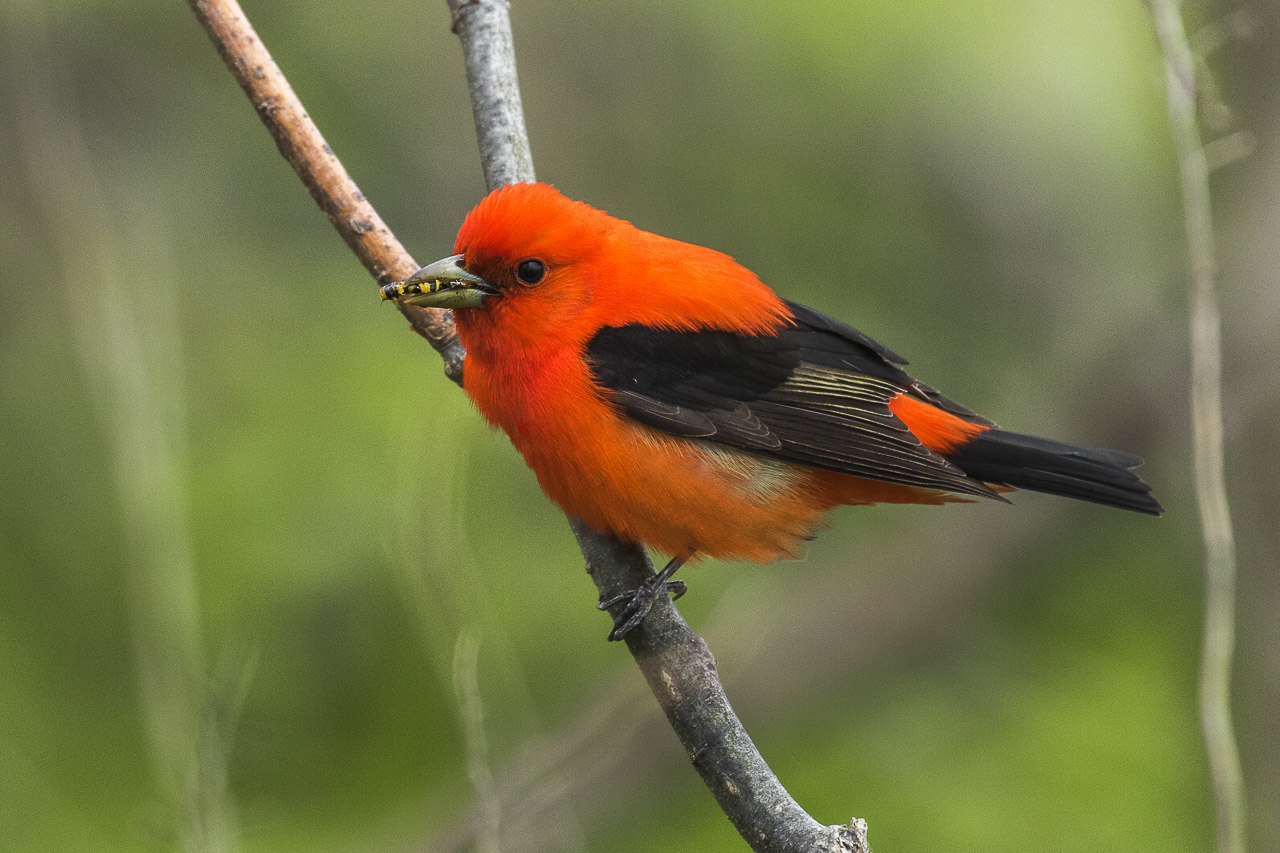
There are four types of tanagers that regularly breed in North America, all brightly colored songbirds known for their vivid plumage and their preference for wooded habitats. The scarlet tanager is a stunning bird of eastern forests, the male brilliant red with black wings, while the summer tanager, found in the South, is entirely rosy-red with no black. The western tanager, of the West, has a yellow body, black wings, and a red face, and the hepatic tanager, of the Southwest, is a brick-red bird with a gray cheek. Although tanagers look tropical and were long grouped with the true tropical tanagers, the North American species are now classified in the cardinal family, related to cardinals and grosbeaks. In all four, the males are brightly colored while the females are yellowish or greenish and much plainer. Understanding tanagers begins with these species, and one female is covered in our guide to the female scarlet tanager.
The Four Tanagers and How to Tell Them Apart
Each tanager has a distinctive look, especially the males. The scarlet tanager male is unmistakable in summer, a brilliant flame-red bird with jet-black wings and tail, while the female is yellow-green with darker wings. The summer tanager male is entirely rosy-red, including the wings, with no black at all, and the female is a warm mustard-yellow. The western tanager male is striking, with a yellow body, black wings with wingbars, and a reddish-orange face, while the female is yellowish and plainer. The hepatic tanager, of the Southwest, is a brick-red male with a dark gray cheek and bill, with a yellowish female. Range is a strong clue, since the scarlet is eastern, the summer southern, and the western and hepatic western, though summer and western tanagers overlap in places. The plainer yellowish females are trickier and are best identified with care. Each tanager is a jewel of the woods, as explored in our guide to the female summer tanager.
Where Tanagers Live
Tanagers live across much of North America in the warmer months, with different species in different regions, and all migrate to the tropics for winter. The scarlet tanager breeds in mature deciduous forests of the eastern United States and southeastern Canada, often high in the canopy, which can make it hard to spot despite its bright color. The summer tanager breeds in open woodlands of the southern United States, favoring oak and pine woods, and it has a taste for bees and wasps. The western tanager breeds in coniferous and mixed forests of the western United States and western Canada, and the hepatic tanager is found in mountain pine and oak forests of the Southwest. All four are neotropical migrants, present in North America mainly from spring through fall and wintering in Mexico, Central America, or South America. Because they often stay high in the trees, tanagers can take patience to see, as detailed in our guide to types of warblers.
How to See Tanagers
Seeing tanagers is rewarding but can take some effort, since they often forage high in the forest canopy. Listening is a great strategy, since tanagers have distinctive songs and calls, and the scarlet tanager’s burry, robin-like song and the summer tanager’s sharp, staccato call notes can help you locate them among the leaves. Scanning the treetops in mature woodlands during spring and summer, especially in the morning when birds are active and singing, gives the best chance of spotting a flash of red or yellow. Spring migration is an excellent time, when tanagers move through and may pause in lower vegetation or even at the edges of yards, sometimes visiting fruit or water. Offering fruit such as orange halves or providing a birdbath can occasionally attract tanagers, especially during migration. Because they are bright but often high and can be surprisingly hard to see, finding a tanager feels like a reward. Patience and attention to song make tanagers findable, as reflected in our guide to bird symbolism.
Tanager Colors and Molt
The brilliant colors of tanagers are one of their great attractions, and the story behind them is fascinating. According to the Cornell Lab of Ornithology, the male scarlet tanager molts from its brilliant breeding red into a greenish, female-like plumage for the winter, keeping its black wings. This means that in fall, a male scarlet tanager can appear patchy and green, a very different look from his flaming summer self, which can puzzle observers. The vivid reds and yellows of tanagers come from pigments in their food, and their colors are used in display to attract mates. Because the plainer female tanagers are yellowish or greenish year-round, and males can look female-like outside the breeding season, careful attention to wing color, bill shape, and range is often needed. The dramatic seasonal change in the scarlet tanager is a wonderful example of molt, adding interest to every tanager sighting, as explored in our guide to the northern cardinal.
How Tanagers Live
Tanagers have interesting habits that reward the patient watcher. Most North American tanagers are birds of the treetops, foraging deliberately through the foliage for insects and fruit, and their tendency to stay high in the canopy is why such brightly colored birds can be surprisingly hard to see. The summer tanager has a special fondness for bees and wasps, which it catches in flight and beats against a branch before eating, even raiding nests, an unusual diet among songbirds. Tanagers also eat fruit, especially outside the breeding season and during migration, which is why offering fruit can sometimes draw them to yards. They build cup nests in trees, and the plainer females do much of the nest building. All North American tanagers migrate to the tropics for winter, undertaking long journeys twice a year. Learning these habits helps you find and appreciate tanagers, as reflected in our guide to types of warblers.
Appreciating Tanagers
Tanagers are among the most rewarding birds to appreciate, both for their dazzling colors and for the challenge of finding them. Learning to recognize the different tanagers, from the scarlet tanager’s flaming red and black to the western tanager’s yellow and orange, adds a thrilling dimension to woodland birding, since spotting one of these treetop jewels feels like a genuine reward. Because they often stay high in the canopy and the females are plain, tanagers reward patience and attention to song. Spring and summer, when the males are in brilliant breeding color and singing, are the best times to seek them, and migration offers extra chances. Taking the time to listen for tanager songs, scan the treetops, and appreciate these vivid neotropical migrants makes birding more rewarding, and connects you to the remarkable journeys these birds make between North America and the tropics each year.
Frequently Asked Questions
How many types of tanagers are there?
Four types of tanagers regularly breed in North America: the scarlet, summer, western, and hepatic tanagers. All are brightly colored and migrate to the tropics for winter.
What is the difference between a scarlet and summer tanager?
The scarlet tanager male has a red body with black wings, while the summer tanager male is red all over, including the wings. The summer tanager is also more southern.
Are tanagers related to cardinals?
Yes, the North American tanagers are now classified in the cardinal family, related to cardinals and grosbeaks, though they were long grouped with the tropical tanagers.
What do female tanagers look like?
Female tanagers are yellowish or greenish and much plainer than the brightly colored males, which can make them harder to identify. Range and shape help with identification.
How do you tell tanager species apart?
Use color, face pattern, and range. The scarlet has black wings, the summer is all red, the western has a yellow body and red face, and the hepatic is brick-red with a gray cheek.
Where do tanagers live?
Tanagers live in forests across North America in summer, the scarlet in the East, summer in the South, and western and hepatic in the West, wintering in the tropics.
How do you see a tanager?
Listen for their songs and scan the treetops in mature woods in spring and summer. Migration is a good time, and offering fruit or water can occasionally attract them.