Types of Grebes: A Complete Guide
The main types of grebes in North America are the pied-billed, horned, eared, western, Clark’s, red-necked, and least grebes. These diving waterbirds sit low in the water and have lobed toes rather than webbed feet, setting them apart from ducks. This guide covers the types of grebes, how to tell them apart, where they live, and how to see them.
| Grebe | Key Feature |
|---|---|
| Pied-billed Grebe | Small, brown, banded bill |
| Horned Grebe | Golden ear tufts in breeding |
| Eared Grebe | Wispy golden ear fan |
| Western Grebe | Large, long neck, black and white |
| Clark’s Grebe | Like Western, white around eye |
| Red-necked Grebe | Rusty neck, larger |
| Least Grebe | Tiny, dark, golden eye |
How Many Types of Grebes Are There?
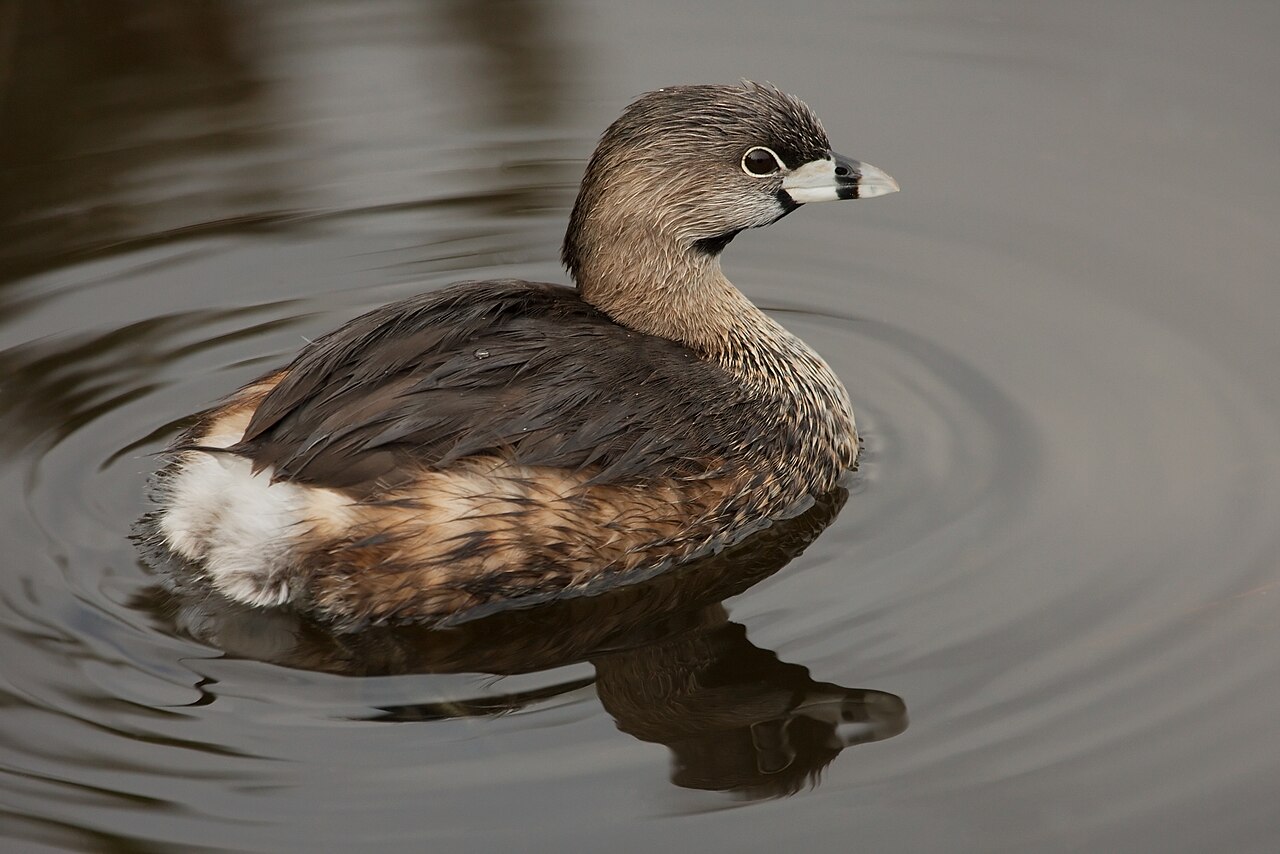
There are seven species of grebes in North America, all diving waterbirds specialized for life on the water, with bodies set low in the water, pointed or stout bills, and feet placed far back for powerful swimming. The most widespread is the small pied-billed grebe, a brown bird of ponds and marshes with a banded bill in the breeding season. The horned grebe and eared grebe are small grebes that show striking golden head plumes when breeding, while the large western grebe and the very similar Clark’s grebe are elegant black-and-white birds with long, slender necks. The red-necked grebe is a larger grebe with a rusty neck in breeding plumage, and the least grebe is a tiny, dark grebe of the far south. Grebes have lobed toes rather than the webbed feet of ducks, and they are not closely related to ducks at all. Understanding grebes begins with these species, part of the wider world of water birds covered in our guide to water birds in Florida.
The Main Grebes and How to Tell Them Apart
Each grebe has distinctive features, especially in breeding plumage. The pied-billed grebe is small and brown, with a stout, pale bill that shows a black band in summer, and it is the grebe most often seen on small ponds. The horned grebe has golden ear tufts and a rusty neck when breeding, and a clean black-and-white look in winter, while the eared grebe has a wispy golden fan on the face and a peaked head. The western grebe is large and slender, with a long neck, black upperparts, white underparts, and a yellowish bill, and the Clark’s grebe looks nearly identical but has white around the eye and a brighter bill. The red-necked grebe is a large grebe with a rusty neck and a yellowish bill, and the least grebe is tiny and dark with a golden eye. Size, head pattern, bill, and neck color all help, along with range and season. Each grebe is a fascinating water bird, as explored in our guide to types of ducks.
Where Grebes Live
Grebes live across North America on a variety of freshwater and, in winter, saltwater habitats. The pied-billed grebe is widespread on ponds, marshes, and slow rivers across much of the continent, and it is the grebe most likely to be seen inland. The horned and eared grebes breed on northern and western lakes and marshes and winter on lakes, bays, and coastlines, the eared grebe often in large flocks on western waters. The western and Clark’s grebes breed on large western lakes and marshes with open water and reeds, famous for their courtship displays, and winter along the coast and on large lakes. The red-necked grebe breeds on northern lakes and winters on coastal waters, and the least grebe is a resident of ponds in the far southern United States, mainly Texas. Many grebes migrate, moving to open water for the winter. Because they favor lakes, ponds, and marshes, grebes are found by scanning open water, as detailed in our guide to bird symbolism.
How to See Grebes
Seeing grebes is rewarding and usually involves scanning open water patiently. Grebes spend most of their time swimming and diving, so a good approach is to look over ponds, lakes, marshes, and bays with binoculars or a spotting scope, watching for small to medium birds sitting low in the water. Because grebes dive frequently and can stay under for a surprisingly long time, it helps to wait and watch, since a bird that vanishes will often pop up some distance away. The pied-billed grebe is the easiest to find on small inland ponds, while the horned, eared, western, and Clark’s grebes are often seen on larger lakes and coastal waters, especially in winter. Spring is a wonderful time to see grebes in their colorful breeding plumage, and the courtship displays of western and Clark’s grebes, in which pairs rush side by side across the water, are a spectacular sight. Patience and open water are the keys to enjoying grebes, as reflected in our guide to types of thrushes.
Grebe Feet and Feather-Eating
Grebes have some of the most remarkable adaptations of any water bird, which makes them fascinating to learn about. According to the Cornell Lab of Ornithology, grebes have the unusual habit of eating their own feathers, which is thought to help protect their stomachs and aid digestion. This strange behavior, unique among birds, may cushion the digestive tract against sharp fish bones and help form pellets of indigestible material that the grebe can cough up. Grebes are also built for diving, with legs set far back on the body and feet bearing broad, lobed toes rather than the webbed feet of ducks, which makes them superb swimmers but awkward on land. They can control their buoyancy, sometimes sinking slowly beneath the surface, and they pursue fish and invertebrates underwater with agility. These extraordinary adaptations, from lobed toes to feather-eating, set grebes apart, making them a fascinating group to observe, as explored in our guide to water birds in Florida.
Grebe Courtship Displays
Grebes are famous for some of the most spectacular courtship displays in the bird world, worth seeking out in spring. The western and Clark’s grebes perform an elaborate ritual known as rushing, in which a pair rises up and runs side by side across the surface of the water in perfect unison, their bodies held upright, before diving back down, a breathtaking sight on western lakes. They also perform a graceful ceremony in which they rise together holding water weeds in their bills. Other grebes have their own displays, with the horned and eared grebes showing off their golden head plumes and performing head-shaking and posturing rituals. These displays strengthen pair bonds and are among the highlights of spring birding on lakes and marshes. Witnessing a pair of western grebes rushing across the water is an unforgettable experience, adding to the appeal of grebes, as reflected in our guide to types of ducks.
Appreciating Grebes
Grebes are a rewarding group to appreciate, both for their elegance and for their extraordinary adaptations. Learning to recognize the different grebes, from the small pied-billed grebe on a local pond to the elegant western grebe on a large lake, adds a rewarding dimension to birding on the water. Because grebes dive frequently and can be tricky to identify in their plainer winter plumage, they reward patience and careful observation. Spring, when many grebes show their colorful breeding plumage and perform their remarkable courtship displays, is an especially wonderful time to seek them. Taking the time to scan open water, wait for a diving grebe to resurface, and appreciate these superb swimmers with their lobed toes and fascinating habits makes birding on lakes and marshes more rewarding, and connects you to a bird family beautifully adapted to a life spent almost entirely on the water.
Related reading: Types of Tanagers.
Frequently Asked Questions
How many types of grebes are there?
There are seven species of grebes in North America: the pied-billed, horned, eared, western, Clark’s, red-necked, and least grebes.
What is the most common grebe?
The pied-billed grebe is the most widespread and commonly seen grebe, a small brown bird found on ponds, marshes, and slow rivers across much of North America.
Are grebes ducks?
No, grebes are not ducks. They belong to a separate family and have lobed toes rather than webbed feet, sit low in the water, and have pointed or stout bills, not flat duck bills.
What is the difference between a western and Clark’s grebe?
They look nearly identical, but the Clark’s grebe has white surrounding the eye and a brighter yellow-orange bill, while the western grebe has black around the eye and a duller bill.
How do you tell grebe species apart?
Use size, head pattern, bill shape, and neck color, along with range and season. Breeding plumages, like the horned grebe’s golden ear tufts, are especially distinctive.
Where do grebes live?
Grebes live on ponds, lakes, marshes, and, in winter, coastal waters across North America. The pied-billed grebe is the one most often seen on small inland ponds.
How do you see a grebe?
Scan open water on ponds, lakes, and bays with binoculars, and be patient, since grebes dive often and resurface some distance away. Spring shows their colorful breeding plumage.