Types of Thrushes: A Complete Guide
The types of thrushes in North America include the American robin, eastern bluebird, wood thrush, hermit thrush, Swainson’s thrush, veery, and varied thrush. This family includes both familiar backyard birds and shy, spotted forest songbirds famous for their beautiful songs. This guide covers the types of thrushes, how to tell them apart, where they live, and how to see them.
| Thrush | Key Feature |
|---|---|
| American Robin | Orange breast, gray back |
| Eastern Bluebird | Blue above, orange breast |
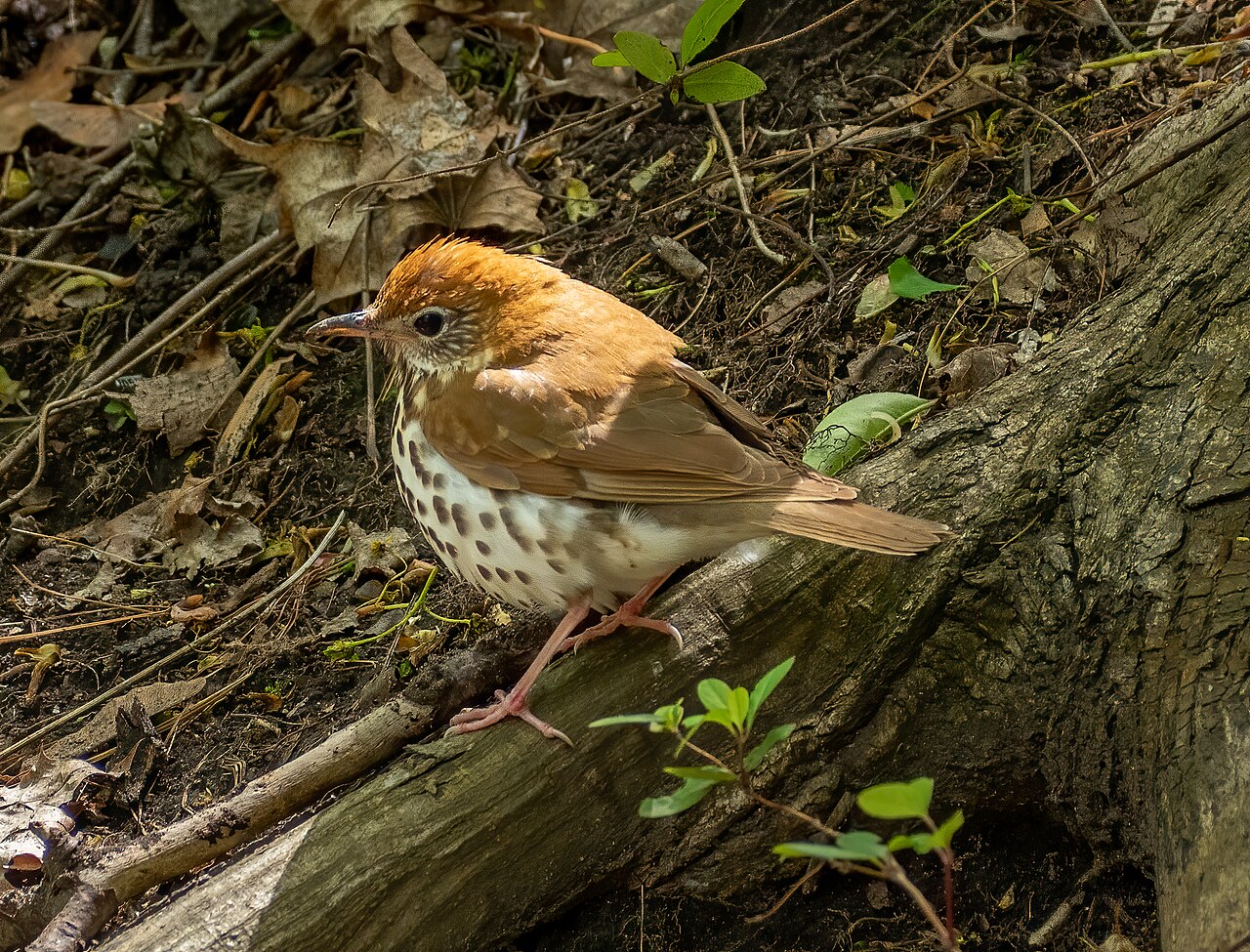
| Wood Thrush | Rusty head, bold round spots |
| Hermit Thrush | Rusty tail, spotted breast |
| Swainson’s Thrush | Buffy eyering, spotted breast |
| Veery | Warm brown, faint spots |
| Varied Thrush | Orange and black, western |
How Many Types of Thrushes Are There?
There are many types of thrushes in North America, a family that ranges from some of the most familiar backyard birds to shy woodland songbirds. The most familiar thrush is the American robin, with its orange breast and cheerful song, and, perhaps surprisingly, the eastern bluebird is also a thrush, as are the western and mountain bluebirds. Beyond these, a group of brown, spotted-breasted thrushes includes the wood thrush, with its rusty head and bold spots, and the smaller Catharus thrushes such as the hermit thrush, Swainson’s thrush, veery, and gray-cheeked thrush, which are shy birds of the forest floor renowned for their flute-like songs. The varied thrush of the West is a striking orange-and-black bird, and the Townsend’s solitaire is another western member of the family. Thrushes are generally strong singers with slender bills, and many feed on both insects and fruit. Understanding thrushes begins with these species, and a favorite is covered in our guide to the eastern bluebird.
The Main Thrushes and How to Tell Them Apart
Thrushes range from easy to tricky to identify. The American robin is familiar, with a gray back and brick-orange breast, and the eastern bluebird is blue above with an orange breast. Among the brown, spotted thrushes, the wood thrush stands out with its warm rusty head and back and bold, round black spots on a white breast. The smaller Catharus thrushes are subtler, so the hermit thrush is best told by its rusty tail contrasting with a browner back, the Swainson’s thrush by its buffy eyering and buffy face, the veery by its warm cinnamon-brown color and only faint spots, and the gray-cheeked thrush by its grayish face and cold brown tones. The varied thrush is unmistakable, orange and black with an orange eyebrow and wingbars. Spotting patterns, face marks, tail color, and range all help. Each thrush is a rewarding bird, as explored in our guide to the American robin.
Where Thrushes Live
Thrushes live across North America in a wide range of habitats. The American robin is found almost everywhere, from lawns and parks to forests and mountains, and the eastern bluebird favors open areas with scattered trees, readily using nest boxes. The wood thrush breeds in moist deciduous forests of the East, and the shy Catharus thrushes breed in forests, the hermit thrush in a variety of woods, Swainson’s thrush in northern and mountain forests, the veery in damp northern and eastern woods, and the gray-cheeked thrush in far northern forests and shrublands. The varied thrush lives in the moist coniferous forests of the West, especially the Pacific Northwest. Many thrushes are migratory, with the spotted forest thrushes wintering from the southern United States to the tropics, while the American robin and some others may remain through winter where food is available. Because habitats vary, different thrushes are found in different places, as detailed in our guide to types of warblers.
How to See Thrushes
Seeing thrushes ranges from effortless to challenging, depending on the species. The American robin and eastern bluebird are easy to observe in open areas, lawns, parks, and around nest boxes, and they are often the first thrushes people come to know. The brown, spotted forest thrushes take more effort, since they are shy birds that forage on or near the forest floor in shady woods, often staying hidden. Listening is one of the best ways to find them, as their beautiful, flute-like songs carry through the forest, especially at dawn and dusk in spring and summer, and learning these songs greatly improves your chances. Walking quietly along wooded trails and watching the ground and low branches can reveal a foraging thrush, and migration periods offer extra chances as birds move through. Offering fruit or providing a birdbath can attract some thrushes. Patience, quiet, and attention to song are the keys to enjoying thrushes, as reflected in our guide to bird symbolism.
The Songs of Thrushes
Thrushes are celebrated as some of the finest singers in the bird world, and understanding their songs deepens the pleasure of finding them. According to the Cornell Lab of Ornithology, the wood thrush can sing two notes at once, using the two sides of its voice box, or syrinx, to produce its beautiful, flute-like, harmonizing song. This ability to sing internal duets gives the wood thrush and its relatives their ethereal, echoing quality that has inspired poets and musicians. The Catharus thrushes, such as the hermit thrush and veery, are likewise renowned for their haunting, spiraling songs that drift through the forest at dawn and dusk. Because these thrushes are shy and often stay hidden in shady woods, their songs are frequently the best way to detect and identify them, and learning a few thrush songs transforms a walk in the woods. The remarkable musical gifts of thrushes make them a treasured group, as explored in our guide to the eastern bluebird.
Thrushes, Fruit, and the Seasons
Thrushes have a close relationship with fruit that shapes their lives through the year, and knowing it helps you find them. While thrushes eat many insects, worms, and other invertebrates, especially in the breeding season, they also rely heavily on fruit and berries, particularly in fall and winter and during migration, which is why planting native berry-producing trees and shrubs can attract them. The American robin is a familiar example, switching from earthworms on spring lawns to flocks feeding on berries in winter, which is why robins may appear in unexpected places when fruit is abundant. The spotted forest thrushes fuel their long migrations partly on fruit, and offering fruit or a birdbath can occasionally draw them to yards. This shift between insects and fruit lets thrushes thrive across the seasons and explains their movements. Understanding the role of fruit enriches your appreciation of thrushes, as reflected in our guide to the American robin.
Appreciating Thrushes
Thrushes are among the most rewarding birds to appreciate, both for their beautiful songs and for the range of the family. Learning to recognize the different thrushes, from the familiar robin and bluebird to the shy, spotted forest thrushes, adds a rewarding dimension to birding, and discovering that beloved backyard birds and hidden woodland singers belong to the same family is a delightful insight. Because the forest thrushes are shy and often identified by song, they reward a patient ear and quiet walks in the woods. Spring and summer, when thrushes are singing their flute-like songs at dawn and dusk, are the best times to seek them, and migration offers extra chances. Taking the time to listen for thrush songs, watch for a foraging bird on the forest floor, and appreciate these superb singers makes birding more rewarding, and connects you to some of the finest musicians in the natural world.
Frequently Asked Questions
How many types of thrushes are there?
North American thrushes include the American robin, eastern bluebird, wood thrush, hermit thrush, Swainson’s thrush, veery, gray-cheeked thrush, and varied thrush, among others.
Is a robin a thrush?
Yes, the American robin is a thrush, the most familiar member of the thrush family in North America, known for its orange breast and cheerful song.
Is a bluebird a thrush?
Yes, the eastern bluebird and the western and mountain bluebirds are all thrushes, part of the same family as the robin and the spotted forest thrushes.
How do you tell the brown thrushes apart?
Use spotting pattern, face marks, tail color, and range. The wood thrush has bold spots and a rusty head, the hermit thrush a rusty tail, and Swainson’s thrush a buffy eyering.
Why are thrushes famous for singing?
Many thrushes, especially the wood thrush and the Catharus thrushes, have beautiful, flute-like songs that carry through the forest, making them among the finest songbirds.
How do you tell a hermit thrush from a Swainson’s thrush?
The hermit thrush has a rusty tail contrasting with a browner back and often flicks its tail, while Swainson’s thrush has a uniform brown back and a buffy eyering and face.
Where do thrushes live?
Thrushes live across North America, from robins and bluebirds in open areas to spotted thrushes in forests. The varied thrush lives in moist western coniferous forests.