National Bird of El Salvador: The Torogoz and Its Racket Tail
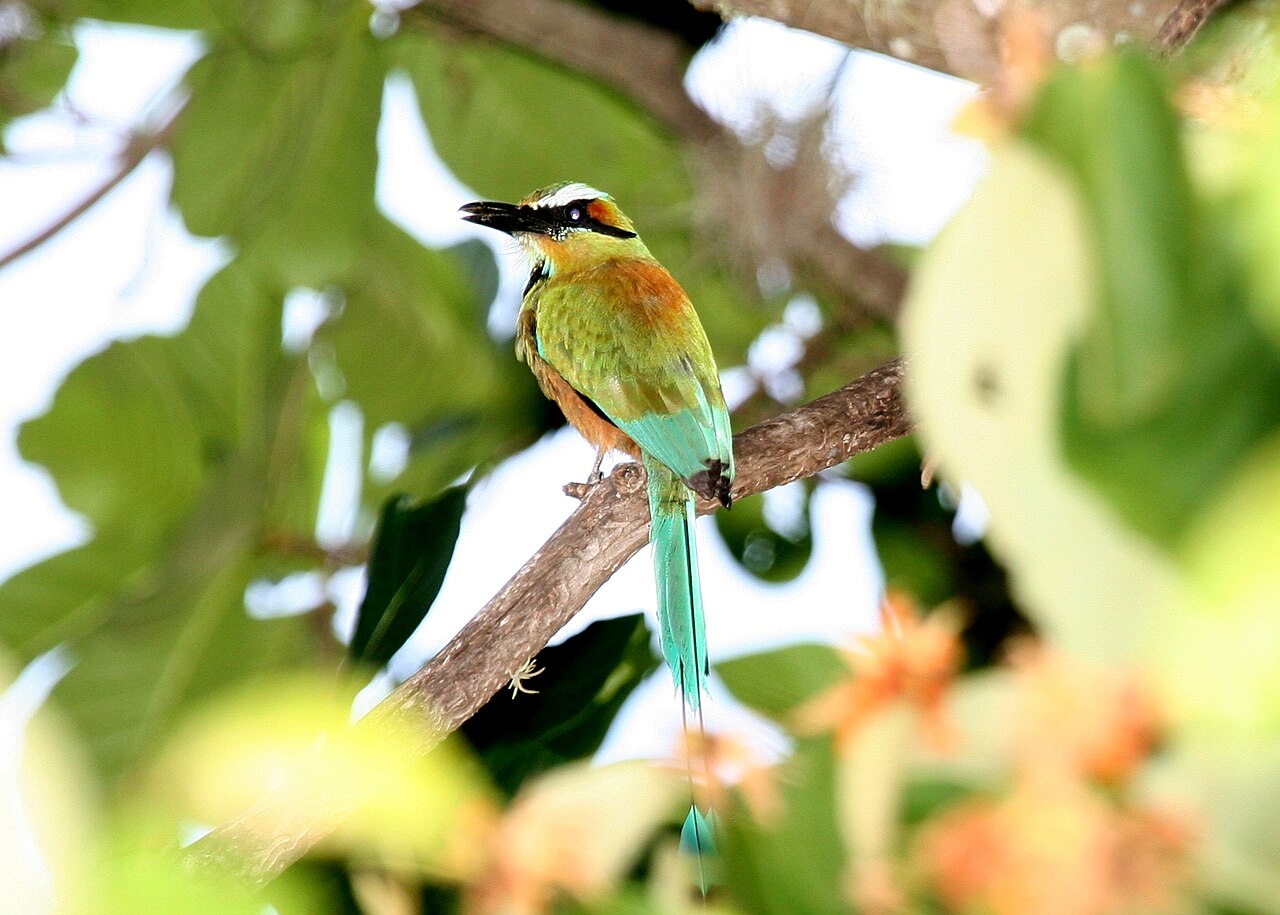
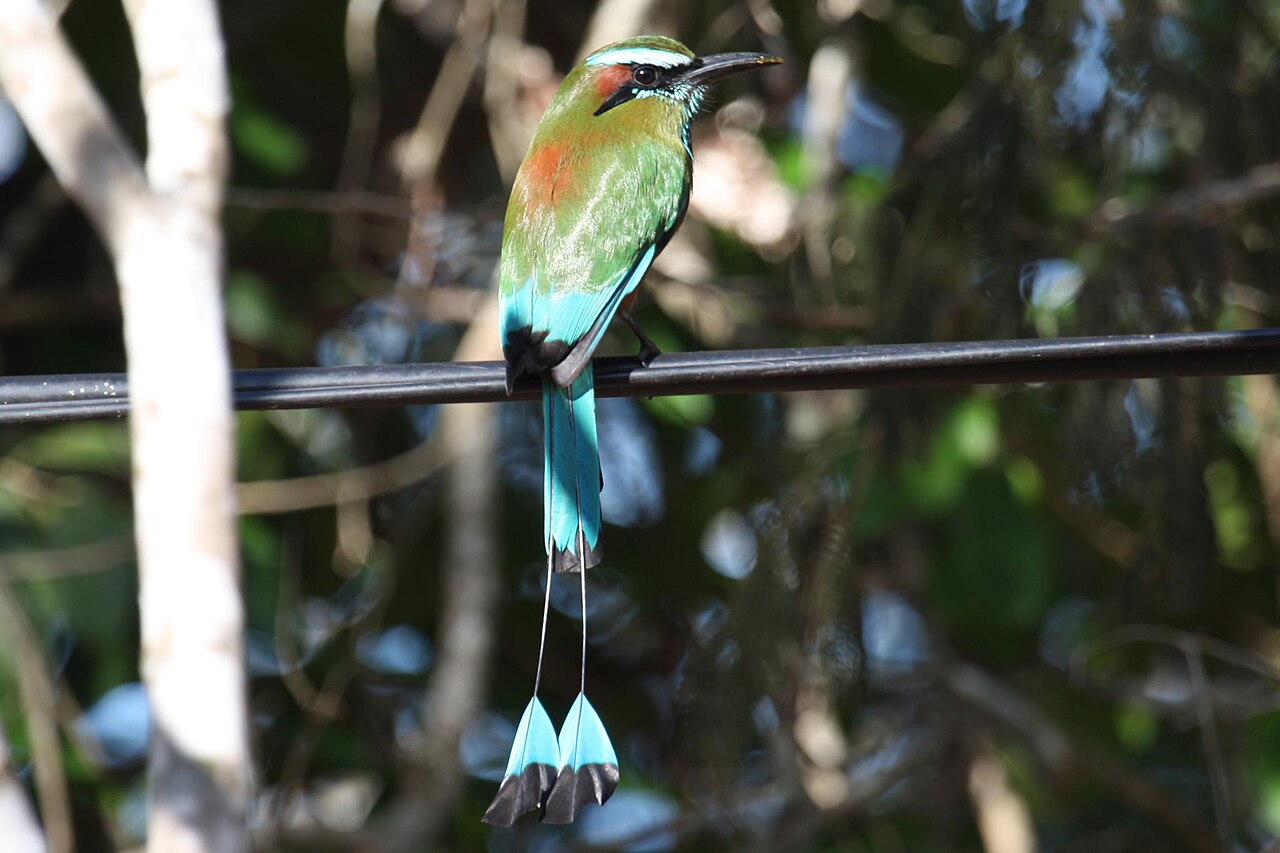
The national bird of El Salvador is the turquoise-browed motmot (Eumomota superciliosa), known across the country by its onomatopoeic local name, torogoz. It is a jay sized bird of dry forest edges with a turquoise eyebrow stripe, a black mask, and two long central tail feathers that end in bare shafts tipped with small rackets.
Salvadorans picked a bird that almost nobody outside Central America can name, and that is part of the point. The torogoz is common in the countryside but instantly recognizable, it stays with one partner through the breeding season, and it digs its nest into the earth banks that line rural roads. Those habits are what turned it into a symbol of family and freedom rather than a piece of ornithological trivia.
El Salvador’s national bird is the turquoise-browed motmot, called torogoz in Spanish. It measures about 13 in (34 cm) including its racket tipped tail, lives in dry forest and open country from southern Mexico to Costa Rica, and nests in tunnels dug into earth banks. It symbolizes family unity and freedom.
| Detail | Turquoise-browed motmot |
|---|---|
| Scientific name | Eumomota superciliosa |
| Local names | Torogoz (El Salvador), guardabarranco (Nicaragua) |
| Length | About 13 in (34 cm) including tail |
| Weight | 2 to 2.5 oz (55 to 70 g) |
| Range | Southern Mexico to Costa Rica |
| Nest | Burrow 3 to 5 ft (1 to 1.5 m) into an earth bank |
| Diet | Insects, spiders, small lizards, fruit |
What Is Torogoz in English?
In English the torogoz is the turquoise-browed motmot. The Spanish name imitates the bird’s low, double noted call, which carries a long way through dry scrub at dawn. Nicaraguans call the same species guardabarranco, meaning ravine keeper, a reference to the earth banks it nests in. The English name simply describes the field mark that separates it from its relatives: a bright turquoise stripe running above the eye, sitting over a black eye mask.
What Bird Is Native to El Salvador?
El Salvador has well over 500 recorded bird species, and the torogoz is native to the dry Pacific slope that covers most of the country. It is not an Salvadoran endemic, though. The species ranges from the Yucatan Peninsula south through Guatemala, Honduras, and Nicaragua into northwestern Costa Rica, and it is also the national bird of Nicaragua. Motmots belong to the order Coraciiformes, which makes their closest North American relative the belted kingfisher, a bird with the same stout bill, the same burrow nesting habit, and a similar heavy headed silhouette.
Why Is the Torogoz the National Bird of El Salvador?
Because it behaves like the family unit Salvadoran culture puts at its center. Torogoz pairs dig the nest burrow together, take turns incubating, and feed the chicks jointly, and they are usually seen in twos rather than flocks. That visible partnership is the reason given in Salvadoran schoolbooks. Sources differ on the exact year of the official designation, with 1999 the date most commonly cited, though the bird had already served as an informal national emblem for decades before that. It also helps that the torogoz never became a cage bird: it sits in the open, watches, and does not flee, which reads locally as calm rather than tame.
What Does El Torogoz Bird Symbolize?
Family unity and loyalty first, freedom second. The paired nesting behavior carries the family reading, and the bird’s refusal to survive well in captivity carries the freedom reading; both appear in Salvadoran poetry, currency design, and tourism branding. Diaspora communities have adopted it further, and the torogoz now shows up on murals in Los Angeles and Houston as shorthand for home. Birds do this work in almost every culture, as our overview of bird symbolism across traditions shows, and the color matters too: blue plumage is read as hope and sky in Mesoamerican symbolism as reliably as it is in Europe.
The Racket Tail: How It Forms and What It Does
The two racket tipped streamers are not grown that way. The barbs along a short section of each central tail feather are weakly attached, and they fall away through normal preening and abrasion, leaving a bare shaft with an intact paddle at the end. The bird then wags that tail from side to side like a pendulum, often when no mate is anywhere nearby. Research on wild motmots points to a pursuit deterrent signal: the wag tells a watching predator it has been spotted, and the hunt is not worth starting. The Audubon Society’s bird guides document similar signaling displays in other families.
Does El Salvador Have a National Animal?
El Salvador designates a national bird, a national flower, and a national tree, but no separate national mammal. The flower is the izote (Yucca gigantea), whose blossoms are also eaten, and the tree is the maquilishuat (Tabebuia rosea), which turns whole hillsides pink in the dry season. The torogoz is therefore the country’s animal emblem by default. Its turquoise and rufous coloring means it is often confused in photos with other green birds of the region, and lumped in casually with the blue and white birds on El Salvador’s flag.
Frequently Asked Questions
What is El Salvador’s national bird called in Spanish?
Torogoz, sometimes written with the definite article as el torogoz. The name is onomatopoeic, imitating the bird’s two syllable call. Guardabarranco is the Nicaraguan name for the same species, and pajaro reloj, meaning clock bird, is used in parts of Mexico for the pendulum motion of the tail.
What does the female torogoz look like?
Almost exactly like the male. Both sexes carry the turquoise brow, the black mask, and the racket tail, which is unusual among tropical birds and makes field sexing unreliable. Males tend to have slightly longer tail streamers on average, but the overlap is wide enough that a single bird cannot be sexed by tail length alone.
Is the turquoise-browed motmot endangered?
No. The species is listed as Least Concern, and it tolerates farmland, hedgerows, and road cuts better than most tropical forest birds. Local declines happen where earth banks are bulldozed or cemented, since suitable nest sites, not food, are usually the limiting factor for a breeding pair.
Are motmot feathers really blue?
The turquoise is structural, not pigment based. Microscopic structures in the feather scatter light to produce the color, so the same feather looks dull brown in the wrong light, exactly as with a blue jay feather in North America. Crush the feather and the blue disappears, because you have destroyed the structure that made it.