What Do Geese Eat? Complete Diet Guide
Geese are mostly herbivores that eat grasses, sedges, aquatic plants, grains, roots, seeds, and berries, grazing heavily on land and feeding in water. Unlike ducks, geese are dedicated grazers, and you will often see them cropping grass on lawns, fields, and shorelines. While people enjoy feeding geese, bread is unhealthy for them just as it is for ducks. This guide covers exactly what geese eat in the wild, why they graze so much, what goslings eat, and the healthy foods to feed geese instead of bread.
| Food | Examples |
|---|---|
| Grasses | Lawn grass, sedges, clover |
| Aquatic plants | Pondweed, algae, roots, shoots |
| Grains | Corn, wheat, waste grain |
| Seeds and berries | Grass seeds, wild berries |
| Roots and tubers | Dug from soil and shallows |
Geese are grazers. They eat grasses, sedges, aquatic plants, grains, seeds, roots and berries, cropping vegetation for hours a day. Goslings take the same plant diet plus insects for protein. Bread is the one common offering that should never be fed to them.
What Do Geese Eat?
Geese are primarily herbivores, and grazing on plants makes up the bulk of their diet. According to the Cornell Lab of Ornithology, Canada geese and their relatives feed largely on grasses, sedges, and other plants, grazing on land and also eating aquatic vegetation, grains, and seeds. On land they crop grass, clover, and low plants, which is why flocks of geese are such a familiar sight on lawns, parks, golf courses, and farm fields. In and around water they eat pondweed, algae, roots, shoots, and the seeds of aquatic plants. Geese also readily feed on waste grain such as corn and wheat in harvested fields, especially during migration. This plant-based, grazing diet sets geese apart from the more omnivorous ducks. For a duck’s more varied menu, see our guide to what ducks eat.
Why Geese Graze So Much
Geese spend a remarkable amount of time grazing, and there is a good reason for it. Because plant material like grass is relatively low in nutrients and energy compared with the seeds, insects, and animal foods other birds eat, geese must consume large quantities to meet their needs. Their bills are well suited to cropping and tearing grass, and their digestive systems are adapted to process large volumes of fibrous plant matter. As a result, a goose may spend many hours a day feeding, steadily working across a lawn or field. This heavy grazing is also why large flocks of geese can noticeably crop grassy areas and why they favor open, grassy spaces near water. Understanding their need to graze explains much of the behavior people observe in geese.
What Do Goslings Eat?
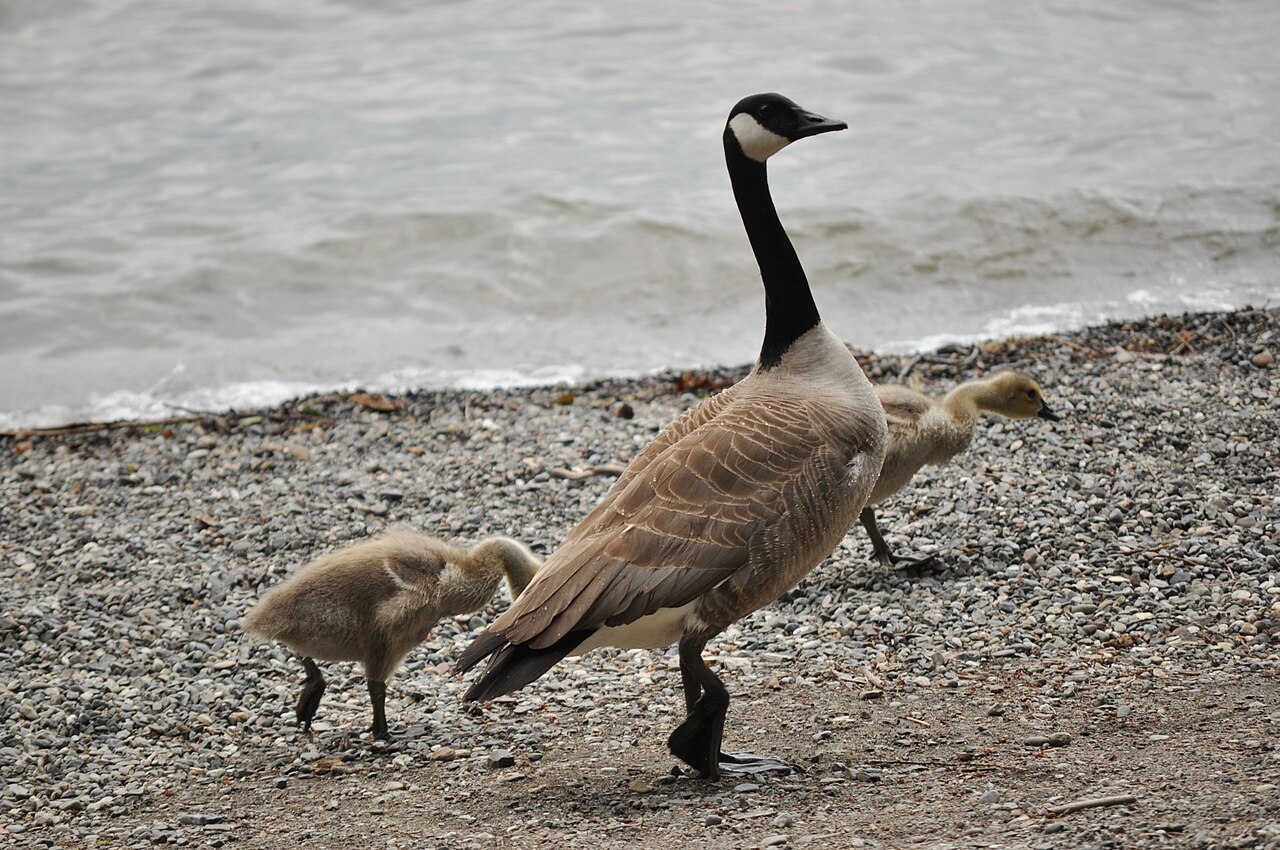
Goslings begin grazing on plants very early in life, following their parents to feed on tender grasses and other vegetation almost from the start. While young goslings do eat some insects and aquatic invertebrates for extra protein during their fast early growth, their diet is more plant-based than that of ducklings, reflecting the strongly herbivorous nature of geese. They nibble soft grasses, clover, aquatic plants, and small seeds, gradually eating more as they grow. Goslings stay with their parents in tight family groups, learning where and what to feed, and this parental guidance helps them find the best grazing. This early shift to a plant-heavy diet prepares goslings for life as dedicated grazers, and it is why you often see fuzzy young geese cropping grass right alongside the adults.
What to Feed Geese Instead of Bread
If you like feeding geese at a park or pond, offering the right foods protects their health. Bread, crackers, chips, and other processed foods are poor choices, providing empty calories, contributing to nutritional problems, and polluting the water when left uneaten. Much better options suit a goose’s natural grazing diet: cracked corn, whole oats, chopped lettuce, cabbage, or other leafy greens, halved grapes, and vegetable trimmings. These foods are nutritious and easy for geese to eat. As with all wildlife feeding, it is best to offer food only occasionally and in moderation so geese keep grazing naturally and do not become dependent or overcrowded. Choosing wholesome foods lets you enjoy the geese while genuinely supporting their health, and planting a natural landscape helps too, as covered in our guide to plants that attract birds.
How a Goose’s Diet Changes by Season
Geese adjust their diet through the year to match the seasons. In spring and summer, they graze on abundant fresh grasses and aquatic plants, and breeding geese and their goslings take advantage of tender new growth, with goslings eating some insects for protein. In fall and winter, geese rely heavily on grains and waste crops, feeding in harvested fields of corn and grain to build the fat reserves needed for migration and cold weather. Migrating geese feed opportunistically on grasslands and fields along their route. This seasonal flexibility, grazing lush vegetation in the warm months and fueling on grain in the colder ones, helps geese meet their high energy needs year round and supports the long migrations many populations undertake between their breeding and wintering grounds.
Do Geese Eat Bugs or Meat?
Geese are primarily plant eaters, but they are not strictly vegetarian, and they will consume some animal matter. While the vast majority of a goose’s diet is grasses, aquatic plants, grains, and seeds, geese do incidentally eat small insects, and goslings in particular take some insects and aquatic invertebrates for the extra protein their growth requires. Adult geese may also swallow small invertebrates along with the vegetation they graze. However, unlike the more omnivorous ducks, geese do not actively hunt insects, fish, or other animals as a significant food source, and meat is a very minor part of their diet at most. Their bodies are built for processing large amounts of plant material, so grazing on grasses and aquatic plants remains overwhelmingly the heart of what geese eat throughout their lives.
Why Geese Gather on Lawns
Large flocks of geese are drawn to open lawns for a simple reason: these grassy spaces are ideal feeding grounds. Mowed lawns, parks, golf courses, and athletic fields offer abundant tender grass that geese love to graze, and the open sightlines let them watch for danger while they feed. Proximity to water, where geese rest and find safety, makes such areas even more attractive. This is why Canada geese have become so common in suburban and park settings, where lush grass and nearby ponds create perfect goose habitat. Their heavy grazing and droppings can become a nuisance in these spots. Reducing the appeal often involves letting grass grow taller or planting less palatable vegetation near water, which works with the goose’s natural feeding preferences rather than against them, similar to thoughtful landscaping covered in our guide to plants that attract birds.
What Not to Feed Geese
Just as important as what to feed geese is knowing what to avoid, since some common foods do real harm. Bread, crackers, chips, doughnuts, and other processed or sugary foods should never be offered, as they provide empty calories, can lead to nutritional deficiencies and health problems, and pollute the water when uneaten, encouraging harmful algae. Moldy or spoiled food is dangerous and must never be given. Anything salty, sugary, or heavily processed is unsuitable for geese. Instead, stick to wholesome options that suit their grazing diet, such as cracked corn, oats, chopped leafy greens, and halved grapes, offered only occasionally and in moderation. Feeding responsibly protects both the geese and the health of the pond or park where they live, and it keeps geese foraging naturally, much as choosing quality food matters for backyard birds in our guide to the best bird seed and other wild birds.
Related reading: types of geese.
How Much Do Geese Eat in a Day?
An adult Canada goose eats roughly two to four pounds of vegetation a day, which is a striking figure for a bird weighing seven to twelve pounds itself. Grass is low in energy and hard to digest, so the only way to extract enough from it is volume, and a goose spends around half its waking hours feeding to reach that.
The consequence is the one most people actually notice: a goose produces droppings roughly every twenty minutes while grazing, adding up to one to two pounds a day per bird. That is why a flock of thirty on a park lawn or golf course becomes a management problem quickly, and it is a direct function of the diet rather than anything unusual about the birds.
Intake rises before migration and during moult, when adults are flightless for several weeks and feed heavily close to water, and falls in deep winter when the birds conserve energy and switch to waste grain in harvested fields. Goslings eat close to continuously through their first eight weeks, which is what powers the jump from hatchling to flight-capable in about ten weeks. Audubon’s Canada Goose account covers seasonal diet and the moult period.
Frequently Asked Questions
What do geese eat?
Geese are mostly herbivores that eat grasses, sedges, aquatic plants, grains, roots, seeds, and berries. They graze heavily on land and also feed on vegetation in water.
What should I feed geese?
Offer cracked corn, oats, chopped lettuce or cabbage, halved grapes, or vegetable trimmings. Never feed bread, chips, or crackers, which are unhealthy and pollute the water.
Why do geese eat grass?
Geese are grazers whose bills and digestion are adapted for plants. Because grass is low in energy, they must eat large amounts, so they graze for many hours each day.
What do baby geese eat?
Goslings graze on tender grasses, clover, aquatic plants, and small seeds early in life, with some insects for protein. Their diet is more plant-based than a duckling’s.
Do geese eat differently than ducks?
Yes. Geese are primarily herbivores that graze on plants, while ducks are omnivores that eat more insects, invertebrates, and small animals along with plants and seeds.
Is bread bad for geese?
Yes. Bread provides empty calories, can cause nutritional and health problems, and pollutes water when uneaten. Offer healthy alternatives like corn, oats, or greens instead.
What do geese eat in winter?
In winter geese rely heavily on grains and waste crops, feeding in harvested corn and grain fields to build fat reserves for migration and cold weather.