Falcon Symbolism: What Seeing One Means, Tradition by Tradition
Seeing a falcon is widely read as a sign to focus and act, not to wait. In North American and European folk belief, the falcon spiritual meaning centers on precision, clear sight and a decision that has already been made somewhere below the surface. People who report a sighting usually describe the same thing afterward: a sudden sense that something they had been circling finally needed a move.
Falcons carry that reputation because of how they hunt. A peregrine (Falco peregrinus) stoops at over 200 mph and commits to one target. Traditions as different as Lakota ceremony, Celtic poetry and Egyptian religion built their falcon symbolism on that single trait, and modern spirit animal readings inherited it. What follows separates those traditions, then works through the situations people ask about.
A falcon generally symbolizes focus, speed, vision and sovereignty over one’s own direction. Seeing one is traditionally read as a prompt to commit to a goal and stop hesitating. Falcons are rarely treated as bad omens; most traditions frame the sighting as an opportunity that will not stay open long.
| Situation | Common traditional reading |
|---|---|
| Falcon crosses your path | A decision is due now; the route ahead is already chosen |
| Falcon circling overhead | You are being asked to see the situation from higher up |
| Falcon at a window or on a railing | News or a message arriving, often about work or ambition |
| Falcon in the yard or on a fence post | Protection of territory; guard what you have built |
| Falcon calling at night | Usually a misidentified owl; where read as a sign, a warning to slow down |
| Repeated sightings over weeks | A message considered unfinished until acted on |
| Finding a dead falcon | An ambition ending so another can begin; grief without blame |
What Does the Falcon Symbolize?
The falcon symbolizes disciplined power. Unlike the eagle, which folk tradition links to vision and majesty at rest, the falcon is associated with the moment of commitment itself: the dive, the strike, the single chance taken. That is why hunting cultures tied it to nobility and to warriors rather than to kings on a throne.
Three ideas repeat across sources. First, sharp sight, both literal and as insight into one’s own motives. Second, speed under control, which is read as the opposite of panic. Third, freedom, because a trained falcon returns by choice and not by capture. Those three themes carry through every tradition below, and they also shape how the bird differs from the symbolism of the bald eagle, which is read far more as national and spiritual authority than as personal urgency.
What Does It Mean If a Falcon Crosses Your Path?
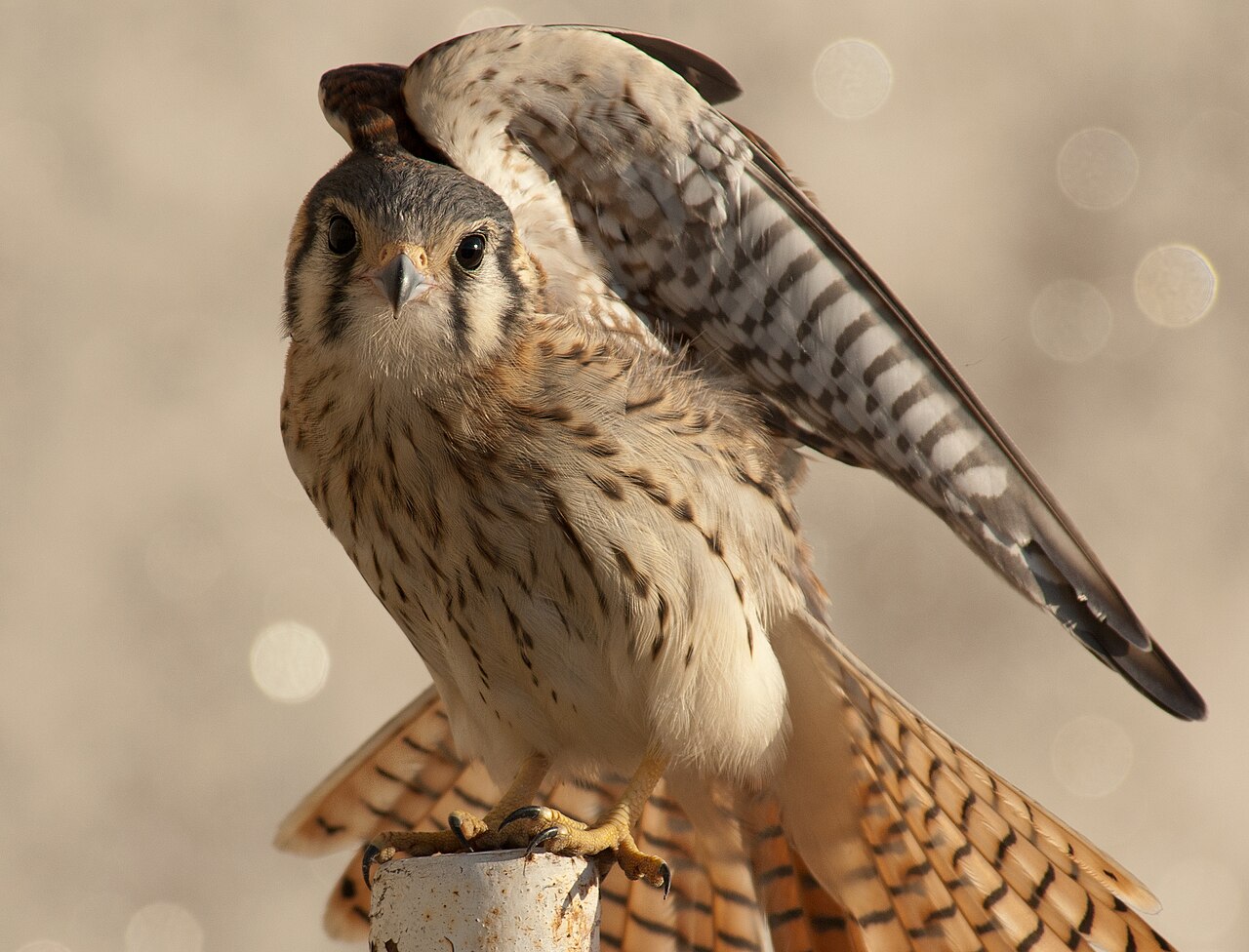
A falcon crossing your path is traditionally read as confirmation rather than warning. In most folk interpretations the bird is not telling you what to choose; it marks that the choice is already made and the hesitation is the only thing left. People commonly report such a sighting during a job change, a move or the end of a relationship.
Direction matters in some regional readings. A bird crossing left to right counted as favorable in several European augury systems, right to left as a call for caution, though the rules were never consistent. Most people who ask what it means spiritually if you see a falcon are looking for permission to act, and the tradition gives it.
Seeing a Falcon in Your Yard, at Your Window, or at Night
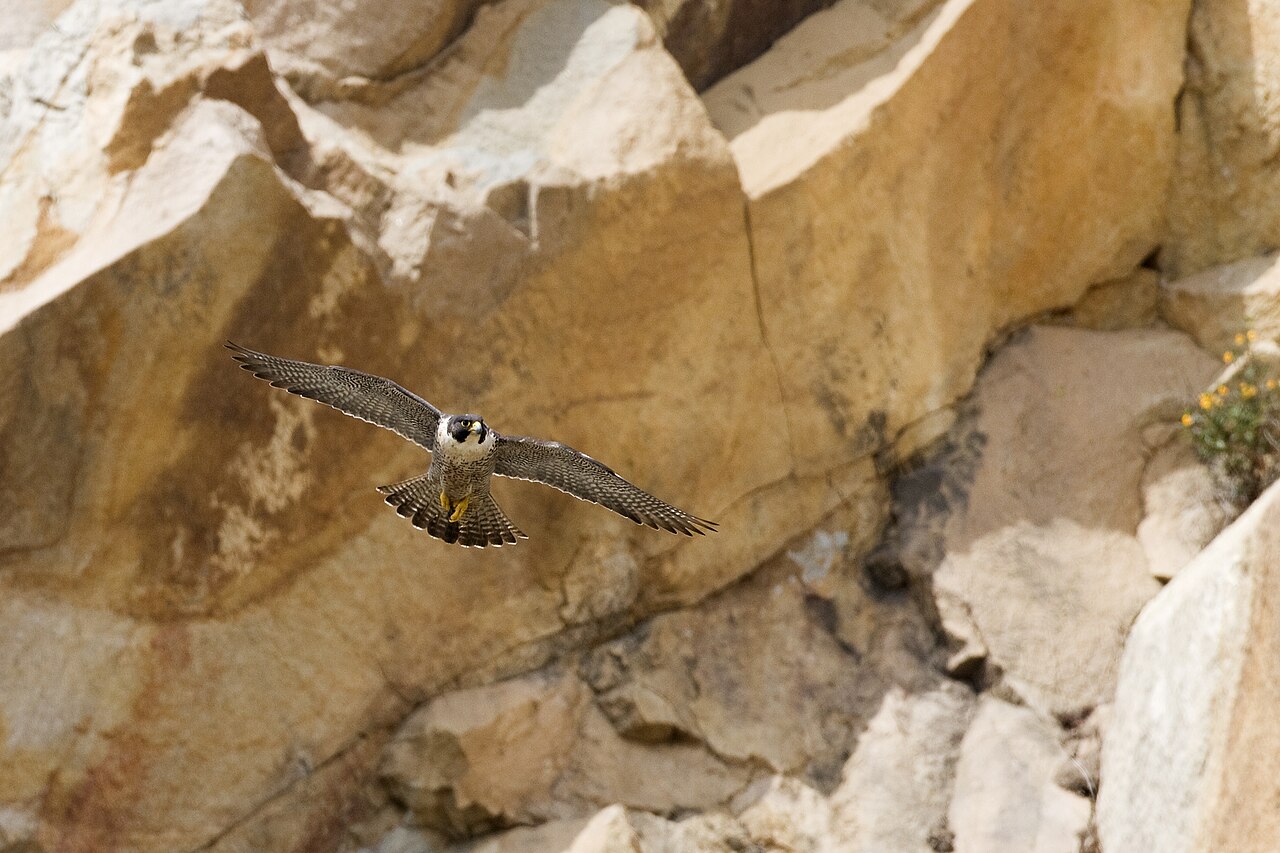
A falcon in the yard is usually an American kestrel (Falco sparverius) hunting grasshoppers, or a Cooper’s hawk mistaken for one. Symbolically, a falcon on your own ground raises a question about territory: what you built, who has access, and whether you are defending it or only worrying about it.
At a window, the traditional reading is a message. Where a cardinal at the window is taken as a visit from someone who has died, a falcon at the glass is read as professional or practical news, something requiring a reply. Night sightings are the one case worth treating skeptically first: falcons hunt by day, and a night call almost always belongs to an owl or a nightjar.
Repeated Sightings, Falcons in Dreams, and Finding a Dead Falcon
Repeated sightings are considered the strongest version of the sign. The folk logic is simple: a message repeats because it has not been acted on. Three falcons in a week, in traditions that keep count at all, mean the same single message three times, not three separate ones.
In dreams, a falcon on the arm is read as power you already hold, a falcon flying away as something you released on purpose, and a hooded falcon as talent you are keeping idle. Finding a dead falcon is the one reading that carries real weight without being a curse. It is interpreted as an ambition reaching its end, with the advice to retire it deliberately rather than pretend it survived. Possessing the body or feathers of most raptors is also illegal in the United States under the Migratory Bird Treaty Act, so leave it where it lies.
Falcon Meaning in Native American Traditions
There is no single Native American meaning, and treating hundreds of distinct nations as one tradition is the most common error in this topic. In Lakota tradition the falcon and hawk are associated with the role of the scout, the one who sees first and reports plainly. Among Plains nations more broadly, falcon feathers were earned markers of a specific deed rather than general good luck.
In Mississippian iconography, the falcon or “birdman” motif appears on copper plates and shell gorgets from Cahokia and Etowah, linking the bird to warriors and to the upper world. In some Pueblo traditions the prairie falcon is tied to hunting ceremony. These are living religious practices, not open symbolism, and they are described here as beliefs held by specific peoples. The broader patterns are covered in general bird symbolism.
Falcon Symbolism in the Bible, Celtic Lore, and East Asian Culture
Scripture says little directly about falcons. The Hebrew bible groups them with birds of prey declared unclean for eating in Leviticus 11 and Deuteronomy 14, and Job 39 praises the hawk and the eagle as creatures beyond human instruction. There is no verse in which a falcon delivers a message, so the question of whether God sends signs through birds is answered in Christian thought mostly through the dove and the raven, not the falcon. The four living creatures of Revelation 4, often asked about as the four animals of God, are a lion, an ox, a man and an eagle, not a falcon.
Celtic sources associate the falcon and hawk with long memory and with the warrior’s single-minded aim; the Hawk of Achill in Irish lore is among the oldest living things in the tale. In ancient Egypt the falcon was the form of Horus, and kingship itself was expressed as the falcon on the serekh. In Japan, falconry under the samurai class made the bird a symbol of disciplined restraint, which is why hawk and falcon imagery appears in New Year dream symbolism alongside Mount Fuji. Other dark raptors and corvids were read very differently, as the entries on blackbird symbolism and coyote symbolism show.
Falcon as Spirit Animal, Totem, and Omen
In contemporary spirit animal writing, the falcon as spirit animal is assigned to people who work in bursts and need a clear target to function at all. The falcon totem, in the stricter sense of an inherited clan emblem, belongs to specific lineages and is not something chosen from a list. The falcon as omen is almost always a positive one: of the traditions surveyed here, none treat a sighting as a death omen, which separates it sharply from the owl and the raven.
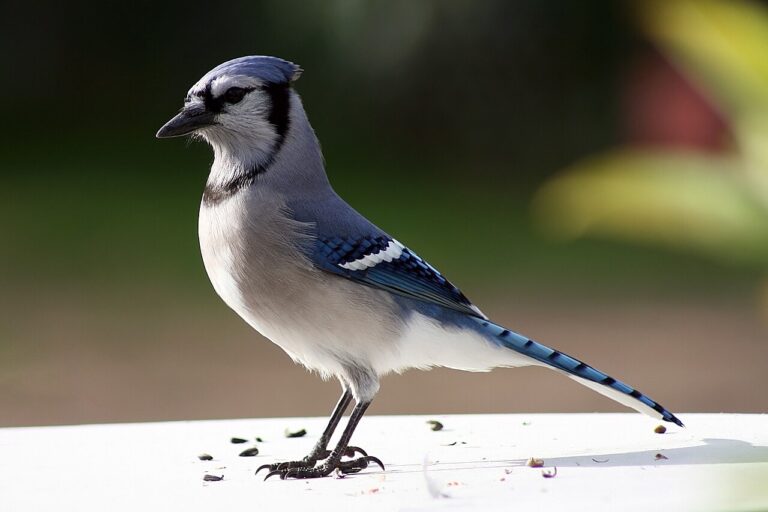
Color variants circulate widely online. A white falcon, usually a white morph gyrfalcon (Falco rusticolus), is read as clarity and rare opportunity; a brown falcon as groundedness and patient work; a red or rust-toned bird, typically a kestrel, as energy and appetite. These readings are modern rather than traditional, and they should be held loosely. For a gentler counterpart in the same family of readings, see blue jay spiritual meaning.
Frequently Asked Questions
Is seeing a falcon good luck?
In most traditions, yes. The falcon is read as a favorable sign tied to opportunity, focus and swift resolution rather than to fortune arriving by itself. The usual caveat is that the opportunity is treated as time limited, so the luck is conditional on acting rather than on waiting for a second sign.
What are falcons an omen of?
Falcons are an omen of decision and momentum. Across Egyptian, Celtic, Plains and modern Western readings they signal that a situation has reached the point of commitment. Unlike owls or ravens, falcons are rarely treated as omens of death or misfortune in any of these traditions.
What does a white falcon mean spiritually?
A white falcon, in practice a pale gyrfalcon morph, is read in modern symbolism as purity of purpose and an unusually clear path forward. Because white morphs are genuinely rare in the wild, the sighting is treated as a once in years event rather than a routine message.
What does a falcon mean for love and relationships?
Falcon symbolism in love emphasizes honesty over comfort. The bird’s association with directness is read as a prompt to say the thing being avoided. Falcons are seasonally monogamous and return to the same cliff ledge with the same mate, which some readings take as loyalty by choice rather than by habit.
How rare is it to see a falcon?
Less rare than most people assume. American kestrels sit on roadside wires in every lower 48 state, and peregrines now nest on bridges and high rises in dozens of US cities after their recovery from DDT. A deliberate look at tall buildings or open farmland in winter usually produces one within an hour.