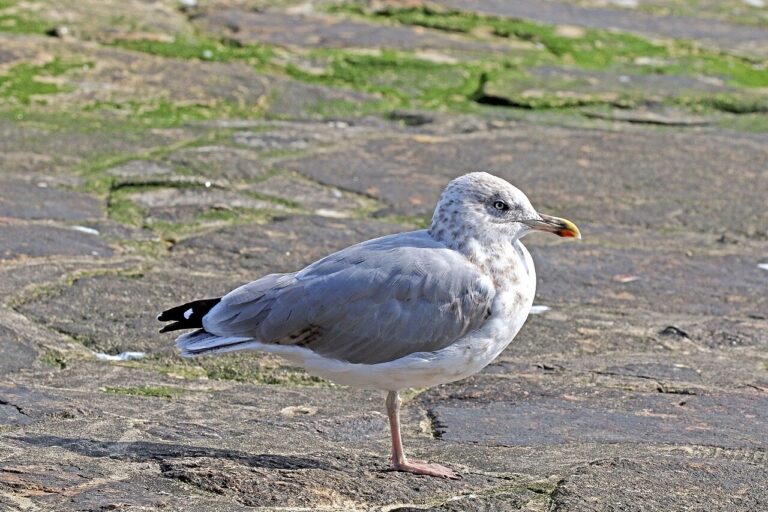
Swan Symbolism: What It Means to See One, by Tradition
Seeing a swan is traditionally read as a sign that grace, love, and a long commitment are arriving or being tested in your life. Across European, Celtic, and Native American traditions the swan carries the same cluster of meanings: faithful partnership, purity, transformation, and a kind of calm dignity that holds under pressure. Swan symbolism is unusually consistent for an animal omen, and the reason is biological. Swans pair for years, defend their young hard, and glide while paddling furiously underwater.
What follows separates the traditions rather than blending them, because they disagree on the details. A Lakota reading of a swan is not a Christian reading, and the Celtic swan is a transformed human rather than a symbol of anything. The sections below cover each tradition, then the situations people actually ask about: a single swan, a pair, a black swan, a swan in a dream, and a dead swan.
Swan symbolism centers on faithful love, grace under pressure, purity, and transformation. Seeing a single swan is widely read as a call to self trust or a sign of a coming partnership, while a pair signals loyalty and marriage. Black swans represent the rare and unexpected event. Most traditions treat the swan as a good omen rather than a warning.
What Does It Mean to See a Swan?
In the broad folk tradition, seeing a swan means that something graceful and lasting is taking shape, and that you are being asked to stop thrashing visibly while you work. The swan is the classic emblem of effort hidden beneath composure, which is why it attaches so often to artists, grieving people, and anyone holding a household together quietly.
Context shapes the reading more than the bird does. A swan encountered on still water is usually taken as confirmation that a decision is right. A swan that hisses, rears, and runs at you is read in the same folk tradition as a boundary message: something in your life is being defended too little or too much. Swans are genuinely aggressive when nesting, so the encounter is common in spring, and the symbolic reading sits comfortably on top of the behavior rather than against it. For the wider framework these readings sit inside, see bird symbolism across species.
Swan Symbolism in Native American Traditions
Native American traditions are many nations rather than one belief system, and swan stories differ sharply between them. In several Plains traditions, including Lakota accounts, the swan is associated with the north, with winter, and with the kind of wisdom that arrives through endurance rather than vision. White animals in general are treated as carrying messages in these traditions, and the swan’s whiteness is read as purity of intention.
Among some Northeastern and Great Lakes peoples the swan appears in origin and transformation stories, often as a being that moves between worlds. In parts of the Pacific Northwest, swan feathers were used in ceremony and trade. What these accounts share is that the swan is treated as a relative with its own agency, not as a symbol to be decoded, which is a real difference from European omen reading. Anyone quoting a specific nation’s teaching should name the nation, since a generic “Native American meaning” flattens traditions that do not agree.
Swan Symbolism in Christianity and the Bible
In Christian symbolism the swan stands for purity, grace, and the soul at the moment of death, though it is not a biblical animal in any clear sense. Older English translations of Leviticus 11 list the swan among unclean birds, but modern scholarship generally reads that Hebrew word as a water hen or small owl instead. So a swan symbolizing something in the Bible rests on later Christian art, not on scripture.
That later tradition is rich. Medieval bestiaries treated the swan’s supposed final song as an image of the Christian meeting death with praise, and the white plumage over black flesh was moralized as outward piety tested against inner sin. Saint Hugh of Lincoln is depicted with a swan that guarded him, which made the bird an emblem of faithful protection. In church decoration a swan with its wings spread over cygnets reads as divine care, the same way dove symbolism reads as peace and the Holy Spirit.
Celtic Swan Symbolism and Irish Legend
In Celtic tradition the swan is rarely a symbol at all. It is a shape that people take. The Children of Lir, the best known Irish version, turns four royal children into swans for 900 years, and they keep human speech and song throughout. In the story of Aengus and Caer Ibormeith, both lovers become swans and circle the lake three times, and their singing puts the country to sleep for three days.
Because of these stories, Celtic readings treat a swan as a soul in transit, a person under enchantment, or a boundary crossing between the human and the Otherworld. Killing a swan was taboo in parts of Ireland and Scotland well into the modern period, with the explicit reasoning that the bird might be a transformed human. Swan pairs appear on Celtic metalwork joined at the neck by a silver chain, an image that carried into later wedding symbolism. The crane plays a parallel role in some of these cycles, and crane symbolism overlaps with the swan in transformation tales.
Swan Symbolism in East Asian Traditions
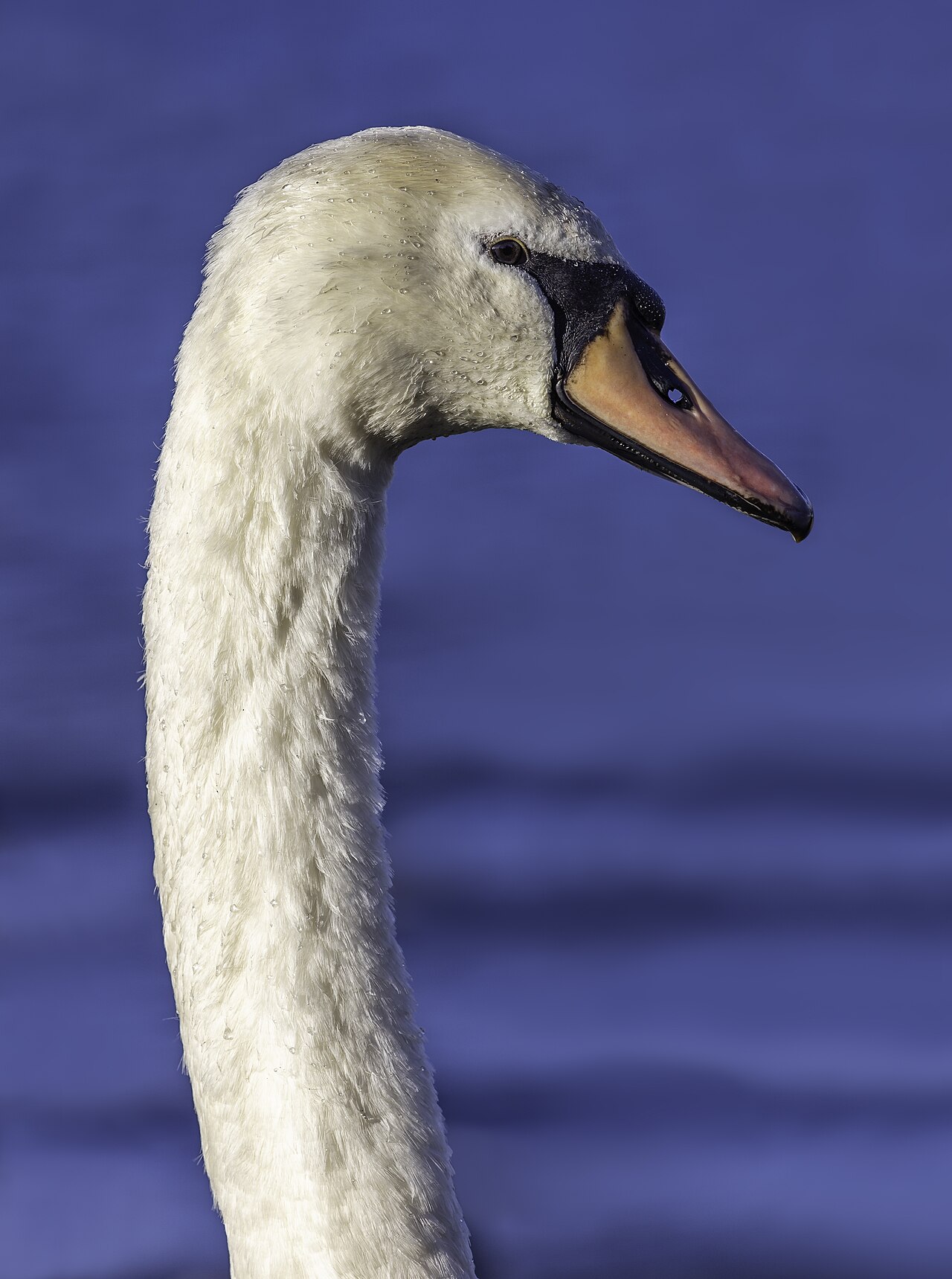
East Asian traditions give the swan less space than the crane, which occupies most of the symbolic ground around longevity and marital devotion in Chinese and Japanese culture. Where swans do appear, they carry grace and elevated status, and in Chinese usage the phrase for a swan’s ambition describes aiming far above one’s present position.
In Hindu tradition, which sits adjacent to these readings in most popular writing, the hamsa is central and is usually translated as swan or sometimes goose. It is the mount of Saraswati, goddess of learning and the arts, and the word paramahamsa titles a sage who has reached the highest discrimination. The symbolic logic there is specific: the swan is said to separate milk from water, so it represents the mind that distinguishes the real from the unreal. That is a sharper and more intellectual meaning than the European emphasis on love and purity.
Greek Myth, Apollo, and the Swan Song
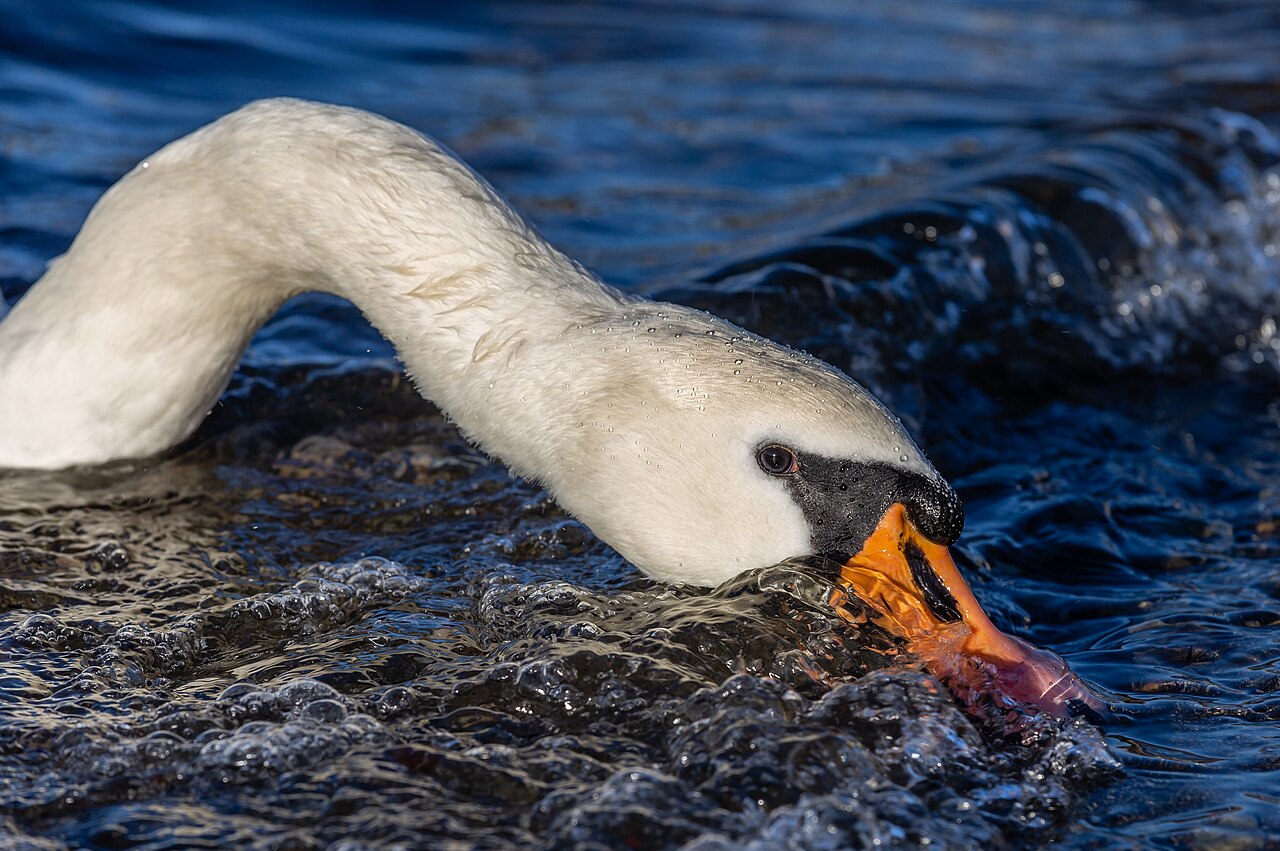
Greek and Roman myth gave Western culture two of its most durable swan ideas. The first is Zeus taking swan form to approach Leda, which attached the swan to desire, seduction, and divine intrusion rather than gentle romance, and which painters returned to for centuries. The second is the swan’s association with Apollo, god of music and prophecy, which made the bird a symbol of poetry and of truthful speech.
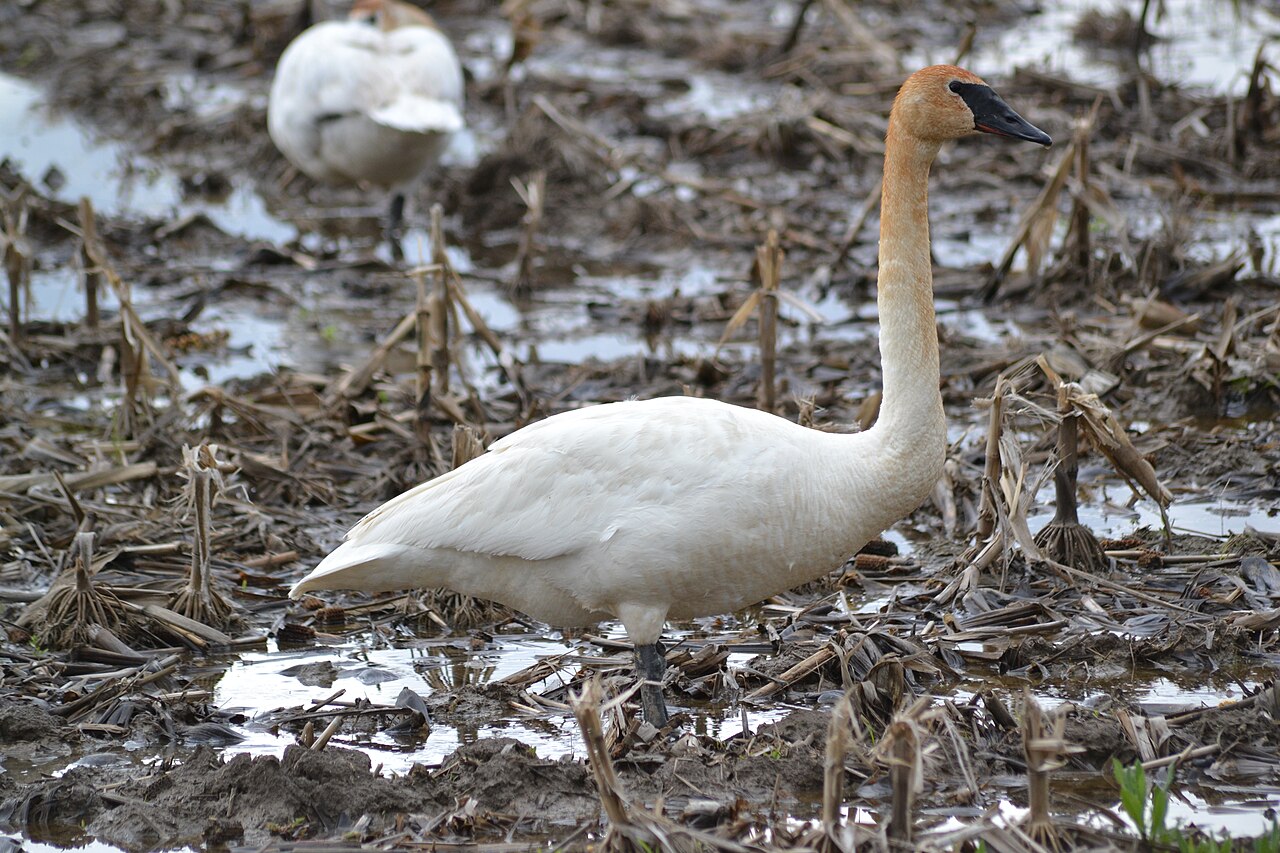
From that link came the swan song. Aeschylus, Plato, and later Cicero all pass along the belief that a swan sings once, beautifully, just before it dies. Pliny the Elder flatly rejected it, and he was right about the mute swan, though trumpeter and whistling swans do produce a long final call as air leaves the trachea. The phrase survived anyway, which is why a swan in art often marks a last work or a farewell performance.
Black Swan Symbolism
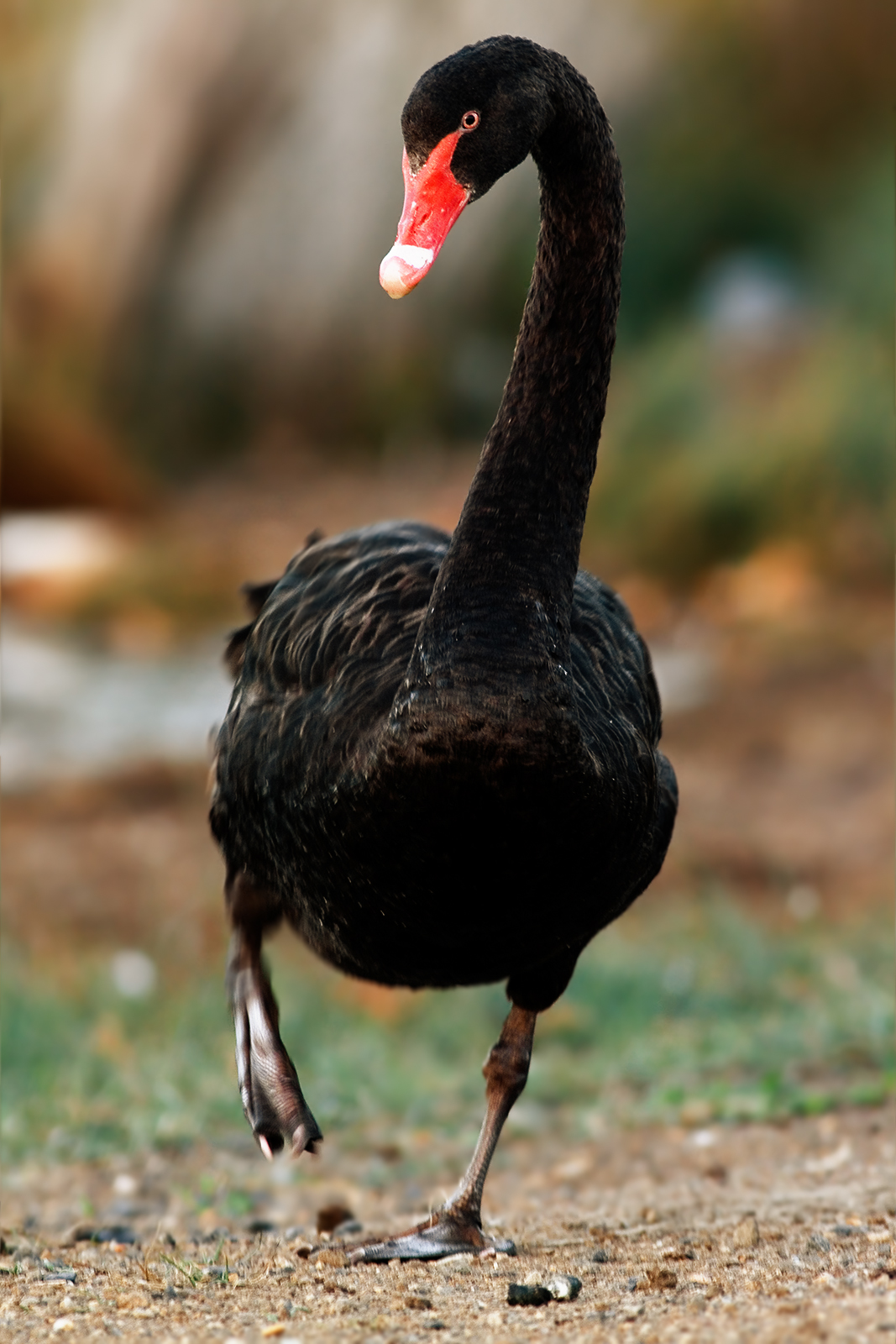
Black swan symbolism splits cleanly from white. Because Europeans assumed black swans did not exist, the phrase meant an impossibility for about 1,500 years, from the Roman satirist Juvenal onward. Then Dutch explorers found them in Western Australia in 1697, and the meaning inverted: a black swan became the rare thing that was wrongly ruled out.
Modern readings follow that history. In popular spiritual writing the black swan represents hidden depth, the shadow side of a gift, and the courage to be the exception. In finance and risk it names the unpredictable high impact event. In Australia it carries no exotic charge at all, since Cygnus atratus is the common local swan and the state emblem of Western Australia. Encountering one is read as a sign to question an assumption you have treated as settled rather than as a warning of misfortune.
What Does a Single Swan Symbolize?
A single swan is usually read as self possession rather than loneliness, and that is worth stating plainly because the folk reading runs the other way. Lone swans are extremely common in the wild: young birds spend two to four years in non breeding flocks or alone before they pair, and a solitary bird on a pond is far more likely to be a teenager than a widow.
The symbolic reading that holds up is independence before commitment. Seeing one alone is traditionally taken as a sign that a period of solitude is doing necessary work, and that partnership comes after, not instead. The grimmer folk version, that a lone swan means its mate has died and it will grieve itself to death, is not supported by observation; bereaved swans usually re pair within a season or two. If you are specifically identifying a young grey bird rather than reading an omen, the symbolism of finding a dead bird covers the adjacent question people ask next.
Seeing a Pair of Swans: Love and Loyalty
A pair of swans is the strongest love omen in the European tradition, and it is the reading behind most swan imagery at weddings. Two swans facing each other with their necks curved form a heart shape, which is why the motif appears on everything from Celtic brooches to modern invitations. The traditional meaning is a bond that holds through hardship, not infatuation.
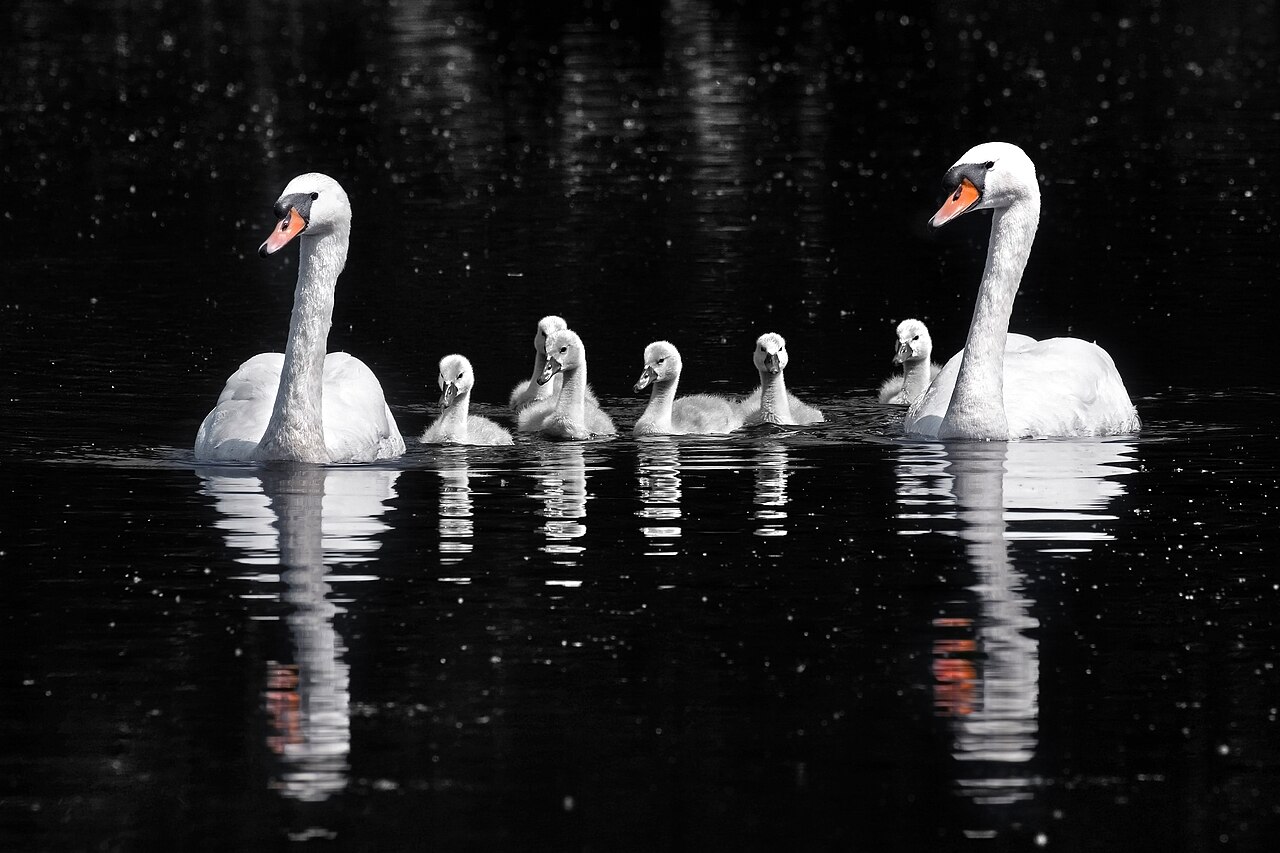
The behavior supports the symbol better than most animal omens do. Mute swans form pair bonds that often last for life, defend a territory together, and both sexes share incubation and cygnet escort duties. Divorce does happen, at a few percent per year, and usually follows a failed breeding season. So the honest version of the omen is a strong bond maintained by shared work, which is closer to what most people want from the reading anyway.
Seeing a Swan in Your Yard or at Your Window
A swan that turns up away from open water, in a yard, a driveway, or pressed against a window, is read in folk tradition as a message that cannot be ignored any longer. The reasoning is the same across traditions: the omen gains weight when the animal leaves its own element to reach you. Applied to the swan’s usual meanings, the reading is a relationship or a commitment demanding attention now.
Repeated sightings are treated as emphasis rather than a new message. Seeing the same swan over several days is read as confirmation, and hearing one at night, which happens with trumpeter and whistling swans in migration, is traditionally taken as news arriving from a distance. The ordinary explanation is usually migration, a storm, or a young bird that landed on wet asphalt mistaking it for water, and a grounded swan often needs a wildlife rehabilitator rather than interpretation.
Finding a Swan Feather
Finding a swan feather is read as a small, personal confirmation of the swan’s larger meanings, most often that a bond is intact or that help is nearby. White feathers in general carry this reading in European and modern spiritual traditions, and the swan’s size and softness make it the most prized version of the sign.
Interpretations differ by placement. A feather on a doorstep or inside a house is read as protection; one found on water as a message about a relationship; one found while you are deciding something as agreement with the direction you are leaning. The legal note is worth knowing in the US, since swan feathers fall under the Migratory Bird Treaty Act and collecting them is restricted even when the bird is long gone, so the usual advice is to photograph rather than pocket.
Seeing a Swan in a Dream
A swan in a dream is generally read as a message about a relationship or a creative project that has reached a point of either commitment or release. Dream traditions pay attention to the water: a swan on calm water is taken as confirmation, a swan on rough or muddy water as a bond under strain, and a swan flying as the end of a chapter.
A swan that speaks or sings in a dream carries unusual weight in Celtic influenced reading, because of the enchantment stories where swans keep human voices. A swan attacking in a dream is read by most popular dream writers as a boundary you are not defending while awake. None of this is measurable, and dream content tracks waking preoccupation more than prophecy, so the useful question is which relationship was on your mind when you went to sleep. For the same pattern in other species, see cardinal symbolism.
Finding a Dead Swan
Finding a dead swan is read in folk tradition as the close of something that was meant to last, and it is treated as a serious omen rather than a casual one, partly because of the swan’s association with the soul. In Celtic influenced readings it carries extra weight given the transformation stories, and in English tradition killing a swan was long treated as an offense against the Crown, which gave the dead bird a legal gravity too.
The practical note matters more than the omen. In the US, swans are protected under the Migratory Bird Treaty Act, and a dead swan can indicate lead poisoning from fishing tackle, avian influenza, or a power line collision, all of which are worth reporting to your state wildlife agency rather than handling yourself. Documentation from the Cornell Lab of Ornithology covers swan identification if you need to confirm the species first.
Swan as Spirit Animal, Totem, and Omen
In contemporary spirit animal writing, which draws loosely on Native American vocabulary without belonging to any specific nation, the swan totem is assigned to people who hold composure in public while working hard in private, and who are drawn to beauty, music, or ritual. The stated lesson is usually about accepting transformation instead of forcing it, following the ugly duckling arc that Hans Christian Andersen gave the bird in 1843.
As an omen, the swan is read as favorable in nearly every tradition surveyed here, which makes it unusual. The hard versions are conditional rather than fatal: a hissing swan as a boundary warning, a dead swan as an ending, a lone swan as a season of solitude. The table below collects the situational readings in one place, with the tradition they come from, so you can see where a given meaning actually originates.
| Situation | Traditional meaning | Tradition |
|---|---|---|
| Single swan on calm water | Self trust, a necessary season alone | European folk |
| Pair of swans together | Faithful love, marriage, shared work | European and Celtic |
| Black swan | The rare event, a false assumption exposed | Modern and classical |
| Swan with cygnets | Protection, divine care over a family | Christian art |
| Swan hissing or charging | A boundary being tested | European folk |
| Swan in a dream | A relationship at commitment or release | Dream tradition |
| Dead swan | The end of something meant to last | Celtic and English |
Related reading: Swallow Symbolism.
Related reading: Vulture Symbolism.
Related reading: Turkey Symbolism.
Related reading: Pelican Symbolism.
Related reading: Penguin Symbolism.
Related reading: Heron Symbolism.
Related reading: Nightingale Symbolism.
Related reading: Goose Symbolism.
Related reading: Parrot Symbolism.
Related reading: Pigeon Symbolism.
Related reading: Flamingo Symbolism.
Related reading: Duck Spiritual Meaning.
Related reading: White Dove Symbolism.
Related reading: Grackle Symbolism.
Related reading: Wren Symbolism.
Related reading: Egret Symbolism.
Related reading: Loon Symbolism.
Related reading: Chickadee Symbolism.
Related reading: Kingfisher Symbolism.
Related reading: Northern Flicker Symbolism.
Related reading: Roadrunner Symbolism.
Related reading: Stork Symbolism.
Frequently Asked Questions
Is a swan a good omen?
In almost every tradition surveyed, yes. The swan is read as a favorable omen for love, loyalty, and artistic work, and it is one of the few animal signs with no dominant negative version. The conditional warnings attach to specific situations, such as a hissing swan or a dead one, rather than to the bird itself.
What is the spiritual meaning of a swan?
The spiritual meaning of a swan is grace maintained through hidden effort, paired with faithful love and transformation. In Hindu tradition the hamsa adds a sharper meaning: the mind that separates the real from the unreal. Most contemporary readings combine the European emphasis on purity with that idea of discernment.
What does “I love you like a swan” mean?
It means loving for life and for one partner only, borrowing the swan’s reputation for lifelong pair bonds. The phrase is used in wedding vows and love letters as a promise of permanence rather than intensity. Biologically it holds up reasonably well, since mute swan pairs often stay together for many years.
What does a swan symbolize in Christianity?
In Christian symbolism the swan represents purity, the soul, and a death met with praise, drawn from the swan song legend rather than from scripture. It also became an emblem of faithful protection through Saint Hugh of Lincoln. The swan’s appearance in older translations of Leviticus is now generally considered a mistranslation.
What does a single swan symbolize?
A single swan symbolizes independence and a productive season of solitude, not permanent loneliness. The darker folk reading of a grieving widow has little support in the field, since most lone swans are young birds that have not yet paired. Read it as self reliance preceding commitment.
What does black swan symbolism mean today?
Today a black swan means the rare, high impact event that everyone had ruled out, a usage that comes from the European assumption that black swans were impossible until 1697. In spiritual writing it also signals hidden depth and the courage to be an exception, and American goldfinch symbolism works as a bright counterpoint to that shadow reading.