Seagull Sounds: The Long Call and Every Other Noise
The classic seagull sound is the long call, a loud head-thrown-back series of drawn-out wailing notes that gulls use to advertise territory and identity. Herring gulls and their relatives produce at least a dozen distinct vocalizations beyond it, including a sharp alarm, a low growl at close range, a rapid mew, a copulation call, and a begging squeal from chicks that is answered by the parent regurgitating food.
There is no such bird as a seagull. The name covers around 50 species in the family Laridae, most of which are not restricted to the sea and several of which live hundreds of miles inland. That matters for sound identification, because the calls people think of as generic gull noise belong mainly to the large white-headed gulls such as the herring gull and the great black-backed.
| Sound | Meaning |
|---|---|
| Long call | Territory and identity, head thrown back |
| Mew call | Contact, greeting a mate, cat-like |
| Alarm call | Short sharp repeated note, predator |
| Charge call | Rapid staccato before an attack |
| Growl | Low, close range, territorial threat |
| Chick squeal | Begging, triggers regurgitation |
| Choking display | Rhythmic notes over a nest scrape |
What Sounds Seagulls Make
Gulls are vocal in a way few other bird groups match, and the repertoire is genuinely structured rather than random noise. The long call sits at the centre of it: the bird stretches its neck forward and down, then throws the head back and up while delivering a series of loud wailing notes that carry a kilometre or more across open water.
The mew call is the second most recognisable, a softer, rising, distinctly cat-like note used between mates and in close contact. It gives the common gull its alternative name, the mew gull, and hearing it usually means two birds that know each other are interacting rather than competing.
Alarm and aggression calls are shorter and harsher. A repeated sharp kyow signals a predator, and a rapid staccato series precedes a physical attack, which is what people hear immediately before a gull dives at them. Growling is the close-range threat, delivered low and guttural with the head lowered.
Do Seagulls Squawk or Chirp?
Neither term fits well. Gull calls are laughing, wailing, mewing, and yelping rather than squawking, and they have a tonal quality that a squawk lacks. Chirping is a songbird term and describes nothing gulls do, since gulls are not songbirds and have no song in the technical sense.
The most accurate descriptions are laughing and wailing. Laughing gulls are named for exactly this, producing a descending series that sounds unmistakably like laughter, and herring gulls produce a long wailing call that older writing describes as a scream or a cry.
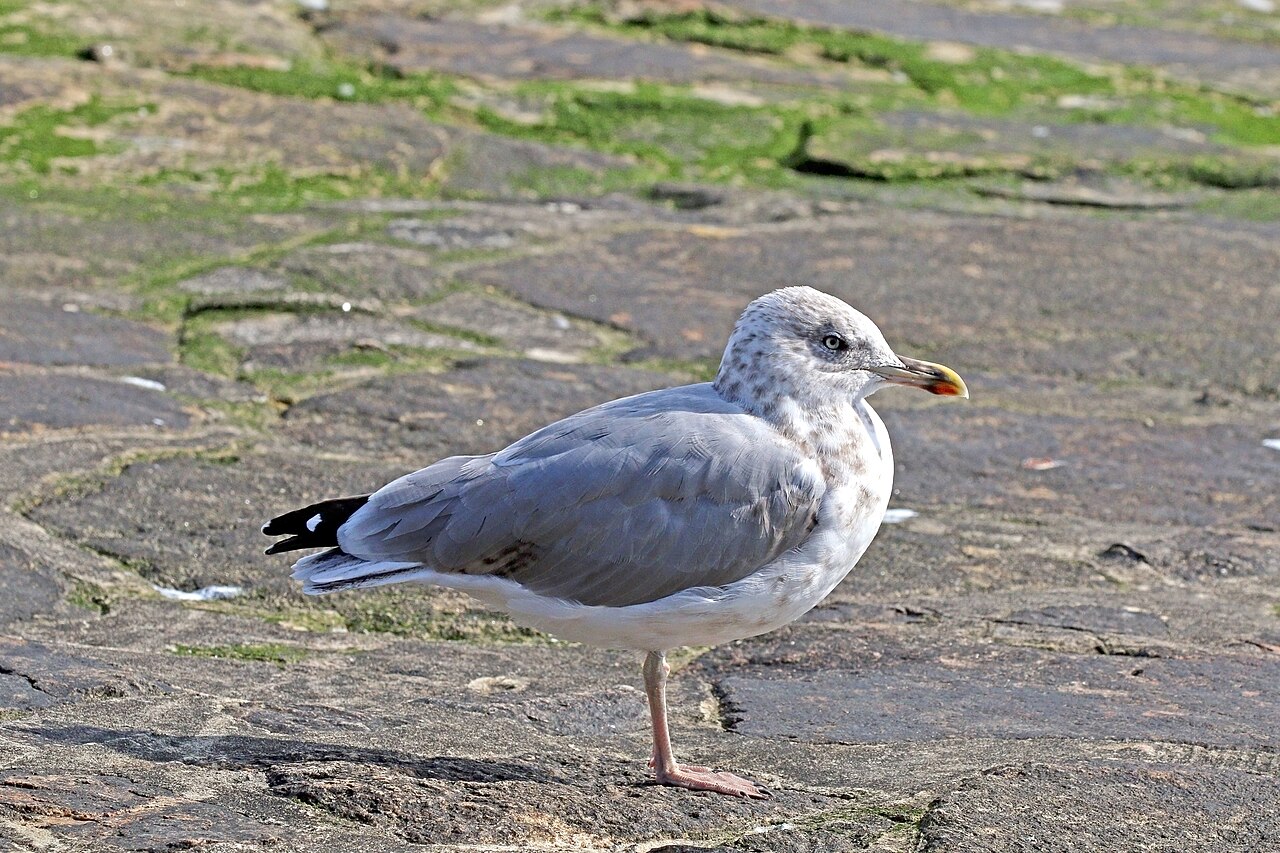
Chicks are the exception. Young gulls produce a thin repeated squeal quite unlike any adult call, given while pecking at the red spot on the parent’s bill to trigger regurgitation. That red spot and the pecking response are one of the most-cited examples in the history of animal behaviour research.
The Long Call and What It Signals
The long call does more than one job at once. It advertises territory ownership, it signals individual identity, and it functions in pair bonding, with mated birds often long calling together in a coordinated duet that reinforces the bond.
Individual recognition is the striking part. Gull long calls vary enough between individuals that mates recognise each other by voice alone, and chicks learn their parents’ calls within days of hatching. In a colony of thousands of near-identical birds, voice is the primary way anyone finds anyone. Playback experiments have shown adults returning to a colony orienting toward recordings of their own chicks and ignoring others of the same age from neighbouring nests.
The posture is as informative as the sound. The full head-back delivery is the territorial version, while a partial, lower-intensity version is used in less charged contexts. Watching the neck movement tells you how seriously the bird means it before you have parsed the call itself.
Why Seagulls Scream at Night
Gulls are not strictly diurnal, and several species feed at night, particularly where artificial light concentrates prey around harbours, piers, and floodlit car parks. A colony near a lit area stays partly active through the night as a result. Gulls are opportunistic feeders across an unusually wide range of foods, as our guide to birds that eat fish describes for their fishing behaviour specifically.
Disturbance is the other main cause. A fox, cat, or person moving through a rooftop colony sets off alarm calling that spreads across the whole colony within seconds, and urban gulls nesting on roofs are disturbed far more often than birds on a cliff. These outbursts are sudden, involve many birds, and stop as quickly as they start.
Breeding season drives the rest. From April through July territorial disputes, mate contact, and chick begging all run at maximum intensity, and the 4 a.m. calling that generates so many complaints is birds resuming activity at first light, which in midsummer arrives very early. It quietens substantially once chicks fledge.
Urban Gulls and Rooftop Colonies
Herring gulls and lesser black-backed gulls have colonised town and city rooftops across much of their range, and flat roofs mimic the cliff ledges the species evolved on while offering no predators and abundant human food. Urban populations have grown while some natural coastal colonies have declined, which is why herring gulls hold conservation concern status in parts of Europe despite being conspicuously abundant in town centres.
Noise complaints track the breeding cycle precisely. Territorial long calling peaks in April and May as pairs establish, chick begging begins in June, and the loudest period runs from late June through July when large chicks call constantly and parents call in response.
Aggression peaks in the same window. Gulls dive at people near a nest or a mobile chick, and the rapid staccato charge call is the warning that comes first. Backing away from the area rather than standing still ends most encounters, since the bird is defending a specific spot rather than pursuing.
Rooftop nesting also changes what people find on their property. Gull droppings are large, white, and copious, and they accumulate quickly on cars and paving beneath a colony. Our guide to bird poop identification covers telling gull droppings from those of pigeons and corvids using the same surfaces.
Seagull Sounds vs Other Coastal Birds
Terns are the closest confusion and sound quite different once compared. Their calls are harsher, higher, and more grating, often a rasping keee-arr, and they lack the wailing tonal quality of a gull long call entirely.
Crows and ravens overlap in habitat around harbours and landfills, and both are far lower and rougher than any gull. Our guides to crow sounds and raven sounds cover the corvids most often blamed for noise that gulls made.
Oystercatchers produce a piercing repeated piping that people frequently report as a gull, and it is higher, more mechanical, and delivered in a much faster rhythm. Learning the gull long call first makes everything else on a coastline easier to separate, since it is the reference point people already half know. Pigeons occupy many of the same urban rooftops, and our guide to pigeon sounds covers the low cooing frequently attributed to gulls at a distance.
Which Gull Am I Hearing?
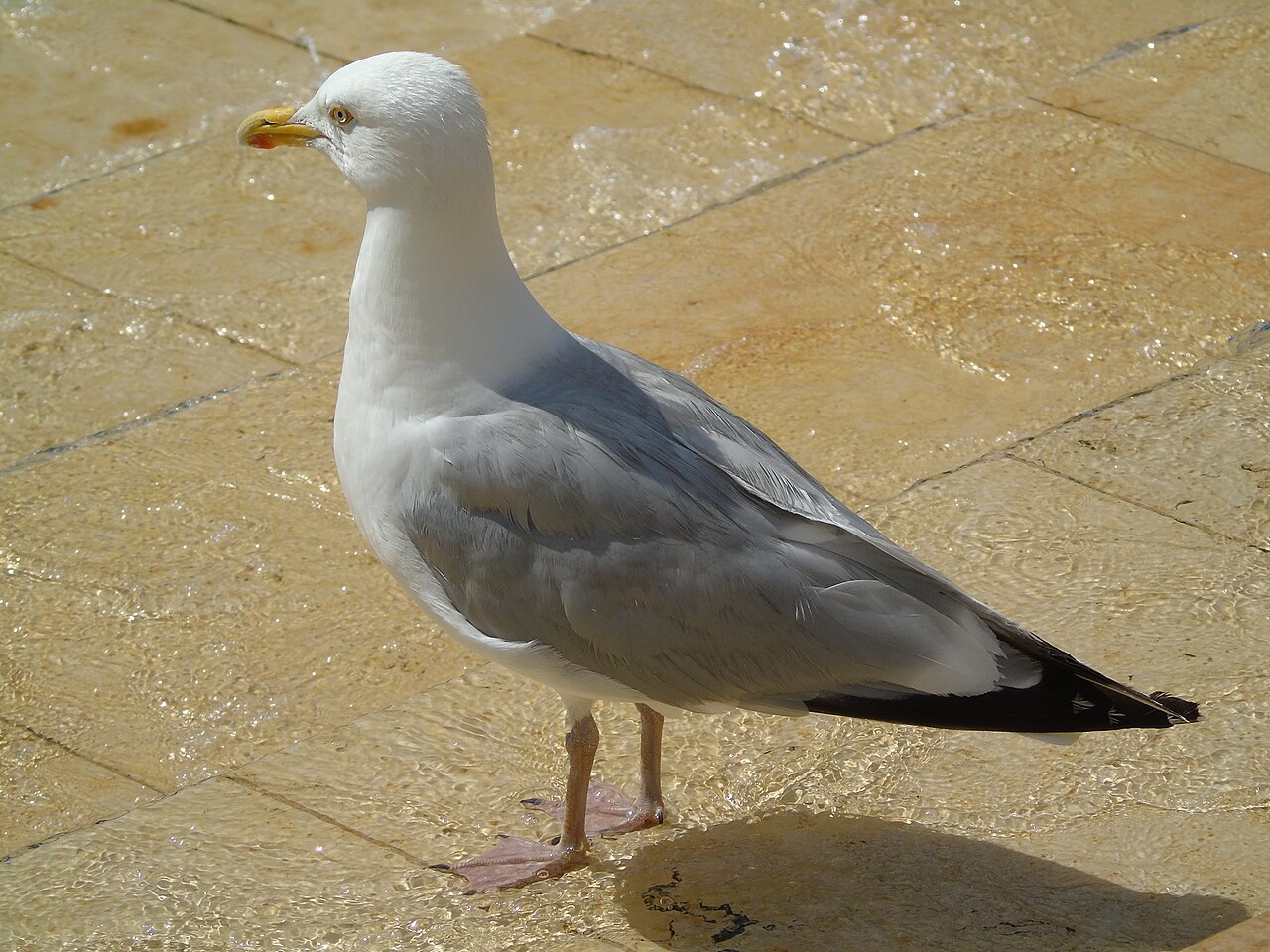
Herring gulls give the archetypal long call, a loud descending wail in a series of six to nine notes. Great black-backed gulls sound similar but noticeably deeper and slower, and the difference in pitch is obvious when both are present.
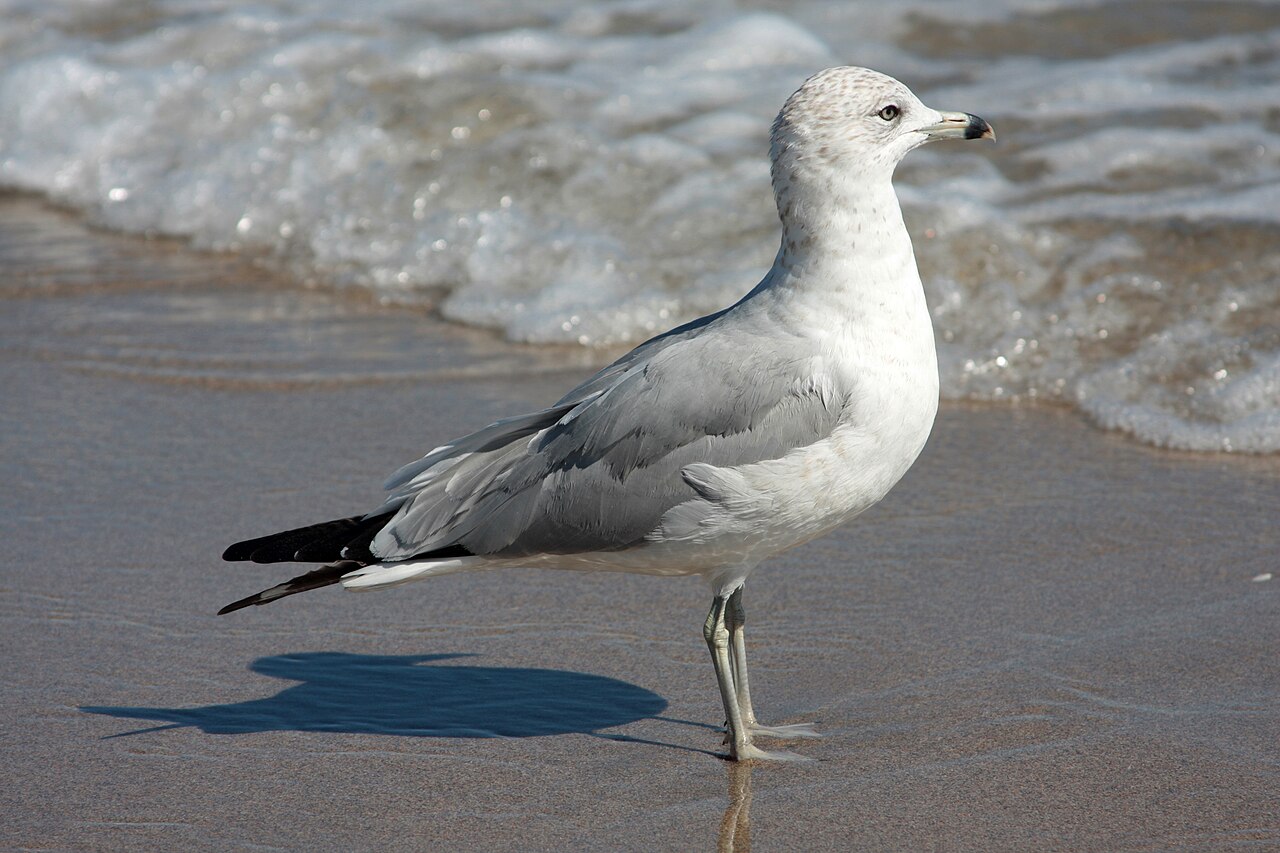
Laughing gulls produce the descending laugh that gives them their name, common along the Atlantic and Gulf coasts. Ring-billed gulls, the most widespread inland gull in North America, give a higher and slightly more nasal version of the herring gull pattern.
Size correlates with pitch reliably across the family, so a low slow call means a large gull and a higher faster one means a smaller species. Our guide to types of gulls covers the North American species and how to separate them visually.
Can Seagulls Hear Humans?
Yes, and better than their reputation suggests. Gull hearing covers roughly the same frequency range as human hearing, and they respond to human voices, footsteps, and vehicle noise. Urban gulls also habituate quickly, which is why shouting at a gull works once and then stops working.
They read human behaviour as much as they hear it. Research on herring gulls found that birds approaching food took significantly longer to do so when a person was looking directly at them, indicating they monitor gaze direction, and experienced urban birds distinguish between people carrying food and people who are not.
The practical implication is that deterrence based on noise fails. Gulls learn that a sound carries no consequence within a few exposures, and gull deterrent devices that rely on distress calls or noise generators lose effectiveness within weeks. Removing food access is the only approach that holds.
That means bins with secured lids, no deliberate feeding, and prompt clearing of dropped food around outdoor seating. Several UK and Australian coastal councils have moved to enforcement of bin rules rather than to deterrent devices for exactly this reason, since the devices consistently underperform after the first few weeks.
Frequently Asked Questions
What sounds do seagulls make?
The long call is the classic sound, a series of loud wailing notes delivered with the head thrown back. Gulls also give a cat-like mew for contact, a sharp repeated alarm, a rapid staccato charge call before attacking, a low growl at close range, and chicks produce a thin begging squeal.
Do seagulls squawk or chirp?
Neither describes them well. Gull calls are laughing, wailing, mewing, and yelping, with a tonal quality a squawk lacks. Chirping is a songbird term, and gulls are not songbirds and have no song in the technical sense.
What is the sound of seagulls called?
The main one is the long call. Individual notes are described as wails, mews, or laughs depending on species, and laughing gulls are named for a descending series that sounds genuinely like laughter. There is no single collective term equivalent to song.
Why are seagulls screaming at night?
Several species feed at night where artificial light concentrates prey around harbours and lit car parks. Disturbance is the other main cause, since a fox, cat, or person moving through a rooftop colony sets off alarm calling that spreads within seconds. Breeding season amplifies both.
Why are seagulls so noisy at 4am?
They resume activity at first light, which in midsummer arrives very early. From April through July territorial calling, mate contact, and chick begging all run at maximum intensity, with the loudest stretch from late June through July. It quietens substantially once chicks fledge.
What do different seagull sounds mean?
A long call with the head thrown back is territorial advertisement and individual identity. A cat-like mew is friendly contact between mates. A short repeated sharp note is alarm. A rapid staccato series means an attack is imminent. A low growl is a close-range threat.
Can seagulls hear humans?
Yes, over roughly the same frequency range humans do, and they also monitor human gaze direction. Herring gulls take significantly longer to approach food when a person is looking at them. They habituate to noise fast, which is why shouting or noise deterrents stop working within weeks.