Hawk Calls and Sounds: Identification Guide
The most recognizable hawk call is the red-tailed hawk’s hoarse, descending scream, “kee-eeeee-arrr,” a sound so iconic it is regularly dubbed over eagles in movies and television because real eagle calls sound too weak for the moment. Other North American hawks sound quite different: red-shouldered hawks give a sharper, repeated “kee-aah,” while accipiters like Cooper’s hawk give a fast, chattering “cak-cak-cak” near the nest. This guide breaks down the calls of the most common North American hawks, why they sound so different from one another, and how to tell them apart by ear alone, whether you are standing in your own backyard or out on a longer hike through mixed woodland and open field.
| Species | Call Description | When Heard Most |
|---|---|---|
| Red-Tailed Hawk | Descending scream, “kee-eeeee-arrr” | Soaring, territorial display |
| Red-Shouldered Hawk | Sharp, repeated “kee-aah” | Near nest, wooded habitat |
| Cooper’s Hawk | Fast “cak-cak-cak” chatter | Near nest, alarm |
| Sharp-Shinned Hawk | Higher, faster “kik-kik-kik” | Near nest, alarm |
| Broad-Winged Hawk | Thin, high-pitched whistle | Migration, breeding season |
The classic hawk call is the Red-tailed Hawk’s hoarse, descending scream, kee-eeeee-arrr, lasting two to three seconds. Cooper’s Hawks give a barking cak-cak-cak near the nest, and Red-shouldered Hawks give a repeated rising kee-aah. Most other hawks are far quieter.
What Does a Hawk Call Sound Like?
Most hawk calls fall into one of two broad categories: a long, drawn-out scream used mainly by soaring buteos, or a fast, repeated chattering call used mainly by forest-hunting accipiters near the nest. Buteo screams tend to be harsh, hoarse, and slightly descending in pitch, often given while soaring or during territorial disputes with other hawks passing through the same airspace looking for an unclaimed hunting territory. Accipiter calls are shorter, sharper, and repeated rapidly in a burst, most often heard as an alarm when another animal, including a human, approaches too close to an active nest with young inside. Understanding which broad category a call falls into is often enough to narrow down whether you are hearing a buteo or an accipiter before even considering the individual species.
Red-Tailed Hawk Call
The red-tailed hawk’s call is the single most recognizable hawk sound in North America, a raspy, descending scream lasting two to three seconds that drops in pitch throughout the call from start to finish. It is given both in flight while soaring and from a perch, often as a territorial announcement to rival hawks passing through the same stretch of sky, and both members of a pair will call to each other during courtship and while defending an active nest site from intruders. This call carries remarkably far across open country and is distinctive enough that most people can learn to recognize it after hearing it just a handful of times, making it a useful starting point for anyone learning hawk calls from scratch.
Cooper’s Hawk and Sharp-Shinned Hawk Calls
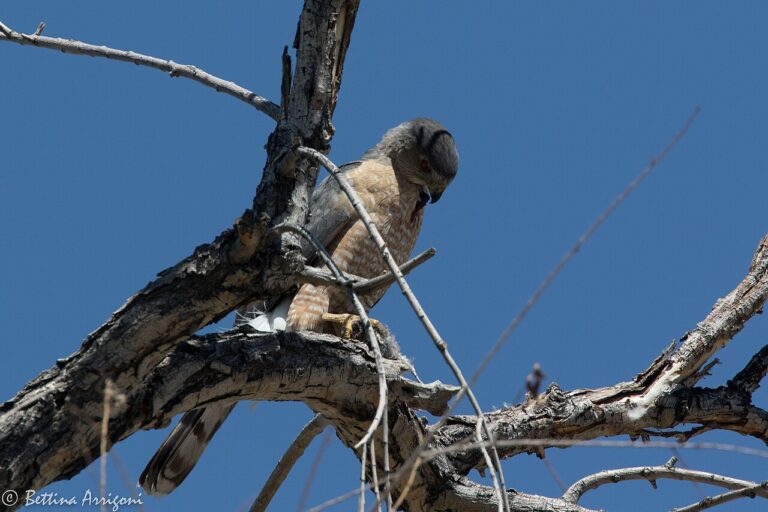
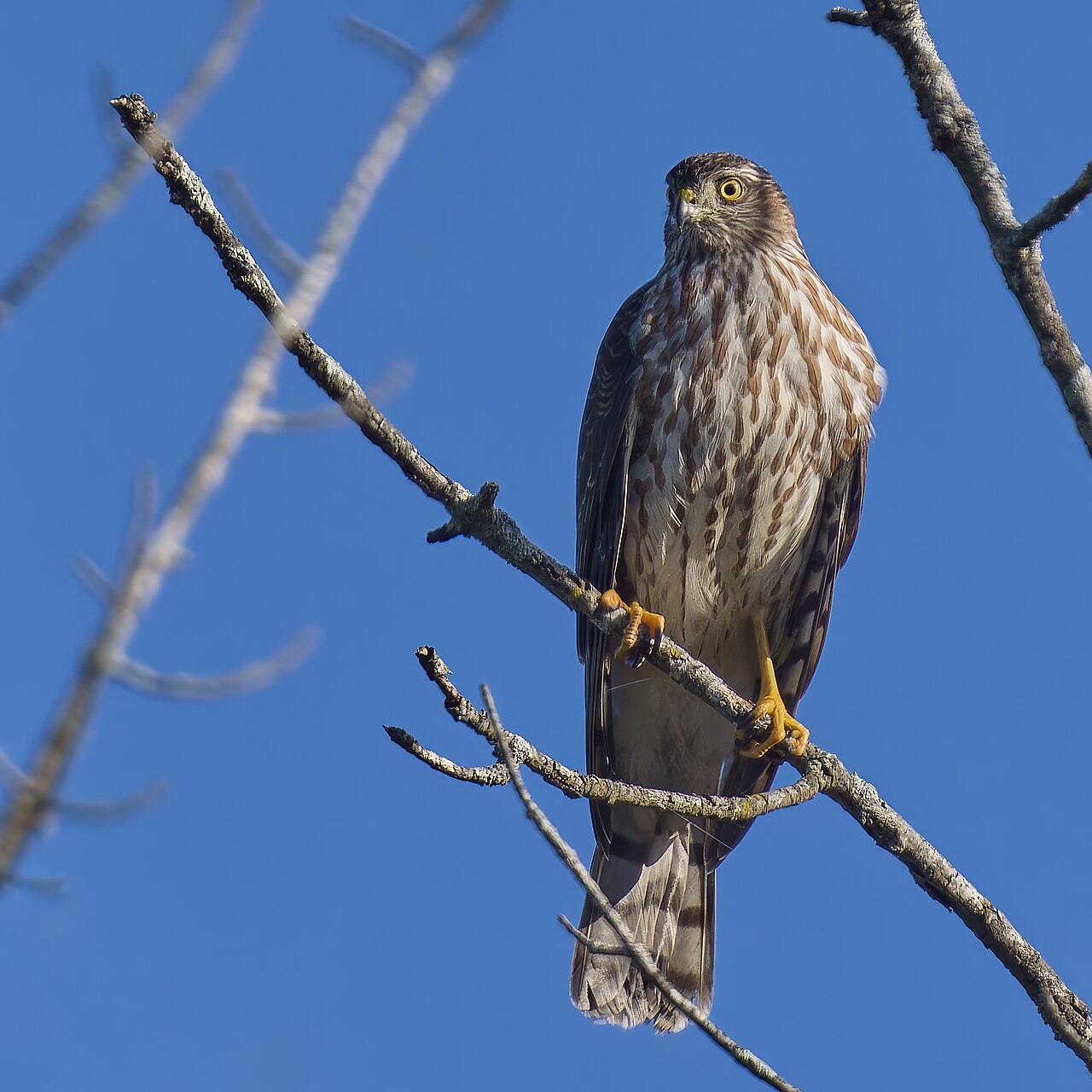
The two most common backyard accipiters sound similar but distinguishable with a bit of practice and a side-by-side comparison of a few recordings. Cooper’s hawk gives a fast, evenly spaced “cak-cak-cak-cak” that is somewhat lower and slower than the sharp-shinned hawk’s higher, more rapid “kik-kik-kik-kik,” a difference that roughly tracks the size gap between the two species, since the smaller sharp-shinned hawk tends to have the higher-pitched voice. Both calls are used mainly as alarm or nest-defense calls rather than during routine hunting, since a silent, stealthy approach is essential to an accipiter’s ambush hunting style around dense cover, and calling too often while hunting would only alert potential prey.
Red-Shouldered Hawk Call
The red-shouldered hawk gives a sharp, evenly pitched “kee-aah” typically repeated three to five times in a row, a call so distinctive that blue jays are famous for imitating it almost perfectly, sometimes to scatter other birds from a feeder or simply as vocal mimicry with no clear purpose at all. This call carries well through the wooded wetland habitat the species prefers and is often the first clue to a red-shouldered hawk’s presence well before the bird itself comes into view through the canopy above. Pairs will also call back and forth to each other, especially early in the breeding season while establishing and defending territory boundaries against neighboring pairs.
Why Movies Use the Red-Tailed Hawk Call for Eagles
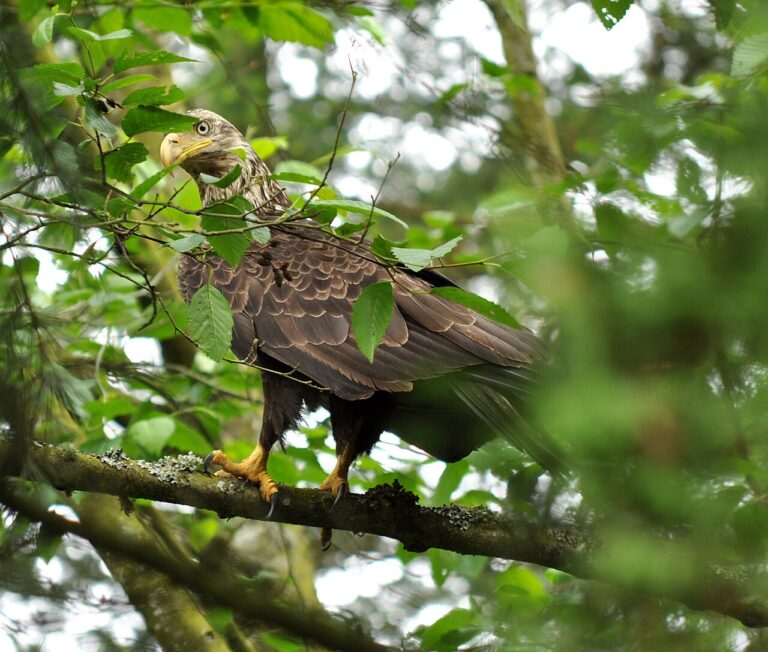
Bald eagles actually have a surprisingly weak, high-pitched, chattering call that most audiences find underwhelming for such a powerful-looking bird appearing on screen during a dramatic, tense moment in a film or nature documentary. Film and television sound editors have long substituted the red-tailed hawk’s harsh, dramatic scream whenever an eagle appears on screen, a practice so widespread that most people now instinctively associate that sound with eagles rather than with the hawk that actually makes it in real life. According to the Cornell Lab of Ornithology, this substitution is one of the most commonly cited examples of inaccurate bird sound use in popular media, and it means that anyone who has watched a nature documentary or action movie has almost certainly heard a red-tailed hawk without realizing it.
Other Hawk Calls Worth Knowing
Beyond the four species covered in detail above, several other North American hawks have calls worth learning to recognize as your ear gets more practiced. The broad-winged hawk gives a thin, high-pitched whistle quite different from the harsh scream of its larger buteo relatives, often heard during migration when large flocks called kettles pass overhead in fall on their way south. Swainson’s hawk, common across open western grasslands, gives a plaintive, drawn-out squeal, while the rough-legged hawk, a winter visitor from the Arctic, is largely silent outside its remote northern breeding grounds and is rarely heard calling at all in the lower 48 states. Learning a handful of these secondary calls rounds out a birder’s ability to identify hawks by ear across a much wider range of habitats and seasons, well beyond just the handful of species most common in any one backyard.
Hawk Calls at Night vs During the Day
Hawks are daytime hunters, and the vast majority of hawk calls are given during daylight hours, most frequently in the morning and around territorial disputes or nest defense later in the season. A raptor call heard clearly after dark in North America is far more likely to be an owl than a hawk, since true hawks are not nocturnally active and rarely, if ever, vocalize at night once they have settled in to roost. If you are trying to identify a nighttime bird call, checking our guide to owl calls is a far more productive starting point than assuming it came from a hawk, since the two groups almost never overlap in when they call.
How to Practice Identifying Hawk Calls
The most effective way to learn hawk calls is repetition paired with a visual confirmation whenever possible, since matching a sound to a bird you can actually see cements the memory far better than audio alone ever could. Many birders start with a single, very distinctive call, most often the red-tailed hawk’s scream, and use it as an anchor point for comparison before branching out to trickier species like the accipiters that sound more similar to one another. Recording apps and online audio libraries make it easy to review calls repeatedly at home between outings, and playing a call back immediately after hearing it in the field, when the memory is still fresh, tends to build recognition far faster than trying to memorize sounds cold from a book or a website with no recent field experience attached. Over a season or two of regular practice, most backyard birders find they can confidently identify the two or three most common local hawk species by ear alone, well before they ever spot the bird itself in the sky or perched along a tree line.
Related reading: what do hawks eat.
What Does It Mean When a Hawk Keeps Screaming?
Repeated screaming almost always means one of three things: territory, alarm, or a fledgling begging. Territorial calling peaks from late winter into spring, when a pair advertises a nesting area, and it is usually given from a high perch or in slow circling flight rather than at close range.
Alarm calling is faster and more insistent, and it means something is near the nest. A hawk that screams continuously while circling low over one spot, often diving at a crow, a cat or a person, has young nearby. This peaks from late spring into early summer and stops as soon as the perceived threat moves off. Cooper’s Hawks are the species most likely to do this in a suburban yard, and their alarm is a rapid barking rather than the drawn-out scream.
The third case runs through late summer. Fledged young call persistently for weeks after leaving the nest, a thinner and more repetitive version of the adult scream, and they will follow a parent through the trees doing it for hours. The Cornell Lab’s Red-tailed Hawk sound library has the adult scream and the juvenile begging call side by side.
Frequently Asked Questions
What is the most common hawk call?
The red-tailed hawk’s descending scream is the most common and recognizable hawk call in North America, frequently used in movies and TV even when the on-screen bird is an eagle.
Why do movies use a hawk sound for eagles?
Bald eagles have a weak, high-pitched chattering call that sounds unimpressive on screen, so sound editors substitute the red-tailed hawk’s dramatic scream instead.
Do blue jays really imitate hawk calls?
Yes, blue jays are well known for closely imitating the red-shouldered hawk’s call, sometimes convincingly enough to fool experienced birders.
What does a Cooper’s hawk sound like?
Cooper’s hawk gives a fast, evenly spaced “cak-cak-cak” alarm call, slightly lower and slower than the similar call of the smaller sharp-shinned hawk.
Do hawks call at night?
No, hawks are daytime hunters and rarely vocalize after dark; a raptor call heard at night in your backyard or nearby woods is far more likely to be an owl instead.
How can I tell hawk species apart by call alone?
Listen for length and rhythm: a single long, descending scream points to a red-tailed hawk, while a fast, repeated chattering call points to an accipiter like Cooper’s hawk or a sharp-shinned hawk.