Northern Mockingbird vs Brown Thrasher: How to Tell Them Apart
Telling a mockingbird vs brown thrasher apart trips up many backyard birders because both are slim, long tailed mimics that sing endlessly varied songs from the same family. The quick answer is color and repetition. A northern mockingbird is gray with white wing flashes and repeats each song phrase three or more times, while a brown thrasher is rich rusty brown, heavily streaked below, and repeats each phrase about twice. Get those two habits down and you will never mix them up again. This guide breaks down every difference in looks, song, habitat, and behavior.
| Color | Mockingbird: gray. Thrasher: rusty reddish brown |
| Underparts | Mockingbird: plain pale gray. Thrasher: bold dark streaks |
| Size | Mockingbird: medium, about 10 in. Thrasher: larger, about 11.5 in |
| Eyes | Mockingbird: dark. Thrasher: bright yellow |
| Song repeats | Mockingbird: 3+ times. Thrasher: usually twice |
| Wings | Mockingbird: white patches flash in flight. Thrasher: two thin white bars |
| Habitat | Mockingbird: open lawns and edges. Thrasher: dense shrubs and thickets |
Northern Mockingbird vs Brown Thrasher: Looks
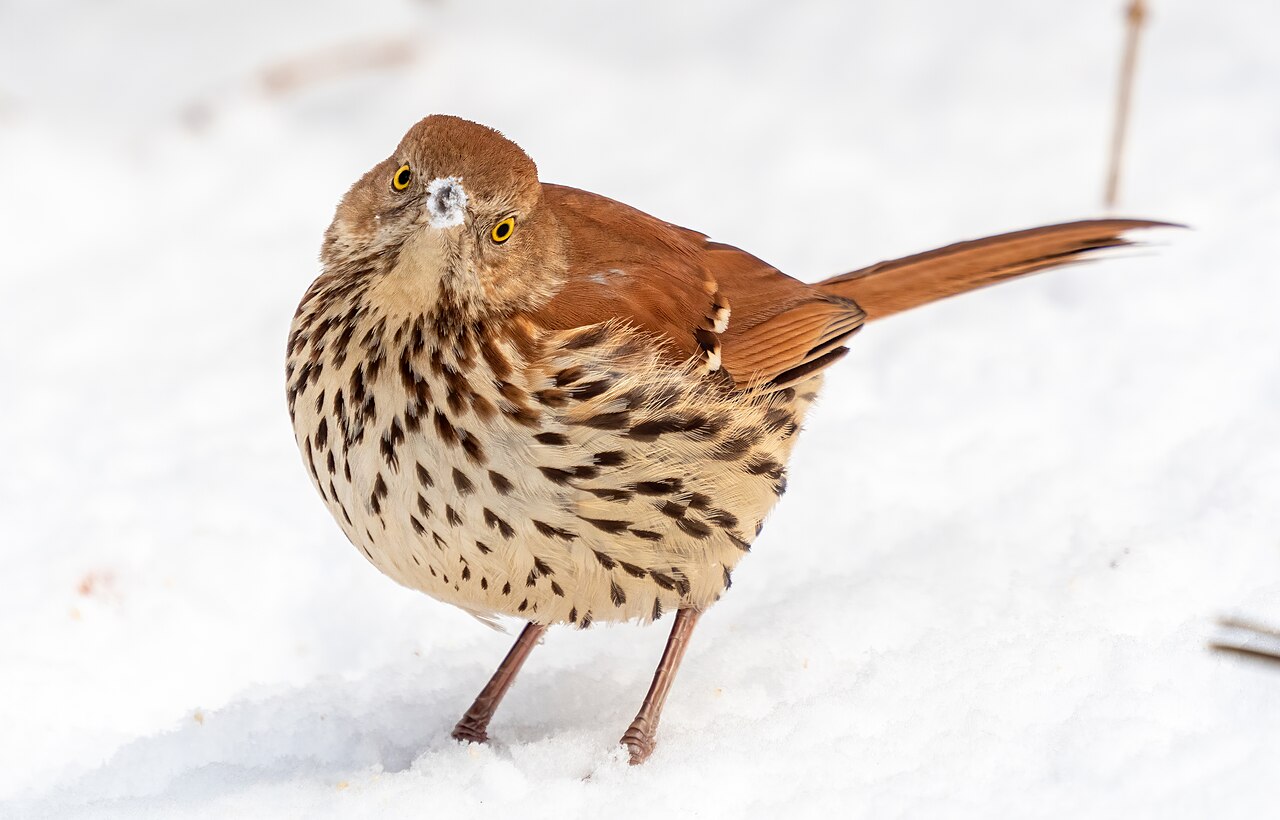
The visual difference is stark once you look past the shared slim, long tailed shape. The northern mockingbird is overall pale gray, lighter below, with two white wing bars and, most distinctively, large white wing patches and white outer tail feathers that flash dramatically when it flies or spreads its wings. Its eyes are dark. The brown thrasher, by contrast, is a warm foxy reddish brown above with bold dark brown streaks marching down a whitish chest, a longer tail, a longer curved bill, and staring pale yellow eyes. If the bird is gray, it is a mockingbird. If it is rusty and streaked, it is a thrasher. There is no real overlap in color.
The Song Test: Count the Repeats
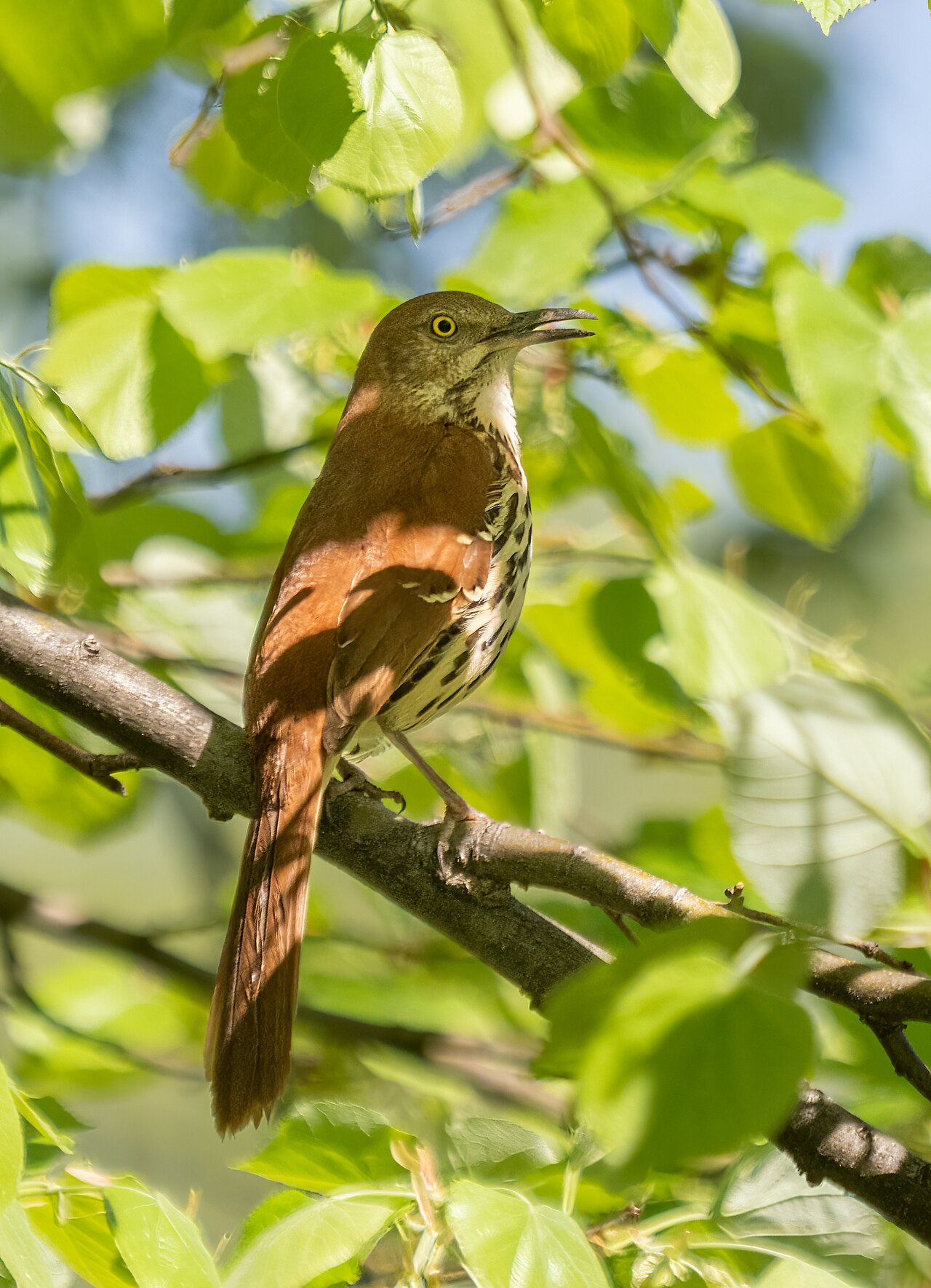
Both birds are members of the mimic family and string together imitations of other species into long, rambling songs, which is exactly why people confuse them by ear. The reliable separator is how many times each phrase is repeated before the bird moves on. According to the Cornell Lab of Ornithology, the northern mockingbird typically repeats each phrase three or more times, while the brown thrasher usually repeats each phrase about twice, and the related gray catbird generally sings each phrase only once. Counting repetitions is the single most dependable field skill for this trio.
Habitat and Behavior: Open vs Hidden
Where the bird sits tells you a lot before you even raise binoculars. Northern mockingbirds love open, edgy habitats: suburban lawns, parks, fence lines, and shrubby borders, and they perch boldly in the open, often on a wire, rooftop, or exposed branch, and sing from prominent spots. Brown thrashers are secretive birds of dense cover. They forage on the ground in leaf litter and slip through thickets and hedgerows, usually staying low and hidden. A confident mimic singing from an exposed perch in an open yard is far more likely a mockingbird, while a rustling in the underbrush that resolves into a big rusty bird is a thrasher.
Are They Related? The Mimic Family
Yes. The northern mockingbird, brown thrasher, and gray catbird all belong to Mimidae, the mimic thrushes. All three can learn and imitate the songs of other birds, and the mockingbird famously adds mechanical sounds like car alarms and squeaky gates. The family connection is why they share the slim silhouette, the long tail, and the improvisational singing style, even though their plumage and repetition habits differ. Understanding that they are cousins makes the differences easier to remember. Both can appear in the same regions, so residents of the Southeast often host all three; see our backyard birds of Georgia for the local cast.
Range Overlap and Which You Are More Likely to See
The two species overlap broadly across the eastern and southern United States, so in much of that region either is possible in the right habitat. Your odds come down to your yard. A manicured suburban lawn with scattered shrubs and open perches favors the mockingbird. A property with dense hedgerows, brush piles, and thick native shrubs favors the thrasher. Because the brown thrasher is Georgia’s state bird and the mockingbird is the state bird of several southern states, the Southeast is prime territory to practice telling them apart. For finch and sparrow look alikes that share these habitats, our house finch vs purple finch guide applies the same compare and contrast method.
The Gray Catbird: The Third Mimic
Any discussion of the mockingbird and thrasher should include the third member of their family, the gray catbird, because it completes the picture and sharpens your identification skills. The catbird is slate gray all over with a black cap and a rusty patch under the tail, smaller and darker than either the mockingbird or the thrasher. Its song habit is the giveaway: it typically sings each phrase only once, in a rambling, halting stream, and it famously includes a catlike mewing note that gives the bird its name. Put the trio together and the repetition rule becomes a powerful tool. Catbird once, thrasher twice, mockingbird three times or more. Learning all three at once, rather than in isolation, makes each easier to remember, and all three can turn up in the same shrubby habitats across the eastern United States.
Nesting and Behavior Compared
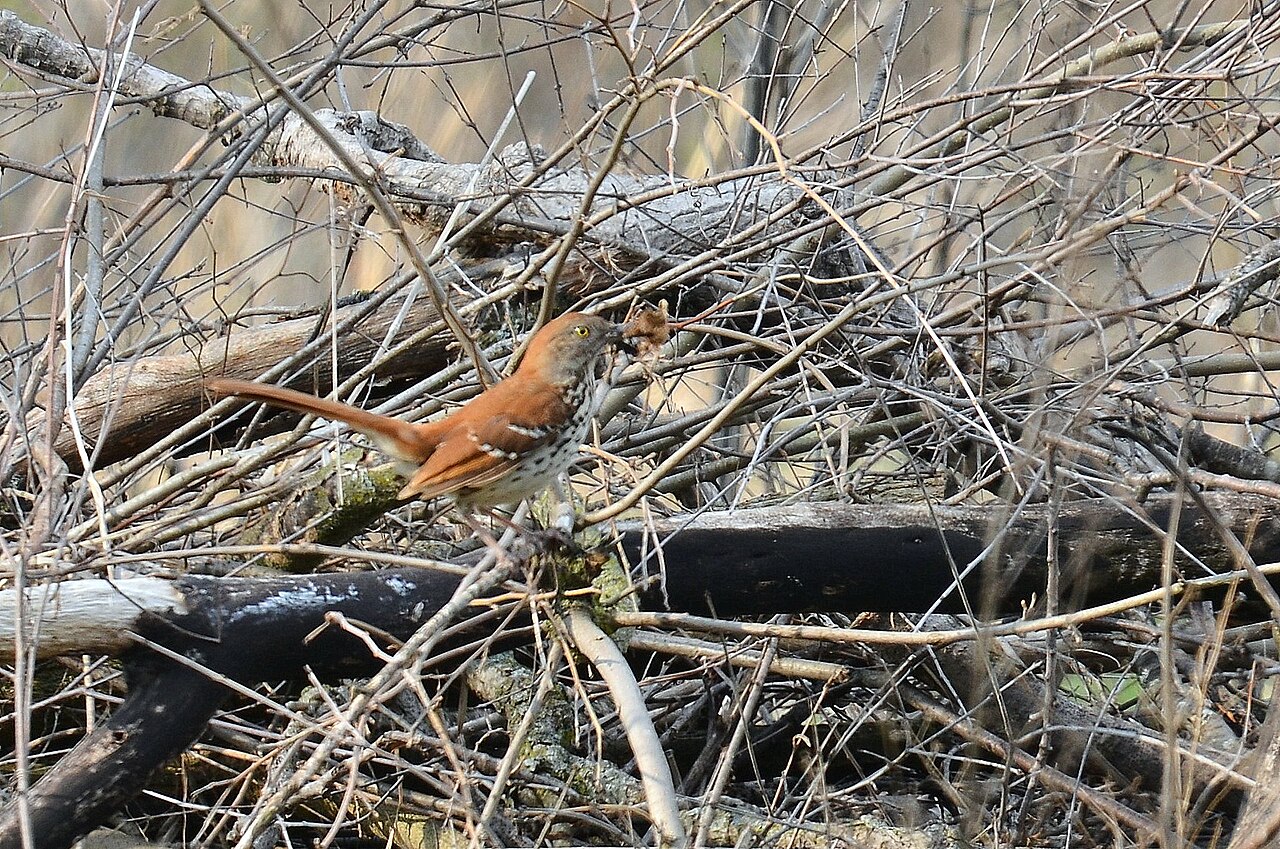
The two birds also differ in how they live around your yard, which offers behavioral clues. Northern mockingbirds often nest in ornamental shrubs and small trees close to houses and are bold, conspicuous, and famously aggressive in defense of a nest, dive bombing cats, dogs, and people who venture too near. They also aggressively defend winter feeding territories built around berry bushes. Brown thrashers nest lower and deeper in dense thickets and are far more secretive, spending most of their time foraging in leaf litter out of sight. A bold gray bird singing from your rooftop is a mockingbird; a shy rusty bird glimpsed slipping through a hedge is a thrasher. Both benefit from native shrubs and berry producing plants, so a wildlife friendly yard can host either. To attract the secretive thrasher in particular, our brown thrasher guide details the dense habitat it needs, and our guide to plants that attract birds covers the berry bushes both species use.
Which One Is Visiting Your Yard?
Location and habit narrow it down quickly. A bird belting a long, unbroken medley from an exposed perch such as a rooftop, wire, or bare treetop is almost always a northern mockingbird, the bolder and more urban of the two. A rusty brown bird skulking low in dense shrubs, flipping leaf litter with its bill and singing in tidy paired phrases is a brown thrasher. Mockingbirds flash white wing patches in flight, while thrashers show plain wings and a much longer tail. If a mimic is raiding your feeder aggressively and chasing other birds, bet on the mockingbird. Plant native berry shrubs and both may share your yard through the seasons.
Frequently Asked Questions
What is the main difference between a mockingbird and a brown thrasher?
Color and size. A northern mockingbird is medium sized and gray with white wing patches, while a brown thrasher is larger, rich rusty brown, and heavily streaked below with yellow eyes. In song, the mockingbird repeats phrases three or more times and the thrasher usually twice.
How can you tell them apart by song?
Count phrase repetitions. The northern mockingbird repeats each phrase three or more times before switching. The brown thrasher typically repeats each phrase about twice. This repetition rhythm is the most reliable way to separate them by ear.
Are mockingbirds and brown thrashers related?
Yes. Both belong to the family Mimidae, the mimic thrushes, along with the gray catbird. All three are accomplished vocal mimics that can imitate other birds, but each has a distinct look and repetition pattern.
Which one is grayer?
The northern mockingbird is the gray one, with pale gray upperparts, whitish underparts, and bold white wing patches and outer tail feathers that flash in flight. The brown thrasher is never gray; it is warm reddish brown above.
Do both birds mimic other species?
Yes. The mockingbird is the more famous mimic and can learn dozens of other birds’ songs plus mechanical sounds. The brown thrasher has an even larger raw repertoire but repeats each phrase fewer times, so its mimicry is less obvious to casual listeners.
Where are you likely to see each one?
Mockingbirds favor open areas, lawns, parks, and suburban edges, often perching in the open. Brown thrashers prefer dense shrubs, thickets, and hedgerows and stay low and hidden, so a bird singing boldly from an exposed perch is more often a mockingbird.
Which is more aggressive?
Both defend nests vigorously, but the northern mockingbird is famous for relentlessly dive bombing cats, hawks, and people near its nest. Brown thrashers also attack intruders but are generally more secretive overall.