What Do Hawks Eat? Complete Diet Guide
Hawks eat small mammals, birds, reptiles, amphibians, and insects, with the exact mix depending heavily on the species: buteos like the red-tailed hawk favor rodents and rabbits, while accipiters like Cooper’s hawk specialize in catching other birds. Nearly all hawks are opportunistic hunters that take whatever prey is easiest to catch in their habitat, and few will pass up an easy meal like roadkill when the opportunity arises. This guide breaks down what hawks eat in the wild, what baby hawks eat, how diet shifts with the seasons, and how eating habits differ between the major hawk species found in North America.
| Food Type | Examples | Typical Hunters |
|---|---|---|
| Small mammals | Voles, mice, rabbits, squirrels | Red-tailed, red-shouldered, ferruginous hawk |
| Birds | Songbirds, pigeons, starlings | Cooper’s hawk, sharp-shinned hawk |
| Reptiles and amphibians | Snakes, frogs, lizards | Red-shouldered hawk |
| Insects | Grasshoppers, dragonflies, cicadas | Broad-winged hawk, Swainson’s hawk |
| Carrion (occasional) | Roadkill | Red-tailed hawk |
What Do Hawks Eat in the Wild?
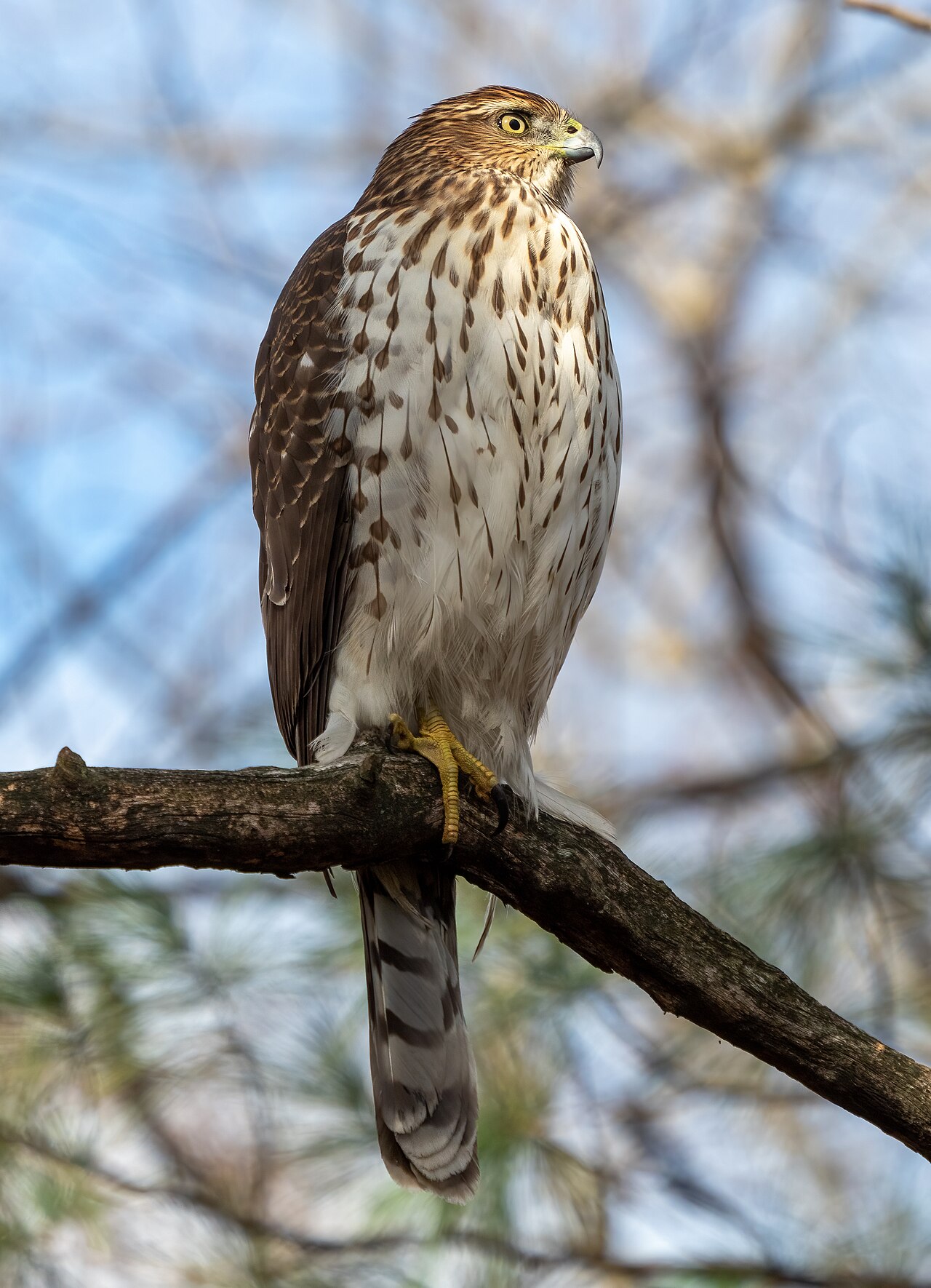
In the wild, most hawks hunt live prey rather than scavenge, relying on exceptional eyesight, estimated to be several times sharper than human vision, to spot movement from a perch or while soaring, followed by a fast dive or short chase. Rodents make up the bulk of the diet for open-country buteos like the red-tailed hawk and ferruginous hawk, which specialize in voles, mice, ground squirrels, and rabbits caught in open fields and along road shoulders. Forest-hunting accipiters like Cooper’s hawk and sharp-shinned hawk take a very different approach, chasing down songbirds in flight through dense cover using short bursts of speed and remarkable agility through tight branches. The red-shouldered hawk, which favors wooded wetland habitat, adds a heavier dose of snakes, frogs, and crayfish to its diet than most other hawk species, reflecting the damp, forested terrain it prefers over open fields.
What Do Baby Hawks Eat?
Baby hawks, called eyases while still in the nest, eat exactly what the adults hunt, just torn into smaller pieces by a parent for the first several weeks of life. Both parents typically hunt to feed the growing brood, with the female often doing more of the feeding and tearing while the male focuses on hunting trips during early nestling stages when the chicks cannot yet regulate their own body temperature. As young hawks near fledging age, parents begin delivering whole or barely processed prey to encourage the hatchlings to practice tearing food themselves, an important survival skill before they leave the nest and start hunting independently. This gradual shift from spoon-fed pieces to whole prey typically plays out over four to six weeks, depending on the species and how quickly the young birds develop their coordination and strength.
Do Hawks Eat Chickens?
Yes, hawks will take chickens when the opportunity arises, particularly free-range birds and young chicks left unprotected in open runs, and larger species like the red-tailed hawk are capable of taking a full-grown hen. That said, chickens are rarely a hawk’s primary food source and predation usually spikes when coops lack overhead cover, since most hawks strongly prefer to attack from above with the element of surprise rather than approaching on the ground. Covering runs with netting or wire, providing shelters chickens can duck under at the first sign of danger, and avoiding leaving flocks unattended at dawn and dusk, when hawks are most active, all meaningfully reduce losses over time.
Do Hawks Visit Bird Feeders?
Hawks do not eat birdseed, but they absolutely visit bird feeders, drawn not by the seed itself but by the concentration of songbirds a busy feeder reliably attracts throughout the day. Accipiters in particular, especially Cooper’s hawk and the sharp-shinned hawk, are well known for staking out backyard feeding stations as a dependable hunting ground, sometimes striking within feet of the feeder itself while the homeowner watches from a window. If a hawk has become a regular, unwelcome visitor at your feeding station, our guide on how to get rid of hawks at bird feeders covers legal, effective ways to make the area less appealing without harming the hawk in the process.
What Do Hawks Eat in Winter?
Hawk diets shift with the seasons mainly because prey availability changes, not because the hawks themselves change strategy or preference. Insect-heavy hunters like the broad-winged hawk migrate south for winter entirely, following their food supply thousands of miles to Central and South America, while year-round residents like the red-tailed hawk lean more heavily on mammals during colder months when reptiles, amphibians, and insects become scarce or dormant underground. Snow cover can also concentrate rodent activity along field edges and roadsides, which is part of why red-tailed hawks are so often seen perched along highways in winter, patiently watching for the smallest movement in the exposed grass along the shoulder.
How Different Hawk Species Hunt and Eat
Hunting style varies as much as diet across hawk species, and understanding the difference explains a lot about where and how each species finds its food. Buteos like the red-tailed hawk hunt mainly from a high, stationary perch or while soaring, using patience and superb distance vision to spot prey before a controlled, gliding dive toward the target. Accipiters hunt the opposite way, relying on stealth and explosive short-range speed to surprise birds in dense cover, often flying low and fast along hedgerows before a sudden upward strike that gives prey almost no time to react. According to the Cornell Lab of Ornithology, this difference in hunting strategy is directly reflected in wing shape, with the accipiters’ shorter, rounder wings built for maneuverability rather than the sustained soaring efficiency of a buteo’s broader, longer wings.
Do Hawks Compete With Other Raptors for Food?
Yes, hawks regularly overlap in diet with other raptors sharing the same habitat, and larger species will sometimes displace or even prey on smaller ones when food is scarce. A great horned owl, for instance, is one of the few predators that will take a red-tailed hawk given the chance, usually striking at night while the hawk roosts and is unable to defend itself as effectively as during the day. Competition is generally reduced by differences in hunting time, with hawks active by day and most owls by night, and by differences in preferred prey size and habitat, which allows several raptor species to share the same general area without directly competing for every meal available. Even among hawk species themselves, a larger buteo and a smaller accipiter occupying the same woodland edge rarely compete head to head, since one focuses on ground-dwelling mammals in open patches while the other chases birds through dense cover just a short distance away.
Do Hawks Store or Cache Food?
Some hawks will cache surplus prey for later rather than eating everything immediately after a successful hunt, particularly during periods when prey is temporarily abundant. A hawk with more food than it can eat in one sitting may wedge a partial carcass into a tree fork or tuck it under vegetation, returning within a day or two to finish the meal before it spoils or is discovered by a scavenger such as a crow or raccoon. This behavior is more commonly documented in accipiters defending a nest full of hungry young than in solitary buteos, since a larger, growing brood creates more pressure to secure extra food whenever the opportunity presents itself during a productive hunting day, and a cached meal can make the difference during a stretch of poor weather.
Related reading: Hawk Calls and Sounds.
Frequently Asked Questions
What is a hawk’s favorite food?
Most hawks do not have a single favorite food, but small mammals like voles and mice are the single most common prey item across North American hawk species overall, regardless of habitat.
What do baby hawks eat?
Baby hawks eat the same prey as adults, torn into small pieces by a parent at first, gradually shifting to whole or barely processed prey as they near fledging age.
Do hawks eat squirrels?
Yes, squirrels are a common prey item for larger hawks like the red-tailed hawk, particularly in suburban and wooded habitat where squirrels are abundant.
Will a hawk eat a cat or small dog?
It is rare but not impossible for a large hawk to attack a very small kitten or toy-breed puppy left unattended outdoors, though hawks strongly prefer wild prey and typically avoid pets.
Do hawks eat other birds?
Yes, especially accipiters like Cooper’s hawk and the sharp-shinned hawk, which specialize in hunting songbirds and are frequently seen near bird feeders for exactly that reason.
What do hawks eat in the winter?
In winter, hawks lean more heavily on small mammals like voles and mice, since insects, reptiles, and amphibians become scarce or dormant during the colder months of the year.