Owl Sounds: How to Identify Owl Calls by Species
Owl sounds are among the most evocative voices of the night, but they are far more varied than the single “hoot” most people imagine, ranging from deep resonant hoots to harsh screeches, soft trills, and rolling whistles. Learning to identify owl calls by species is one of the most rewarding skills in birding, because most owls are heard far more often than they are seen. This guide walks through the signature sounds of the common North American owls, explains what owl calls mean and why owls call at night, points out a few birds that sound like owls, and links to detailed guides for each species so you can put a name to every voice in the dark.
| Owl | Signature sound |
|---|---|
| Great Horned Owl | Deep “hoo-h’HOO-hoo-hoo” |
| Barred Owl | “Who cooks for you? Who cooks for you-all?” |
| Eastern Screech-Owl | Descending whinny and even trill |
| Barn Owl | Long, harsh screech |
| Northern Saw-whet Owl | Steady, repeated tooting |
| Great Gray Owl | Very deep, soft descending hoots |
The main types of owl sounds
Owl calls fall into a few broad categories that make identification much easier once you know them. Hoots are the deep, resonant sounds of the larger “typical” owls, used mainly to defend territory. Screeches and shrieks are harsh, grating calls given by the Barn Owl and, despite the name, are not what screech-owls produce. Trills and whinnies are the soft, tremulous sounds of the small screech-owls. Toots and whistles are the repetitive, flute-like calls of tiny owls like the saw-whet.
On top of these territorial and advertising calls, most owls also hiss, bark, snap their bills, and give begging calls, and their young often sound completely different from the adults. Sorting a mystery night sound into one of these categories, hoot, screech, trill, or toot, is the first step to naming the owl that made it. The sections below cover the signature call of each common species.
Hooting owls: Great Horned, Barred, and Great Gray
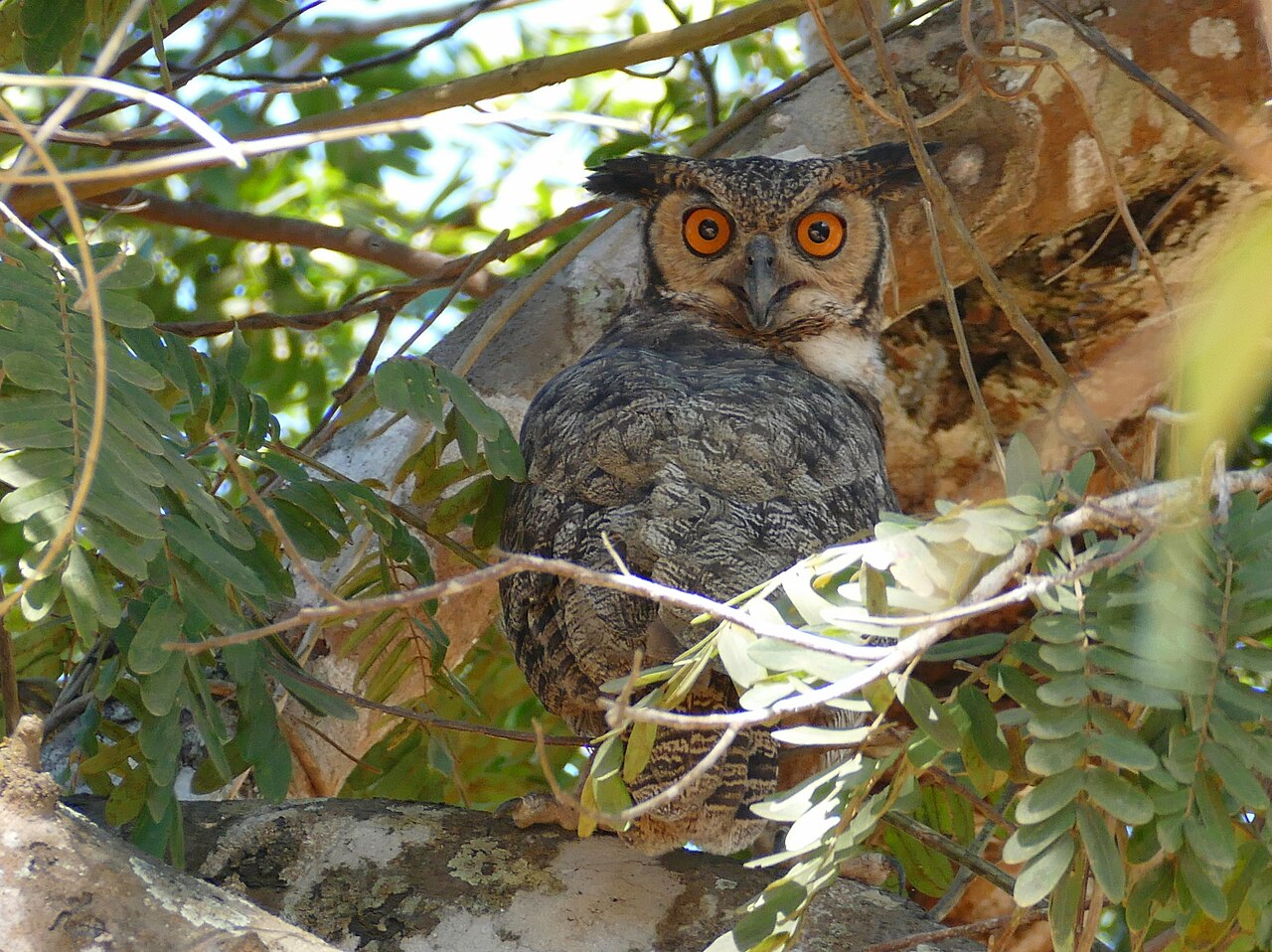
The classic hooters are the large woodland owls. The Great Horned Owl gives a series of deep, soft, evenly spaced hoots, hoo-h’HOO-hoo-hoo, low and muffled, and in a duetting pair the male sounds deeper than the female. Its detailed voice is covered in our guide to Great Horned Owl sounds.
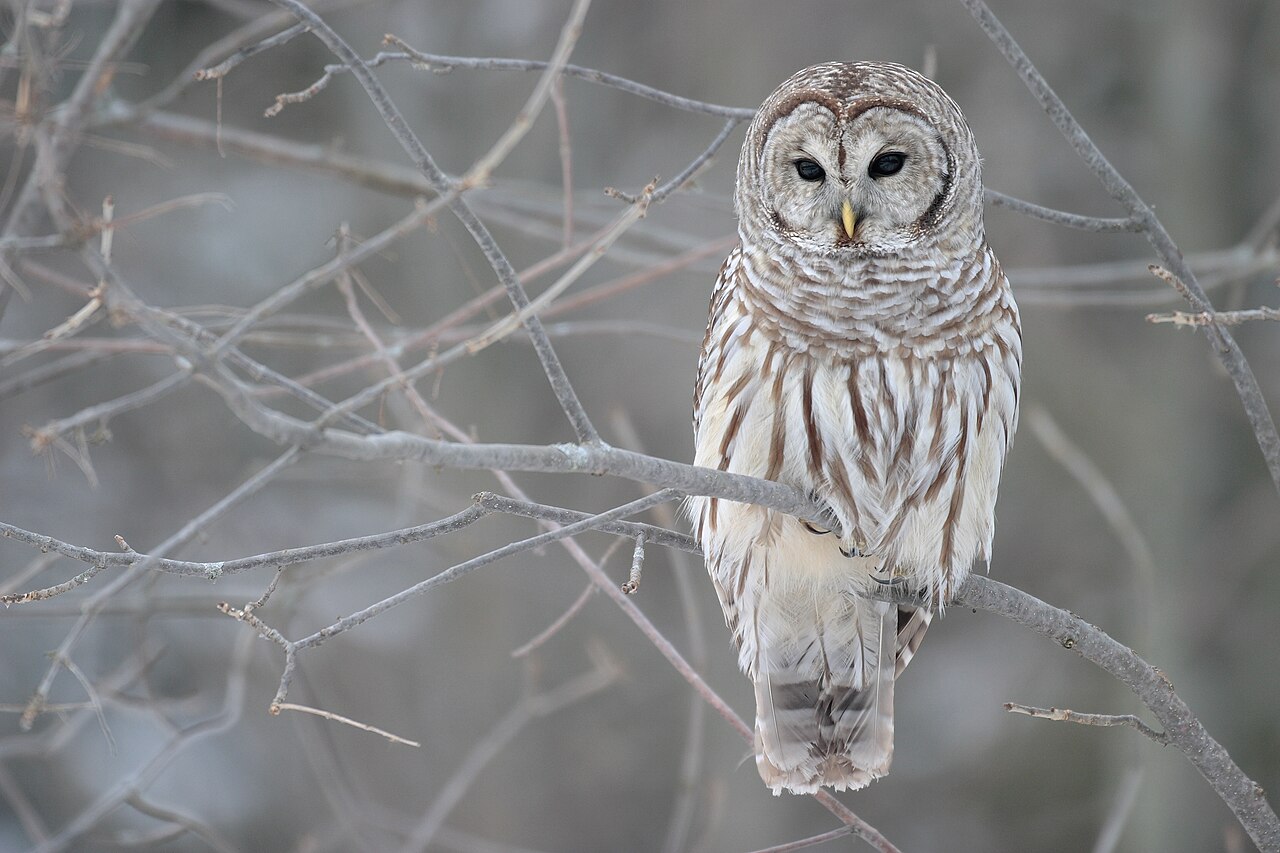
The Barred Owl gives the famous rhythmic phrase “Who cooks for you? Who cooks for you-all?”, higher and more emphatic than the Great Horned Owl, and pairs erupt into wild caterwauling duets, as explained in our guide to the Barred Owl call. The Great Gray Owl of northern and montane forests gives an even deeper, softer series of hoots that descend and fade, among the lowest-pitched owl sounds of all. All three hold territory by voice and call most in late winter and spring.
Screeching and trilling owls: Barn and screech-owls
Not all owls hoot. The Barn Owl gives a long, harsh, rasping screech, an eerie shriek with none of the musical quality of a hoot, detailed in our guide to Barn Owl sounds. Confusingly, the birds actually named “screech-owls” do not screech at all.
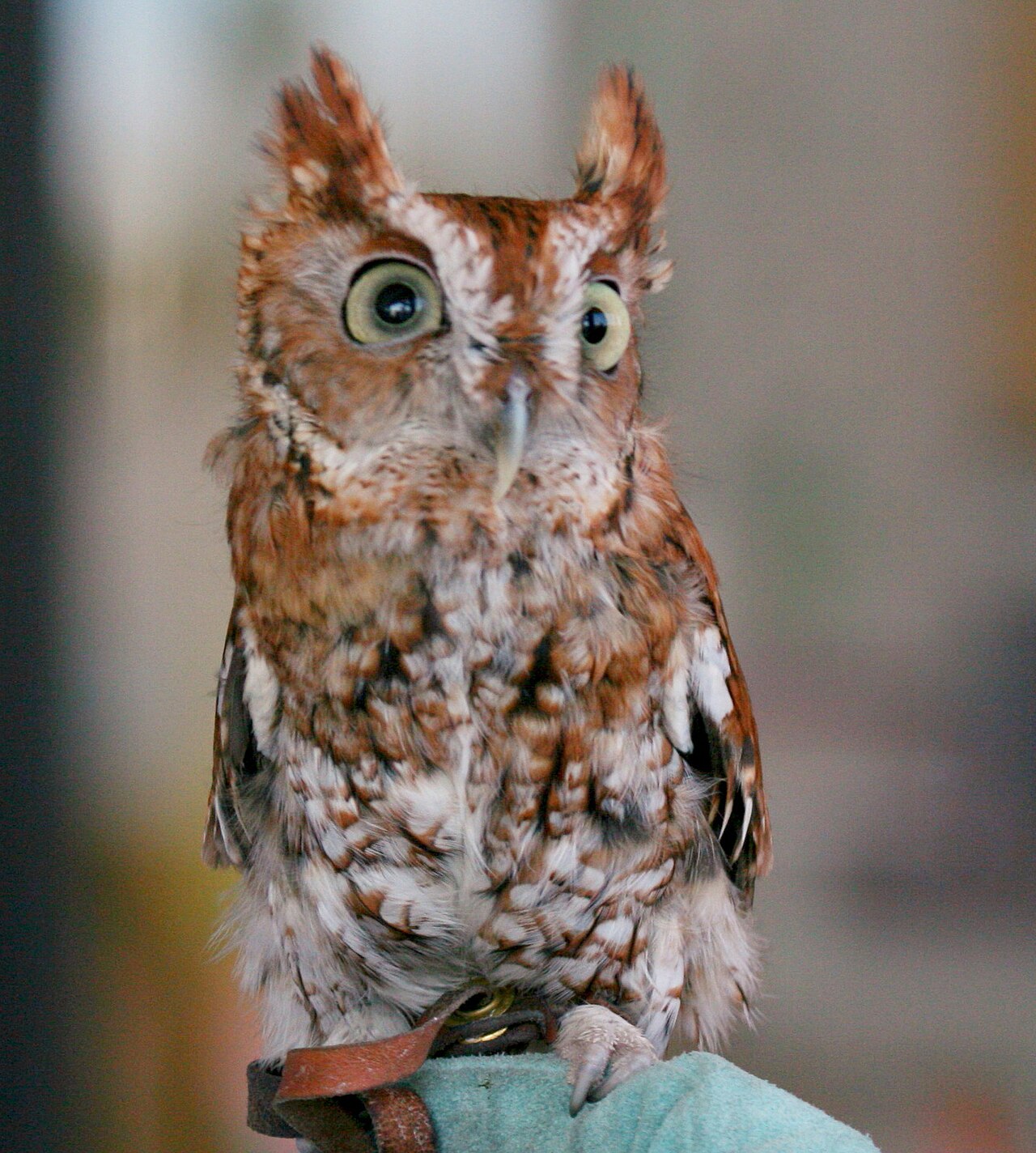
The Eastern Screech-Owl gives a soft, descending, horse-like whinny and a steady, rolling trill, gentle sounds covered in our guide to Eastern Screech-Owl sounds. Its western counterpart, the Western Screech-Owl, gives an accelerating “bouncing ball” series of short whistles instead. These small owls are quiet, so their calls are easy to miss, but they often come from surprisingly close to homes.
Tooting and whistling owls: the Saw-whet
The smallest owls tend to give simple, repetitive whistled notes rather than hoots. The Northern Saw-whet Owl gives a steady, monotonous series of clear, whistled toots, often about two per second, continuing for minutes on end, a sound early naturalists likened to a saw being sharpened. It is given mostly on late-winter and spring nights and carries surprisingly far through the forest.
Other small owls follow the same theme of repetitive tooting or whistling, and their persistence is a good clue: a single note repeated tirelessly for minutes is far more likely to be a tiny owl than one of the larger hooters, which deliver their calls in shorter bursts. Because these tiny owls are so hard to see, their monotonous calls are often the only way to detect them.
Why owls call at night and what it means
Most owl calling comes down to two things: territory and mating. Owls hoot, screech, and trill to advertise ownership of a patch of habitat and to warn off rivals, and to attract or stay in contact with a mate. This is why calling peaks in late winter and early spring, the courtship and nesting season for many owls, and why a burst of duetting often signals a pair bonding. Alarm calls, hisses, and bill-snaps, by contrast, signal a threat or an intruder.
Owls call at night simply because that is when most of them are active, though some, like the Barred Owl, also call at dusk and on cloudy days. The many folk beliefs attached to owls calling in the dark are explored in our guides to what it means to see or hear an owl and owls at night. In biological terms, a calling owl is usually just defending its home or seeking a mate. The Cornell Lab of Ornithology and Audubon host extensive libraries of owl call recordings.
Birds that sound like owls
Not every hoot in the night is an owl. The Mourning Dove, in particular, gives a soft, mournful cooing that many people mistake for an owl, especially the first, rising note, though its call is gentler and more plaintive than a true hoot. Doves also call by day, which owls usually do not. Certain other birds, and even some frogs and mammals, can produce owl-like sounds that fool the ear at night.
When in doubt, consider the time and context: a “hoot” heard in broad daylight from a suburb is far more likely to be a dove than an owl. Learning the genuine owl categories above, and comparing a recording with known species, quickly clears up most confusion. For visual identification to go with the sounds, see our guide to owl types and owl identification by size.
A month-by-month guide to owl calling
Owls are not equally vocal all year, so timing your listening pays off. The Great Horned Owl peaks earliest, hooting and duetting most from fall through midwinter as it claims territory and pairs up ahead of its very early nesting. Late winter and early spring are the loudest overall, when Barred Owls launch into caterwauling duets, screech-owls trill and whinny, and the Northern Saw-whet Owl begins its tireless tooting.
Spring into early summer brings a shift toward the begging calls of young, from the raspy screech of young Great Horned Owls to the wheezing snores of baby Barn Owls. By late summer and early fall most owls fall quiet, apart from dispersing juveniles setting up territories. Knowing this calendar, and using the size clues in our guide to owl identification by size, helps you predict which owls to listen for and when.
Frequently Asked Questions
How do I identify an owl by its sound?
First sort the sound into a category: a deep hoot, a harsh screech, a soft whinny or trill, or a repetitive toot. That narrows the species quickly, then the rhythm and pitch point to the exact owl.
What does an owl sound like at night?
It depends on the species. Great Horned and Barred Owls hoot, Barn Owls screech, Eastern Screech-Owls whinny and trill, and saw-whet owls give a steady tooting. Each has a distinctive signature call.
Why do owls hoot at night?
Mainly to defend territory and to attract or stay in contact with a mate. Calling peaks in late winter and spring during courtship and nesting. Alarm calls, hisses, and bill-snaps instead signal a threat.
Which owl says ‘who cooks for you’?
The Barred Owl. Its signature call is a rhythmic ‘Who cooks for you? Who cooks for you-all?’ with the last note trailing down, and pairs also give wild caterwauling duets.
Do screech-owls actually screech?
No. Despite the name, Eastern Screech-Owls give a soft descending whinny and an even trill, while the Barn Owl is the owl that actually delivers a harsh screech.
What bird sounds like an owl but is not?
The Mourning Dove is the most common impostor, with a soft, mournful cooing that resembles a hoot. Unlike owls, doves usually call by day, which is a helpful clue.
When are owls most vocal?
Most owls call most from late winter through spring during courtship and nesting. Still, calm nights are best for hearing them, though the Barred Owl also calls at dusk and on overcast days.
What is the tooting owl sound?
That steady, repeated, whistled tooting is usually a Northern Saw-whet Owl, a tiny owl that gives about two toots per second for minutes on end, mainly on late-winter and spring nights.