Wren Symbolism: What Seeing a Wren Means in 6 Traditions
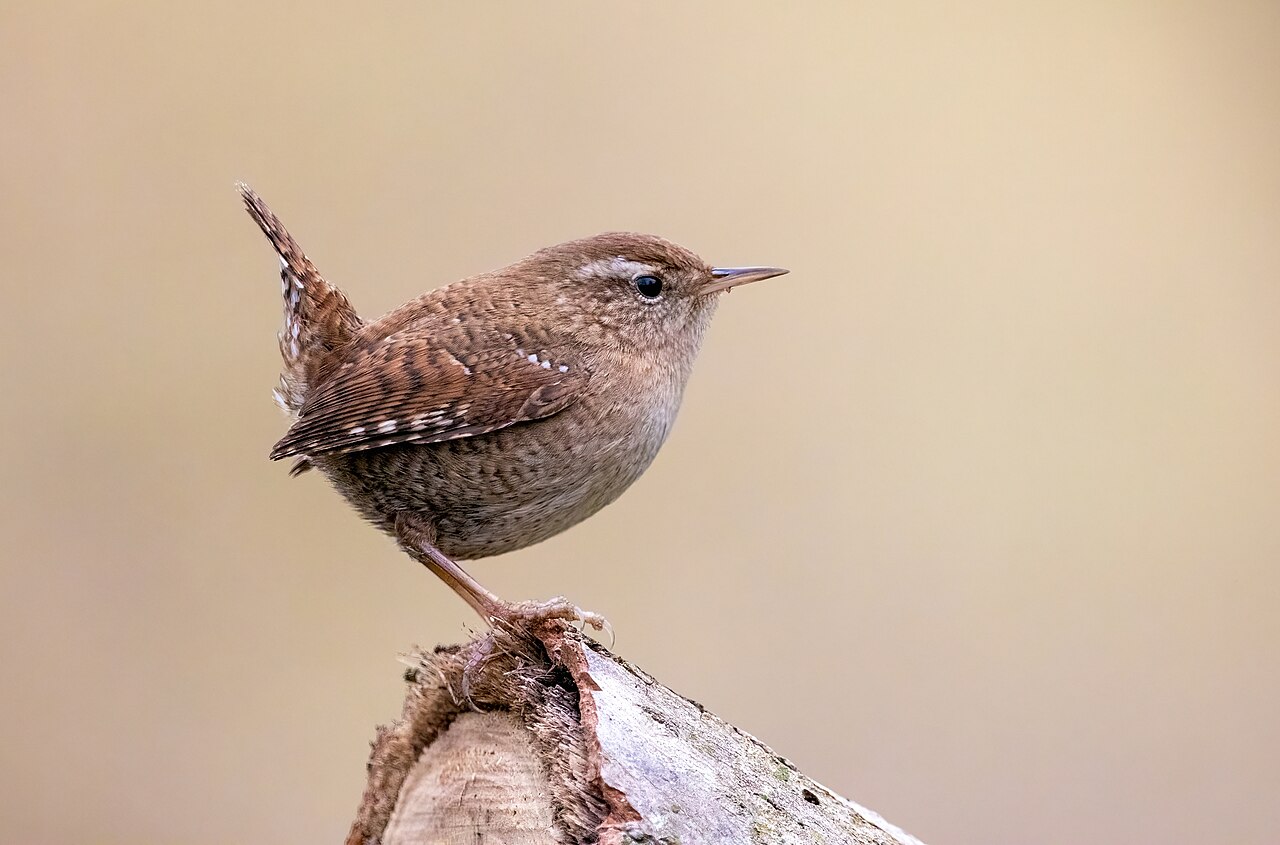
Seeing a wren traditionally means that something small and overlooked in your life is about to prove stronger than it looks. Across European, Celtic and Native American traditions, wren symbolism centers on bold spirit in a tiny body: a bird that weighs less than a slice of bread, sings loud enough to be heard three houses away, and defends a territory against birds five times its size.
That contrast is why the wren collected so much folklore. It was called the king of the birds in Europe long before anyone studied its behavior, it carried a sacred status that made killing one taboo in parts of Ireland and Scotland, and in modern spiritual practice it shows up as a messenger about self worth, voice and resourcefulness. The sections below separate what each tradition actually taught from what the wren is said to mean in specific situations.
In most traditions, seeing a wren is read as a sign to speak up and trust your own resourcefulness despite feeling small. Celtic lore crowned the wren king of the birds, Irish custom treated it as both sacred and sacrificial, and several Native American traditions use the wren as a lesson against pride. A wren nesting at your home is almost always considered lucky.
| Situation | Traditional meaning |
|---|---|
| Wren nesting at your house | Protection, blessing on the household, a project that will succeed |
| Wren singing at dawn | Herald of a new phase, encouragement to begin |
| Wren at your window | A message you have been avoiding, often about speaking honestly |
| Wren flying into the house | News arriving; in older folklore a warning to pay attention |
| Seeing the same wren repeatedly | A lesson not yet learned, persistence being asked of you |
| Finding a dead wren | In Irish and Manx custom an omen of misfortune for the finder |
| Wren in a dream | Hidden strength, an undervalued skill, a small voice worth trusting |
What Does Seeing a Wren Symbolize?
Seeing a wren symbolizes bold action from a modest position. The core of the symbolism is the mismatch between the bird’s size, roughly 4 to 5 in (10 to 13 cm), and its voice, which can carry over 200 ft (60 m) of woodland. Traditions that developed around the bird almost all read that mismatch the same way: do not measure your capacity by your size.
A second strand is domesticity. Wrens nest in sheds, mailboxes, boots and flowerpots, which put them inside human space more than most songbirds. Folklore about household luck, family protection and safe homes attached itself to the wren for that reason, the same way it attached to the blackbird and other birds that live close to people.
Wren Symbolism in Native American Tradition
Several Native American traditions use the wren as a teaching figure about pride and humility rather than as a spiritual emblem. In Cherokee stories recorded in the nineteenth century, the wren is the bird who brings news to the council and announces the birth of every child, which makes it the gossip and the herald of the bird world.
A widely retold Native American story has the birds competing to fly highest to decide their chief, with the wren hiding in the eagle’s feathers and launching from the eagle’s back at the top. In most versions the wren is not rewarded for the trick, and the lesson concerns cleverness that oversteps. Specific teachings vary by nation and are not interchangeable, so a single pan-tribal meaning is not accurate.
The Wren in Christian and Biblical Symbolism

The wren is not named in the Bible, so Christian wren symbolism comes from later European custom rather than scripture. The strongest thread is the medieval legend that a wren betrayed Saint Stephen by fluttering and calling as he hid from his pursuers, which is given as the reason for the Saint Stephen’s Day wren hunt on December 26.
A gentler strand in Christian folk tradition treats the wren as the bird that carried fire to humanity and scorched its feathers doing it, a story that casts the bird as a self sacrificing helper. In both forms the wren sits close to human moral drama rather than above it, unlike the loftier bird symbols of dove and eagle.
Celtic Lore: The Wren as King of the Birds

In Celtic tradition the wren was a druid bird, associated with prophecy and with the old year. The Irish name dreoilín has long been linked by folklorists to words for druid, and the bird’s calls were read for omens in early Irish practice. Its status as king of the birds comes from the flight contest story, which circulated across Ireland, Wales, Scotland and Brittany.
The Wren Day custom, still performed in parts of County Kerry and on the Isle of Man, involves groups of “wren boys” parading with a wren effigy on a decorated pole on December 26. Historically a real bird was hunted; today the effigy is symbolic. The ritual marks the turn of the year, with the wren standing for the dying old year against the robin as the new.
Wren Symbolism in East Asian Tradition
East Asian symbolism rarely singles out the wren, because the birds that carry meaning in Chinese and Japanese tradition are the crane, magpie, rooster and sparrow. The Eurasian wren (Troglodytes troglodytes) does appear in Japanese poetry as misosazai, a winter bird whose song in a cold garden signals endurance.
Where the wren does appear, the reading is close to the European one: a small bird making itself heard in the leanest season. In Japanese seasonal word lists for haiku, the wren belongs to winter, and poems using it lean on quiet persistence rather than luck or prophecy.
Is It Lucky to See a Wren?
In most living traditions, yes. A wren around the house is considered lucky, and killing one or disturbing a nest was held to bring misfortune across much of Britain and Ireland, with specific warnings about broken bones, house fires and cattle loss. Sailors and fishermen in some coastal communities carried a wren feather as protection against drowning.
The one large exception is the Wren Day hunt, where the bird’s death was ritually required. Folklorists generally read the contradiction as a single sacred status with two faces, a bird too powerful to harm casually and therefore fit for a once a year rite. The practical reading today is simpler: a wren choosing your yard means your yard has cover, insects and water.
A Wren Nesting in Your Garden or Near Your Door
A wren nesting at your home is the most favorable sign in the whole set. Traditional readings treat it as a blessing on the household, protection for the family inside and a good omen for anything you start that season. The bird is choosing to raise young within feet of your daily noise, which older interpretations read as trust being extended.
House wrens (Troglodytes aedon) genuinely do this, filling porch planters, grill covers and work boots with twigs. Males build several dummy nests before a female picks one, so a pile of sticks in a strange place is a courtship display rather than an abandoned attempt. Compare the household symbolism attached to the American goldfinch, another yard bird read as a bringer of good fortune.
A Wren at Your Window or Inside the House
A wren tapping or hovering at a window is traditionally read as a message you have been putting off, usually something that needs saying out loud. The wren’s association with voice makes the reading specific: the sign is less about receiving news than about delivering it.
A wren that gets inside the house carries a stronger charge. In older British folklore any bird entering a home was news on the way, and for the wren the tone is urgent rather than ominous. The practical cause is usually a male inspecting a cavity, since an open window reads to a wren the way a knothole does. Open a second window, dim the room and it will leave on its own.
Hearing a Wren Sing at Night or Before Dawn
Wrens are among the first birds into the dawn chorus, often singing 40 minutes before sunrise. Traditional readings of that early song make the wren a herald: the sign points to a beginning, a project worth starting, or permission to go first in a situation where you have been waiting for someone else.
True night singing is unusual and worth noting. A wren singing in full darkness is typically responding to artificial light or to a disturbance at the roost, where several birds may pack into one cavity on cold nights. Folk reading treats an out of season or out of hours song as an emphasized message, the same way a daytime jay’s insistent calling was read as an announcement.
Seeing the Same Wren Again and Again
Repeated sightings are read as an unlearned lesson. A wren appearing on the same fence post for a week is interpreted in modern spiritual practice as persistence being modeled for you, with the implied question being where you have given up too early.
Biologically, a male wren holds a territory of roughly half an acre and sings from a short circuit of favored perches, so you are almost certainly seeing one individual and it is almost certainly the same bird each time. The repetition is real, which is part of why the symbolism stuck.
Finding a Dead Wren
Finding a dead wren is the one clearly negative sign in wren folklore. In Irish and Manx custom, killing a wren outside the Wren Day rite brought misfortune onto the household, and finding one dead was treated as a warning to be careful rather than as a death omen for a person.
The standard remedy in folk practice was burial rather than disposal, with the bird placed in soil away from the house. If you find several dead small birds at once, the cause is usually a window strike or a cat, and both have fixes. Window decals spaced 2 in (5 cm) apart cut strikes substantially. Negative readings are far more common for bats and other night animals than for a wren.
The Wren as Spirit Animal, Totem and Dream Symbol
As a spirit animal, the wren is usually assigned to people who do a great deal with modest resources and underestimate themselves while doing it. The qualities named in contemporary practice are voice, resourcefulness, boldness and attention to small details. As a totem, the wren is said to belong to builders and makers, because of the nest building habit.
In dreams the wren generally stands for an undervalued skill or a small voice worth trusting. A singing wren in a dream is read as an invitation to be heard; a silent or caged one as a voice being suppressed. For the natural history behind all of it, the Cornell Lab species account at All About Birds describes the behavior these traditions were built on. Industrious symbolism of this kind overlaps closely with bee symbolism.
Frequently Asked Questions
Is wren an Irish name?
Wren is used as a given name in English speaking countries and has risen in popularity since the 2010s, but it is not Irish in origin. The Irish word for the bird is dreoilín. As a surname, Wren is English and occupational or nickname based, most famously borne by the architect Christopher Wren.
What does the word “wrens” mean?
Wrens is the plural of wren and refers to the family Troglodytidae, about 88 small brown insect eating songbirds, nearly all of them in the Americas. Capitalized, WRNS or Wrens also referred to members of the Women’s Royal Naval Service in Britain, an unrelated use of the same word.
How rare is a fairy wren?
Fairy-wrens are not rare in Australia. The superb fairy-wren is common in gardens and parks across the southeast and is one of the most studied birds in the country. Several of the 30 or so species have restricted ranges, but none of the familiar garden species is considered scarce.
What does seeing a fairy-wren mean?
In Australian symbolic readings, seeing a fairy-wren is usually taken as a sign about community and family bonds, because the birds live in cooperative groups where helpers raise young that are not their own. The vivid blue of the breeding male adds a secondary reading about confidence and visibility.
Are fairy-wrens the same as blue wrens?
Blue wren is a common Australian nickname for the superb fairy-wren, so the two names often describe the same bird. Fairy-wrens belong to the family Maluridae and are not true wrens at all; they are only distantly related to the house wren and Eurasian wren of the Northern Hemisphere.
Do wrens like humans?
Wrens tolerate humans well and often nest within a few feet of doors, sheds and patios, but they do not seek human contact the way chickadees at a feeder do. They are insect eaters, so they rarely use seed feeders. Leaving brush and avoiding pesticides matters far more to them than any offered food.