Bat Symbolism: Rebirth, Omens and Seeing One at Night
Seeing a bat has meant rebirth far more often than it has meant evil. Bat symbolism in most older traditions is tied to transition: the animal lives between day and night, between the cave and the open sky, and cultures from the Maya to the Chinese built that in between position into their reading of it. The gothic bat, the one attached to vampires and graveyards, is a European idea only a few centuries old.
That split is why two people can see the same bat at dusk and come away with opposite impressions. This guide keeps the traditions separate instead of stirring them together, works through the situations people actually ask about, and marks where a statement is a belief held by a tradition rather than a fact about the animal.
Bats most commonly symbolize rebirth, intuition and the end of one phase of life, because they live between day and night. In European folklore they became omens of death, while Chinese and Maya traditions read them as luck or as guardians of the underworld. The reading depends on the culture, not the species.
| Situation | Traditional reading |
|---|---|
| Bat flies into your house | A phase is ending; in some traditions a warning to the household |
| Bat circles around you at dusk | Attention called to something you sense but have not admitted |
| Bat seen at your window | News arriving, often unwelcome in European folklore |
| Bat seen repeatedly | A transition you keep postponing |
| Dead bat found | The end of a fear, or a warning depending on tradition |
| White or pale bat | Rare and read as a strong positive sign |
| Bat in a dream | Navigating without clear sight, trusting instinct |
What Is the Symbolic Meaning of Bats?
The symbolic meaning of bats rests on three observable traits, and every tradition builds from the same three. Bats emerge at the hinge between day and night, they navigate in darkness by echolocation rather than sight, and they roost upside down in caves that older cultures associated with the underworld.
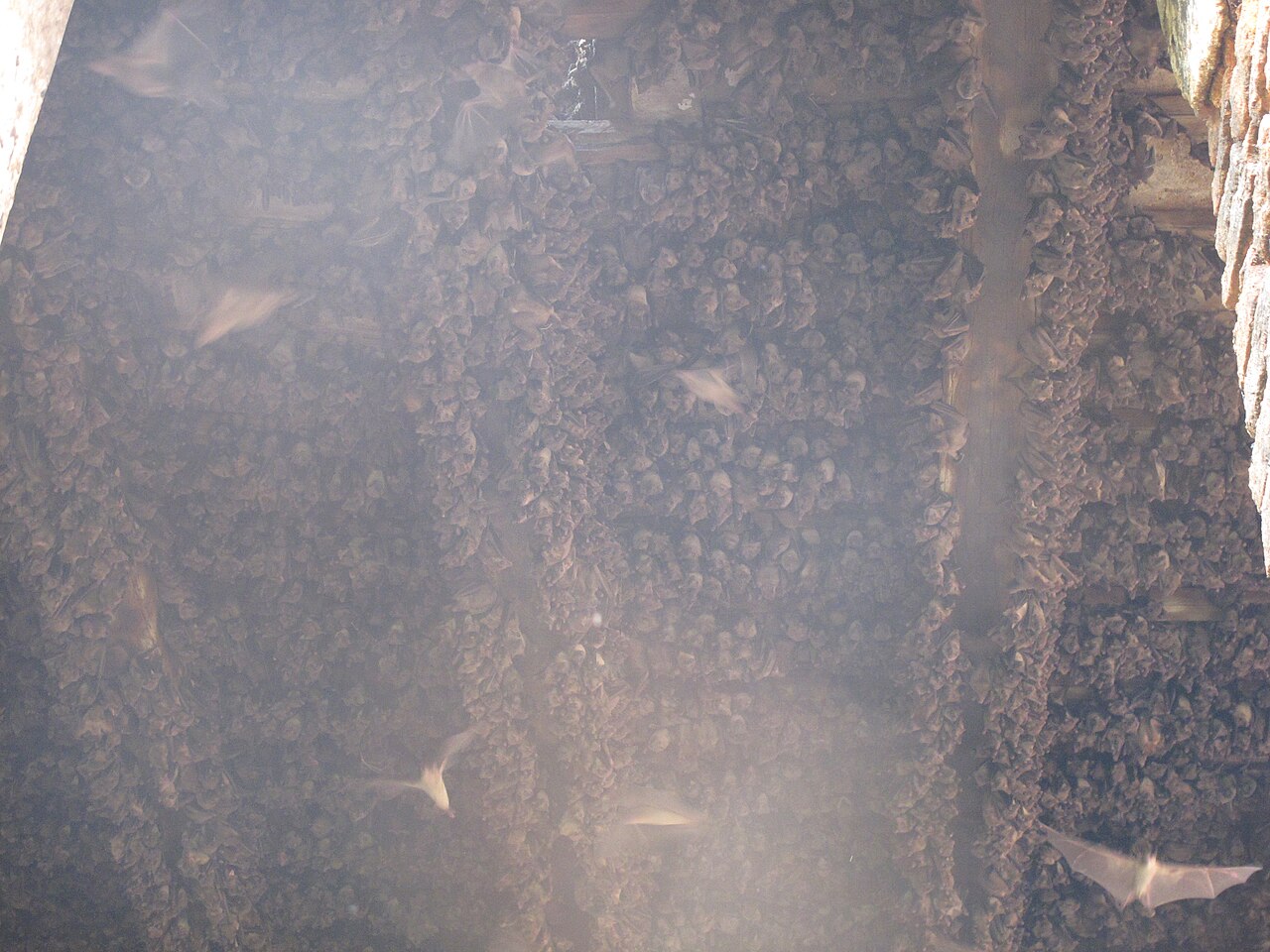
From the first trait comes transition and rebirth. From the second comes intuition, the idea of finding your way without seeing the path, which is the most common modern reading. From the third comes the link to death and the ancestors, which in Maya and some West African traditions is a role of guardianship rather than a threat. Bats also symbolize community, and here folklore rests on real behavior: a colony can hold thousands of animals, and mothers find their own pups among them by call and scent.
What Do Bats Signify Spiritually?
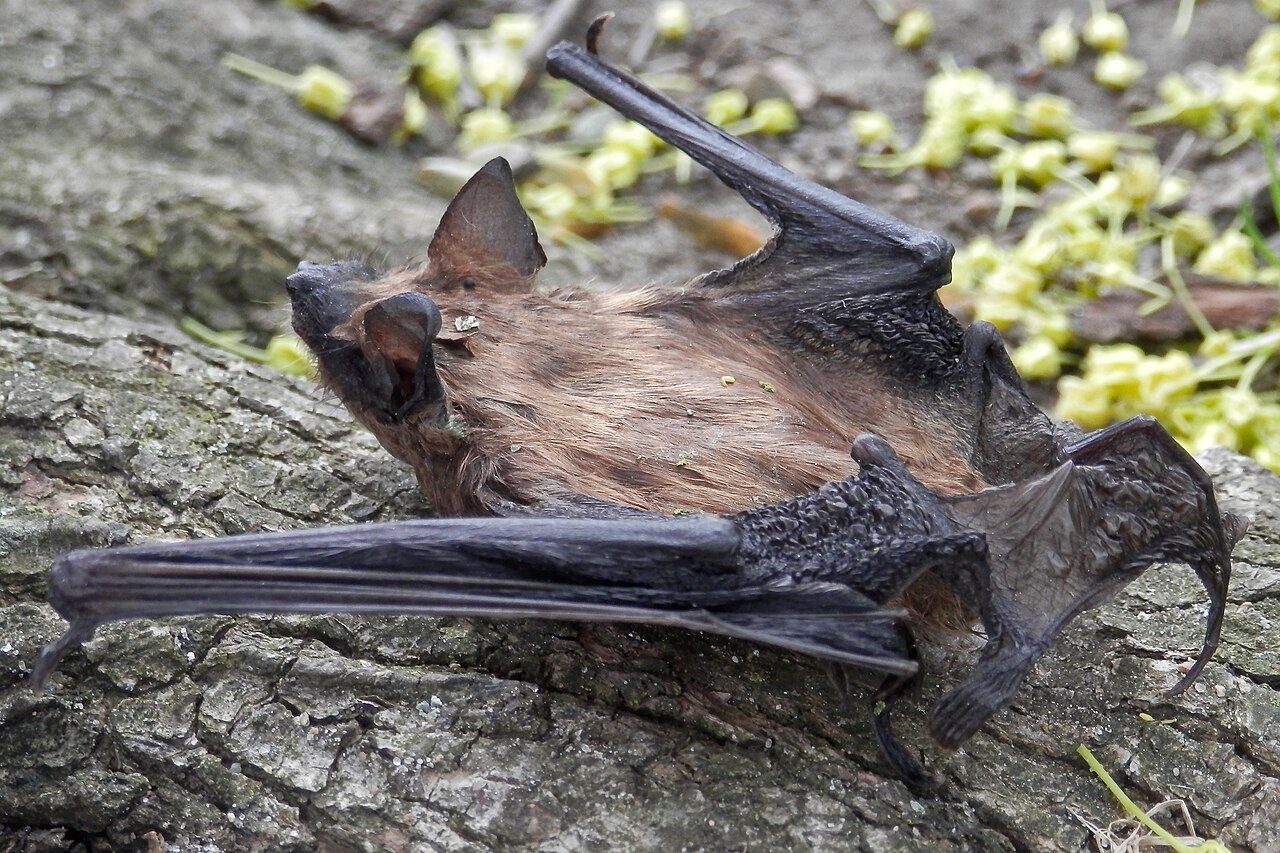
In contemporary spiritual writing the bat is read as a messenger of endings that make room for something else. The usual phrasing is that it asks you to let a role, a job or a relationship die rather than keeping it on life support, and the darkness in the symbol stands for the uncertainty that follows that choice.
The second reading is heightened perception. Because the animal navigates by sound, people who adopt it as a symbol treat it as a reminder to trust what they pick up indirectly, tone and timing rather than what is said. That is interpretive, not demonstrable. Both readings explain why bats appear in initiation imagery: the cave is entered, something is left behind, and whoever comes out is understood to be changed, the same arc that attaches to crow symbolism.
Is a Bat a Good Omen or a Bad One?
Both, split almost cleanly by geography. In China the bat is a good omen, because the word for bat, fu, sounds like the word for fortune, and five bats together stand for the five blessings, a motif found on porcelain, textiles and wedding gifts. In Poland and parts of Central Europe the bat was historically lucky too. For a closely related question, see our guide to sea turtle symbolism.
Western Europe went the other way. A bat striking a window or entering a house was recorded as a death omen in English and French folk collections, and the association hardened once the vampire novel arrived; Bram Stoker’s Dracula, published in 1897, shaped bat symbolism in English more than any older tradition. Where a tradition reads the bat as a warning, the warning is usually about the household rather than the person, which is why the folk response was to open the windows and let the animal leave rather than to kill it.
What Does It Mean Spiritually if a Bat Enters My House?

This is the most searched version of the question, and the traditional answer is that a phase in the household is ending. Interpreters read the bat crossing your threshold as something you kept outside, a decision, a conversation or a piece of news, arriving whether you were ready or not. European folklore was darker, recording a bat that circled the room three times as a death omen, while Chinese and Japanese readings treat the same entry as fortune coming indoors. The fact that they contradict each other is the clearest sign that neither predicts anything.
The practical side deserves more attention than the symbolic one. A bat in a living space is a rabies exposure question, especially if someone was asleep or a child or pet was in the room, and health agencies including the Centers for Disease Control and Prevention advise against releasing a bat that may have had contact with a person before it can be tested. Contain the room, do not handle the animal bare handed, and call animal control or your health department. Where no contact occurred, the safe way to get bats out is to open one exit and let it find its own way.
Seeing a Bat at Night, in the Garden or at Your Window
Seeing a bat at night in summer means almost nothing in itself, because that is simply when insect eating bats hunt. Symbolic readings therefore focus on the sightings that feel pointed: the animal that passes close to your head, the one that returns to the same window on consecutive evenings, the one that shows up on a day you were already deciding something.
A bat circling you is read as attention, and modern writers tie it to intuition for the same reason. The animal is in fact hunting insects drawn to your body heat and movement, which is the plainer explanation and does not stop the moment from feeling meaningful. A bat over the garden is read as a healthy transition, and here folklore and biology agree on the outcome: a yard with bats over it has a working insect population and a roost nearby.
What Does the Bible Say About Bats?
The Bible mentions bats in the dietary laws of Leviticus 11:19 and Deuteronomy 14:18, where they are listed among the birds that must not be eaten, and in Isaiah 2:20, where idols are thrown to the moles and the bats. That is the full extent of it, and both passages place the animal with what is unclean or abandoned.
Christian symbolic tradition built on those verses, pairing the bat with darkness and deception in medieval bestiaries and in church art, where it was given to demons while birds were given to angels. Readers who take scripture as the measure usually treat a bat sighting as a prompt toward prayer rather than as an omen, since scripture itself forbids reading signs that way. Islamic tradition views the animal more favorably than many expect, and interpretations vary by school.
Bats in Native American, Celtic and East Asian Traditions
Native American traditions differ nation by nation and should not be merged. In Cherokee stories the bat gains its wings and wins the ball game against the birds through cleverness rather than size, a tale about underestimated talent. In several Plains traditions the bat is linked to the trickster, a role more often filled by the coyote, and to vigilance. Where a nation treats the bat as a clan or medicine animal, that belonging sits with the community, not with an outsider who likes the symbol.
In Maya tradition the bat is far more prominent: Camazotz, the bat figure of the Popol Vuh, belongs to the underworld and guards its passage, and guardianship there is not the same as evil. Celtic material is thin, though later Irish and Scottish folk belief tied a bat rising and falling to a change in weather. East Asian readings are the most positive on record, with five bats in China standing for health, wealth, long life, love of virtue and a natural death, and Japanese tradition treating the bat as a sign of a happy household.
Bat as Spirit Animal, Totem and Power Animal
The three terms are used interchangeably and mean different things. A spirit animal in the modern popular sense is a symbol a person chooses; a totem, in the traditions the word comes from, belongs to a clan or lineage and is not self selected; a power animal comes from twentieth century neoshamanic practice and is described as encountered rather than picked.
People who take the bat as their spirit animal describe its lesson consistently: face the ending, move in the dark, trust hearing over sight, stay close to your colony. Read as an omen instead of a guide, a single bat sighting carries no more weight than a single dead bird found on a path. Traditions treat repetition as the significant part, and even then the honest version is that repetition says something about what is on your mind. For the wider pattern, bird symbolism and hawk symbolism follow the same logic of threshold and message.
Related reading: Otter Symbolism.
Related reading: Skunk Symbolism.
Related reading: Alligator Symbolism and Spiritual Meaning.
Related reading: Salamander Symbolism.
Related reading: Bear Symbolism.
Related reading: Crocodile Symbolism.
Related reading: Stink Bug Symbolism.
Related reading: Axolotl Symbolism.
Related reading: Frog Symbolism.
Related reading: Scorpion Symbolism.
Related reading: Rabbit Symbolism.
Related reading: Cockroach Spiritual Meaning.
Related reading: Rat Spiritual Meaning.
Related reading: Moose Symbolism.
Related reading: Firefly Symbolism.
Related reading: Python Symbolism.
Related reading: Beaver Spirit Animal.
Related reading: Bobcat Symbolism.
Related reading: Lizard Symbolism.
Related reading: Wolverine Symbolism.
Related reading: Iguana Symbolism.
Related reading: Elk Symbolism.
Related reading: Porcupine Symbolism.
Related reading: Groundhog Symbolism.
Frequently Asked Questions
What do bats symbolize in mythology?
In Maya mythology the bat figure Camazotz guards the underworld, in Cherokee story the bat wins through cleverness, and in Chinese tradition five bats stand for the five blessings. European mythology is the outlier that ties the animal to death and the vampire, a connection cemented in the nineteenth century.
What is the Islamic view on bats?
Islamic tradition treats the bat more positively than Western folklore does, and it is not among the animals traditional sources order killed. Classical scholars discussed its unusual form with interest rather than suspicion. Views differ between schools, so this is tradition rather than uniform doctrine.
What does a white bat symbolize?
White or pale bats are read as a strong positive sign in most traditions, and Chinese symbolism links the white bat specifically to long life. Biologically, a pale bat is usually either an albino individual or a species such as the Honduran white bat, not an omen.
What does it mean when bats fly around you?
Symbolically it is read as attention being called to something you already sense. Practically, bats circling you at dusk are hunting the insects drawn to your warmth and movement. The behavior is feeding, not interest in you, and it is not a sign of aggression.
Does a bat in the house really mean death?
No. That reading comes from nineteenth century European folklore and has no track record behind it, and other traditions read the same event as fortune arriving. The real concern is rabies exposure, which is why a bat found in a bedroom should be contained and reported rather than released.