Salamander Symbolism: What It Means to See One, Omens and Myths
Seeing a salamander is read in most traditions as a sign of transformation that is already under way, a quiet signal that something in your life is changing shape rather than falling apart. Salamander symbolism runs in two very different streams. One is European and makes the animal a creature of fire, able to walk out of the flames unharmed. The other is older and much more widespread: the salamander as a water animal, tied to rain, renewal and the damp hidden places where new things start.
Which stream applies to your sighting depends mostly on where it happened. A salamander under a flowerpot in July carries a different folk reading than one on your doorstep after a thunderstorm, or one you find dead on a trail. The sections below keep the traditions separate, label belief as belief instead of fact, and collect the situation readings in one table.
In symbolic terms the salamander stands for transformation, regeneration and survival through fire. Most traditions treat a sighting as a favorable omen about change, usually change that resolves cleanly rather than painfully. Because the animal needs damp, hidden ground, folk readings also link it to rain, renewal and well kept secrets.
What Does It Mean Spiritually to See a Salamander?
Spiritually, seeing a salamander is usually taken to mean that a transition you are already in will complete itself without destroying you. The animal earns that reading honestly. A salamander lives half its life in water and half on land, it can regrow a lost tail or limb, and it spends most of the day out of sight under wood and leaf litter. Every one of those traits became a symbol: crossing between worlds, healing, and working quietly where nobody watches.
In contemporary spiritual writing the message is often narrowed to one sentence: stop forcing the change and let it finish. That is a modern gloss rather than an inherited teaching, and it is worth saying so. What is genuinely old is the association with moisture, regeneration and fire, and those three ideas are enough to explain nearly every reading you will find online.
Are Salamanders a Good Omen?
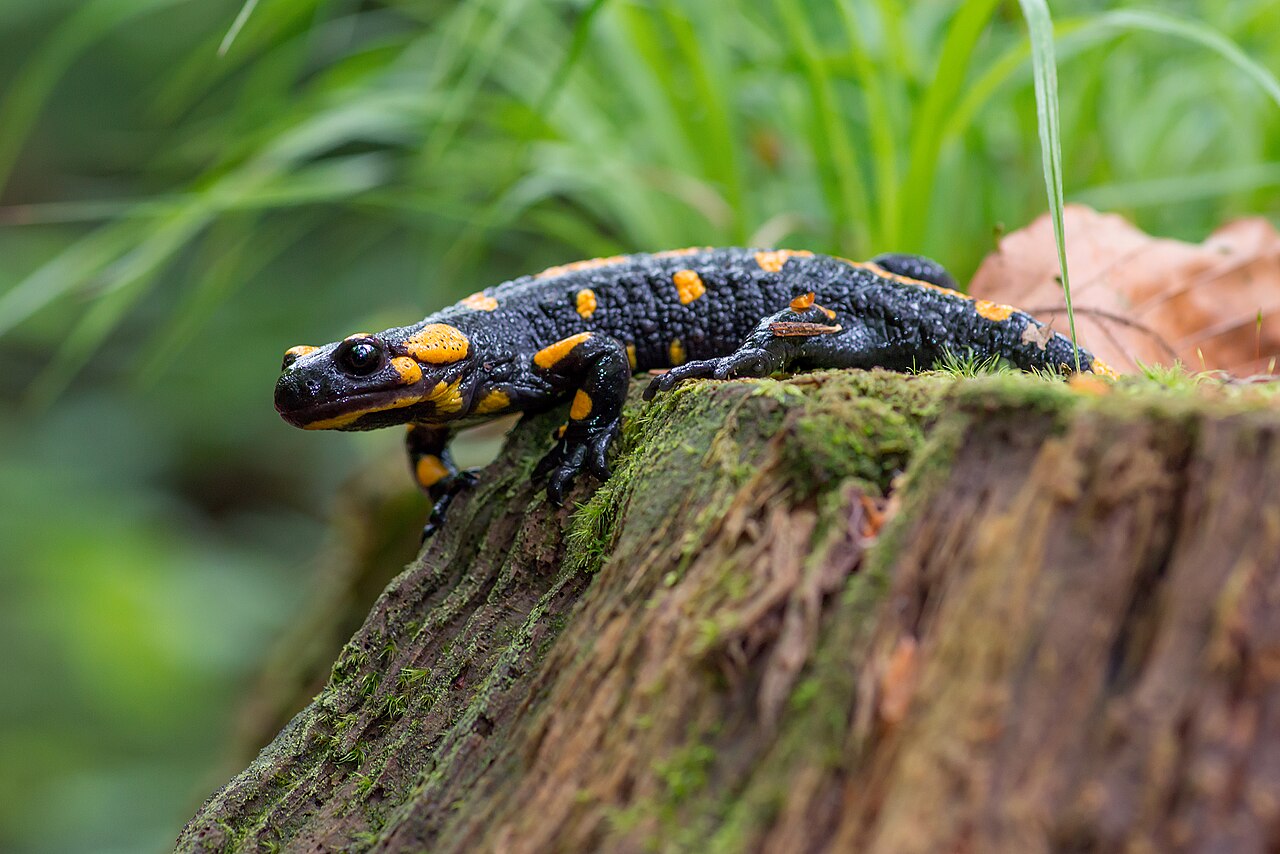
Yes, in most traditions a salamander is a good omen, and that puts it in a small group of amphibians and reptiles that folk belief treats kindly. The usual logic is practical before it is mystical. Salamanders appear where the ground is healthy, the water is clean and the leaf litter is deep, so a sighting in a garden was read as a sign that the land itself was in good order.
The exception is the newt, the salamander’s close relative, which fared badly in British and Irish folk belief and was long thought venomous. If you are weighing an omen, it helps to know which animal you actually saw. A sighting that worries you is usually easier to settle with an identification than with an interpretation, and the same holds for the darker omens attached to crows and ravens.
What Is a Salamander a Symbol Of? Five Core Meanings
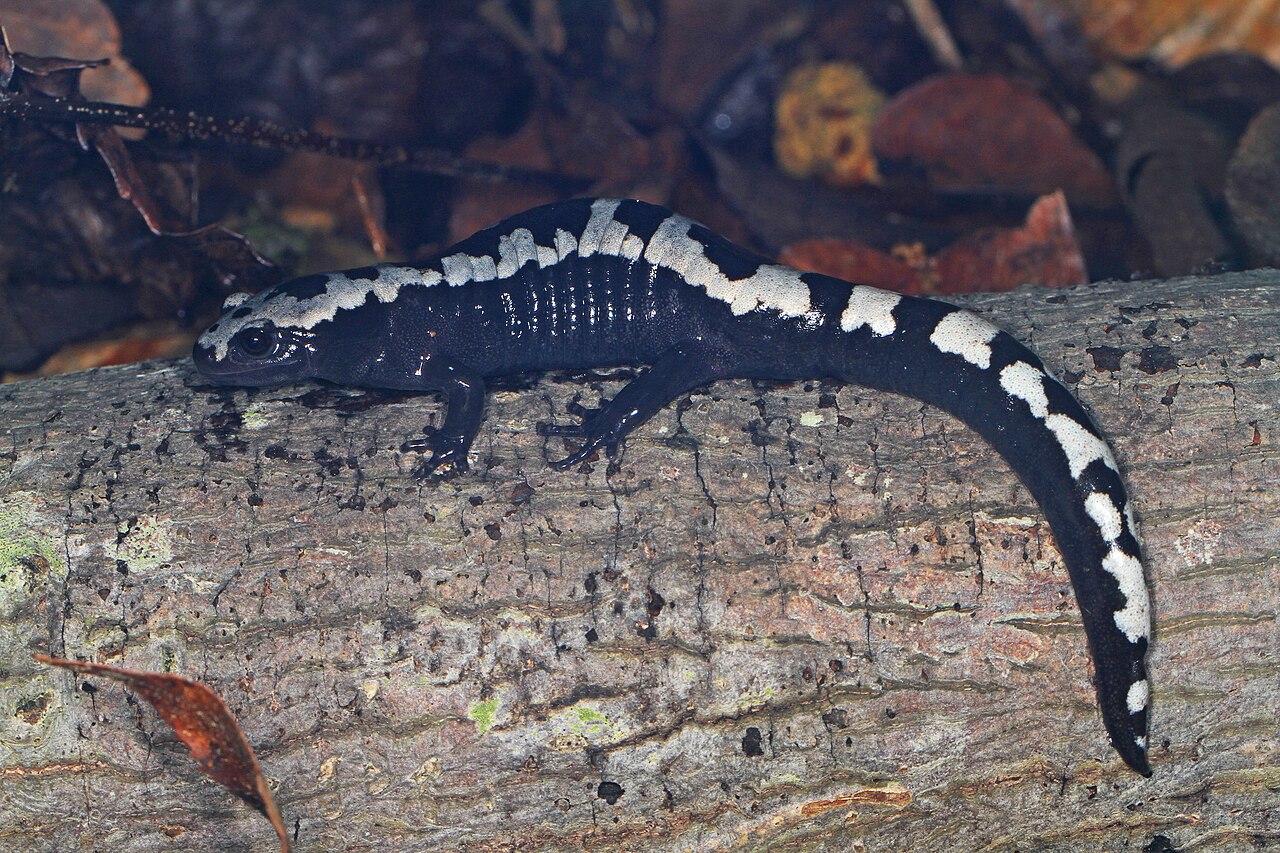
Across traditions the salamander carries five meanings that keep recurring. First, fire and the ability to pass through it, which comes out of classical and medieval Europe. Second, regeneration, from the real ability of many species to regrow tissue. Third, the threshold, because the animal belongs fully to neither water nor land. Fourth, hidden knowledge, since it lives under things. Fifth, rain and fertility, because a salamander walks in the open on wet nights and almost never on dry ones.
Those five do not agree with each other, and they are not supposed to. Fire symbolism arrived through Pliny the Elder and the alchemists; the water and rain symbolism is far older and comes from people who simply watched when the animals appeared. When a source claims a single universal salamander meaning, it is choosing one of the five and quietly dropping the rest.
What Is the Myth of the Salamander? Fire That Does Not Burn
The central myth is that the salamander is born in fire and can put it out. Pliny the Elder recorded in his Natural History that the animal was so cold it extinguished flames on contact, and that claim was repeated for roughly fifteen centuries. Medieval writers went further and described salamander wool, a supposedly fireproof cloth; what was actually being traded was asbestos.
The myth has an ordinary explanation. Fire salamanders (Salamandra salamandra) shelter in damp rotting logs, so when the log went on the hearth the animal crawled out of the burning wood in front of everybody. Amphibian survey work by agencies such as the U.S. Geological Survey documents the same preference for decaying wood and moist litter that put the animal in the woodpile in the first place. The skin secretions that keep a salamander wet also buy it a few seconds against heat, which was all the proof the story needed.
Salamander Symbolism in Alchemy and the Four Elements
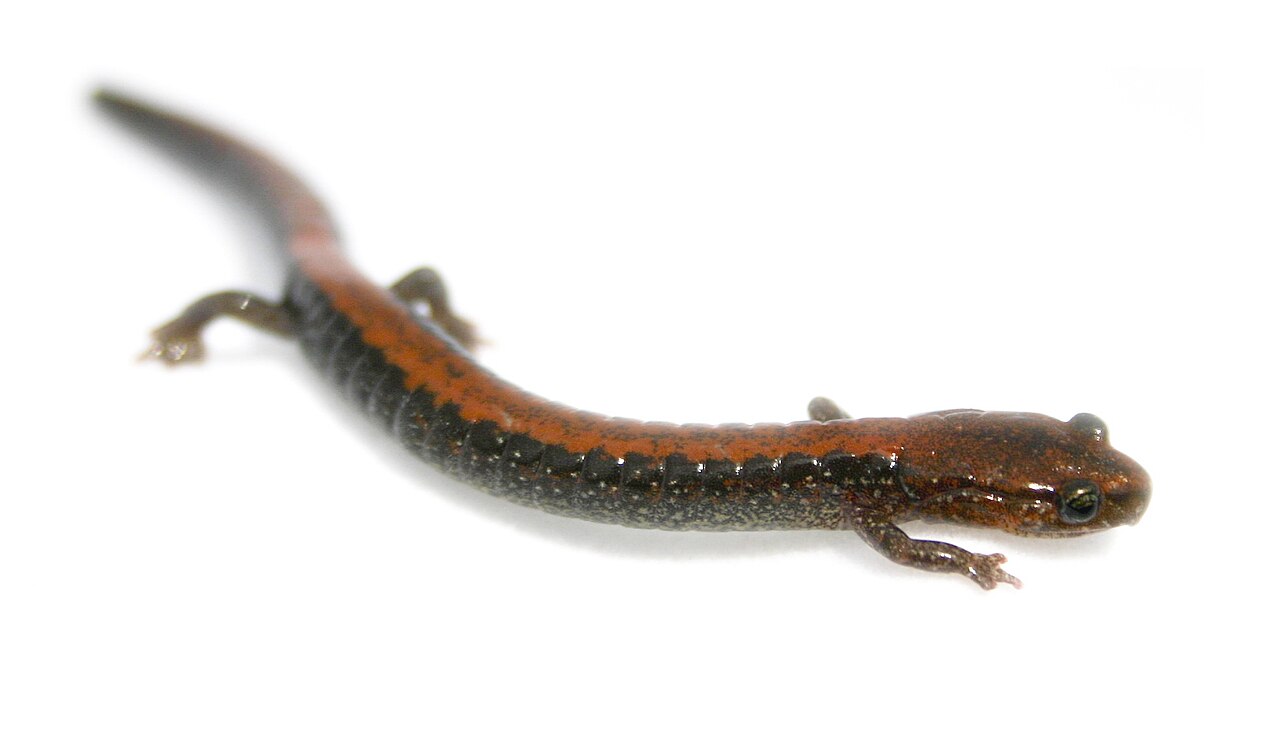
The salamander became the official animal of fire in the 1500s, when Paracelsus set out a scheme of four elemental beings: gnomes for earth, undines for water, sylphs for air and salamanders for fire. That system, not any folk tradition, is the direct source of nearly every modern page calling the salamander a fire elemental or a fire spirit.
Alchemical texts used the animal for the stage of the work where matter is purified by heat and survives it, which made it a natural emblem for the practitioner’s own ordeal. Later occult writing of the 1800s took Paracelsus wholesale and attached the salamander to willpower, drive and passion. Useful to know when a source presents the fire meaning as ancient: it is about five centuries old, and it was invented on paper.
Salamander Symbolism in Native American Traditions
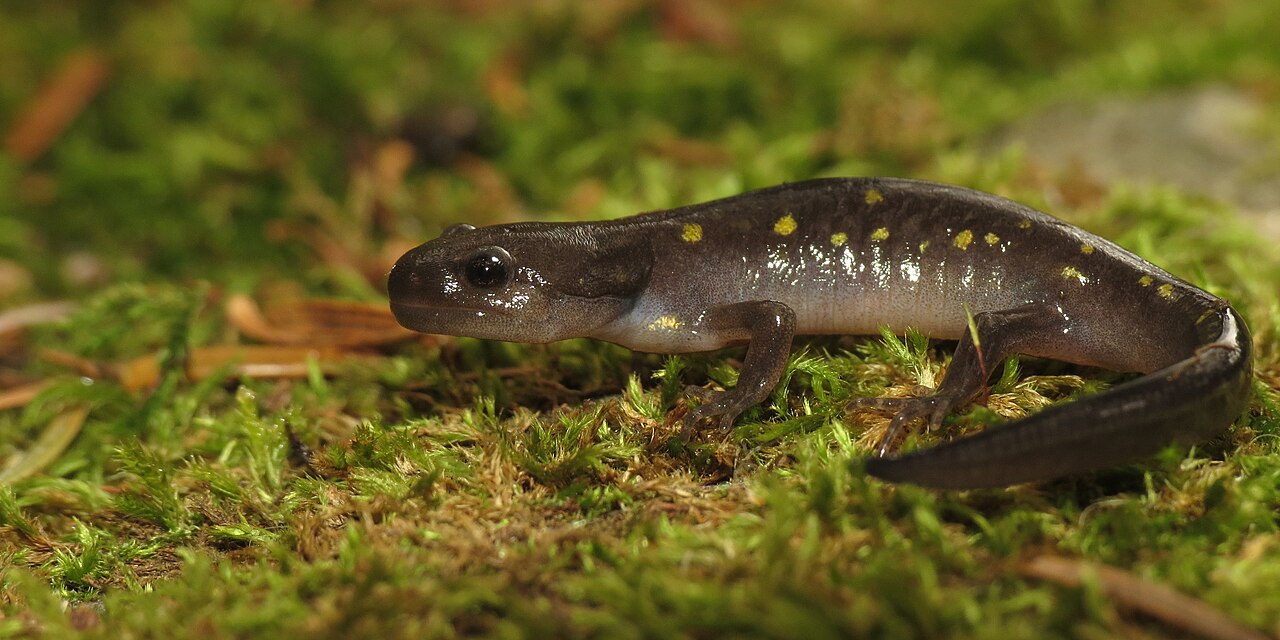
Native American traditions are many and distinct, and salamander lore is not uniform across them. Where the animal appears in recorded accounts it is usually a water being rather than a fire being, connected with rain, springs and the health of a place. Among several Pacific Northwest and Great Basin peoples, salamanders and so called water dogs belong to the spirits of ponds and creeks, and disturbing them was discouraged.
A caution is in order here. Much of what circulates online as Native American salamander symbolism cannot be traced to any named nation, source or recorded informant, and the phrase “Native American” is often used to make a modern idea sound old. In Hopi and other southwestern traditions amphibians broadly carry rain associations, while the trickster and teacher roles that get assigned to the salamander online more properly belong elsewhere, as with coyote symbolism. If a source names no tradition, treat its claim as a modern one.
Salamander Symbolism in Christianity and the Bible
In Christian symbolism the salamander represents the believer who passes through the fires of temptation and comes out unharmed. Medieval bestiaries made that comparison explicitly, and the animal was read alongside the three young men who walked unburned in the furnace in Daniel 3. From there it became a minor emblem of faith under persecution and of the soul that fire cannot consume.
Salamander symbolism in the Bible itself is thinner than most pages admit. No standard English translation names the salamander. The nearest text is the list of unclean creeping things in Leviticus 11, where translators render the Hebrew terms variously as lizard, gecko, monitor and skink, and some older versions reach for salamander. The fire symbolism is patristic and medieval commentary, not scripture.
Celtic and British Isles Lore: Newts, Askers and Bad Luck
Celtic salamander symbolism is largely a modern invention, for a simple reason: the fire salamander does not live in Britain or Ireland. What those islands have are newts, called askers or efts in regional dialect, and folk belief there was hostile rather than reverent. Newts were widely thought venomous, a reputation preserved in the “eye of newt” of Shakespeare’s Macbeth, and swallowing one by accident in drinking water was a standing country fear.
Continental European lore is where the respect lives. In parts of France, Germany and northern Spain the fire salamander was both feared as poisonous, which is partly true, and credited with power over fire and smithcraft. Pages that promise ancient Celtic salamander teachings are usually blending Paracelsus with Victorian occult writing. The honest line is that European fire lore is documented and Celtic salamander lore is not.
Salamander Symbolism in Japan and China
East Asian salamander symbolism centers on a real giant: the Japanese giant salamander (Andrias japonicus), known as hanzaki or sanshouuo, which reaches about 5 ft (1.5 m). Japanese folklore cast it as a river monster strong enough to swallow a person, and the legend attached to Yubara in Okayama Prefecture ends with the creature enshrined as a deity, Hanzaki Daimyojin, after its death brought misfortune. It is still honored there with an annual festival.
The Chinese giant salamander (Andrias davidianus) is called wa wa yu, baby fish, because its call was said to sound like a crying infant. That gave it a different symbolic weight, closer to an uncanny omen heard at night than to a guardian. In both cultures the animal belongs to the river and its spirits, and the association with fire is absent.
Salamander as a Spirit Animal, Totem and Power Animal
As a spirit animal the salamander is generally described as a guide for people in the middle of a change they did not choose. The reading follows the life cycle: gilled larva in the water, lung breathing adult on land, and no way back. People who claim the salamander as a totem tend to describe themselves as slow to commit, hard to rush and quick to recover, which is the animal’s own profile.
What is the power of the salamander, in these frameworks? Regeneration first, and the capacity to shed what is injured rather than defend it. Several species drop a thrashing tail to escape a predator and regrow it over months. Used as a lesson that is unusually concrete, and it sits close to the renewal readings of dragonfly symbolism, another animal that is born in water and finishes its life in air.
The Salamander in Fahrenheit 451, Heraldry and Tarot
Salamander symbolism in Fahrenheit 451 is Ray Bradbury’s sharpest joke. The firemen who burn books wear a salamander badge and ride a machine named the Salamander, borrowing the old claim that the animal is immune to flame. Set against the phoenix, which also appears on their uniforms, it marks the difference between surviving fire and being reborn through it.
In heraldry the device belonged most famously to Francis I of France, who paired a crowned salamander in flames with the motto Nutrisco et extinguo, “I nourish and I extinguish,” and stamped it across Chambord and Fontainebleau. In the Rider Waite Smith tarot, salamanders appear on the robes and throne of the King of Wands and on the Page’s tunic, marking the fire suit. In each case the meaning is control of fire rather than kinship with water.
Salamander, Newt or Lizard: What You Probably Saw
Before reading an omen it pays to know which animal delivered it, because two of the three carry different lore. Every newt is a salamander, a member of the family Salamandridae, but not every salamander is a newt. Newts have rougher, drier looking skin and spend much of the year in water; the eastern newt (Notophthalmus viridescens) even has a bright orange land stage, the red eft, which is the animal most often found walking across a trail in daylight.
A lizard is not a salamander at all. Lizards are reptiles with dry scaly skin, claws and visible ear openings, and they bask in the sun; salamanders are amphibians with moist smooth skin, no claws and no ears to see, and sun kills them. If what you saw was on a hot rock at noon, it was a lizard, and the symbolism you want is a different one.
What It Means to See a Salamander, by Situation
Folk readings depend on the setting, and most questions about a sighting are really questions about one of six situations. The table collects the traditional reading alongside the plain explanation, because in nearly every case there is one.
| Where you saw it | Traditional reading | What is actually going on |
|---|---|---|
| In the garden or under a pot | The land is healthy; good fortune settling in | Damp soil and cover; your yard has what it needs |
| At a window or door | A message arriving; a threshold about to be crossed | Insects at the porch light, or a path to shelter |
| At night, out in the open | Hidden things coming to light | Normal behavior; salamanders move on wet nights |
| In the basement or crawl space | Something in the household needs airing out | A moisture problem worth checking |
| The same one, repeatedly | A lesson not yet learned; insistence | Strong site fidelity to one cover object |
| Dead on a path or road | A cycle closing rather than a bad omen | Drying out, traffic, or a failed migration |
Seeing One Repeatedly, Finding a Dead Salamander and Salamander Dreams
Seeing a salamander again and again is read as insistence, the sense that a decision you keep deferring is being put back in front of you. The biology is less dramatic and more interesting: salamanders are strongly faithful to a single cover object and to the pond where they hatched, so the animal under your step is probably the same individual year after year.
Finding a dead salamander is usually interpreted as a cycle closing cleanly rather than as a warning, which sets it apart from the sharper readings around a dead bird. Dreaming of one points most often to a change you are tracking without acting on, in the same register as the water and patience symbolism of the alligator. A black salamander in a dream or on the path carries the usual symbolism of black animals, secrecy and the unseen, and in California it can also be a real species, the black salamander (Aneides flavipunctatus). Night sightings in general attract the same associations as bats: not threat, just the part of the day we do not watch.
Frequently Asked Questions
Why can’t you touch salamanders?
Salamanders breathe partly through permeable skin, so the salts, oils, soap residue, sunscreen and insect repellent on your hands pass straight into them. Handling also spreads amphibian diseases between ponds. Many species carry skin toxins as well, and the rough skinned newt is genuinely dangerous to swallow. If you must move one, use wet bare hands and wash afterward.
What does a salamander turn into?
A salamander turns into an adult salamander, nothing else. Most species hatch as gilled aquatic larvae, then metamorphose into lung breathing adults that leave the water. Newts add an intermediate land stage, the eft. Axolotls stay larval for life and breed that way. No salamander becomes a lizard; they are amphibians and never were reptiles.
What smell do salamanders hate?
No scent repels salamanders reliably, and claims about vinegar, citrus or coffee grounds are not supported by any published test. What actually drives them off is dryness. Removing damp cover, fixing a leak and letting a crawl space breathe clears an area within days, which is also the humane option since it moves them rather than harming them.
Can salamanders be friendly?
Salamanders do not form attachments, so friendly is the wrong frame. Captive animals learn that a hand means food and stop fleeing, which reads as tameness but is only habituation. They tolerate rather than enjoy contact, and because handling stresses them and damages their skin, the best relationship with a wild one is to watch it and put its log back.
What is the power of the salamander in spiritual traditions?
Two powers are claimed for it. From European fire lore comes immunity to flame, the ability to pass through destruction unchanged. From its biology comes regeneration, the capacity to lose a limb or tail and rebuild it. Modern spiritual writing usually combines the two into one idea: endure the burn, then grow the part back.
What does black salamander symbolism mean?
A black salamander is read as the standard salamander meanings turned inward: secrecy, protected knowledge, work done out of sight. Black animals in European folk belief attract both suspicion and protective power, and salamanders already carry hidden ground symbolism. Worth noting that many common species, including the marbled and slimy salamanders, simply are dark animals.