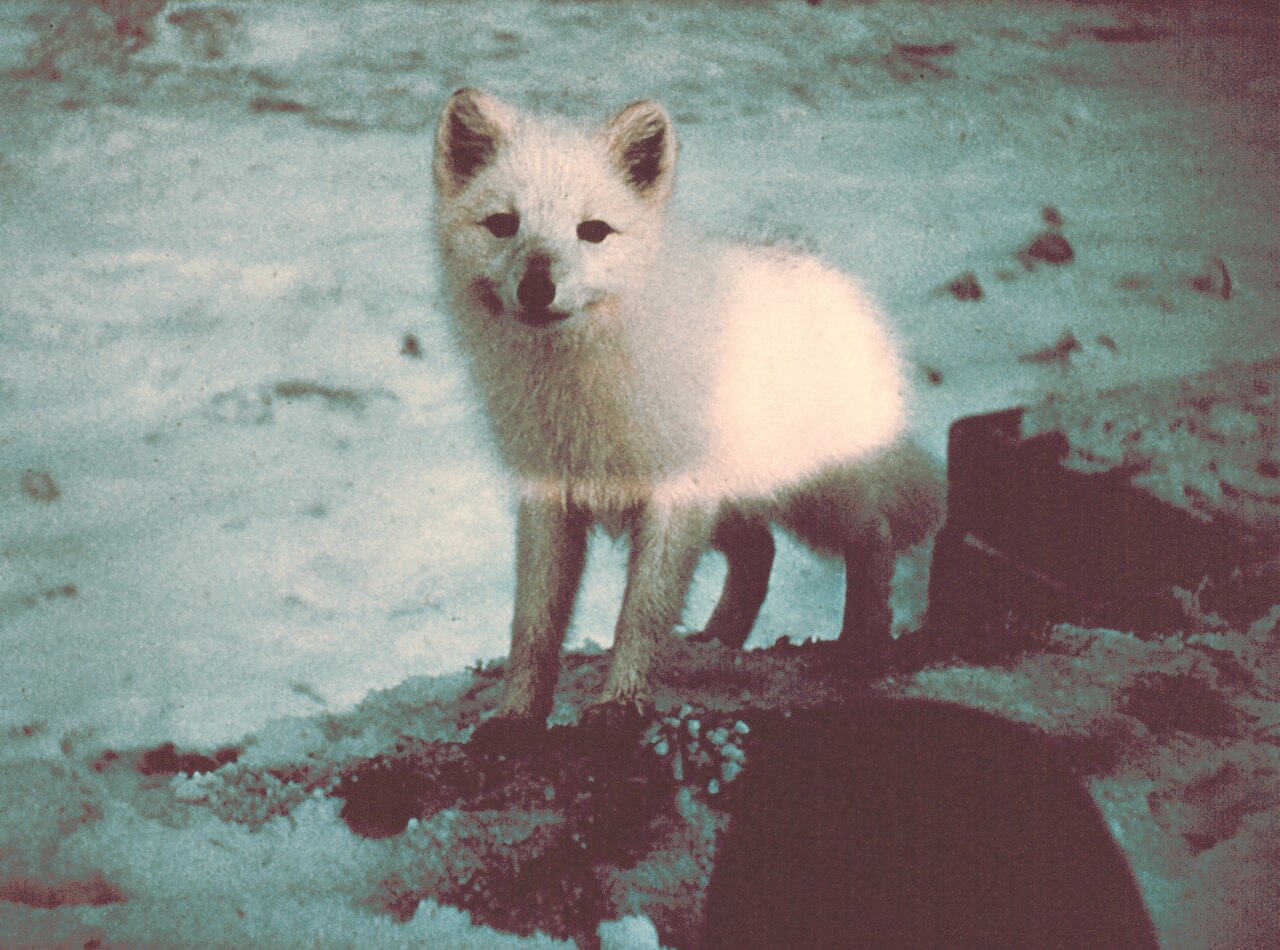
Arctic Fox Lifespan: 3 to 6 Years Wild, 16 in Captivity, and Why
An arctic fox (Vulpes lagopus) lives about 3 to 6 years in the wild and up to 14 to 16 years in captivity. The gap is one of the widest in the dog family, and it comes down to one thing: the tundra kills young foxes at a rate no zoo animal ever faces. More than half of all pups born in a given summer are dead before their first birthday.
Averages hide that pattern. A fox that survives its first winter has a realistic shot at 5 or 6 more years, so the often quoted figure of 3 to 4 years is dragged down by pup mortality rather than by short lived adults. Food supply, not old age, writes the arctic fox lifespan.
Arctic foxes live 3 to 6 years in the wild and 14 to 16 years in captivity. Over half of pups die in their first year, mainly from starvation during low lemming years. Adults that survive to age one typically reach 5 to 7 years. The oldest recorded captive arctic foxes passed 16 years.
| Life stage | Age | What decides survival |
|---|---|---|
| Pups in the den | 0 to 10 weeks | Litter size, prey abundance, den predation |
| First winter | 4 to 12 months | Lemming cycle, carcass scavenging |
| Prime adult | 1 to 5 years | Territory quality, red fox competition |
| Old wild adult | 6 to 10 years | Tooth wear, rare in the wild |
| Captive adult | up to 16 years | Veterinary care, steady diet |
How Long Do Arctic Foxes Live in the Wild?
Field studies from Iceland, Svalbard, and northern Alaska converge on 3 to 6 years for wild arctic foxes, with a hard ceiling near 10. Alaska’s own wildlife agency, the Alaska Department of Fish and Game, reports that few individuals survive beyond their third year in trapped populations, where human harvest adds to natural losses.
Longevity also varies by ecotype. Coastal foxes that scavenge seabird colonies, eggs, and beached carcasses face a steadier food supply than inland foxes tied to rodents, and they tend to live and breed more consistently. That difference shows up as survival, not as size. Compare the numbers for the family as a whole in our breakdown of fox lifespan by species.
How Long Do Arctic Foxes Live in Captivity?

Captive arctic foxes routinely reach 12 to 14 years, and several zoo records exceed 16. The reasons are unremarkable: measured daily rations, no rival foxes, no trapping, treatment for mange and parasites, and dental work when worn teeth would otherwise end a wild fox’s ability to feed.
The tradeoff is that captivity exposes a species built for minus 58 F (minus 50 C) to heat it never evolved for. Facilities in temperate climates need cooled dens and shade, because heat stress and the resulting weight loss shorten captive lives faster than cold ever could. Coat and circulation are covered in our guide to arctic fox adaptations.
What Kills Most Arctic Foxes?

Starvation is the leading cause of death, and it is not close. When lemming numbers crash, whole cohorts of pups fail in the den and yearlings enter winter underweight. Adults respond by traveling enormous distances, with one tracked female covering 2,175 mi (3,500 km) from Svalbard to Canada in 76 days.
Predation ranks second. Golden eagles take pups, while wolves, wolverines, polar bears, and increasingly red foxes kill adults. Disease follows, mainly rabies and sarcoptic mange, and in several regions trapping for fur still removes a substantial share of the population each season. Full species background sits in our arctic fox profile.
Why Lemming Cycles Decide How Long a Fox Lives
Across most of the arctic, lemming populations boom and crash on a 3 to 5 year rhythm, and fox reproduction tracks it almost exactly. In a peak year a female may raise 10 or more pups; in a crash year many pairs skip breeding altogether or lose the entire litter within weeks.
Arctic foxes carry the largest litters of any wild carnivore, with averages near 7 and verified records of 18 pups. That is a bet on abundance: produce many young in good years, accept catastrophic loss in bad ones. The strategy keeps the species going while keeping the average individual lifespan low.
What Is the Oldest Arctic Fox That Ever Lived?
The oldest documented arctic foxes are captive animals just past 16 years, a figure reported from zoo records rather than from a single celebrated individual. Wild records are far shorter, and the oldest aged wild specimens from tooth cementum analysis in Scandinavia and Russia cluster around 10 to 11 years.
Age verification is the reason for the gap in confidence. Wild foxes are aged from tooth sections after death, which carries a margin of error, while captive animals have birth dates. Any claim of a 20 year old arctic fox should be treated as unverified. Longevity records skew high for smaller, slower burning mammals such as the groundhog.
How Many Arctic Foxes Are Left in 2026?
Globally the species remains common, with population estimates in the several hundred thousand and an IUCN listing of Least Concern. Numbers swing hugely between lemming peaks and crashes, so any single figure is a snapshot rather than a trend line.
The exception is Fennoscandia. Sweden, Norway, and Finland together hold only a few hundred breeding adults, a remnant of fur trade hunting that has never fully recovered, and captive breeding plus supplementary feeding keeps it alive. Red foxes expanding north with a warming climate outcompete them directly, much as the gray fox cedes ground to red foxes further south.
Frequently Asked Questions
Can I keep an arctic fox as a pet?
In most US states, no. Arctic foxes are regulated as wild animals and require permits where they are legal at all. They dig relentlessly, mark indoors with a strong musk, need cooling below normal room temperature, and remain fearful of strangers for life. Captive bred foxes are not domesticated animals.
How long do baby arctic foxes live?
Roughly half of all pups die before 6 months, and survival in a crash year can fall below 20 percent. Pups that make it through their first winter have survival odds close to those of adults. Details on that early stage are in our guide to the baby arctic fox.
Are arctic foxes aggressive?
Not toward people. They are bold rather than aggressive, and habituated individuals near settlements approach closely for food, which is precisely how rabies is transmitted in arctic regions. Toward each other they fight over territory and food caches, and adults readily kill pups from rival litters.
Are arctic foxes intelligent?
They show strong spatial memory and problem solving in the field. Foxes cache hundreds of eggs in summer, relocate them months later under snow, and hunt lemmings under a crust by sound alone before diving headfirst. Some follow polar bears for days to scavenge seal kills, a learned behavior.
Do arctic foxes live longer than red foxes?
No, they are close, and red foxes usually edge ahead. Wild red foxes average 3 to 5 years with captive animals reaching 14 to 15, so the two species sit in the same band. The arctic fox loses ground because its food supply collapses on a predictable cycle rather than merely fluctuating.