Arctic Fox: Range, Diet and How It Survives 50 Below
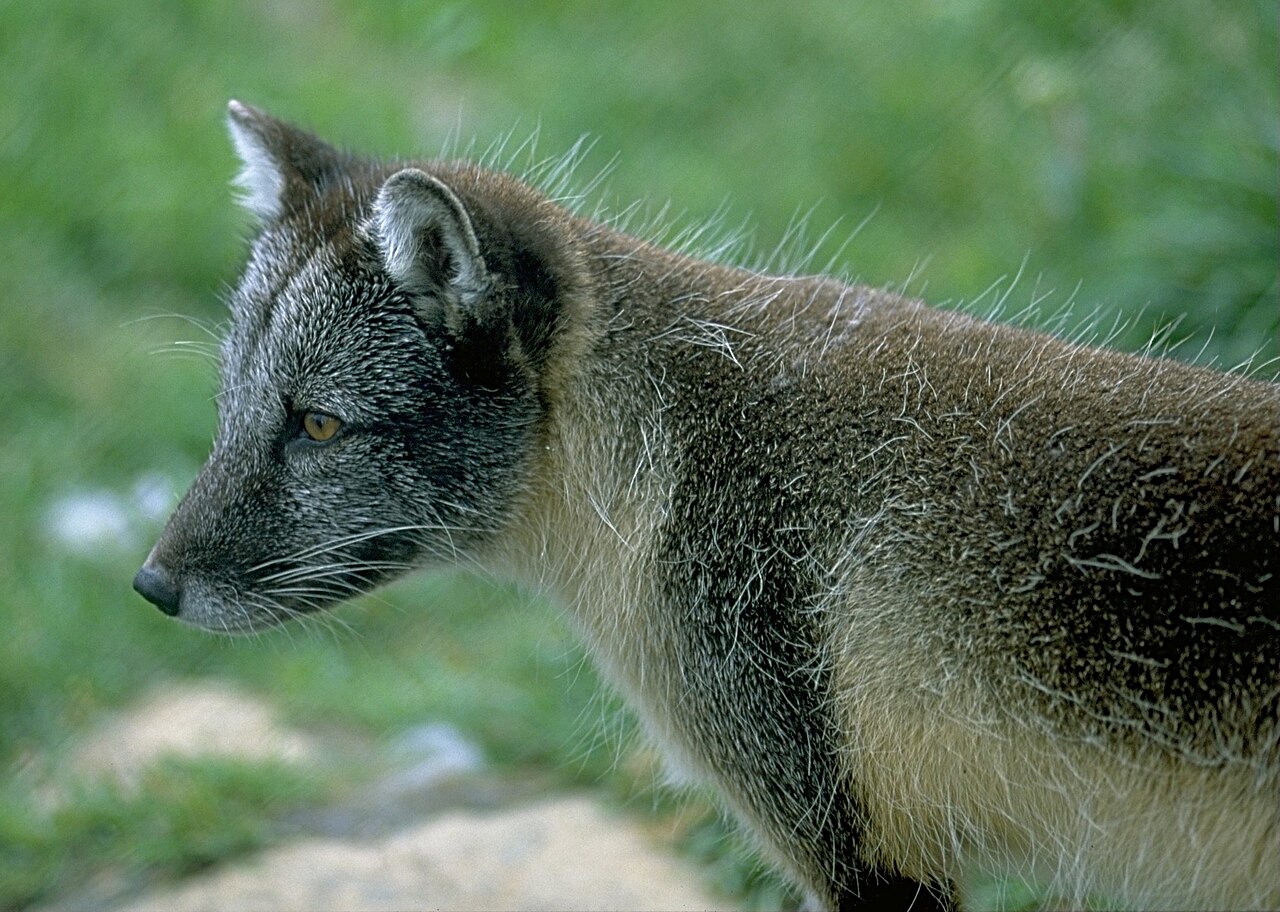
The Arctic fox (Vulpes lagopus) survives temperatures that would kill almost any other dog sized mammal, sleeping on open tundra at 58 F below zero (50 C below zero) without shelter. It is the smallest wild canid in the far north and the only one that changes coat color twice a year, white in winter and brown gray in summer.
Most people meet the species through photographs of a white fox in snow, which hides how much of its year is spent on bare rock and coastal scrub. Here is what the animal actually is: where it lives, how it feeds, whether the population is in trouble, and why it does not work as a pet.
The Arctic fox is a small circumpolar canid weighing 6 to 10 lb (2.7 to 4.5 kg), found across Arctic tundra in North America, Greenland, Iceland, and Eurasia. It withstands temperatures near 58 F below zero (50 C below zero) thanks to dense fur and furred foot pads, eats lemmings, birds, eggs, and carrion, and is listed as Least Concern globally.
| Feature | Arctic fox |
|---|---|
| Scientific name | Vulpes lagopus |
| Size | 18 to 27 in (46 to 68 cm) body, 6 to 10 lb (2.7 to 4.5 kg) |
| Lifespan | 3 to 6 years wild, up to 14 in captivity |
| Range | Alaska, northern Canada, Greenland, Iceland, Scandinavia, Russia |
| Litter size | 5 to 8 typical, up to 18 in lemming peak years |
| Conservation status | Least Concern globally, critically endangered in Scandinavia |
Where do Arctic foxes live?
Arctic foxes occupy tundra and coastal habitat right around the top of the globe, from the Alaskan North Slope across Canada and Greenland to Iceland, Svalbard, northern Scandinavia, and Siberia. They are the only land mammal native to Iceland, having arrived over sea ice at the end of the last glaciation.
They den in eskers and well drained slopes, using the same den systems for generations. Some Norwegian and Canadian dens have been in continuous use for over a century, and the nutrients from years of prey remains make them visibly greener than the surrounding tundra. In winter foxes range enormous distances, with one tracked individual covering 2,700 mi (4,400 km) from Svalbard to Canada in 76 days.
Can Arctic foxes freeze?

They can, but only at extremes almost never reached in their range. Metabolic studies put the lower critical temperature near 58 F below zero (50 C below zero), the point at which the fox must burn extra energy to stay warm. Below that the animal is still insulated, just spending calories it may not have in a lean winter.
The insulation comes from the densest fur of any mammal relative to body size, a compact build with short ears and muzzle that limits heat loss, and fur on the soles of the feet, which is what the species name lagopus means. Curling up with the tail across the face traps a pocket of warm air. The full set of mechanisms is worth a closer look in our breakdown of Arctic fox adaptations.
What do Arctic foxes eat?
Lemmings drive the whole system. In inland populations, lemming abundance determines how many kits are born, and litters swing from none at all in crash years to eighteen in peak years, the largest litter size of any wild canid. Voles, ground squirrels, and hares fill the gaps.
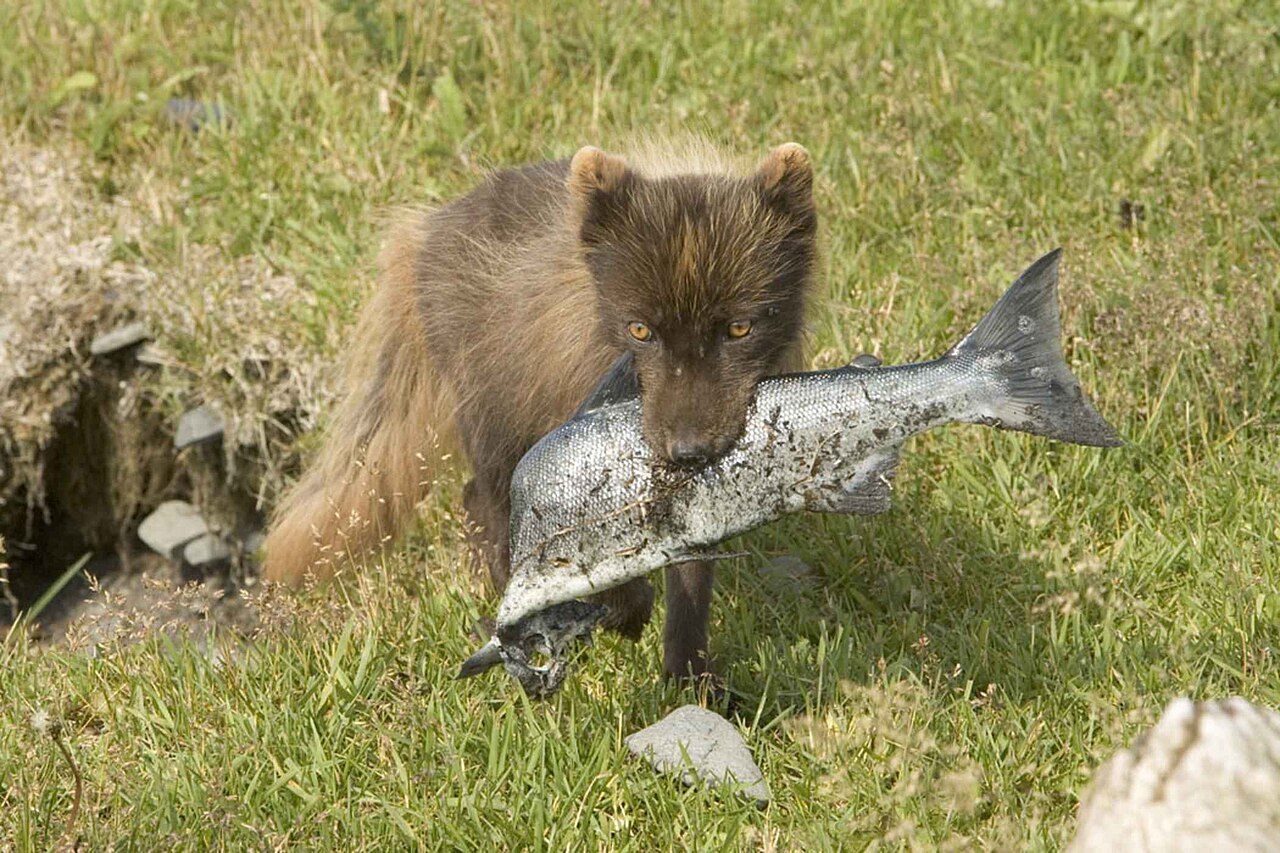
Coastal foxes rely more on seabirds, eggs, fish, and carrion, including seal carcasses left by polar bears. Arctic foxes routinely follow bears across sea ice for scraps and cache surplus food in the permafrost, which works as a natural freezer. This scavenging flexibility is why the species holds ground where more specialized predators fail, and it shows up clearly in what they leave behind, a topic covered in our guide to fox droppings.
Do Arctic foxes still exist?
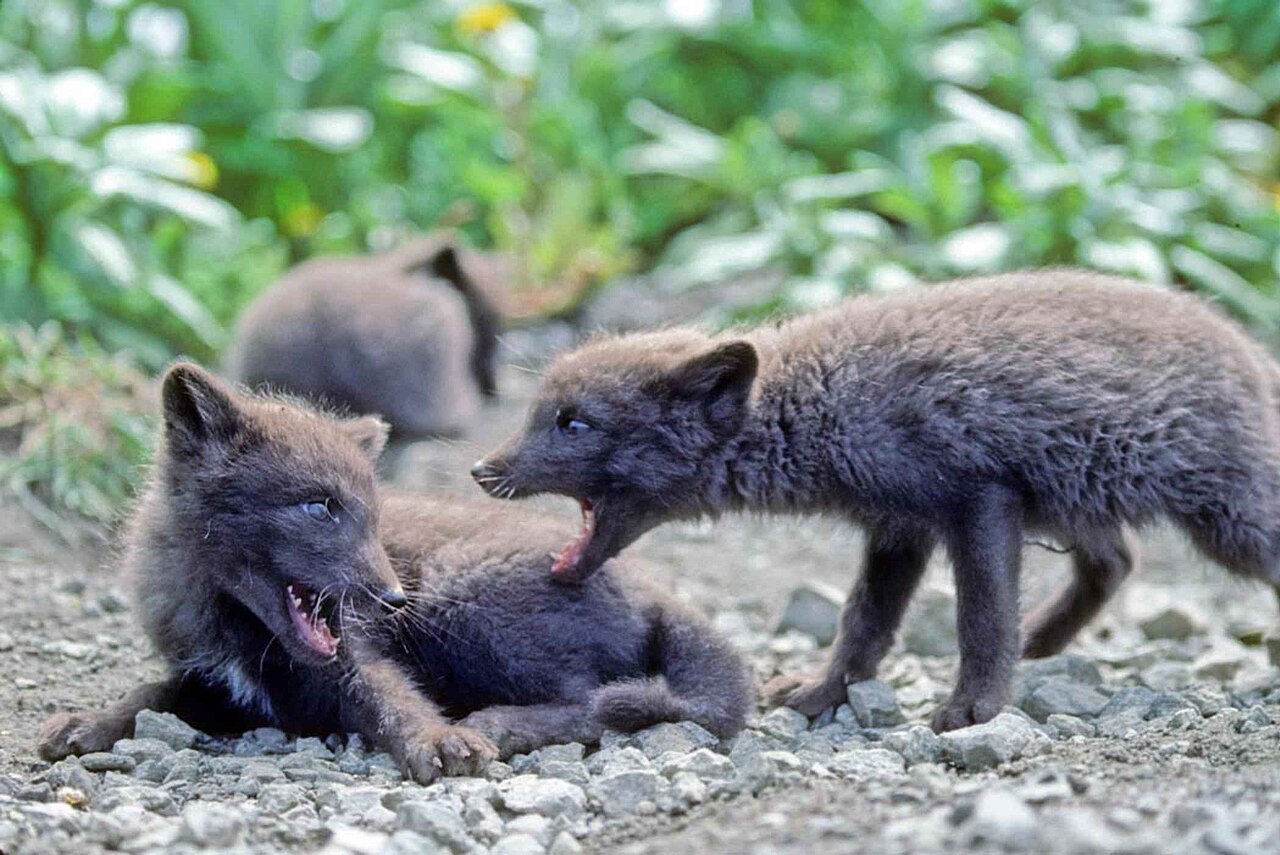
Yes, and globally the species is common. The IUCN lists it as Least Concern with a population in the several hundred thousands, stable across most of its range. Commercial fur trapping, which once took tens of thousands of animals annually, has declined sharply since the 1980s.
The picture is very different in Scandinavia. The mainland Fennoscandian population fell to around 40 breeding adults by the 1990s after a century of hunting, and remains critically endangered despite protection since 1928 and active captive breeding. Red foxes expanding north with warming winters now outcompete and kill Arctic foxes at the southern edge of the range, a pattern documented alongside the competition between foxes and coyotes further south.
Can an Arctic fox be a pet?
No, not in any practical sense. Arctic foxes are illegal to keep in most US states, and where permits exist they go to zoos and licensed facilities rather than private homes. The species is also a recognized rabies reservoir in the Arctic, which makes private ownership a public health issue on top of a legal one.
Even setting law aside, the biology is against it. An animal insulated for 58 F below zero (50 C below zero) suffers in a heated house, the digging and caching instincts are relentless, and captive foxes are not house trainable. Anyone set on a fox as a pet usually ends up looking at the desert dwelling fennec fox, which is smaller, legal in many states, and still a difficult animal. For current population and management data, the Alaska Department of Fish and Game publishes detailed species profiles.
Frequently Asked Questions
Is the Arctic fox aggressive?
Not toward people. Arctic foxes are famously bold rather than aggressive, approaching camps and researchers because they have little experience of humans as predators. That boldness is a rabies risk in the far north, so the standard advice is never to feed or handle one, however tame it appears.
How long do Arctic foxes live?
Three to six years in the wild, with high mortality in the first year driven by lemming crashes and predation from golden eagles, wolves, and polar bears. Captive animals in zoos reach 14. The comparison across species is set out in our overview of fox lifespans.
Will a fox eat a dog or a cat?
Arctic foxes are far too small to threaten a dog, and their range barely overlaps with pet keeping anyway. At 6 to 10 lb (2.7 to 4.5 kg) they take prey under a few pounds. Where red foxes live alongside houses, kittens and small poultry are occasionally taken, adult cats almost never.
What is a female Arctic fox called?
A vixen, the same term used across the fox family, while males are dogs or reynards and the young are kits or cubs. Arctic foxes form monogamous pairs that raise kits together, with both parents provisioning the den. The wider terminology is explained in our note on what a female fox is called.