Flying Squirrel: 3 US Species, Range, and Why You Rarely See One
A flying squirrel does not fly. It glides, using a furred membrane called a patagium that stretches from wrist to ankle and turns the animal into a living paraglider. North America has three native species, and all of them are common across large parts of the United States even though most people never see one.
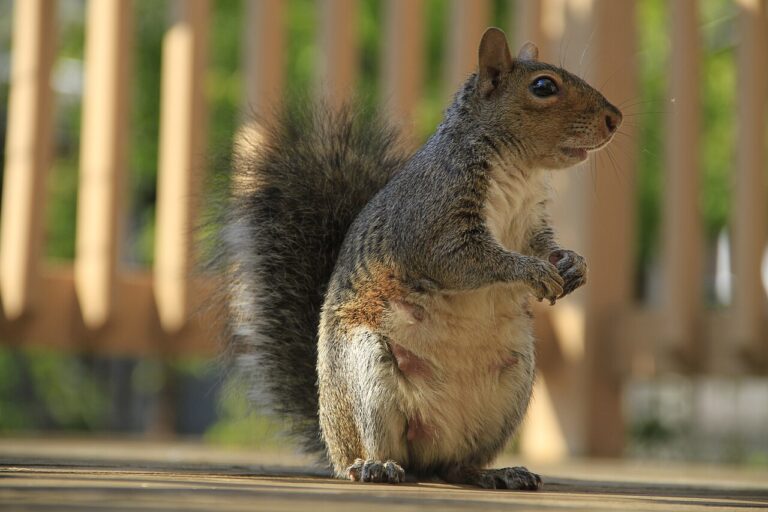
The reason is simple. Every North American flying squirrel is strictly nocturnal, so the squirrels raiding your feeder at noon are gray squirrels, not gliders.
Flying squirrels are nocturnal tree squirrels that glide rather than fly, steering with a skin membrane between their limbs. North America has three species: the southern flying squirrel, the northern flying squirrel, and Humboldt’s flying squirrel. A glide typically covers 20 to 60 ft (6 to 18 m), with records past 150 ft (45 m).
| Feature | Southern flying squirrel | Northern flying squirrel |
|---|---|---|
| Scientific name | Glaucomys volans | Glaucomys sabrinus |
| Body length | 8 to 10 in (20 to 25 cm) | 10 to 12 in (25 to 30 cm) |
| Weight | 2 to 3 oz (55 to 85 g) | 3 to 5 oz (85 to 140 g) |
| Belly fur | White to the base | Gray at the base |
| Core range | Eastern and central US | Northern US, Rockies, Appalachians |
| Typical glide | 20 to 40 ft (6 to 12 m) | 30 to 60 ft (9 to 18 m) |
What Is a Flying Squirrel, and How Does It Glide?
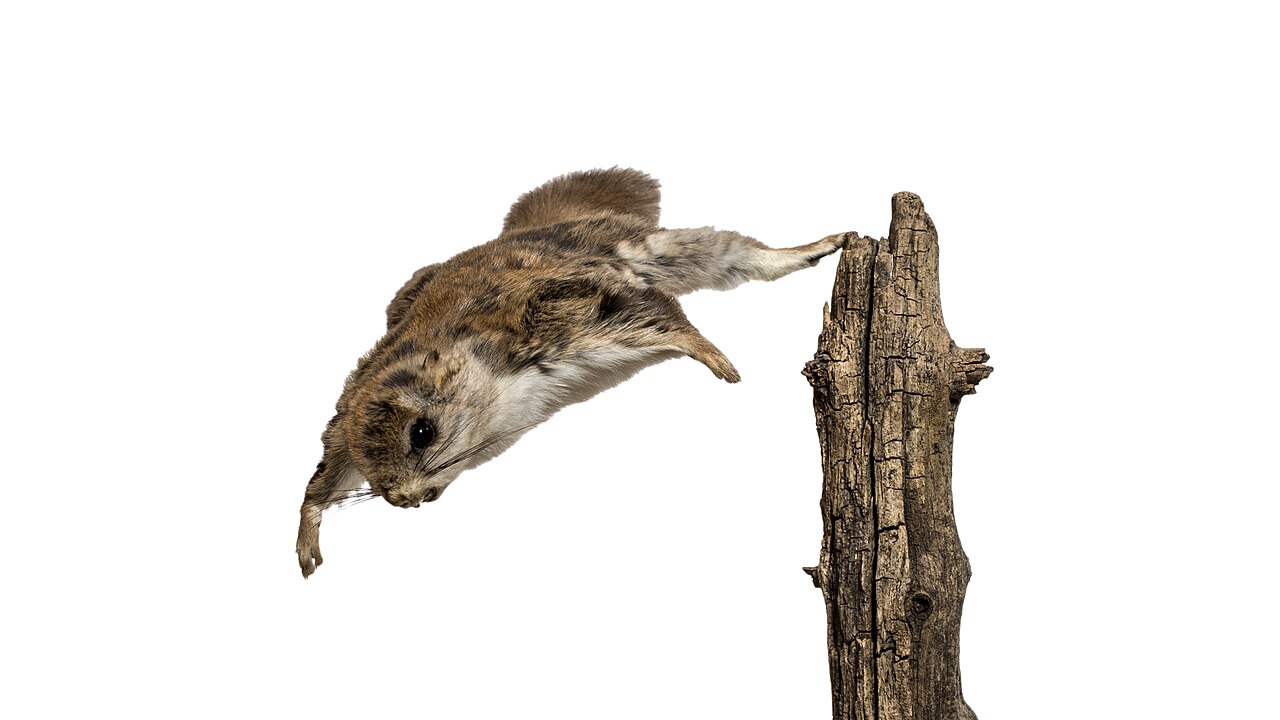
A flying squirrel is a small nocturnal tree squirrel with a patagium, a loose flap of skin running along each flank. When the squirrel launches, it spreads all four limbs and the membrane snaps taut into an airfoil. Wrist cartilage extends the leading edge, and the flattened tail works as a rudder and air brake.
Glides are controlled. The squirrel climbs high, bobs its head to judge distance, then trades height for horizontal travel at roughly three feet forward per foot lost. Just before impact it pitches up, stalls, lands feet first on the trunk, and scurries to the far side in case an owl followed it down. Unlike the day active squirrels most people know, gliders do all of this in darkness.
What States Do Flying Squirrels Live In?
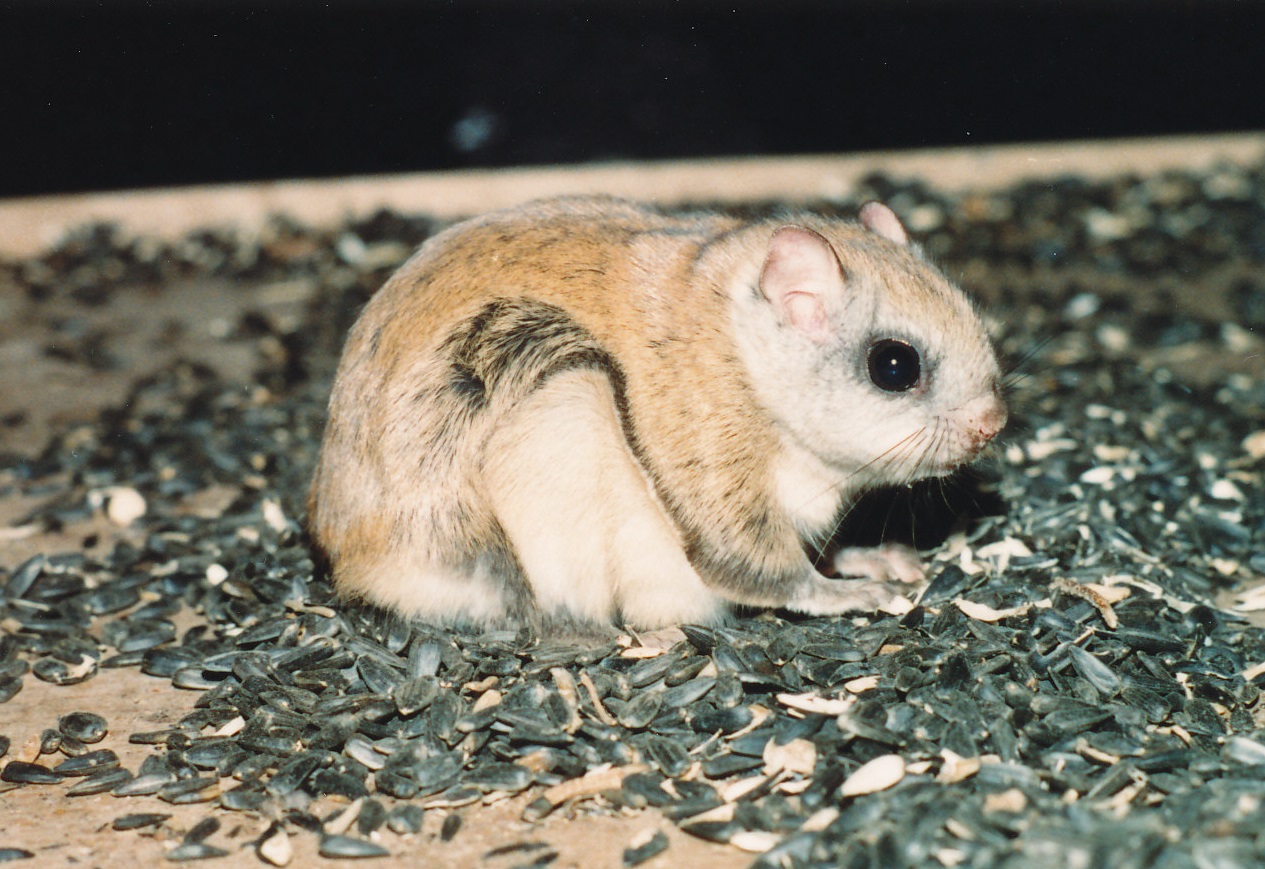
Southern flying squirrels live in every state east of the Great Plains, from Maine and Minnesota south to Florida and eastern Texas, wherever mature hardwoods produce nuts and cavities. Northern flying squirrels occupy conifer and mixed forest across New England, the Great Lakes, the northern Rockies, the Pacific Northwest, and high elevation pockets in the southern Appalachians.
Humboldt’s flying squirrel (Glaucomys oregonensis), split off as a separate species in 2017, holds the Pacific coast from British Columbia through California. The Carolina and Virginia northern flying squirrels are federally protected relicts left behind by the last ice age, tracked by the US Fish and Wildlife Service.
How Rare Is It to See a Flying Squirrel?
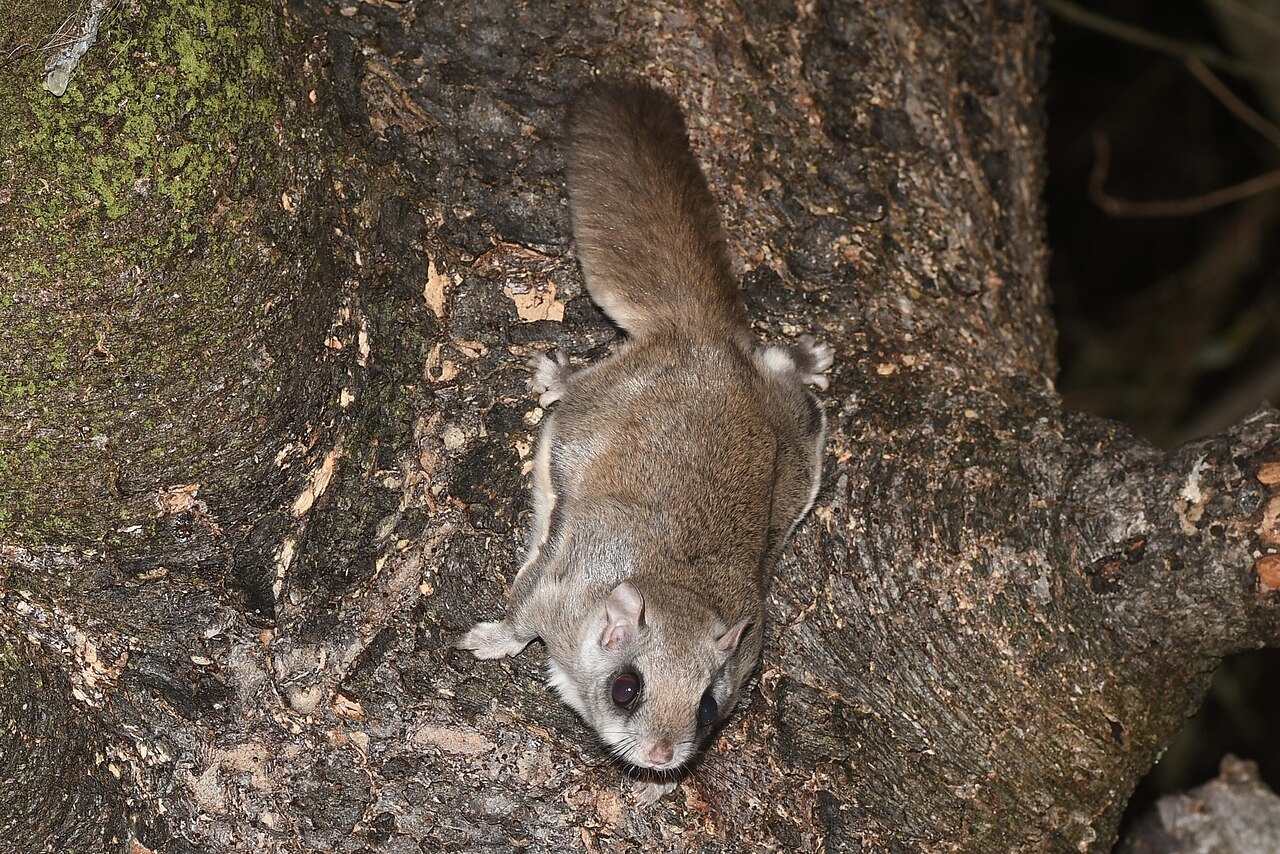
Seeing one is rare, but the animal is not. In much of the eastern United States the southern flying squirrel is among the most abundant mammals in the forest, sometimes outnumbering gray squirrels in the same woodlot. People who aim a trail camera at a feeder overnight are often surprised how many gliders show up.
Two habits hide them. They emerge 30 to 60 minutes after sunset and are back in a cavity before dawn, and they move along trunks rather than across open ground. The easiest way to confirm them is by ear: their high chirps carry on still nights, which is why they appear in most rundowns of squirrel noises after dark.
Are Flying Squirrels Just Sugar Gliders?
No. A sugar glider is a marsupial from Australia and New Guinea that carries young in a pouch. A flying squirrel is a placental rodent in the squirrel family. They look alike because gliding membranes evolved twice in unrelated lineages, a textbook case of convergent evolution.
The difference matters for anyone shopping. Sugar gliders are bred in captivity and legal in most states. Native flying squirrels are wildlife, and ownership is regulated or banned in many states, which is the subject of keeping a flying squirrel as a pet. Orphans found on the ground belong with a licensed rehabilitator, the same rule that applies to a baby squirrel of any species.
What Is a Flying Squirrel’s Favorite Food?
Hickory nuts and acorns top the list for southern flying squirrels, which cache them in cavities for winter. They also take berries, seeds, moths, beetles, and bird eggs, making them the most carnivorous of the North American tree squirrels. Northern flying squirrels are fungus specialists: truffles and other underground fungi, plus winter lichen, make up the bulk of the diet.
Both species will empty a sunflower feeder overnight, and the small dark droppings left under it are smaller than the pellets in our guide to identifying squirrel droppings. A dozen sharing one nest cavity in winter is also why the collective noun for squirrels comes up more often with gliders.
Frequently Asked Questions
Can a flying squirrel bite?
Yes. A frightened flying squirrel bites hard enough to break skin, and its incisors are sharp because they open nuts. Wild individuals bite when handled. Wash any bite, and ask a doctor about rabies exposure, since all wild mammals carry some risk.
Can flying squirrels be good pets?
Only captive bred southern flying squirrels bottle raised from about four weeks old bond reliably, and even then they are nocturnal animals that chew, scent mark, and need a tall cage. They live 10 to 12 years in captivity. Most people are better served by a conventional pet.
In what states is it illegal to own a flying squirrel?
Rules vary by state and change often. California, Nevada, Hawaii, and several New England states prohibit private ownership outright, while others require a permit or allow only captive bred animals with paperwork. Check your state wildlife agency first, because possession without a permit can mean confiscation and fines.
Do flying squirrels bond with humans?
Hand raised captive bred individuals do form strong attachments to one person, riding in a pocket and returning on call. That bond does not extend to strangers, and it does not develop in squirrels caught as adults. A wild adult stays wild, which is why most states treat them as wildlife.