French Angelfish: Size, Diet and Why It Is Not a Pet Store Angelfish
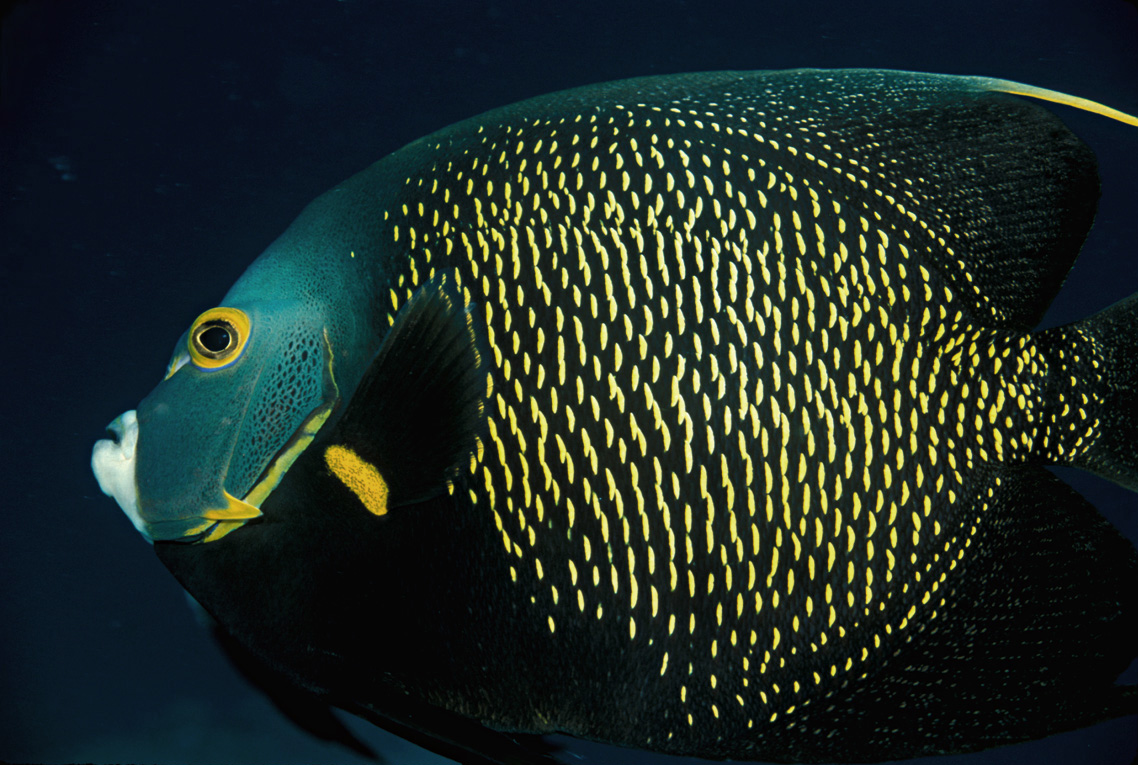
The French angelfish (Pomacanthus paru) is a saltwater reef fish of the Caribbean and western Atlantic, growing to about 15 in (38 cm) and recognizable by a black body dusted with yellow-rimmed scales. It is not the freshwater angelfish sold in pet stores, which is a South American cichlid and a completely different animal.
Divers know this species for its confidence. French angelfish approach swimmers rather than fleeing, work as mated pairs across a fixed territory, and run cleaning stations where larger fish queue up to have parasites removed.
French angelfish are marine reef fish from the Caribbean and Gulf of Mexico, reaching 15 in (38 cm) and living 10 to 15 years. Adults are dark gray to black with yellow scale margins; juveniles are black with bright yellow bars. They pair for life, feed mainly on sponges, and need a 200 gallon aquarium or larger, which puts them out of reach for most home tanks.
| Trait | French Angelfish |
|---|---|
| Scientific name | Pomacanthus paru |
| Adult size | 12 to 15 in (30 to 38 cm) |
| Range | Florida, Gulf of Mexico, Caribbean, Brazil |
| Depth | 6 to 330 ft (2 to 100 m) |
| Diet | Sponges, tunicates, algae, hydroids |
| Minimum tank | 200 gal |
| Lifespan | 10 to 15 years |
How Big Does a French Angelfish Get?
A French angelfish reaches 12 to 15 in (30 to 38 cm) and can weigh close to 4 lb (1.8 kg). Growth is steady rather than fast: a juvenile added to an aquarium at 2 in takes roughly three years to pass 10 in, which is long enough for owners to convince themselves the fish will stay manageable.
The adult body is nearly as tall as it is long, a disc shape that needs swimming width, not just water volume. That geometry is why the minimum footprint recommendation sits near 6 ft (1.8 m) of tank length. Compared with the emperor angelfish, the French is slightly larger and considerably bolder.
Are French Angelfish Reef Safe?
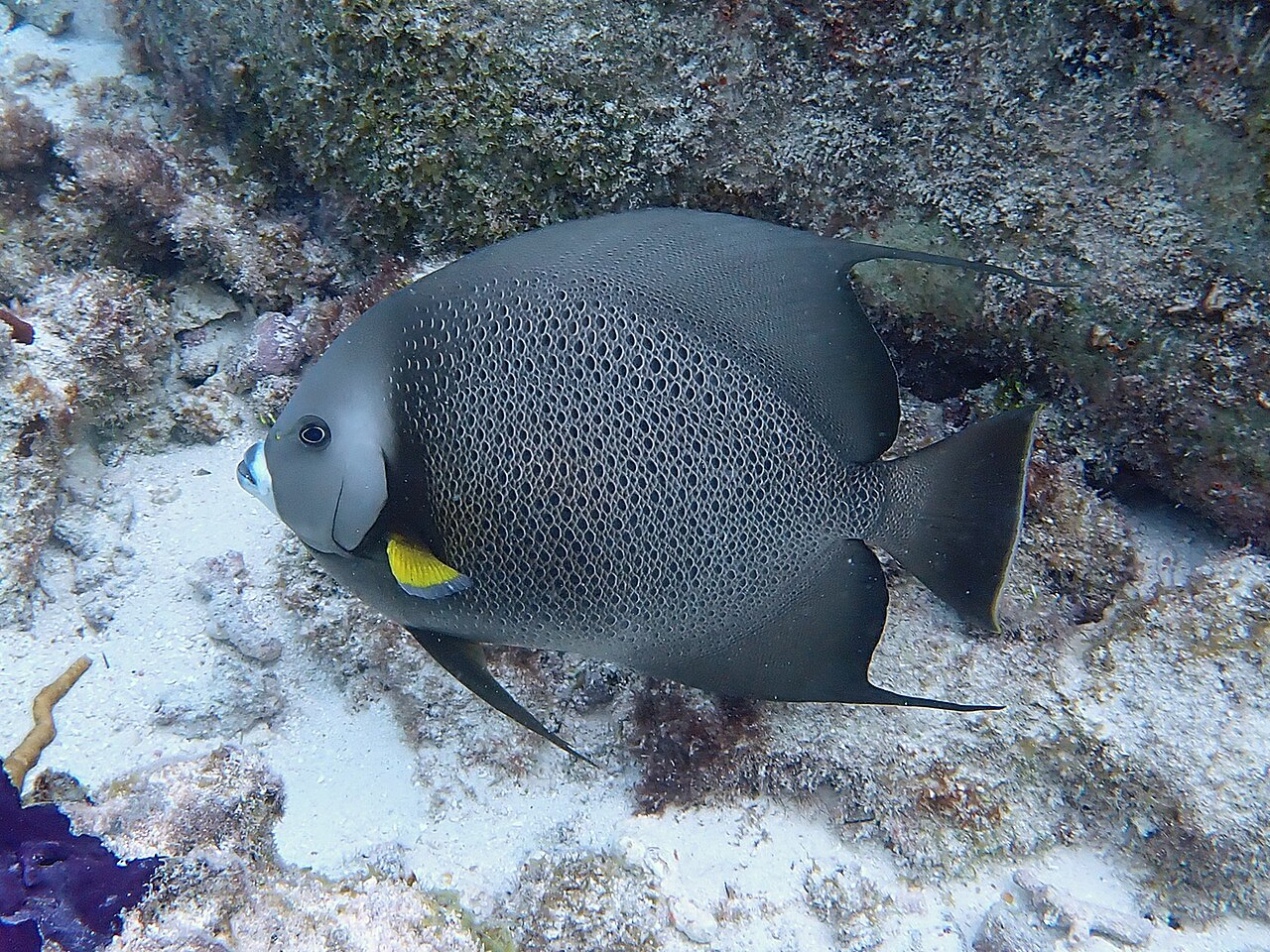
No. French angelfish are not reef safe. Sponges and tunicates make up the bulk of the wild diet, and a captive adult will sample soft corals, zoanthids and clam mantles no matter how well it is fed.
Individual behavior varies, and some keepers report an angelfish that ignores corals for a year before suddenly discovering them. The safe assumption is that a French angelfish belongs in a fish-only setup with live rock, where its grazing does no damage.
Do French Angelfish Mate for Life?

French angelfish form long-term monogamous pairs and defend a shared territory together, often staying with the same partner for years. Pairs swim side by side almost constantly, and a lone adult on a reef is usually a fish that has lost its mate rather than one that never had one.
Both fish defend the territory against neighboring pairs, with the male typically confronting rival males. Spawning happens at dusk in open water above the reef, where the pair rises together and releases eggs and sperm into the current.
Are French Angelfish Rare?
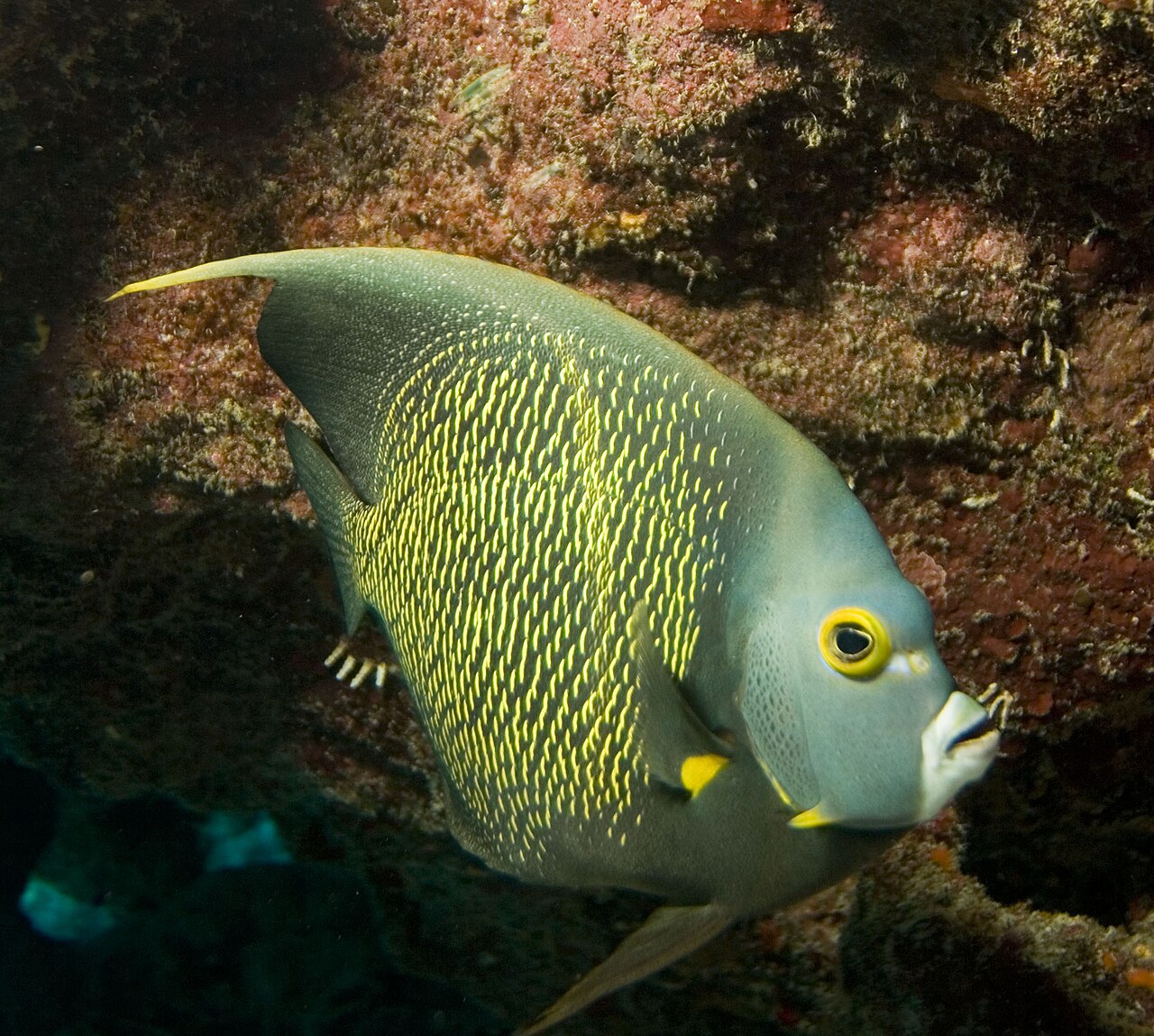
French angelfish are not rare. The species is listed as Least Concern and is common across its Caribbean and western Atlantic range, where the Florida Museum of Natural History records it as a familiar sight on shallow reefs.
What makes them uncommon in home aquariums is price and size, not scarcity. Collected specimens are healthy and widely available; the barrier is that a fish needing a 200 gallon tank simply does not fit most setups, so few stores stock adults.
What Fish Are Best Kept With Angelfish?
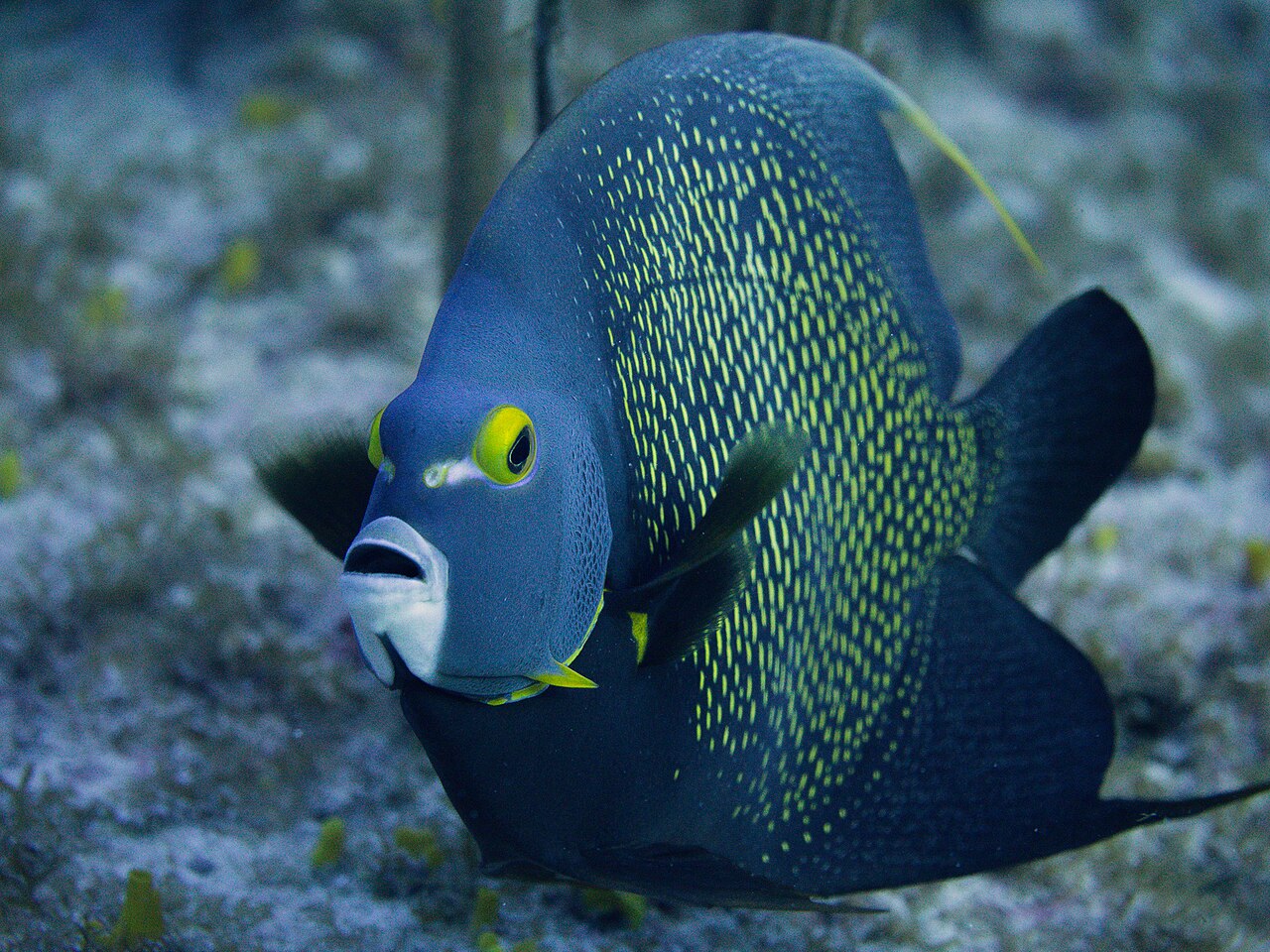
In a large marine system, French angelfish do well with tangs, larger wrasses, groupers, triggerfish and other robust species that can hold their own. The angelfish should go in last, because an established one treats newcomers as territorial intruders.
Avoid a second angelfish of any similar species in the same tank unless the system exceeds 300 gallons, and avoid small, slow or timid fish that will be outcompeted at feeding. The pairing logic differs entirely from the freshwater side, where angelfish tank mates are chosen around a much smaller cichlid.
Frequently Asked Questions
How much does a French angelfish cost?
Juveniles run 60 to 120 dollars, medium fish 150 to 300, and show-size adults 400 dollars or more. The fish is a small fraction of the real cost: a 200 gallon saltwater system with skimmer, lighting and live rock runs several thousand dollars, and that setup is what makes the purchase responsible rather than doomed.
What fish cannot live with angelfish?
Other large angelfish of similar shape are the main conflict, especially a second Pomacanthus in anything under 300 gallons. Small gobies, firefish, dwarf species and anything slow enough to lose at feeding time are also poor matches, as are invertebrates, corals and clams that the angelfish will graze on.
Is it okay to have just one angelfish?
Yes. A single French angelfish does well on its own and shows no sign of distress without a mate, which is fortunate because housing a bonded pair takes a tank most hobbyists will never own. Wild pairing is a territorial strategy, not a social need the aquarium has to replicate.
Can I put 2 angelfish in a 10 gallon tank?
No, and not even one. A 10 gallon tank is too small for any angelfish, marine or freshwater. A French angelfish outgrows that volume within months, and even the freshwater angelfish needs 20 gallons minimum for a single fish and 55 for a pair. For a species that actually suits a small tank, look at platy fish or a well-housed goldfish setup instead.