Emperor Angelfish Care: Size, Tank, Cost and Temperament
The emperor angelfish (Pomacanthus imperator) reaches about 15 inches (38 cm) and needs a tank of at least 180 gallons to live a normal life. It is one of the most recognizable marine fish in the hobby, and one of the most commonly bought by people whose tanks are far too small for it.
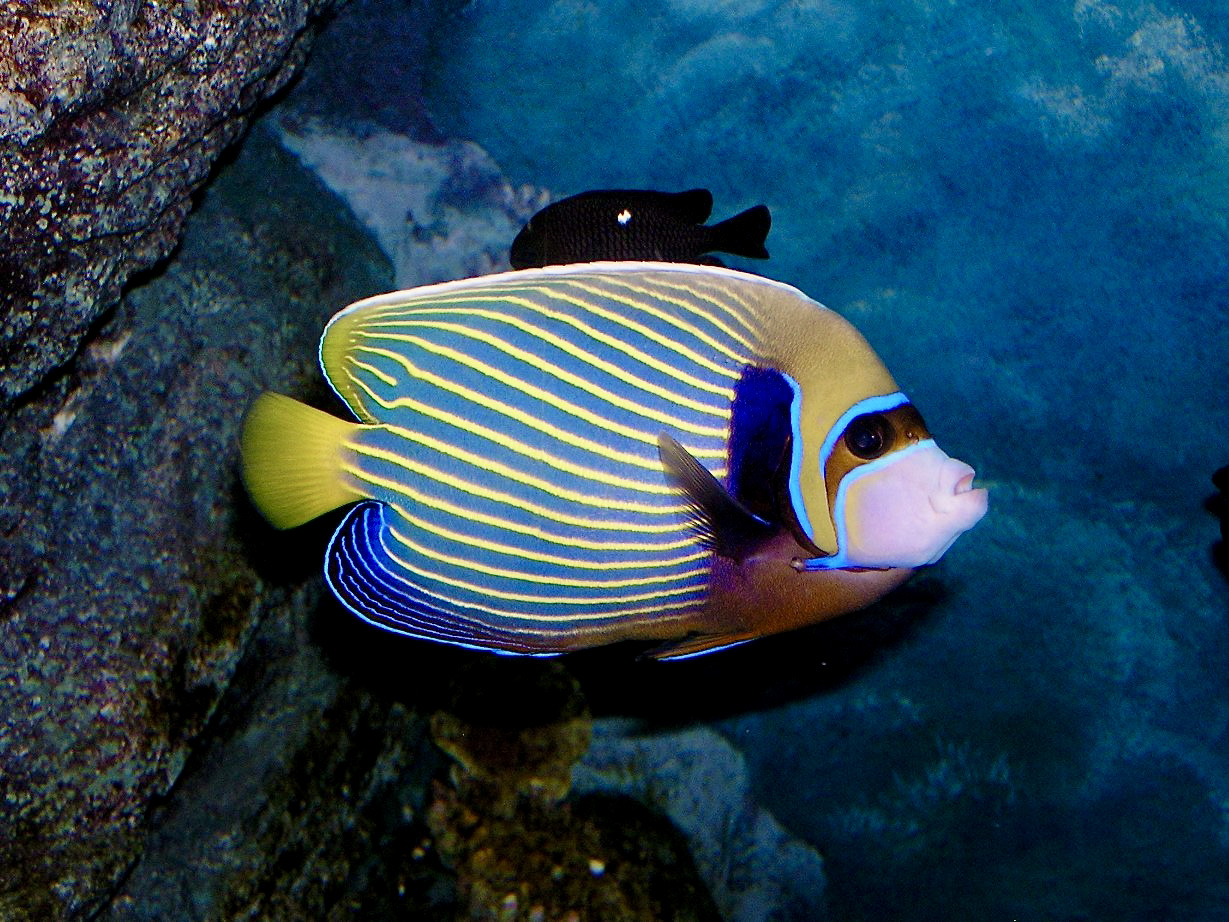
Two fish wear this name. The juvenile is dark blue with white concentric rings, the adult is yellow and blue with horizontal stripes and a black mask, and the change takes two to four years. Knowing which stage you are buying decides both the price and the tank you need ready.
Emperor angelfish grow to roughly 15 inches (38 cm) and live 15 to 20 years in captivity. They need a mature tank of 180 gallons or more, plenty of live rock, and a varied diet with sponge and algae content. They are semi aggressive, not reef safe, and best kept one per tank.
| Quick facts | Emperor angelfish |
|---|---|
| Scientific name | Pomacanthus imperator |
| Adult size | 12 to 15 in (30 to 38 cm) |
| Minimum tank | 180 gal, 220 gal preferred |
| Lifespan | 15 to 20 years in captivity |
| Temperament | Semi aggressive, one per tank |
| Reef safe | No, nips corals and clams |
| Care level | Expert, difficult feeder at first |
How Big Do Emperor Angelfish Get?
Adult emperor angelfish reach 12 to 15 inches (30 to 38 cm) in the wild, and captive fish in large systems come close. That is a body deeper than a dinner plate, moving constantly along the rock. Growth is fast for the first two years, then slows as the adult pattern settles in.
Size is why most emperor angelfish fail in home aquariums. A three inch juvenile looks fine in a 75 gallon tank for a year, then runs out of swimming room and shows it: clamped fins, pacing the glass, refusing food. Open water matters more than volume, so a long shallow tank beats a tall one of the same gallons.
Juvenile vs Adult Emperor Angelfish
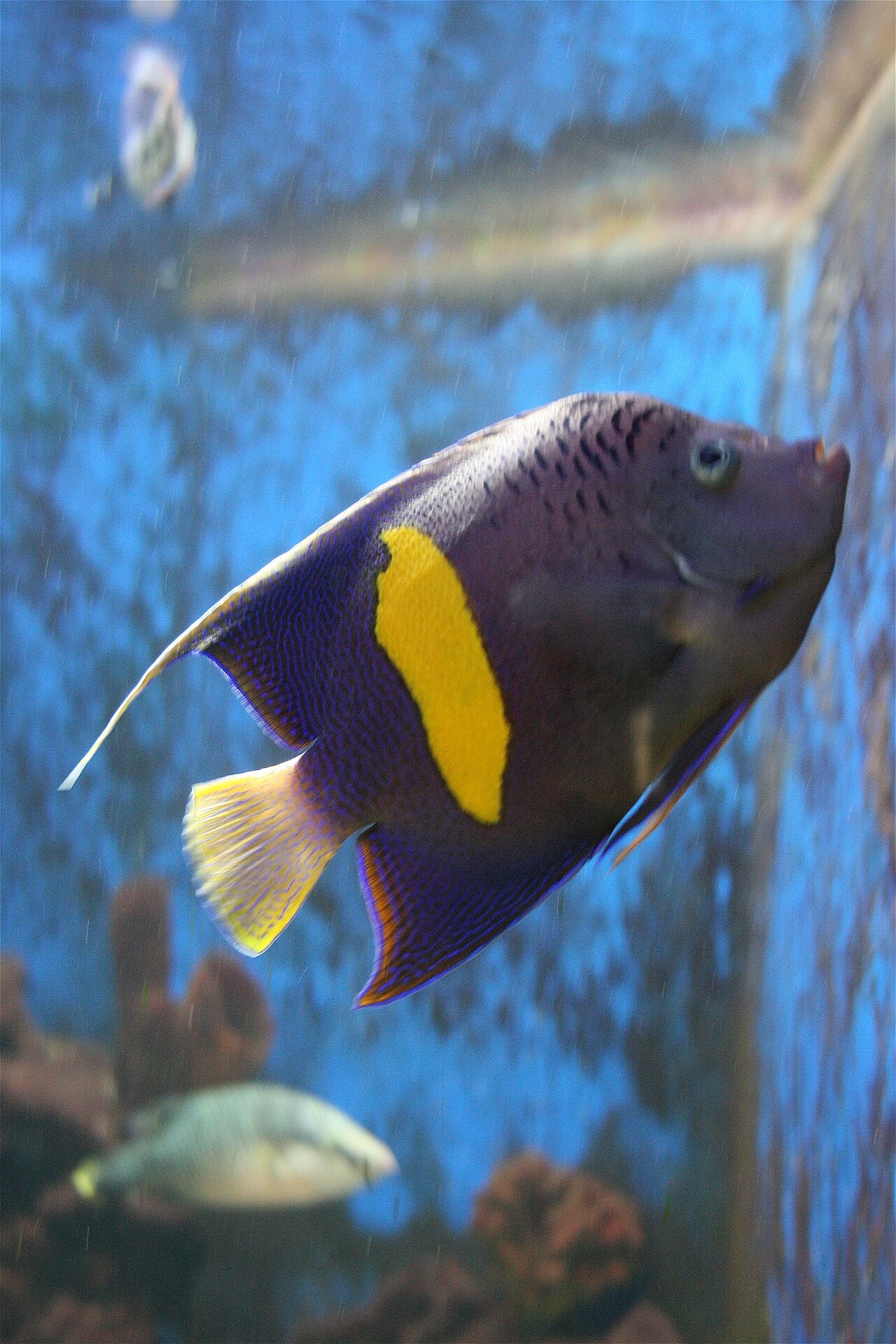
Juveniles are deep blue to almost black with white and pale blue rings curving around the tail end of the body. The pattern is so different from the adult that early naturalists described the two stages as separate species. The rings break up the outline and keep young fish from being read as rivals by territorial adults.
The change begins around 4 inches (10 cm) and finishes between 2 and 4 years old. Through the middle of it the fish looks smudged and blotchy, which is normal and not a disease. Juveniles adapt to aquarium food more readily and cost less; imported adults show the full pattern at once and often refuse prepared food for weeks. A freshwater freshwater angelfish looks essentially the same at every age.
Are Emperor Angelfish Hard to Keep?
Yes, emperor angelfish are hard to keep, and the difficulty is feeding rather than water chemistry. Wild adults eat sponge and tunicates, food no flake replaces. A new import may ignore pellets for two weeks and needs frozen angelfish preparations with sponge content, nori, and mysis to bridge the gap.
The tank has to be mature. Six months of established live rock gives the fish something to graze between meals, which is how it spends most of its day on the reef, as any Smithsonian Ocean reef footage shows. Hold 72 to 80 F (22 to 27 C), salinity 1.020 to 1.025, and feed three to four small meals daily. Thin diets and stray voltage bring on lateral line erosion, a slow failure most aquarists catch too late.
How Aggressive Are Emperor Angelfish?
Emperor angelfish are semi aggressive and grow territorial, mostly toward other large angelfish and anything shaped like a rival. Keep one per tank. Two emperors in the same system usually end with one fish pinned in a corner and starving, no matter how much rock you add.
They mix well with tangs, larger wrasses, and moderate tempered triggers. What fish not to put with angelfish is anything small and slow enough to be chased off the food, and that rule holds for the freshwater species too, where angelfish tank mates follow the same logic at a smaller scale. Do angelfish bites hurt? Not to a person: these are brushlike scraping teeth, and a defensive nip feels like a pinch.
Reef Safety and What an Emperor Angelfish Costs
Emperor angelfish are not reef safe. They sample soft corals, zoanthids, clam mantles, and large polyp stony corals, and a fish that ignores coral for six months can switch overnight. A fish only system with heavy live rock is the honest setup, which is why hobbyists who want color without the risk often stay freshwater with black molly fish or a fancy goldfish tank.
Expect 100 to 250 USD for a juvenile and 250 to 600 USD for a full color adult, with Red Sea specimens at the top. The fish is the cheap part: a 220 gallon system with sump, skimmer, lighting, and 200 pounds of rock runs into several thousand dollars, a different budget entirely from a butterfly koi pond. Buy from a seller who feeds the fish in front of you.
Related reading: Freshwater Angelfish.
Frequently Asked Questions
Are Emperor Angelfish hard to keep?
Yes. They need at least 180 gallons, mature live rock, and a sponge based frozen diet fed three to four times daily. New imports often refuse food for two weeks. Water chemistry is straightforward; getting a large adult to eat reliably is the real hurdle.
How much do Emperor Angelfish cost?
Juveniles run 100 to 250 USD and full color adults 250 to 600 USD, with Red Sea specimens highest. The tank, filtration, and live rock needed to house one add several thousand dollars, so the fish itself is rarely the largest expense.
Is it okay to have just one angelfish?
One emperor angelfish per tank is the standard recommendation, and a single fish shows no sign of distress. They are not schooling fish. Wild pairs hold territories no home aquarium can reproduce, so one specimen is the safer choice.
Are emperor angelfish fin nippers?
They rarely nip fins of fish their own size, but they chase smaller tank mates off food and harass anything resembling a competing angelfish. The nipping that matters is aimed at corals and clam mantles rather than at other fish.