Butterfly Koi Fish: Size, Lifespan, Varieties, and Care
Butterfly koi fish are a long-finned variety of koi carp, developed in the United States in the 1980s by crossing traditional Japanese koi with a hardy long-finned carp from Indonesia. The result is a pond fish with the same colors and patterns as standard koi but with flowing, elongated fins and tail that trail behind the body like ribbons, along with longer barbels and a slimmer build. A butterfly koi fish typically reaches 36 to 40 inches in length, lives 25 to 35 years with good care, and tolerates a wider range of water conditions than most purebred koi lines.
Butterfly koi are also sold as longfin koi, dragon carp, and dragon koi. They are the same species as standard koi, Cyprinus carpio, and can live in the same ponds, eat the same food, and interbreed freely. The differences are fin length, body shape, temperament in the water, and a long-running argument in the koi world about whether they count as “real” koi at all. This guide covers where butterfly koi came from, how to tell them apart from standard koi, the main color varieties, how big they get, what they cost, and how to set up a pond that keeps those long fins intact.
| Feature | Butterfly Koi |
|---|---|
| Scientific name | Cyprinus carpio (longfin variety) |
| Origin | United States, 1980s (koi x Indonesian longfin carp) |
| Adult length | 36 to 40 inches including fins |
| Lifespan | 25 to 35 years typical |
| Water temperature | 59 to 77 F ideal; survives near freezing in deep ponds |
| Minimum pond | 1,000 gallons for a small group; 250 gallons per adult fish |
| Price range | $15 to $60 for young fish; $150 to $1,000 or more for large show-quality fish |
Where Butterfly Koi Came From
Butterfly koi are an American creation, not a Japanese one, which surprises many pond keepers who assume every koi variety traces back to the rice-farming villages of Niigata. In the early 1980s, Blue Ridge Fish Hatchery in Kernersville, North Carolina, one of the largest ornamental fish producers in the country, obtained a batch of long-finned common carp from Indonesia. The fish were dull brown or gray with unusually long fins, and hatchery owner Wyatt LeFever saw the potential to combine that fin length with the brilliant colors of Japanese koi.
Over roughly a decade of selective breeding, the hatchery crossed the Indonesian longfin carp with high-quality metallic koi and then bred the offspring back toward koi coloration while keeping the long fins. The name “butterfly koi” reportedly came from LeFever’s son, who said the fish looked like butterflies as they moved through the water. By the early 1990s the variety had stabilized, and Blue Ridge began shipping butterfly koi to pond retailers across the United States, where they became a fixture of garden centers within a few years.
Because of their hybrid ancestry, butterfly koi were excluded for decades from traditional Japanese koi shows, which judge fish against strict body-conformation standards developed for short-finned varieties. That attitude has softened over time. Many American koi shows now include butterfly classes, and the Associated Koi Clubs of America recognizes them in competition, though purists in Japan still regard them as a separate category. Regardless of show politics, butterfly koi are now one of the best-selling pond fish in North America.
Butterfly Koi vs Standard Koi: The Differences
The obvious difference is the fins. A standard koi has short, rounded pectoral, dorsal, anal, and caudal fins in proportion to its body. A butterfly koi has fins that continue growing throughout its life, so a mature fish carries pectoral fins that can stretch several inches and a tail that fans out to half the length of the body. The barbels around the mouth, the whisker-like sensory organs all carp have, are also noticeably longer on a butterfly koi, sometimes long enough to trail alongside the head.
Body shape differs as well. Standard koi, especially the Japanese show lines, are bred for a thick, torpedo-shaped body with a broad back and deep girth, which judges call good “body conformation.” Butterfly koi are slimmer and more streamlined, a trait inherited from the wild-type Indonesian carp in their ancestry. That slimmer body plus the long fins gives them a graceful, slow, undulating swimming style that many pond owners prefer to the more direct, powerful movement of a standard koi.
Hardiness is the least visible but arguably most practical difference. The infusion of wild carp genetics gave butterfly koi a reputation for greater tolerance of temperature swings, marginal water quality, and disease pressure than heavily inbred show koi. Hobbyists routinely report that in mixed ponds the butterfly koi are the last fish to show stress during a heat wave or a filter failure. They are not indestructible, and a neglected pond will kill them like anything else, but they forgive beginner mistakes more readily than a $2,000 Kohaku does.
Butterfly Koi Colors and Varieties
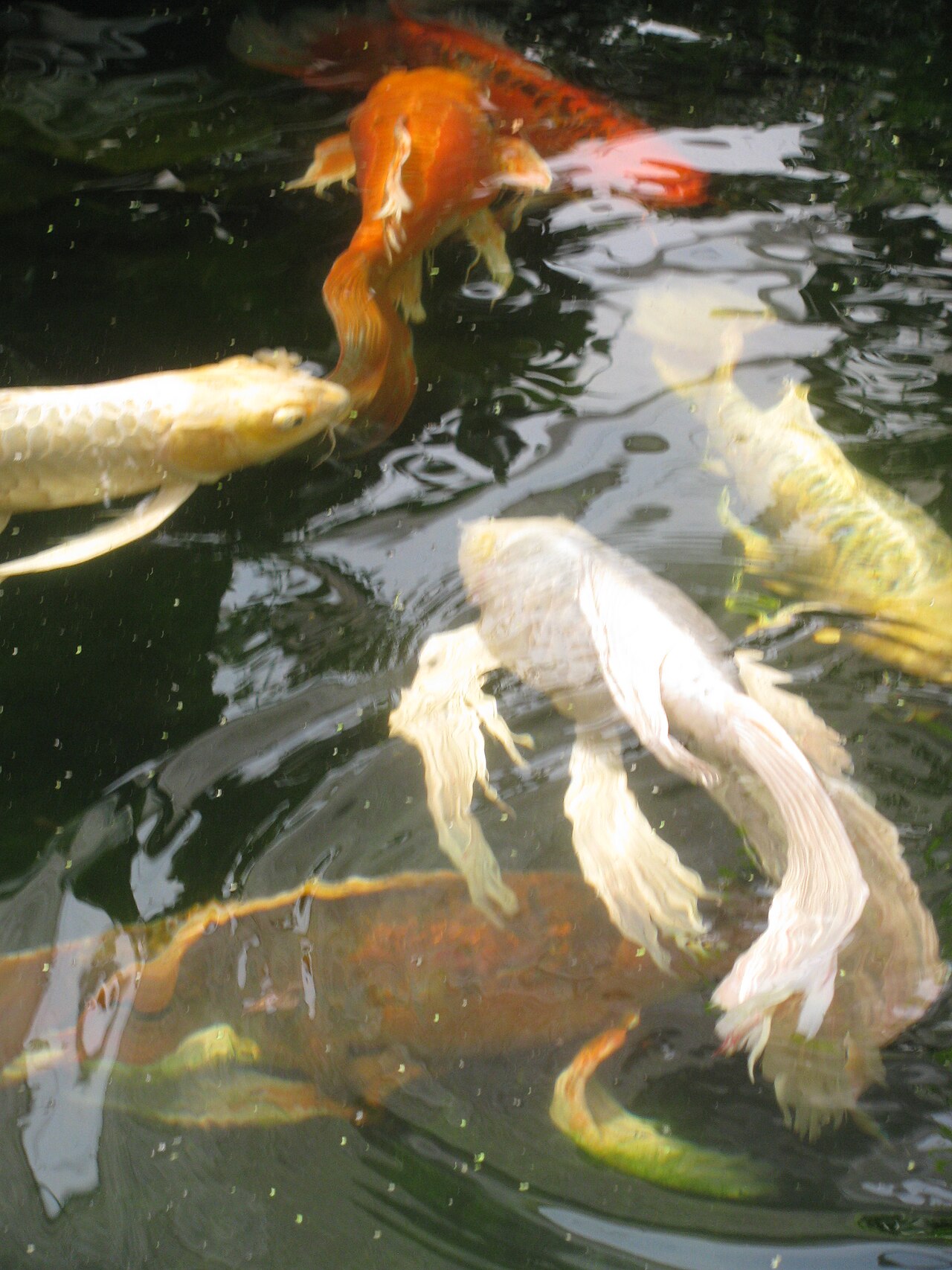
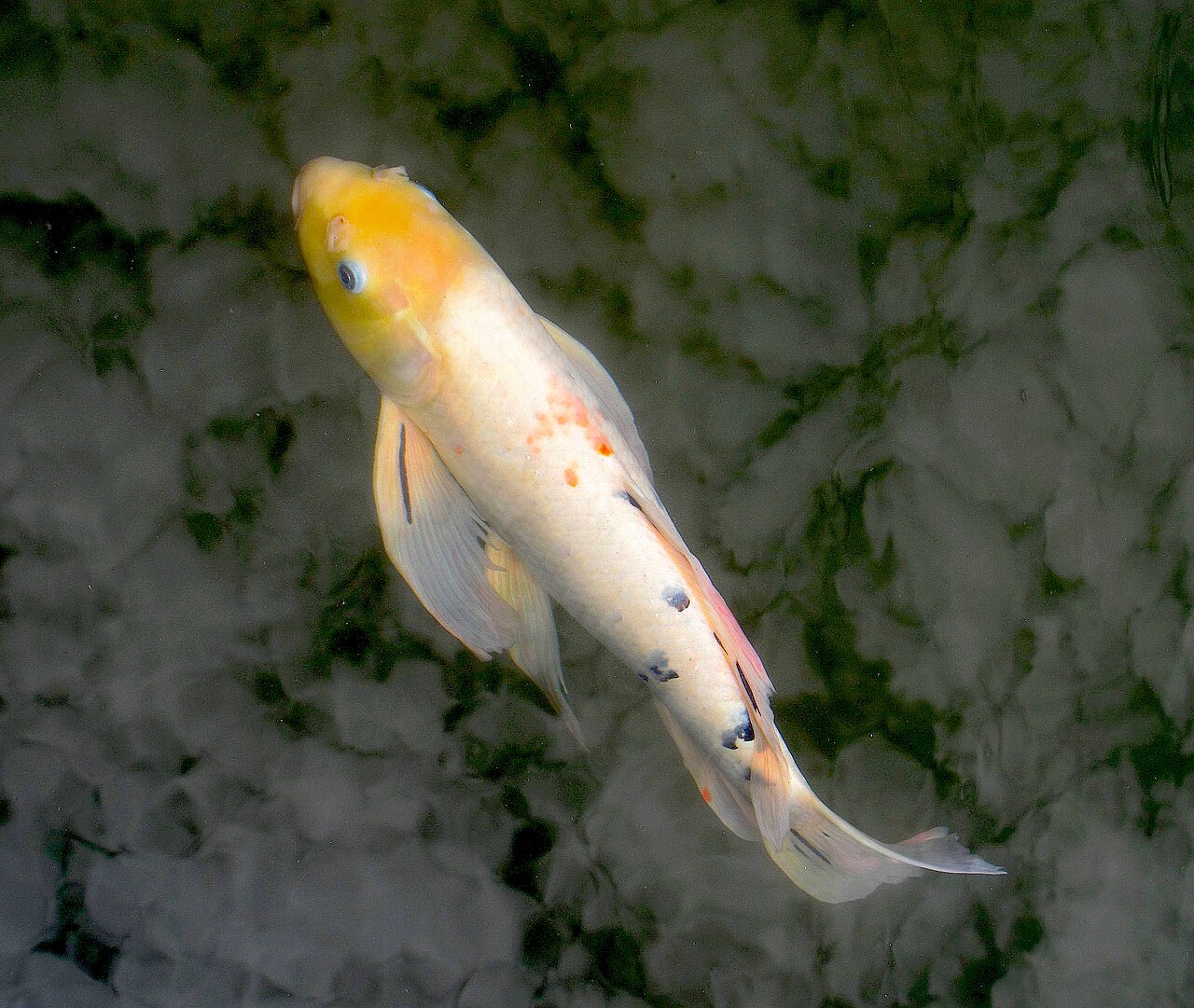
Butterfly koi come in nearly every color pattern that standard koi do, and breeders borrow the Japanese variety names to describe them. The most popular by far is the platinum butterfly koi, a solid metallic white or silver fish that glows under pond lights and shows off the long fins better than any patterned variety. Platinum is the butterfly equivalent of the Platinum Ogon in standard koi and is usually the first butterfly koi people buy.
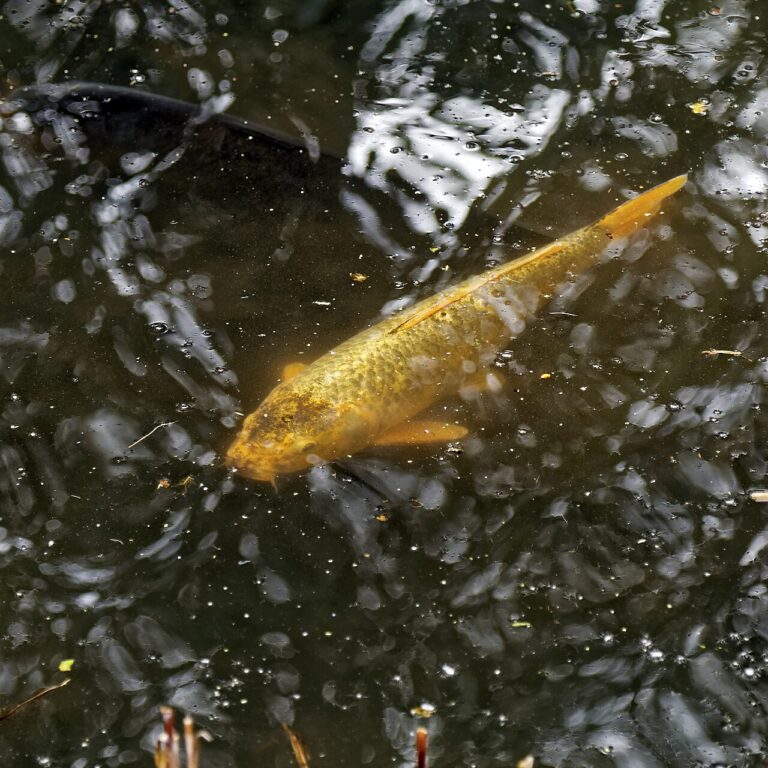
Black butterfly koi, sometimes sold as Karasu butterflies, are solid charcoal to jet black with long dark fins and are prized for the dramatic silhouette they cut against light-colored pond liners. Gold or yellow butterfly koi correspond to the Yamabuki Ogon, a solid metallic yellow. White butterfly koi with red patches follow the Kohaku pattern, and fish with red, white, and black are Sanke or Showa butterflies. Sorogoi and ghost butterfly koi show a gray or silver-black netted scale pattern inherited from the wild carp side of the family.
A few names are marketing terms rather than established varieties. “Dragon butterfly koi” usually refers to any butterfly koi with a wild-type or metallic body and exceptionally long fins, and “Mayan butterfly koi” is a trade name some retailers use for orange and black patterned fish. When buying, judge the individual fish rather than the label: look for even fin length on both sides, clear eyes, no red streaks in the fin webbing, and a color pattern that is crisp rather than blurry, since the pattern will spread as the fish grows and blurry edges only get worse.
How Big Do Butterfly Koi Get?
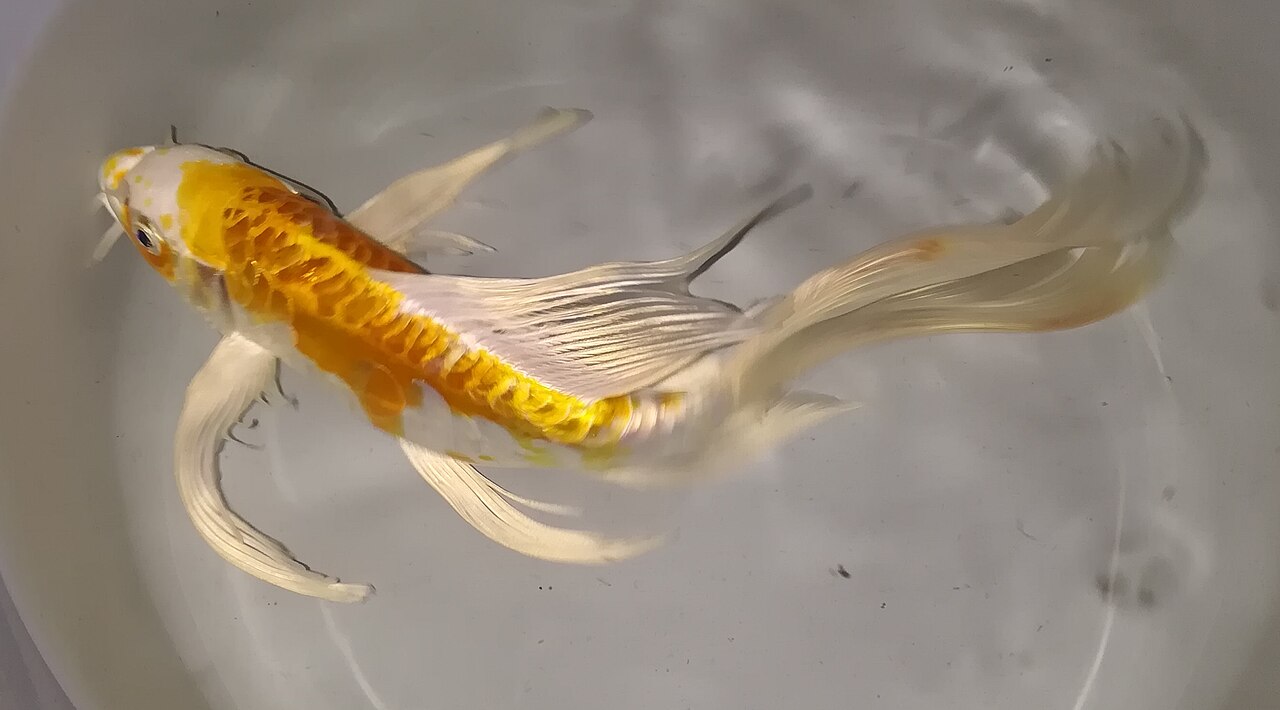
A healthy butterfly koi in a large pond reaches 36 to 40 inches including its tail, with the body itself measuring 24 to 30 inches. That makes them appear longer than standard koi, which typically top out at 24 to 36 inches, although the extra length is mostly fin. The body mass of a mature butterfly koi is somewhat lower than a standard koi of the same overall length because of the slimmer build. Jumbo butterfly koi over 40 inches exist but are uncommon and usually come from breeders who select specifically for size.
Growth is fast in the first three years and then slows. A well-fed butterfly koi grows from a 3-inch fry to about 8 to 10 inches in its first year, reaches 14 to 18 inches by age two, and hits 20 to 24 inches by age three or four. After that, body growth continues at an inch or two per year for another several years while the fins keep lengthening. Fin growth never fully stops, which is why a 15-year-old butterfly koi looks dramatically different from a 3-year-old even when the body length is similar.
Final size depends heavily on pond volume, water quality, and food. Koi kept in small ponds or tanks stay stunted, not because the container physically limits them but because crowding raises waste levels and stress hormones that suppress growth. A butterfly koi that is small at age five because of a cramped pond will often put on rapid growth when moved to a larger one. If you want fish that reach their full potential, plan for the pond size described below rather than the fish size you are buying today.
Butterfly Koi Lifespan
Butterfly koi live 25 to 35 years under good conditions, roughly the same as standard koi, and individual fish reaching 40 years are documented in well-maintained private ponds. Lifespan is driven far more by water quality, temperature stability, and predator protection than by genetics. A fish that spends its life in a deep, filtered pond with seasonal temperature swings and a varied diet will typically outlive one kept in a shallow decorative pond that heats up every summer.
The question of whether koi can live 200 years comes up constantly, and the answer is almost certainly no. The claim traces to a single scarlet koi named Hanako from Gifu Prefecture, Japan, whose owner had her scales examined in the 1960s and reported an age of 226 years based on ring counts. The method is unreliable at extreme ages and the result was never independently verified. Ichthyologists generally treat 50 years as a realistic upper limit for carp, with the vast majority living far less than that. Any seller promising a century-long companion is repeating folklore.
The biggest threats to a butterfly koi’s lifespan are predators, parasites, and water chemistry crashes. Herons, raccoons, and mink kill more pond koi than disease does, and a butterfly koi’s slow, fin-heavy swimming style makes it slightly easier prey than a standard koi. Parasites such as flukes, anchor worm, and Ich thrive when fish are stressed by poor water. Ammonia and nitrite spikes from overstocking or filter failure can kill an entire pond overnight. The care section below addresses each of these directly. For comparison with other long-lived pond fish, see the guide to shubunkin goldfish, which share ponds with koi in cooler climates.
Pond Setup and Water Requirements
Butterfly koi need a pond, not an aquarium. The commonly cited minimum is 1,000 gallons for a small group of young fish, with a rule of thumb of 250 gallons of water per adult fish added as they grow. Depth matters as much as volume: at least 3 feet in most of the United States, and 4 feet or more in northern states where the pond may ice over, because koi survive winter by resting in the deep, stable water at the bottom. A shallow pond swings in temperature daily, which stresses fish and invites disease.
Ideal water temperature is 59 to 77 F. Koi tolerate temperatures near freezing as long as the pond does not freeze solid and a hole is kept open in the ice for gas exchange, and they tolerate brief spikes into the mid 80s. Target pH is 7.0 to 8.5, with ammonia and nitrite at zero and nitrate below 40 parts per million. Filtration should turn over the full pond volume at least once every 1 to 2 hours, with both mechanical filtration to remove solids and biological media to house the bacteria that convert ammonia. A UV clarifier controls the green-water algae blooms that plague sunny ponds.
The long fins create one setup requirement standard koi do not have. Sharp rocks, rough liner seams, exposed pump intakes, and aggressive tankmates all tear butterfly fins, and torn fins are the entry point for bacterial fin rot. Cover pump intakes with smooth prefilter sponges, round off any exposed stone edges, and avoid housing butterfly koi with fin-nipping species. Netting or a covered pond edge protects against herons. Guidance from university extension aquaculture programs, such as the University of Florida IFAS Extension and Kentucky State University’s aquaculture research center, covers pond water chemistry in more depth and applies directly to koi.
What to Feed Butterfly Koi
Butterfly koi eat exactly what standard koi eat: a quality floating koi pellet as the staple, supplemented with fresh vegetables and occasional protein treats. Look for a pellet with 30 to 40 percent protein for summer growth and a lower-protein wheat germ formula for spring and fall when water temperatures drop below about 60 F and digestion slows. Feed only what the fish clear in 5 minutes, once or twice a day in summer, and stop feeding entirely when water temperature falls below 50 F because koi cannot digest food in cold water and it rots in the gut.
Fresh foods add variety and color. Koi eagerly eat orange slices, watermelon, peas, lettuce, spinach, and zucchini, and foods rich in carotenoids such as shrimp, krill, and spirulina intensify red and orange coloration over time. Butterfly koi are also enthusiastic surface feeders that learn to eat from your hand within a few weeks, which is one reason they are so popular in family ponds. The general principles covered in the guide to what fish eat apply, with the caveat that koi are large omnivores with appetites to match.
Overfeeding is the most common feeding mistake and the fastest route to a fouled pond. Uneaten pellets and excess fish waste drive ammonia up, cloud the water, and feed algae blooms. If your water turns green or your fish start gasping at the surface in the morning, cut feeding in half and test the water before doing anything else. Well-fed koi in a mature pond also graze constantly on algae and insect larvae, so a day or two without pellets during a water quality problem does them no harm at all.
Buying Butterfly Koi and What They Cost
Butterfly koi prices track size and quality. Young fish of 3 to 5 inches sell for $15 to $60 at garden centers and online retailers, with platinum and other solid metallic colors at the lower end and well-patterned Kohaku or Sanke types toward the higher end. Fish in the 8 to 12 inch range run $75 to $250. Large, show-quality butterfly koi over 18 inches with symmetrical long fins and clean patterns command $300 to $1,000, and exceptional individuals from named breeders sell for several thousand dollars.
Where you buy matters more than the price tag. Fish from a reputable koi dealer that quarantines new arrivals for 2 to 4 weeks are far less likely to introduce parasites or koi herpesvirus into your pond than bargain fish from a big-box store with a high-turnover tank. Ask whether the fish were quarantined, look for active, alert fish with intact fins and no clamped posture, and avoid any tank with dead or listless fish in it. Buying in spring or early fall, when water temperatures are moderate, reduces shipping stress compared with the heat of midsummer.
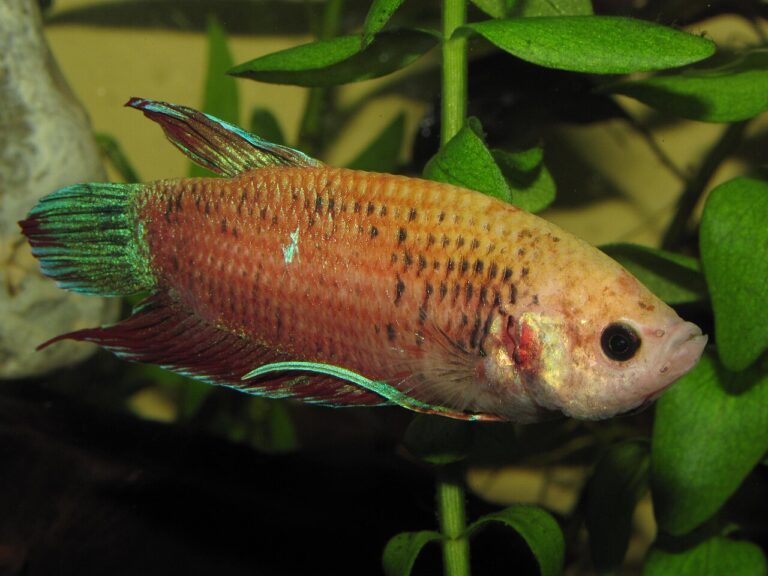
Once home, quarantine every new butterfly koi yourself for at least 3 weeks in a separate tank or stock tank with its own filter before adding it to the main pond. This is the single most effective disease-prevention step in the hobby and the one most often skipped. Butterfly koi mix well with standard koi, fancy goldfish in ponds that stay cool, and other peaceful pond fish, but they will eventually eat very small fish and fry, so plan a mixed pond with adult sizes in mind. Smaller indoor species such as the betta and molly are not pond companions for koi at any size.
Related reading: Koi Fish Meaning.
Frequently Asked Questions
What is a butterfly koi fish?
A butterfly koi is a variety of koi carp with long, flowing fins and elongated barbels, created in the 1980s at Blue Ridge Fish Hatchery in North Carolina by crossing Japanese koi with Indonesian long-finned carp. They are the same species as standard koi and share their colors and care needs.
How big do butterfly koi get?
Butterfly koi reach 36 to 40 inches in total length including the tail, with a body of about 24 to 30 inches. The fins keep growing throughout life, so older fish look progressively longer even after body growth slows. Pond size and water quality determine whether a fish reaches its full potential.
How long do butterfly koi live?
Butterfly koi live 25 to 35 years with good care, and well-kept individuals occasionally reach 40. Claims of koi living 200 years trace to a single unverified scale reading of a Japanese fish named Hanako and are not accepted by ichthyologists, who consider about 50 years a realistic maximum.
Are butterfly koi real koi?
Yes, they are the same species, Cyprinus carpio, and interbreed freely with standard koi. Traditional Japanese koi shows excluded them for decades because of their hybrid ancestry and slimmer body, but most American koi shows now include butterfly classes.
How much do butterfly koi cost?
Young butterfly koi of 3 to 5 inches cost $15 to $60. Fish of 8 to 12 inches run $75 to $250, and large show-quality fish over 18 inches sell for $300 to $1,000 or more. Platinum and other solid metallic colors are usually the least expensive.
Can butterfly koi live in an aquarium?
Only as small juveniles for a short time. Adult butterfly koi need at least 250 gallons each and a pond at least 3 feet deep. Even a 200-gallon aquarium cannot support an adult fish, and crowding leads to stunted growth, poor water quality, and torn fins.
Are butterfly koi hardier than regular koi?
Generally yes. The wild carp genetics in their ancestry give butterfly koi better tolerance of temperature swings, marginal water quality, and disease than heavily line-bred show koi. They still need proper filtration, depth, and quarantine of new fish, but they forgive beginner mistakes more readily.