Woolly Aphids: Identification, Damage, and Treatment
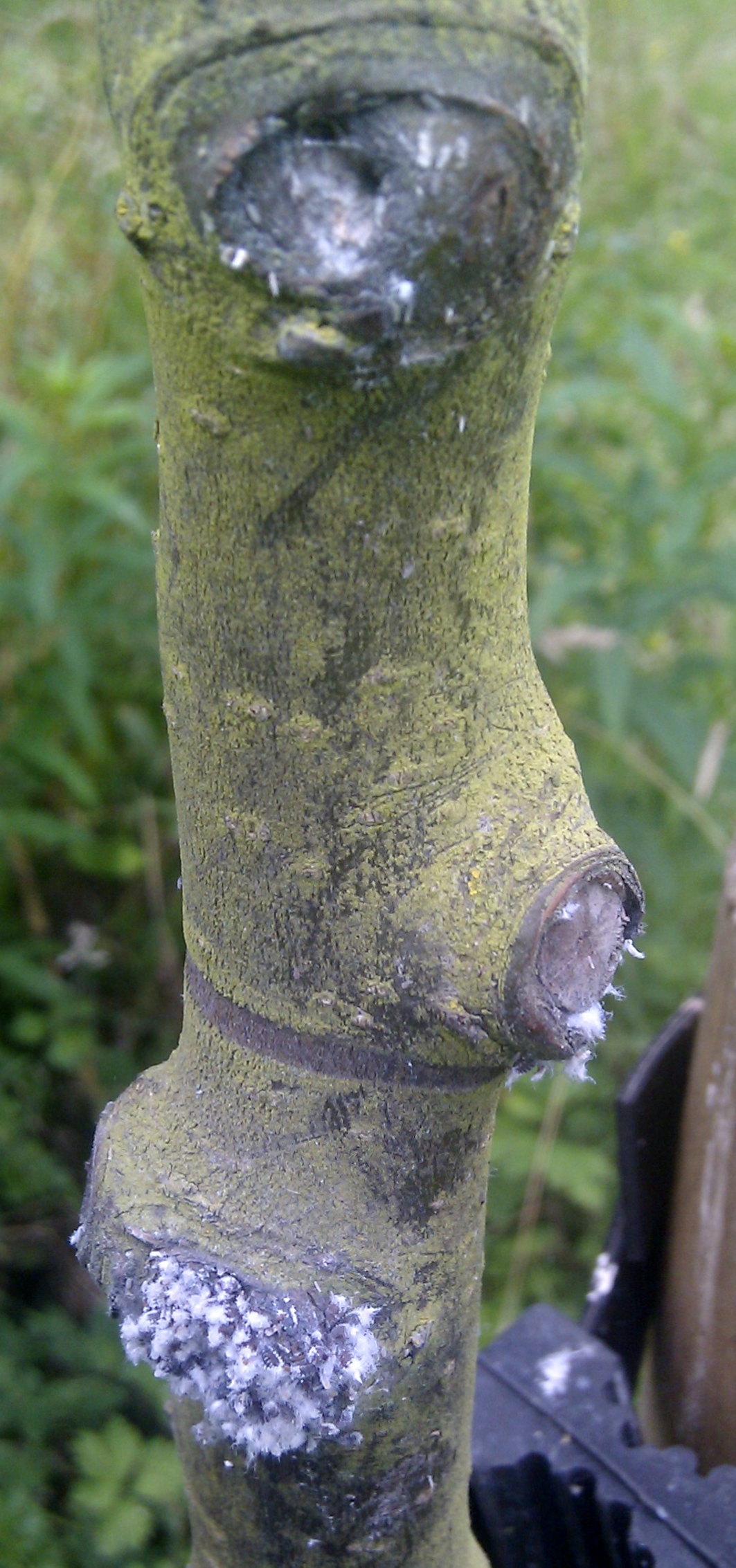
Woolly aphids are small sap-sucking insects in the subfamily Eriosomatinae that cover themselves in a white, waxy fluff. On a branch they look like scattered cotton or mold. In the air, when the winged adults drift past in late summer, they look like snow falling upward, which is why they get called fairy flies, angel bugs, or snow bugs depending on where you live.
Most of the time they are a curiosity rather than a crisis. A light colony on a mature tree does no measurable harm and disappears on its own. A heavy colony on an apple tree, a young olive, or a nursery plant is a different matter, because the feeding deforms growth and the honeydew they excrete turns leaves black. This guide separates the two cases and gives the treatments that actually work.
Woolly aphids are sap-sucking insects covered in white waxy filaments. They do not bite people and are safe to touch. Light infestations need no treatment. For heavy colonies, blast them off with water, then apply insecticidal soap or horticultural oil directly onto the wool, repeating every 7 to 10 days.
| Quick Facts | Woolly Aphids |
|---|---|
| Group | Eriosomatinae, about 300 species |
| Size | 0.04 to 0.08 in (1 to 2 mm) body |
| Appearance | White waxy fluff over a gray, green, or purple body |
| Danger to people | None, they do not bite or sting |
| Main hosts | Apple, elm, alder, beech, hawthorn, olive, silver maple |
| Peak season | Late summer into fall |
| Best treatment | Water jet, then insecticidal soap or horticultural oil |
What Are Woolly Aphids?
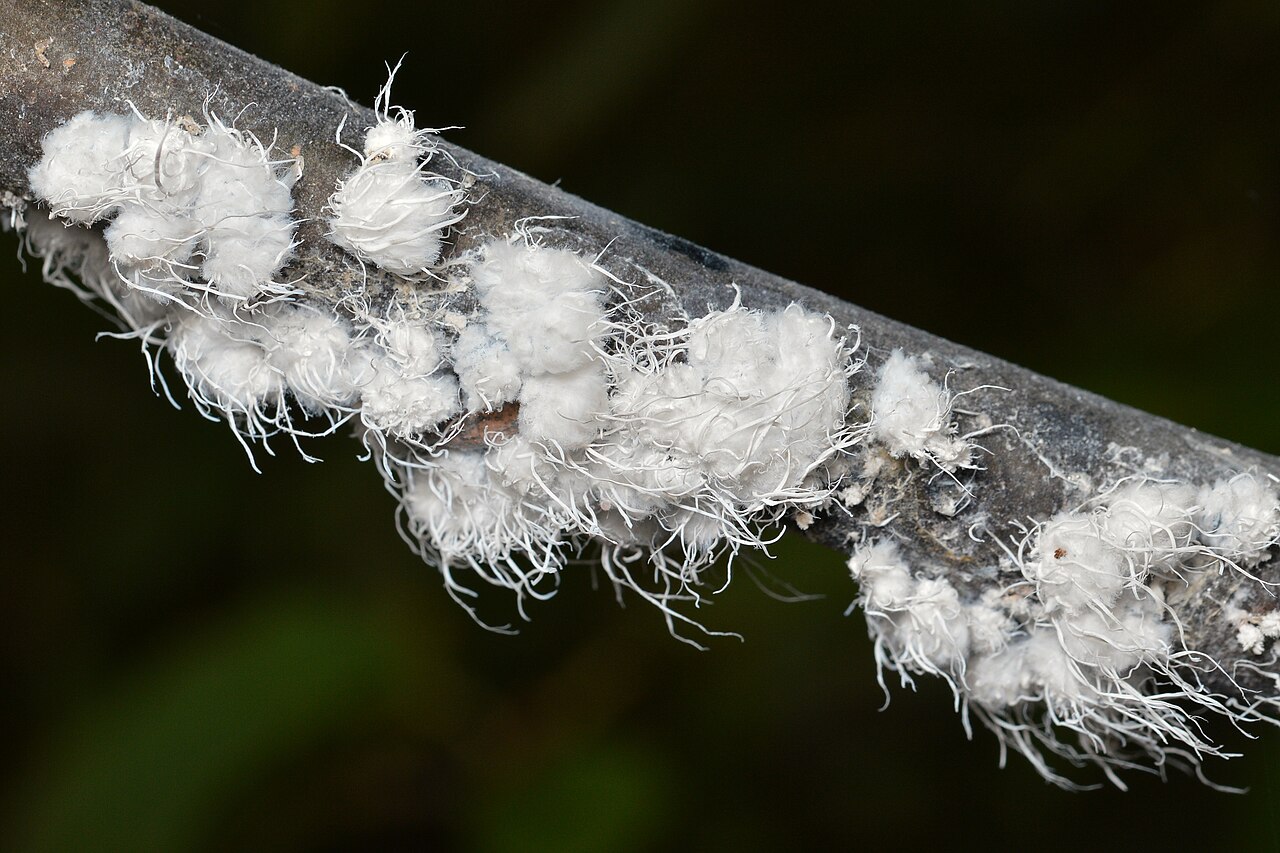
Woolly aphids are true aphids that produce long strands of wax from glands on the abdomen. The wax serves as armor and as waterproofing. It repels contact sprays, it makes the insect unappetizing to some predators, and it keeps the sticky honeydew they excrete from fouling the colony.
Around 300 species sit in the group, and the ones a US gardener meets are a short list. The woolly apple aphid (Eriosoma lanigerum) attacks apple and crabapple. The woolly alder aphid (Prociphilus tessellatus) alternates between silver maple and alder. The woolly elm aphid moves between elm and serviceberry roots.
The spelling trips people up constantly. Searches for wooly aphids, wooly aphid, and woolly aphid all describe the same insect, and neither spelling is a different species. Woolly with two Ls is the standard form, but you will find both throughout garden centers and extension bulletins. The name also collides with the unrelated woolly bear caterpillar, which is a fuzzy moth larva rather than a sap feeder.
How to Identify Woolly Aphids
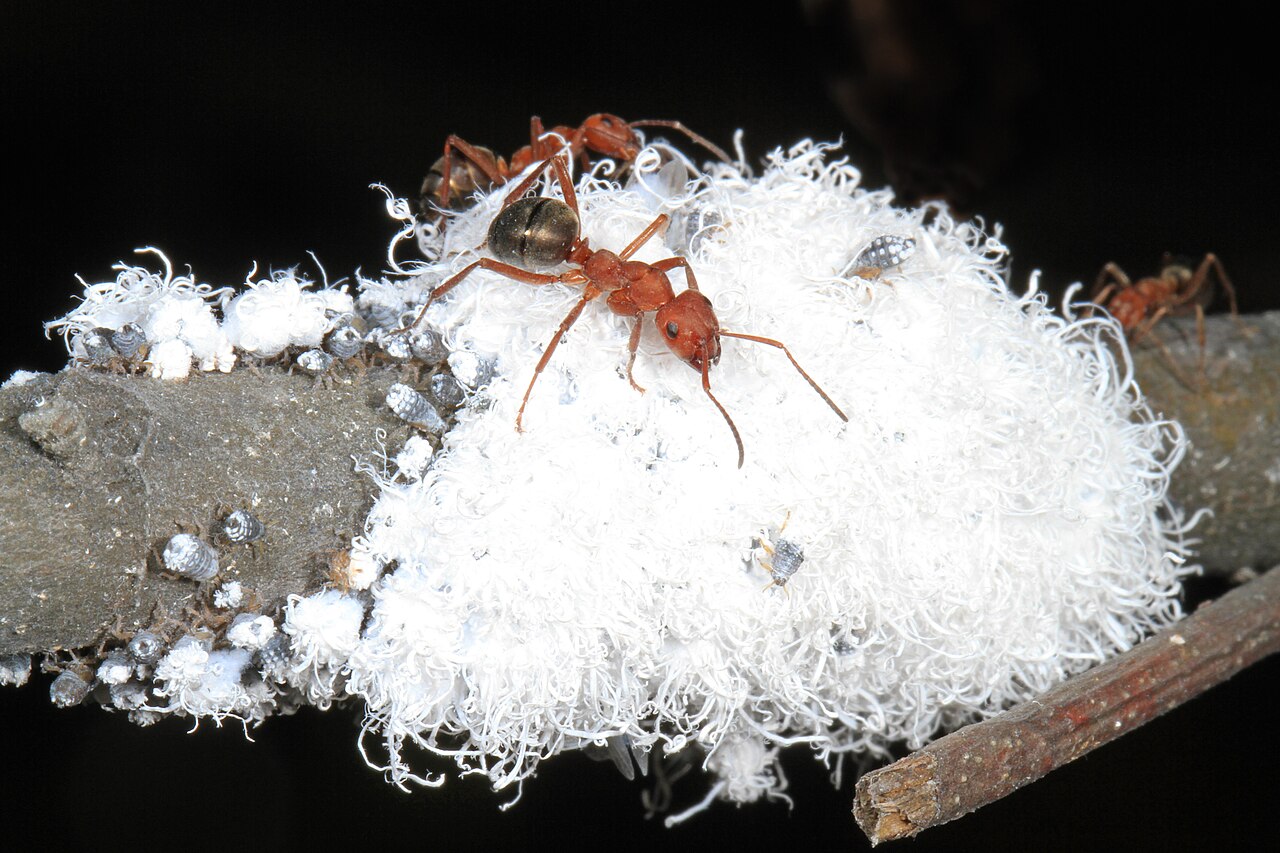
Look for patches of white fluff on bark, on the undersides of leaves, in branch crotches, on pruning wounds, and around the base of the trunk. Pull a patch apart with a stick and you will find soft-bodied insects 1 to 2 mm long, usually gray-green or purplish, clustered tightly together.
The fluff itself is the giveaway. Mold and lichen do not move, and they do not leave a purple-red smear when you crush them, which woolly aphids do. Mealybugs look similar but stay in compact oval shapes and prefer houseplants and greenhouse stock rather than outdoor tree bark.
In late summer the winged adults appear and disperse. These are the drifting white specks people describe as floating cotton or flying fluff, most visible in low evening sun. They fly weakly, land on clothing, and cause a predictable wave of concern every August and September across the eastern and midwestern states.
Are Woolly Aphids Good or Bad?
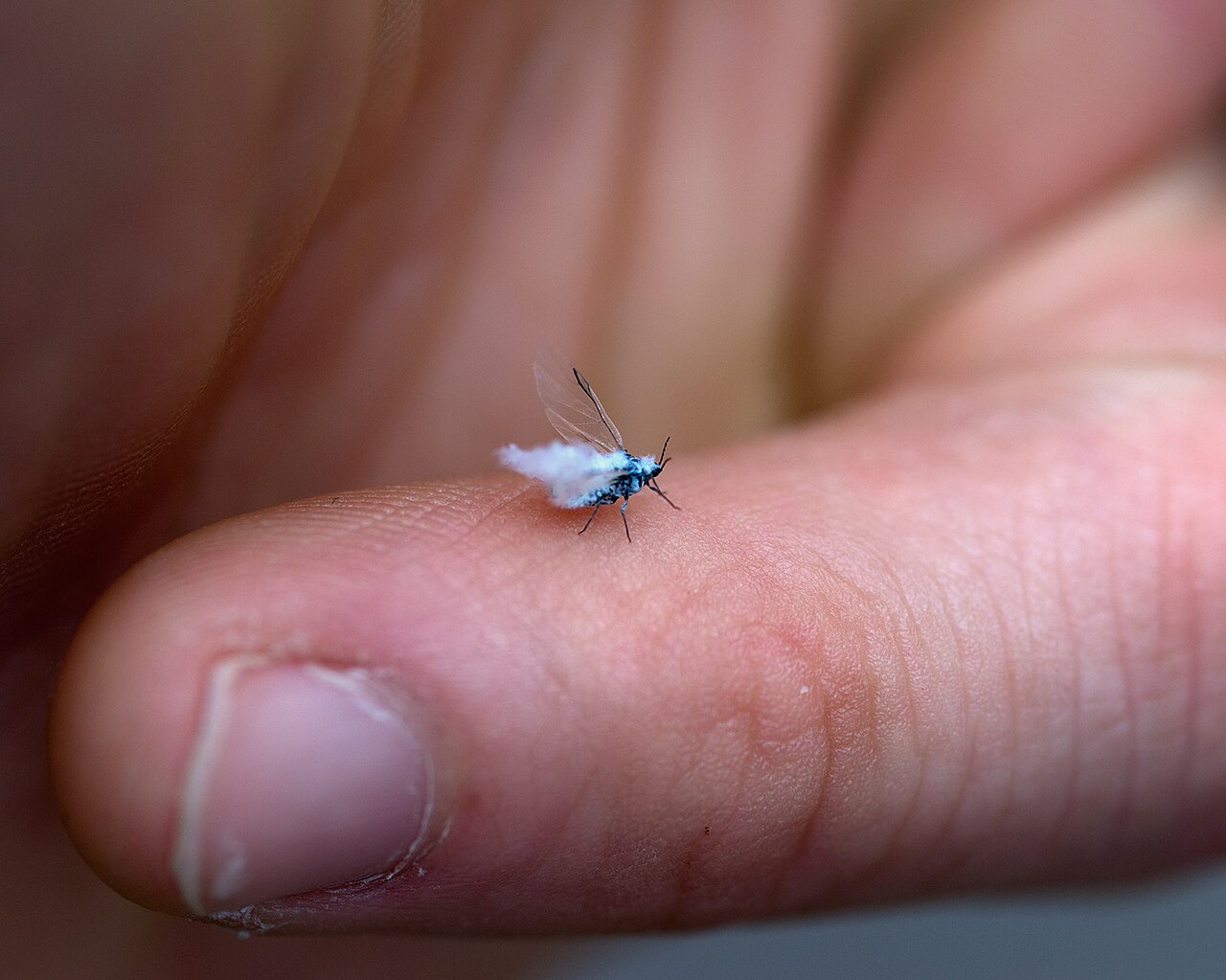
For a healthy established tree, they are mostly neutral. Native species like the woolly alder aphid have fed on silver maples for as long as silver maples have existed, and the trees tolerate it. Colonies build up, predators find them, and the population crashes without any help from you.
They turn bad in three situations. On apple and crabapple, the woolly apple aphid feeds on roots and wounds and creates galls that crack open and admit canker fungi. On young or recently planted trees, the loss of sap genuinely slows establishment. On anything, heavy honeydew feeds sooty mold, which coats leaves and reduces photosynthesis.
They also have a genuine upside. A woolly aphid colony is a food magnet, and the ladybugs, lacewings, hoverflies, and small birds it attracts will stay in the garden and work on your other pests. Read our guide to what ladybugs eat for a sense of how much a single colony gets consumed.
Do Woolly Aphids Bite?
No. Woolly aphids have no interest in animals at all. Their mouthparts are a fine stylet built to pierce plant tissue and draw sap, and the structure cannot penetrate human skin in any useful way. There is no record of woolly aphids biting people, no venom, and no disease transmission.
Are woolly aphids safe to touch? Yes. You can pick one off your sleeve, crush a colony between your fingers, or let a drifting adult land on your face without any risk. The only thing you will get is a small purple-red stain from the body fluid and a little wax on your hands.
The complaints that do arise are nuisance complaints. During dispersal flights they get into hair, onto laundry drying outside, and into open windows, and the honeydew they leave behind makes patios and parked cars sticky. None of that is a health problem, and none of it calls for insecticide around the house.
The Woolly Aphid Life Cycle
Most species run a two-host cycle. Eggs overwinter in bark crevices on a primary woody host. In spring the hatchlings feed there and form galls or leaf curls, then a winged generation flies to a secondary summer host, often a different plant species entirely, where feeding continues on roots or stems.
Through summer the females reproduce without mating and give birth to live young, so a colony can multiply extremely fast from a handful of founders. In late summer a second winged generation flies back to the primary host, produces the sexual generation, and those females lay the overwintering eggs.
Woolly apple aphid breaks the pattern in an important way. In most of the United States it skips the elm stage entirely and survives year round on apple roots, which is exactly why foliar sprays alone rarely solve an apple tree problem. The population you cannot see keeps replacing the one you can.
Which Plants Woolly Aphids Attack
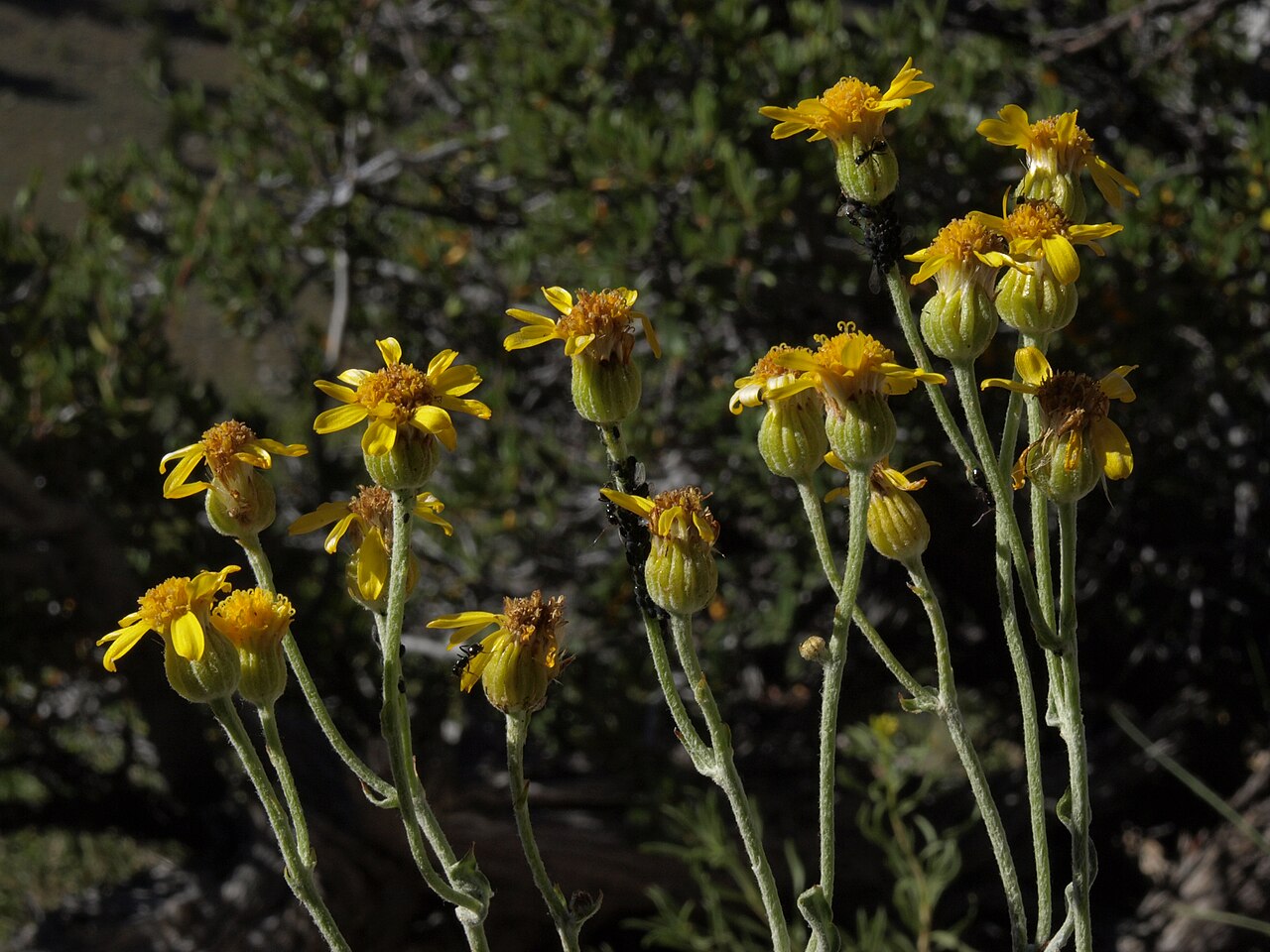
Apple and crabapple are the most economically significant hosts. Others seen regularly in North America include elm, alder, silver maple, beech, hawthorn, serviceberry, pear, ash, and pyracantha. In warmer regions and across the Mediterranean, olive trees and citrus attract their own related woolly species.
Within the plant, the insects prefer sheltered, actively growing tissue: water sprouts, pruning cuts, the undersides of young leaves, branch unions, and root collars. Trees pushing lush growth after heavy nitrogen fertilizer or hard pruning are notably more attractive than trees growing steadily.
Ants complicate every infestation. They farm woolly aphids for honeydew, carry them to fresh growth, and drive off ladybugs and lacewings that would otherwise clear the colony. If you see a busy ant trail on the trunk, that is part of the problem, and our notes on what ants eat explain why the arrangement is so stable.
Signs of Damage Worth Acting On
Light fluff on bark with normal leaves means do nothing. The thresholds that justify treatment are visible: curled or twisted new growth, yellowing leaves, poor shoot extension compared with previous seasons, and swollen knobby galls on twigs or exposed roots on apple.
Sooty mold is the second signal. The black film that grows on honeydew does not infect the tree, but a heavy coating blocks light, and on fruit it makes the crop unsaleable. Sticky leaves and a glossy film on anything parked under the canopy indicate the colony is large enough to matter.
On young trees, act earlier. A newly planted apple or olive with a root colony can lose a full season of growth, and woolly apple aphid galls on young wood are entry points for perennial canker. A mature tree with the same colony will shrug it off.
What Is the Best Treatment for Woolly Aphids?
The best treatment is a sequence, not a product. Start with a strong jet of water directed into every fluffy patch, which strips wax and knocks most of the colony to the ground where it will not return. Repeat after three days to catch survivors.
Follow with insecticidal soap or horticultural oil applied until it runs off, again aimed straight into the wool rather than misted over the canopy. Both work on contact only, so coverage is everything, and the wax means you need volume and pressure. Repeat every 7 to 10 days for three applications.
Add cultural control. Prune out water sprouts and heavily galled twigs, stop high nitrogen feeding, band the trunk against ants, and on apple consider resistant rootstocks for future plantings. The University of California statewide IPM program publishes detailed, region-tested guidance on woolly aphid management that is worth following over generic product labels.
What Kills Aphids Immediately?
Insecticidal soap kills on contact within minutes by breaking down the insect’s outer membrane, and it is the fastest option that does not poison the predators you want to keep. A 1 to 2 percent solution of horticultural oil works the same way by suffocation and also dissolves the wax coating.
Plain water at pressure is immediate in a different sense. It does not kill outright, but a dislodged woolly aphid on the ground is effectively dead, because these insects are poor walkers and rarely climb back up a trunk. For a small tree, this alone often ends the problem.
Broad-spectrum pyrethroids kill fast and are the worst long-term choice. They wipe out the ladybug larvae and lacewings feeding in the colony, and aphid populations rebound far quicker than predator populations do. The usual result is a larger infestation four weeks later. Look for ladybug larvae in the fluff before you reach for anything broad-spectrum.
Does Rain Get Rid of Woolly Aphids?
Heavy rain helps, but it does not clear an infestation. A downpour washes off exposed colonies on open bark and drowns some of the youngest nymphs, and populations usually dip visibly after a storm. That is the same mechanism as a hose, applied unevenly.
The wax is the reason it is not enough. Waterproofing is precisely what the fluff evolved to do, and insects sheltered in branch crotches, under leaves, in galls, or on roots stay completely dry. Those survivors repopulate within one to two weeks under summer temperatures.
Rain also has an indirect cost. Wet conditions plus honeydew accelerate sooty mold growth, so a rainy late summer can leave the foliage looking worse even while the colony itself shrinks. Judge the population by pulling apart a fluff patch, not by how the leaves look.
How to Get Rid of Woolly Aphids on an Olive Tree
Olive trees need a gentler approach because the dense evergreen canopy hides colonies and the interior stays humid. Begin by thinning the canopy so light and air reach the inner branches, which removes the conditions the colony prefers and makes any spray able to land where it matters.
Then hose the affected shoots thoroughly and apply horticultural oil or insecticidal soap into the fluff, working from inside the canopy outward. Avoid oil when temperatures exceed 90 F (32 C) or when the tree is drought stressed, because leaf scorch on olive is easy to cause and slow to grow out.
Potted olives deserve a root check. Tip the plant out and look for white waxy clusters on the root ball, since a root population will keep reinfesting the top indefinitely. Coffee grounds, incidentally, do nothing against aphids and can bind nitrogen as they break down, so they are not a treatment.
Natural Predators and Prevention
A long list of insects eats woolly aphids despite the wax. Ladybugs and their larvae, green lacewing larvae, hoverfly larvae, and several parasitic wasps all work the colonies. One specialist is worth watching for: the harvester butterfly caterpillar, the only carnivorous butterfly larva in North America, which feeds inside woolly aphid colonies on alder.
Birds join in too. The same birds that eat caterpillars, chickadees, titmice, warblers, and nuthatches, pick colonies apart through fall, and a tree with a colony often becomes the busiest feeding spot in the yard for a few weeks. That is a strong argument for tolerance on any tree that is not showing damage.
Prevention is mostly about plant stress. Water consistently, avoid heavy nitrogen and hard summer pruning, remove water sprouts each winter, keep ants off trunks, and plant yarrow, dill, fennel, and alyssum nearby to hold predator populations. The same approach keeps other small sap feeders like the clover mite in check.
Frequently Asked Questions
Are woolly aphids good or bad?
Both, depending on the plant. On a healthy mature tree they are harmless and feed useful predators. On apple, crabapple, young trees, and nursery stock they deform growth, create galls that admit canker, and produce honeydew that grows sooty mold. Treat only when you see curled growth, galls, or heavy sticky residue.
What is the best treatment for woolly aphids?
A strong water jet aimed into the fluff, repeated after three days, followed by insecticidal soap or horticultural oil applied to run-off every 7 to 10 days for three rounds. Add ant barriers on the trunk, remove water sprouts and galled twigs, and stop high nitrogen feeding.
Do woolly aphids bite?
No. Their mouthparts are built to pierce plant tissue and cannot meaningfully break human skin. They carry no venom and transmit no disease to people or pets. The only nuisance is drifting adults landing on clothing in late summer and the sticky honeydew they leave on surfaces below the tree.
Are wooly aphids rare?
No, they are common and widespread, and the spelling wooly is simply a variant of woolly. The insects go unnoticed most years because small colonies look like mold, then draw sudden attention during the late summer dispersal flights when winged adults drift through yards in visible numbers.
Are woolly aphids safe to touch?
Yes, entirely. You can handle them, crush them, or brush drifting adults off your skin with no risk beyond a purple-red stain and a little wax residue. No sting, no bite, no irritation. Wash your hands afterward as normal garden hygiene and nothing further is required.
Does rain get rid of woolly aphids?
Not permanently. Heavy rain strips exposed colonies and kills young nymphs, but the waxy coating sheds water and sheltered insects in galls, branch crotches, and on roots survive untouched. Populations rebuild within one to two weeks. Treat rain as a helpful partial knockdown rather than as control.