Cardinal Sound: What Every Whistle and Chip Means
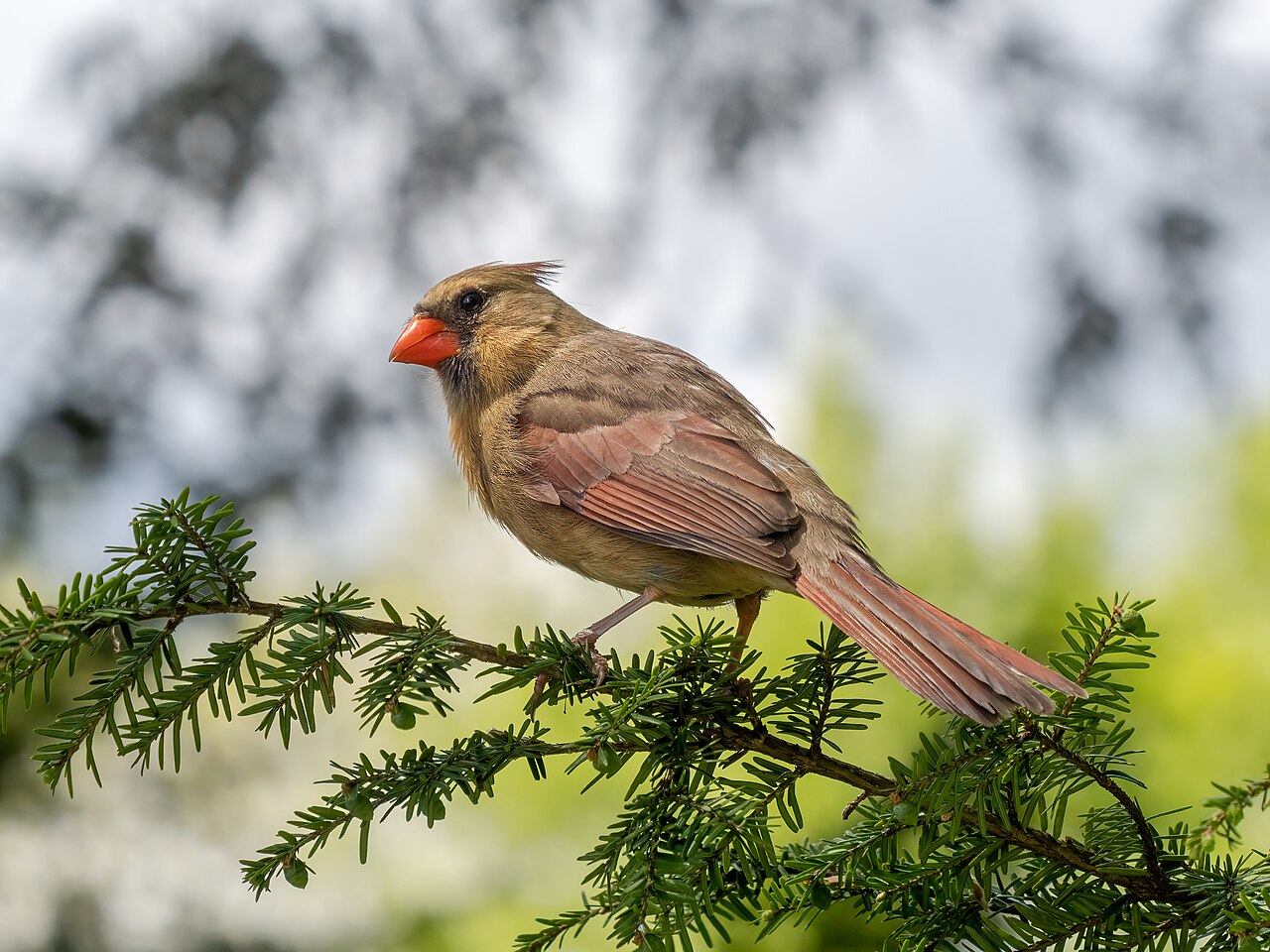
A cardinal sound is usually one of two things: a loud, clear whistle repeated in threes, often written as birdie birdie birdie or cheer cheer cheer, or a short metallic chip that the bird fires off every few seconds while moving through a hedge. The Northern Cardinal (Cardinalis cardinalis) uses the whistle to hold territory and the chip for everything else.
Cardinals are among the loudest birds in an American backyard and among the first to sing in the morning, often before there is enough light to see the feeder. They also do something unusual for North American songbirds: the female sings as much as the male, and sometimes better.
The Northern Cardinal’s song is a series of loud, slurred whistles, commonly heard as birdie birdie birdie, cheer cheer cheer or a descending pew pew pew. Its call is a sharp metallic chip used as an alarm and to keep contact. Both sexes sing, and each male knows eight to twelve song types.
What Is the Sound of a Cardinal?
The song is a run of pure whistles, each one sliding in pitch, delivered in phrases of three to eight notes with a short pause between phrases. Cardinals sing from an exposed perch near the top of a shrub or small tree, which is why the sound seems to come from everywhere at once in a dense yard.
The quality is what separates it from other backyard whistlers: it is clean and slightly slurred, without the burry edge of a Tufted Titmouse or the rhythmic hammering of a Carolina Wren. Volume is the other clue, since cardinals carry across several yards.
| Sound | Written as | What it means | Best time to hear it |
|---|---|---|---|
| Whistled song | birdie birdie birdie | Territory claim, mate contact | March through July, first light |
| Cheer song | cheer cheer cheer | Same function, different song type | Spring mornings |
| Descending whistle | pew pew pew | Common song variant | Late winter into spring |
| Chip note | chip or tik | Alarm, contact, mild irritation | All year, all day |
| Rapid chipping | chip-chip-chip-chip | Predator near the nest | May through August |
| Female song from nest | longer, more complex phrases | Signals the male to bring food | Nesting season |
What Bird Says Pew Pew?
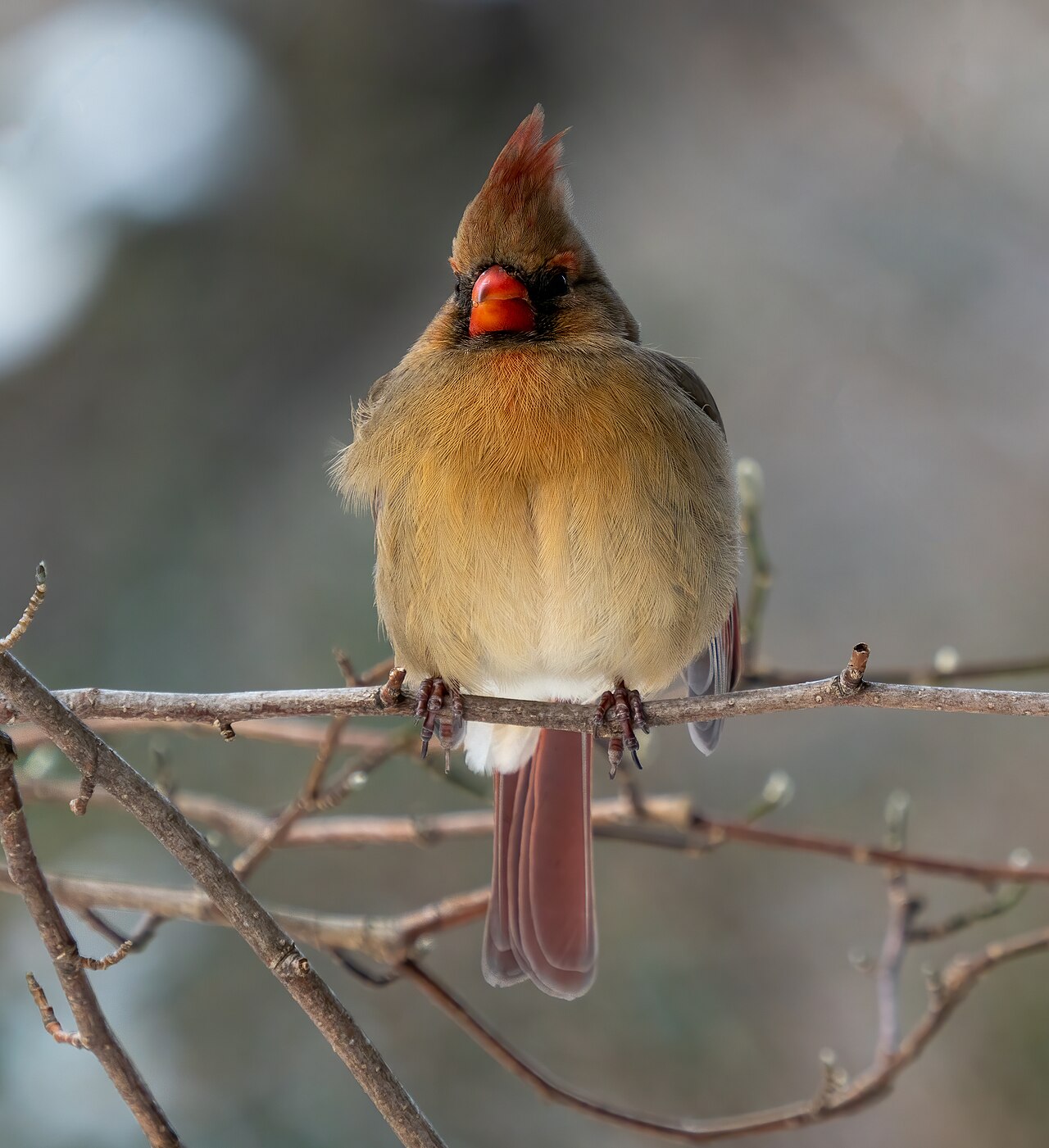
That is the Northern Cardinal. One of its standard song types is a clean whistle that drops in pitch and repeats, and to most ears it sounds exactly like pew pew pew or a cartoon laser. People report it constantly in spring and rarely guess the cardinal, because the red bird is filed under chirping rather than whistling.
The same bird may switch to birdie birdie birdie a minute later. Cardinals rotate through their song types rather than repeating one all morning, which is why a single bird can seem like three different species.
The Chip Note Is the Sound You Hear Most
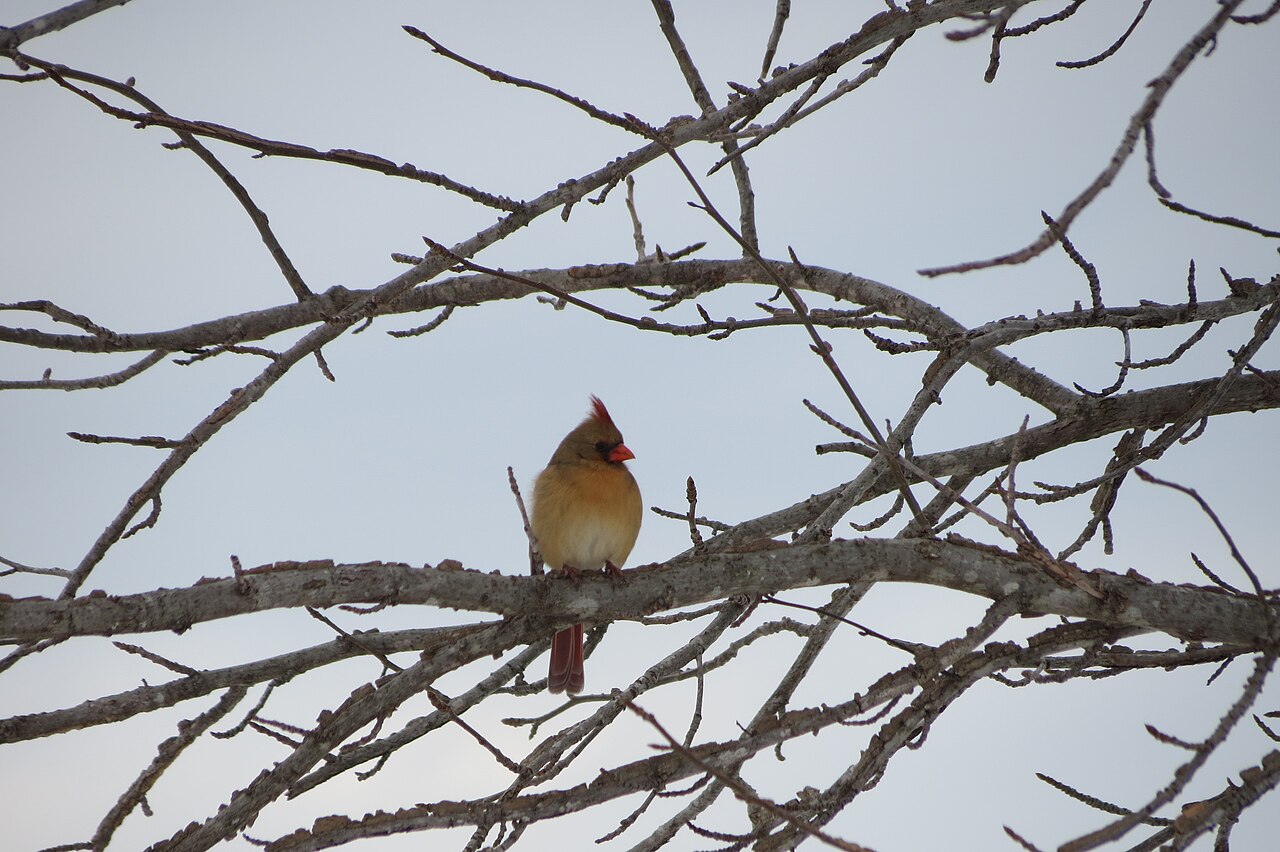
The chip is a short, hard, metallic note with no pitch slide, and it is by far the most common cardinal sound across the year. Birds use it to stay in touch while foraging, to flag mild alarm, and to scold a cat or a person who is standing too close to a hedge.
Speed carries the meaning. A chip every few seconds is routine contact; a fast run of chips means something is near a nest. Chickadees do the same thing with their alarm call, adding notes as the threat gets bigger.
Why Is a Cardinal Chirping at Me?
A cardinal chirping at you is almost always giving an alarm chip because you are near its nest, its fledglings or its favorite feeder. It is a warning aimed at a potential threat, and it stops within a minute or two once you move away.
The other common case is a bird that has been attacking a window or a car mirror. It sees a rival cardinal in the reflection, chips and sings at it, and wears itself out for weeks. Covering the outside of the glass ends the fight immediately.
Female Cardinals Sing Too
Female Northern Cardinals sing regularly, which is unusual among North American songbirds, and their songs tend to be longer and more complex than the male’s. Females often sing from the nest, and researchers think this tells the male when to bring food.
Pairs also counter sing, with one bird matching the other’s song type and answering it back. If two cardinals are trading identical phrases across a yard, you are listening to a mated pair rather than two rivals.
Cardinal Songs Change From Region to Region
Cardinal song has local dialects. Birds learn from the adults around them, so populations in Ohio and Texas share the same structure but differ in the fine detail of each whistle, and birders who move across the country often notice the shift.
Individual variety matters just as much. A single male holds eight to twelve distinct song types and uses them in bouts, so identifying a cardinal by one phrase alone is unreliable. Learn the tone, not the tune.
Do Cardinals Chirp at Night?
Occasionally. Cardinals are daytime birds that roost at dusk, but one near a streetlight or a floodlit parking lot may sing well after dark, and any bird disturbed at its roost will chip in the dark. Sustained singing at 2 a.m. is almost never a cardinal.
The bird that sings all night in American suburbs is the Northern Mockingbird, usually an unmated male in May and June. Other after dark noise comes from owls, bullfrogs and insects rather than songbirds.
What Cardinals Sound Like Through the Year
Singing ramps up in late January as days lengthen, peaks from March through June, and fades in July and August when adults molt and go quiet. Fall and winter are chip note seasons, with occasional bursts of song on mild days.
Cardinals do not migrate, so the same birds hold the same half acre all year. That makes them one of the easiest species to follow by ear across seasons, and a good baseline against the full catalog of cardinal songs and calls.
Sounds Mistaken for a Cardinal
Tufted Titmice whistle peter peter peter in the same pitch range but with a burry, less pure tone. Carolina Wrens are louder and more rhythmic. Northern Mockingbirds copy cardinal phrases outright, though they repeat each imitation three or four times before switching, which no cardinal does.
Among the sharp calls, Blue Jay notes are lower and harsher than the cardinal chip. If the note is metallic, short and comes from low in a shrub, the cardinal is the safe bet.
How to Get Cardinals Close Enough to Hear
Black oil sunflower and safflower seed in a hopper or platform feeder bring cardinals in fast, since their heavy bills are built for cracking seeds rather than picking. They prefer feeding at dawn and dusk and want a shrub within about ten feet (3 m) as an escape route.
Dense cover matters more than the feeder itself. Verified recordings of every call type, useful for training your ear before you head outside, are on the species page at All About Birds.
Related reading: Catbird Sound.
Related reading: Woodpecker Sound.
Frequently Asked Questions
What is the sound of cardinal?
A loud, clear whistle repeated in threes, heard as birdie birdie birdie, cheer cheer cheer or pew pew pew, plus a short metallic chip used as a contact and alarm note. The whistle means territory or courtship, the chip means everything else.
What time do cardinals go to bed?
Cardinals settle into dense shrubs or evergreens roughly 20 to 30 minutes after sunset, often after a last round of chipping. They are among the last birds active at dusk and the first singing at dawn, which gives them one of the longest daily schedules in the yard.
What is a predator of a cardinal?
Domestic cats take the most adult cardinals in suburbs, followed by Cooper’s Hawks and Sharp-shinned Hawks. Nests are raided by snakes, squirrels, hawks, jays and raccoons, which is why so few of the four eggs in a typical clutch reach adulthood.
What is the annoying bird that chirps at night?
Usually a Northern Mockingbird. Unmated males sing through the night in late spring, often from a rooftop or antenna, and they cycle through dozens of imitations. Robins under bright lights and killdeer passing overhead account for most of the rest.
What is the average lifespan of a cardinal?
About three years in the wild, held down by heavy losses in the first year. Birds that survive to adulthood often reach five to eight years, and the oldest banded wild cardinal on record lived more than fifteen.
Do cardinals get attached to humans?
They learn routines rather than people. A cardinal will time its visits to when you refill the feeder and may wait nearby while you do it, but that is a food association, not attachment. They stay wary and rarely tolerate a hand within a few feet.
A yard usually holds more voices than you expect. Once the cardinal whistle is easy to pick out, try sorting the night shift next, starting with the killdeer that calls overhead after midnight.