Stork Symbolism: Spiritual Meaning, Omens and What It Means to See One
Seeing a stork is almost always read as a sign that something new is arriving: a birth, a move, a project, or a season that finally turns. Across Europe, Asia and the Americas, stork symbolism carries the same core idea of renewal and safe return, which is why the bird ended up delivering babies in folklore instead of delivering warnings.
That consistency comes from behavior people could verify. White storks (Ciconia ciconia) migrate thousands of miles and return to the same rooftop nest, often with the same mate, right as spring begins. A bird that leaves, survives the winter and comes back to the same chimney reads as loyalty in any language.
Seeing a stork traditionally means new beginnings, fertility, family loyalty and protected travel. Because storks migrate and return to the same nest each spring, most cultures treat a sighting as a good omen: a birth or pregnancy announcement, a household blessing, or confirmation that something you sent away will come back to you.
| Where you see the stork | Traditional meaning |
|---|---|
| Flying overhead | News on the way, often a birth or a pregnancy |
| Standing in your yard or garden | Blessing on the household, a fertile season |
| At your window or on your roof | Protection for the home, the classic nesting omen |
| Calling or clattering at night | A message you have been avoiding; time to decide |
| Seen repeatedly over days | Confirmation, not coincidence; follow the plan you started |
| Found dead | An ending before a beginning; grief that clears space |
| In a dream | Something is gestating in you, not yet visible to others |
What Does It Mean to See a Stork?
To see a stork means a beginning is close enough to prepare for. In European village tradition the first stork of the year was announced out loud, because its arrival set the farming calendar: the frost was done and planting could start. The practical message and the spiritual one were identical.
The second layer is fidelity. Storks return to the same nest platform year after year and repair it rather than build fresh, so a sighting meant tend what you already have. The third layer is patience: storks hunt by standing still in shallow water, then striking once. People who work with bird symbolism read the stork as the opposite of the restless, chattering omen birds.
What Is the Biblical Meaning of a Stork?

In the Bible the stork is a model of obedience to natural order and of devoted parenting. Jeremiah 8:7 uses the bird as a rebuke: “Even the stork in the sky knows her appointed seasons,” while the people do not know the ordinances of their God. The stork keeps the schedule it was given, and that is the point of the verse.
The Hebrew name does the rest of the work. The stork is called chasidah, from the root for loyal kindness, so the bird was named for the virtue it symbolizes. Medieval bestiaries turned it into an emblem of filial piety by claiming young storks feed their aging parents, and German and Polish folk tradition added that the red bill and legs were stained from pulling thorns from Christ’s crown.
Native American, Celtic and East Asian Stork Traditions
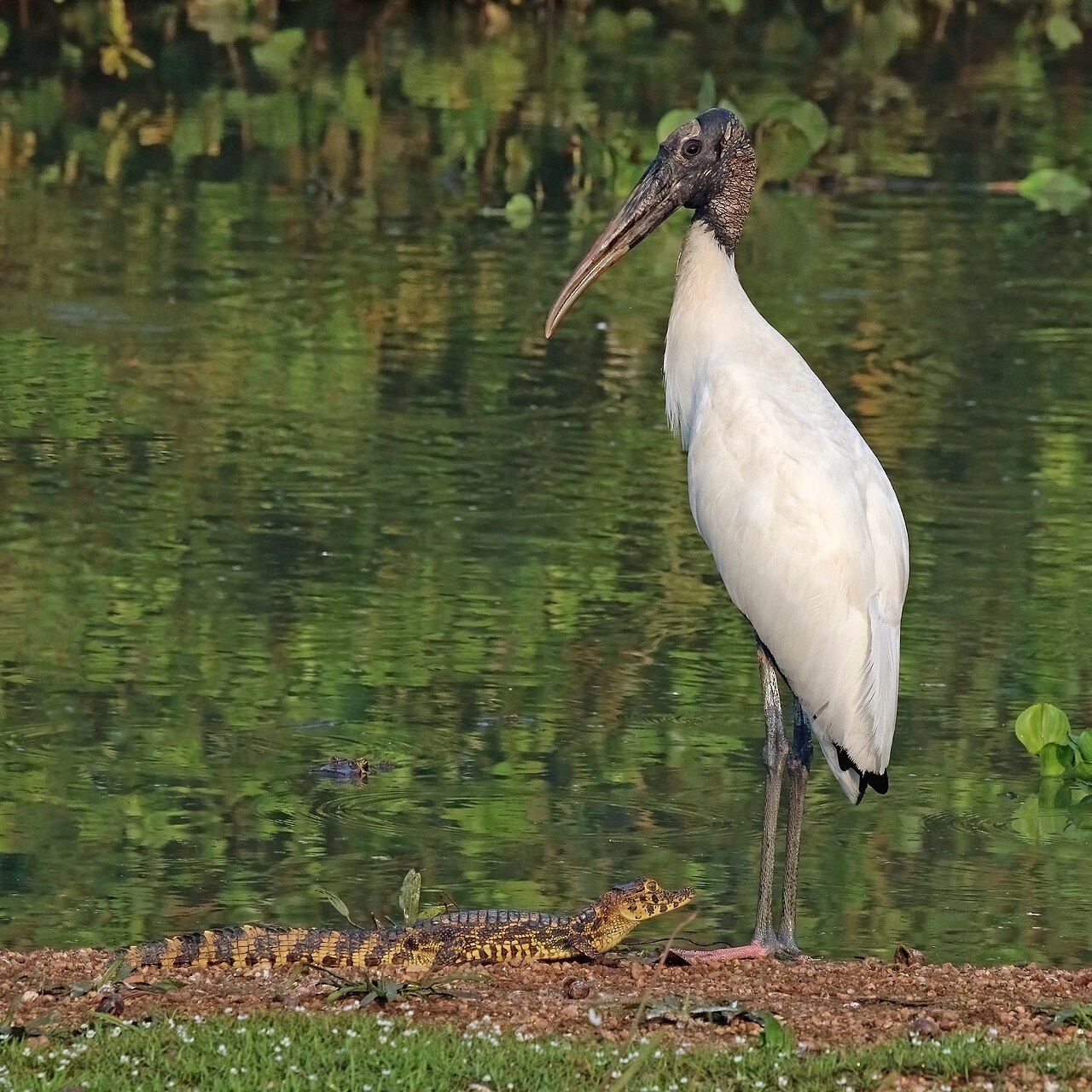
These traditions agree on the stork as a messenger and disagree on the message. In Native American storytelling the relevant long legged waders are herons and cranes rather than storks, since the only North American stork, the wood stork (Mycteria americana), lives in the Southeast. Where wading birds appear in Lakota and Ojibwe accounts, they tend to stand for self reliance, careful watching and knowing when to speak.
In Celtic belief the stork and its relatives belonged to the threshold between water and land, which made them guides at birth and at death; a wader seen at a ford meant a journey underway would finish safely. In Chinese and Japanese art stork and crane blur together and both mean long life, appearing at weddings and birthdays as a wish for a faithful marriage, closer to the goldfinch’s association with joy than to any warning.
Stork as a Spirit Animal, Totem and Omen
As a spirit animal the stork is an arrival guide, the energy people turn to when a new phase is coming and they want it to land safely. Practitioners say stork people are nest builders who commit to one place, partner or craft for years rather than chasing novelty.
As a totem the stork is a family and lineage symbol. Where the bat totem is about transition through darkness and the bee totem about collective work, the stork totem is continuity: children, inheritance, the house that stays in the family. As an omen it is favorable in almost every record, with one exception: a stork abandoning an established nest was read in Germany and the Netherlands as bad luck for the house it left.
Seeing a Stork in Your Garden, at Your Window or at Night
A stork that lands on or near your home is the most favorable version of the sighting. The old European reading is direct: a nesting stork protects the roof from fire and lightning and promises children to the household, which is why villages mounted cartwheels on chimneys to invite one. A bird in your garden is the same omen at lower volume.
A stork at the window is read as a message aimed at you rather than at the house, usually news about family, so take the call and have the conversation you have been postponing. Hearing one at night is the single unsettling variant: storks are day birds that rattle their bills at the nest, and night clattering was read as urgency, a deferred decision that now has a deadline. Compare the blackbird’s night singing, which carries the same push to speak rather than any threat.
Dead Storks, Repeat Sightings and the Baby Myth
A dead stork means an ending that makes room, not a punishment. The traditional reading is a chapter closing in the family line: a phase of caregiving ending, a plan that should be grieved and then released. Repeated sightings read as confirmation instead, the same logic as repeat blue jay encounters, where frequency turns a sign into an instruction.
The baby myth has a traceable origin. Storks arrive in Northern Europe in spring, roughly nine months after midsummer weddings, and they nest on the chimneys of the houses whose children later appeared. The wood stork profile at All About Birds covers the one American species, federally listed as endangered in 1984 and reclassified as threatened in 2014, so a wood stork sighting in Florida or Georgia is uncommon rather than rare.
Frequently Asked Questions
What does it mean to see a stork?
It means a beginning is near and will land safely. Traditional readings include a birth or pregnancy in the family, a blessing on the household, a safe return from travel, and confirmation that a long project should continue. Almost no tradition treats a living stork as a bad omen.
What is another name for a stork?
Storks are called wood storks, wood ibises, jabirus and marabous depending on the species, and the white stork is sometimes the house stork or chimney stork in European folk usage. The Bible calls it chasidah, the loyal one, which is where the devotion symbolism comes from.
What is the spiritual meaning of a stork mark on a baby?
A stork mark, or stork bite, is the common name for a nevus simplex, a pink patch on a newborn’s nape where folklore said the stork gripped the baby. Spiritual readings call it a blessing mark. Medically it is a harmless cluster of blood vessels that usually fades.
What is the biblical meaning of a stork?
The stork in scripture stands for knowing your appointed season and for family devotion. Jeremiah 8:7 contrasts its reliable migration with human forgetfulness, and the Hebrew name chasidah derives from the word for loyal kindness. Leviticus lists it among birds not to be eaten, which later tradition read as the bird being set apart.
How rare is it to see a stork?
In most of the United States you will not see a wild stork at all, since the wood stork is the only native species and it is limited to Florida, Georgia, South Carolina and Alabama, where it is locally common in cypress swamps. In Europe white storks are easy to see in Spain, Poland and Portugal.