Golden Eagle Symbolism: What Seeing One Means in 5 Traditions
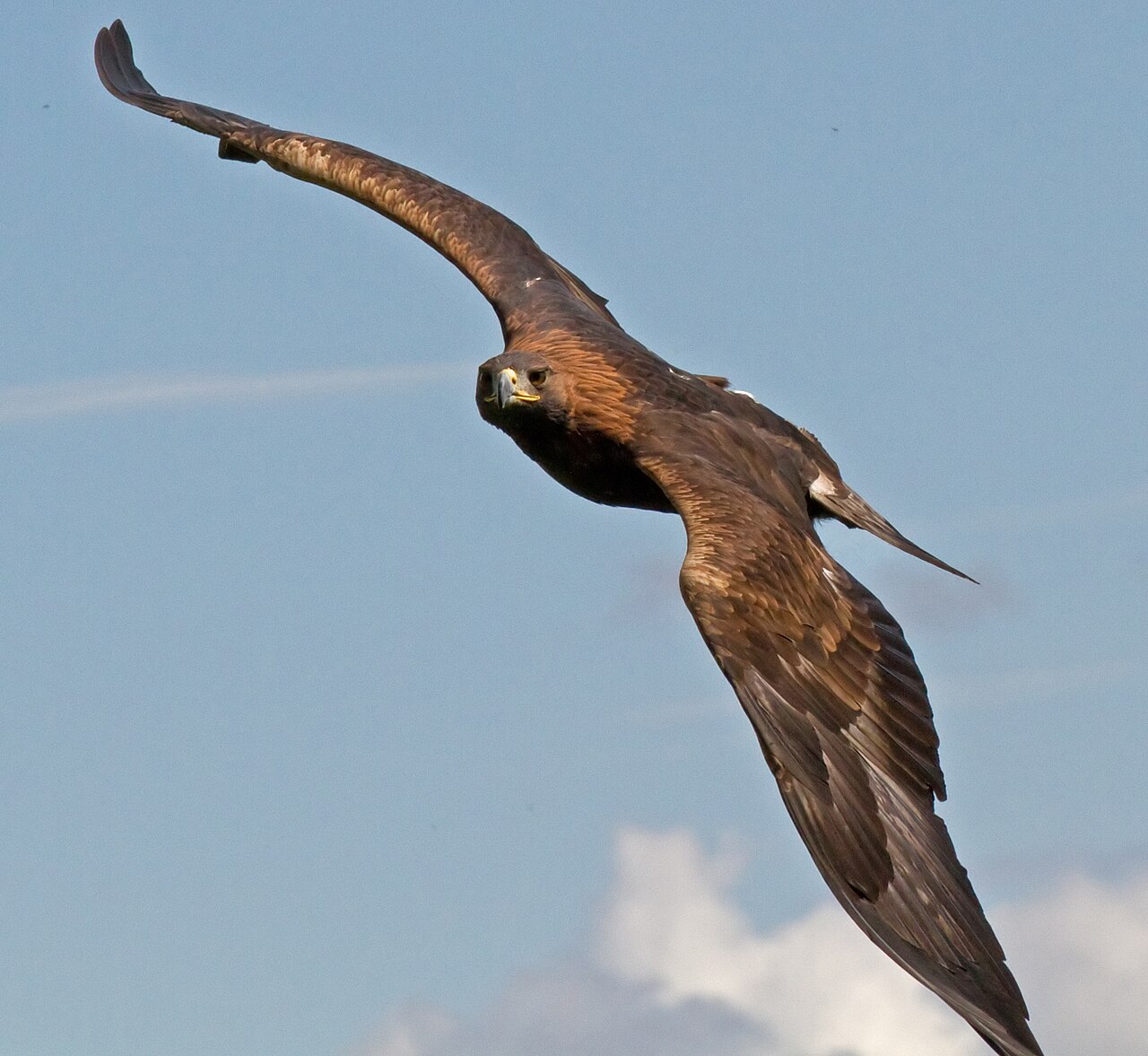
Seeing a golden eagle is widely read as a call to rise above a situation, take the long view and act with courage. Across Native American, biblical, Celtic and East Asian traditions, golden eagle symbolism circles the same cluster of ideas: sovereignty, vision, spiritual authority and a message carried between the earthly and the divine. The bird’s sheer physical presence feeds that reading, since a golden eagle can cross a valley at 150 mph in a stoop and spot a rabbit from over a mile away.
What the sighting means to you depends heavily on where you saw it, what the bird was doing and which tradition you stand in. A golden eagle circling over a ridge carries a different weight in Lakota teaching than an eagle appearing in a dream carries in a biblical reading. This guide separates those traditions rather than blending them into one vague message, and it treats each belief as a belief rather than a fact.
Seeing a golden eagle is traditionally read as a sign of courage, clear vision and spiritual elevation. Many Native American nations treat the eagle as a messenger between people and the Creator, Christian readers connect it to renewed strength in Isaiah 40:31, and Celtic lore ties it to ancient wisdom. Most traditions read the sighting as favorable.
| Situation | Common traditional reading | Tone |
|---|---|---|
| Eagle circling overhead | You are being asked to take the wider view of a decision | Favorable |
| Eagle perched and watching you | A warning to act with integrity; you are accountable | Neutral |
| Eagle diving or hunting in view | A moment to commit fully instead of hesitating | Favorable |
| Feather found on the ground | Honor, courage earned, a blessing in several nations | Favorable |
| Eagle seen repeatedly over days | A message not yet acted on; persistence is required | Urgent |
| Eagle found dead | The end of a role or identity, not a death omen | Somber |
| Eagle in a dream | Ambition, perspective, or an unmet calling | Varies |
What Is the Spiritual Meaning of the Eagle?
The spiritual meaning of the eagle across most traditions is elevated perspective. The bird lives in a part of the sky people cannot reach, hunts by sight rather than scent or sound, and returns to the same cliff territory for decades. Those three traits produced a remarkably consistent symbol set across cultures that never traded with one another: vision, dominion and endurance.
Golden eagle symbolism adds a specific flavor to that general eagle meaning. Where the bald eagle reads as national and ceremonial in the United States, the golden eagle reads as wild, remote and unhumbled. It is the eagle of open country, mountain ridges and high desert rather than river edges and fish runs. People who work the land encounter it, and the symbolism reflects that: it is about earned strength rather than inherited status.
If you are weighing one bird against another, it helps to know that bird symbolism as a whole tends to treat high fliers as messengers and ground feeders as providers. The golden eagle sits at the extreme end of the messenger category, which is why so many traditions placed it closest to their highest powers.
Golden Eagle Symbolism in Native American Traditions
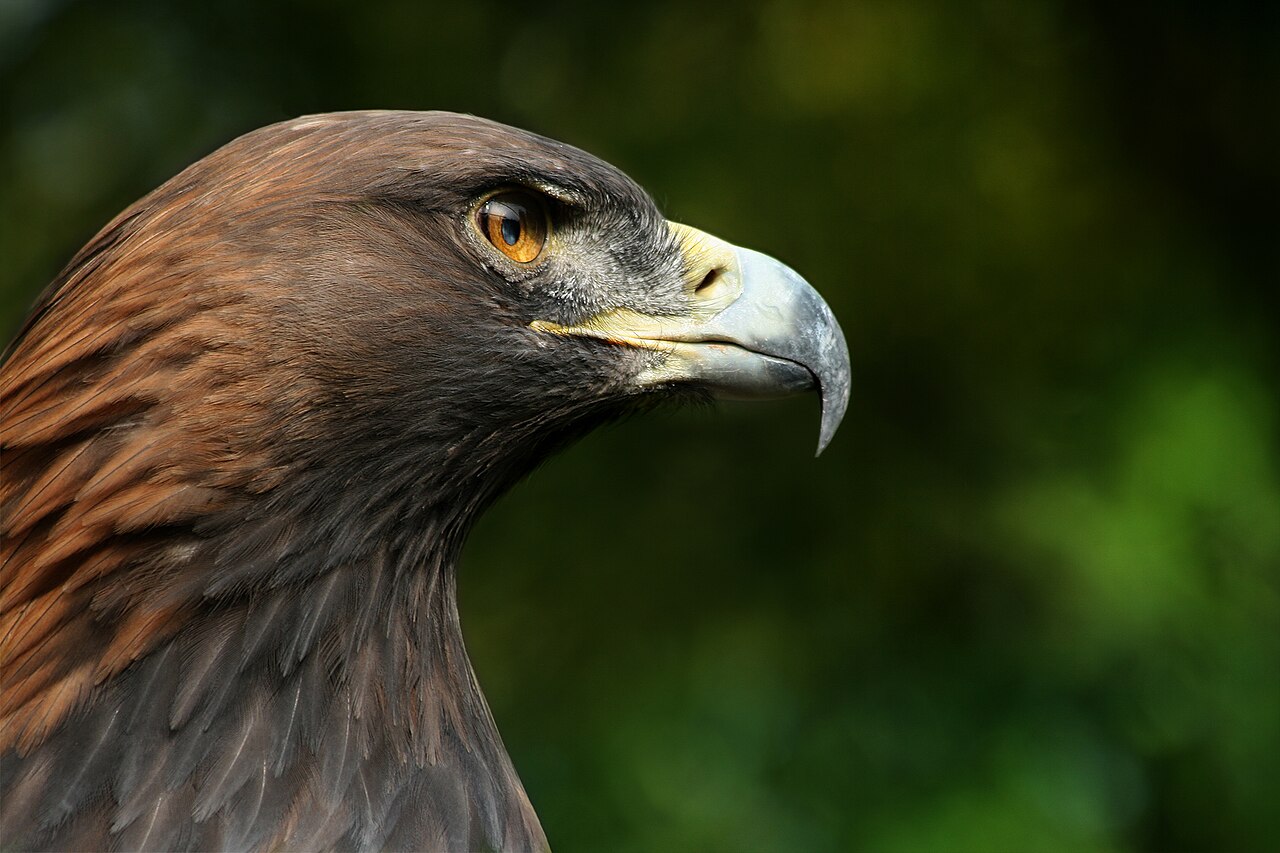
In many Native American nations the eagle is understood as the being that flies closest to the Creator, and therefore as the carrier of prayers. In Lakota tradition the eagle, wanbli, is associated with the direction of the west and with leadership that serves the people rather than itself. Pueblo, Hopi and Zuni traditions include eagle imagery in ceremonial contexts tied to rain, sky and renewal.
The golden eagle specifically holds high standing among Plains and Southwestern nations, where its tail feathers were awarded for acts of courage rather than simply collected. Receiving a feather signified that the community had witnessed something and chosen to mark it. That is a social meaning, not a personal one, which is the main thing outsiders get wrong about eagle symbolism.
It is worth saying plainly that these are living religious practices belonging to specific nations, not a generic spiritual menu. Under the Bald and Golden Eagle Protection Act, possession of golden eagle feathers in the United States is restricted, with a permit system administered through the National Eagle Repository for enrolled members of federally recognized tribes. Picking up a feather you find is not legal for most people.
What Does God Say About Seeing an Eagle? Biblical and Christian Meaning

Scripture does not describe eagle sightings as omens, but it uses the eagle repeatedly as an image of renewal and divine care. The best known passage is Isaiah 40:31, where those who wait on the Lord “shall mount up with wings as eagles” and run without growing weary. Exodus 19:4 has God carrying Israel out of Egypt “on eagles’ wings,” an image of rescue rather than prediction.
Deuteronomy 32:11 extends the picture to parenting, describing an eagle stirring up its nest and hovering over its young. Christian readers who see an eagle often take it as an encouragement toward endurance in a difficult stretch rather than as a forecast of events. That reading is interpretive, and churches differ on whether animal sightings carry any message at all.
Golden Eagle Symbolism in Celtic Tradition
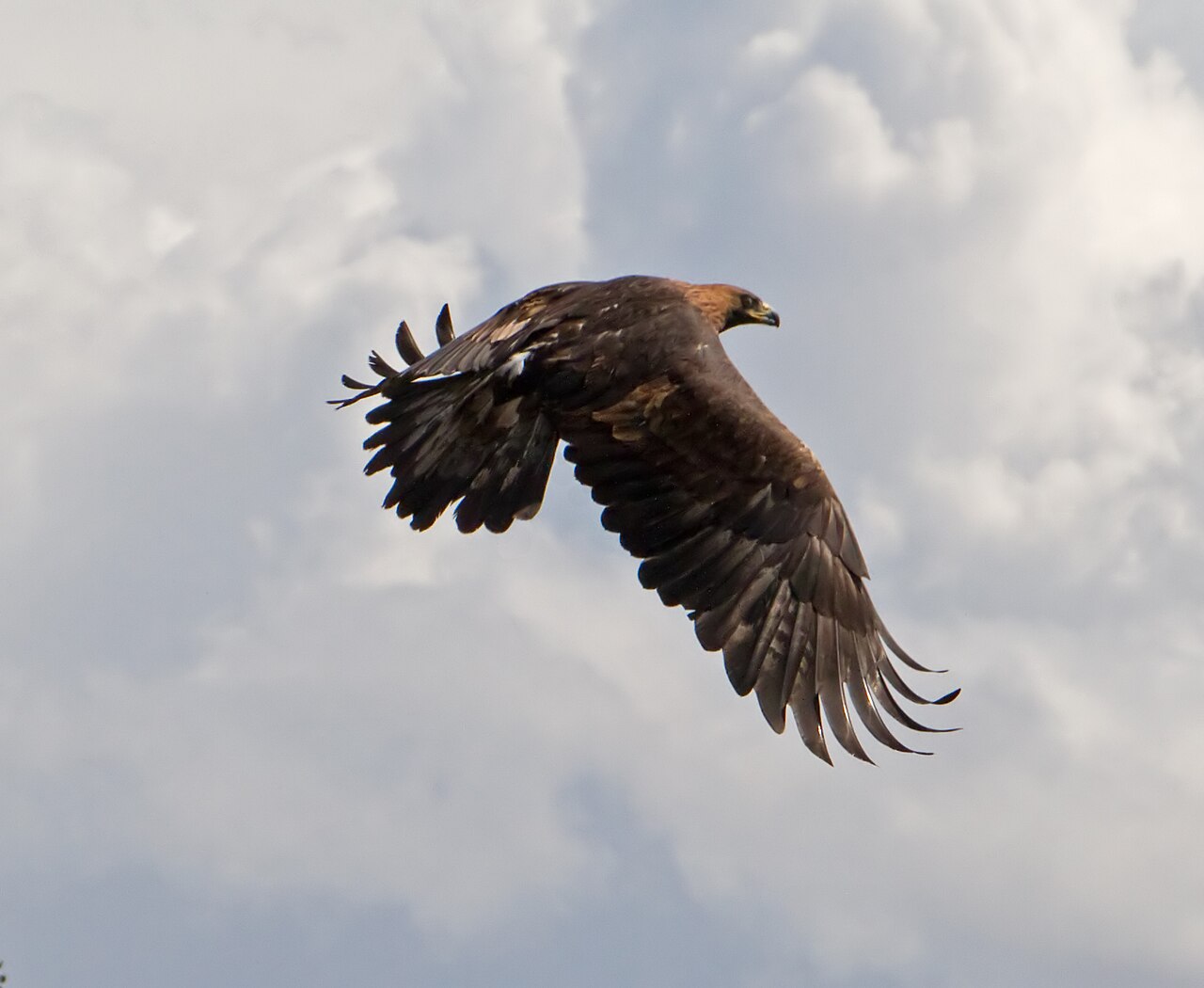
Celtic lore places the eagle among the oldest living beings. In the Welsh tale of Culhwch and Olwen, the heroes question a series of ancient animals to find the imprisoned Mabon, and the Eagle of Gwernabwy is one of the elders consulted. The eagle there is not a warrior symbol but a keeper of memory, old enough to have watched the landscape change.
In Scottish Highland tradition the golden eagle, iolaire, carried associations with clan standing and with the high ground itself. The bird appears in clan crests and in bardic praise poetry as a measure of a chief’s reach. Scotland still holds most of Britain’s breeding golden eagles, so the symbol never became purely historical there.
Golden Eagle Meaning in East Asian Traditions
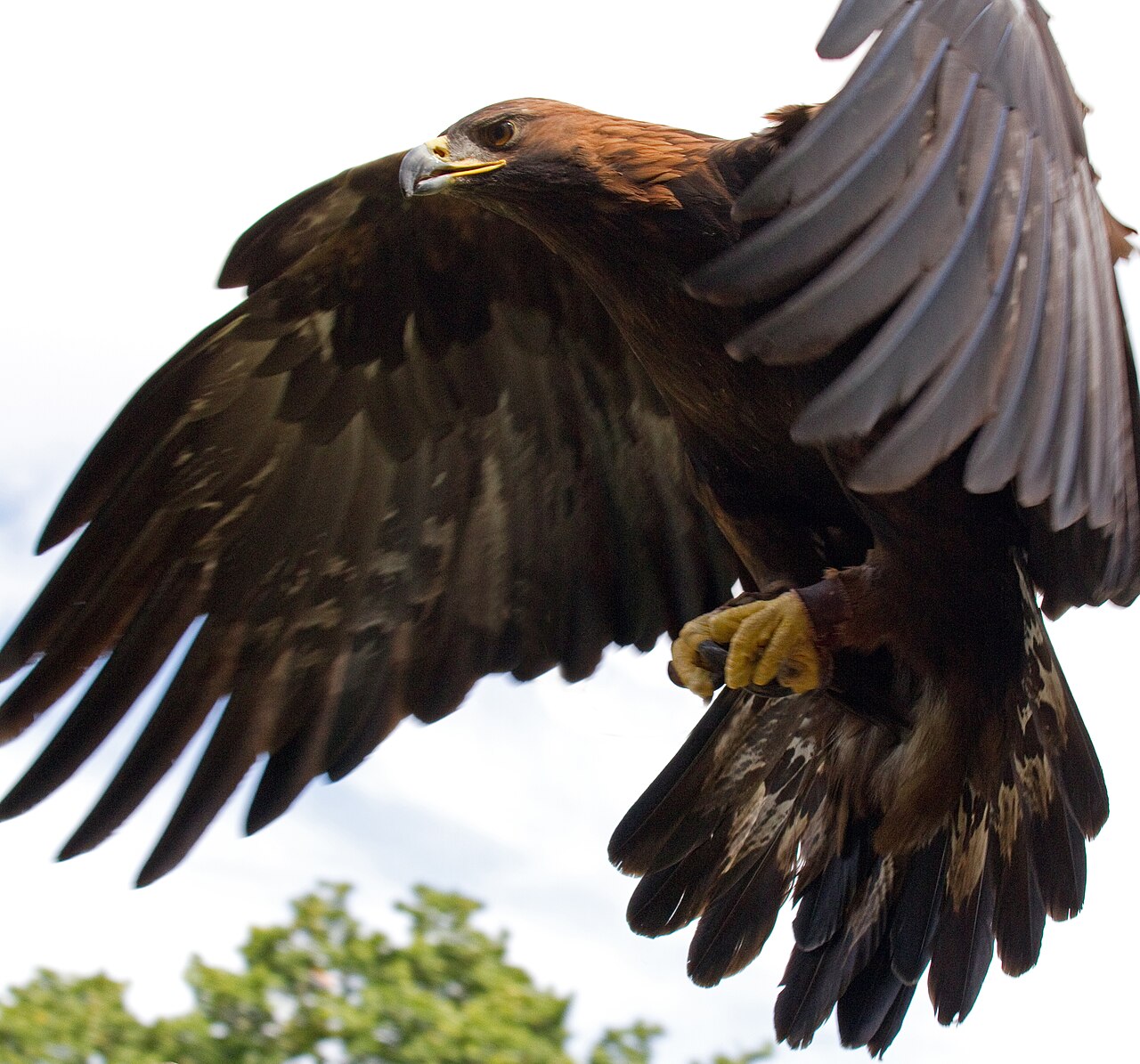
In Mongolian and Kazakh culture the golden eagle is a working partner rather than a distant symbol. Berkutchi, the eagle hunters of the Altai, train female golden eagles to hunt fox and hare from horseback, a practice several centuries old and still held annually at festivals in western Mongolia. The symbolism there is reciprocal: the bird represents a bond that must be maintained, and birds are traditionally released back to the wild after years of partnership.
Japanese tradition associates large raptors with mountain spirits and with the tengu, figures that are part bird and part guardian of remote peaks. In Chinese symbolism the eagle, ying, commonly conveys strength and ambition, and eagle imagery paired with a pine tree is a conventional wish for a long and vigorous career.
Golden Eagle as a Spirit Animal, Totem and Power Animal
In contemporary spirit animal practice, which draws loosely on several traditions rather than belonging to one, the golden eagle is usually described as a guide for people in a period of transition who need altitude on their own lives. The common reading is that an eagle spirit animal asks you to stop managing details and decide direction.
The words differ in usage. A spirit animal is generally described as a guide that appears for a season, a totem as a lifelong association often tied to family or clan, and a power animal as a source of borrowed strength called on for a specific task. Writers use the three loosely and often interchangeably, so the distinction matters mainly if you are reading within a specific tradition.
People who identify with eagle energy often describe the same downside: distance. The bird that sees everything from above is not in the conversation on the ground. Where bear symbolism tends to emphasize presence and protection of what is near, eagle symbolism emphasizes range, and the two carry opposite blind spots.
What It Means to See a Golden Eagle in Different Situations
Context shapes interpretation more than the sighting itself. An eagle circling high without hunting is commonly read as an invitation to widen your view of a decision you are stuck on. An eagle perched in plain sight and watching is read in several traditions as accountability, a reminder that you already know what the honest choice is.
A hunting stoop seen up close is the most dramatic version and is generally read as a prompt to commit. Golden eagles do not hover and reconsider, and people who witness a kill tend to describe the moment as decisive rather than violent. Repeated sightings over several days are usually taken to mean the message has not yet been acted on.
Finding a dead golden eagle is somber but is not traditionally a death omen. Most readings treat it as the close of a role or an identity you have outgrown. Practically, report it to your state wildlife agency.
What Does It Mean to Dream About an Eagle?
Dreaming about an eagle most often reads as ambition, perspective or a calling you have not acted on. The detail that carries the meaning is usually the dreamer’s position. Watching an eagle from the ground is commonly interpreted as aspiration toward something still out of reach, while flying as or with the eagle is read as readiness.
An eagle attacking in a dream is normally read as pressure from an authority figure or from your own standards rather than as a threat forecast. A caged or injured eagle is read as capability that circumstances are holding down. These are interpretive frameworks from dream symbolism literature, not findings, and dream research itself gives no support to predictive readings.
In biblical dream interpretation the eagle generally keeps its waking meaning of renewal and deliverance, so dreaming of eagles is more often read as encouragement than as warning. Readers comparing notes with the bald eagle spiritual meaning will find the dream readings overlap almost entirely, since most sources do not distinguish the two species.
Is It Good Luck Seeing an Eagle?
In the large majority of traditions, yes. Seeing an eagle is read as favorable, and specifically as a sign of protection, vindication or a turning point in your favor. There is no widespread tradition in North America or Europe that treats a live eagle sighting as bad luck, which is unusual; most powerful animal symbols carry a dark counterpart.
The closest thing to a negative reading involves eagles in distress, eagles found dead, or eagles taking prey that belongs to you, which in herding cultures was a practical loss rather than a spiritual one. Among bison symbolism and other Plains animal symbols, this same pattern holds: the omen tracks the animal’s condition, not its presence.
Golden Eagle Versus Bald Eagle Symbolism
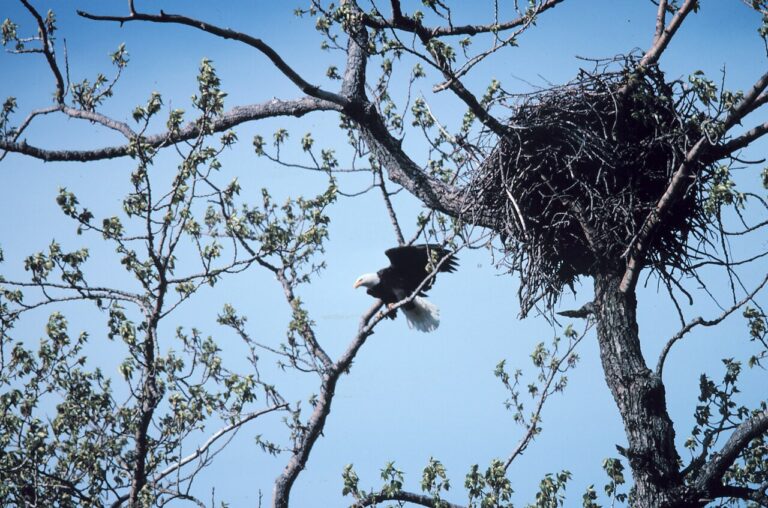
The two birds carry different symbolic weight in the United States. The bald eagle is the national emblem, tied to the state, to ceremony and to collective identity. The golden eagle is tied to the individual, to wilderness and to personal courage, and it is the eagle most often referenced in warrior traditions across the Northern Hemisphere.
Biologically they are not close relatives. The golden eagle, Aquila chrysaetos, is a true booted eagle found across North America, Europe and Asia, while the bald eagle is a sea eagle adapted to fish and carrion near water. Their symbolism follows that split: the golden eagle means the high country, the bald eagle means the shoreline and the nation.
If a dark eagle crosses your path and you cannot tell which one you saw, note the head and the tail. Adult bald eagles are unmistakable, but juveniles are brown and mottled for four to five years. Detailed identification guidance is available from the Cornell Lab at All About Birds. The same caution applies to darker species such as the blackbird, where identity and symbolism are often assigned before the bird is correctly named.
Frequently Asked Questions
What types of eagles can be found in the United States?
Two eagle species breed in the United States: the bald eagle (Haliaeetus leucocephalus) and the golden eagle (Aquila chrysaetos). Bald eagles occur in all 48 contiguous states plus Alaska, usually near water. Golden eagles are concentrated in the West, from Alaska south through the Rockies and Southwest, with a small eastern population. Steller’s sea eagle and white-tailed eagle appear only as rare strays.
What are some interesting facts about golden eagles?
Golden eagles reach 150 mph in a hunting stoop, have a wingspan of 6 to 7.5 ft (1.8 to 2.3 m), and defend territories that can exceed 60 square miles. They mate for life, reuse nests for decades, and can live more than 30 years in the wild. Females are roughly one third larger than males, which is why falconers traditionally fly females.
Is seeing an eagle in a dream good or bad?
Most dream interpretation traditions read it as positive, signaling ambition, perspective or a coming period of personal strength. Negative readings attach to specific details rather than to the bird itself, such as an injured eagle, a caged eagle or an eagle attacking the dreamer, which are typically read as blocked capability or external pressure instead of as warnings about events.
Is an eagle bird lucky or unlucky?
Lucky, in nearly every tradition that assigns the bird a meaning. Eagles are associated with protection, authority and favorable turning points across Native American, biblical, Celtic, Mongolian and Roman symbolism. Unlucky readings are rare and apply to dead or distressed birds rather than to live sightings, which makes the eagle unusual among major animal symbols.
What does it mean to dream of eagles according to the Bible?
Biblical interpretation generally reads eagles as renewal, deliverance and divine care, drawing on Isaiah 40:31, Exodus 19:4 and Psalm 103:5. A dream of eagles is typically read as encouragement to endure rather than as prophecy. Scripture itself contains no instruction to read animal sightings as signs, so this interpretation is a devotional practice rather than a doctrinal teaching.
Is it legal to keep a golden eagle feather you find?
No, not for most people in the United States. The Bald and Golden Eagle Protection Act prohibits possession of eagle feathers and parts without a permit, including feathers found on the ground. Enrolled members of federally recognized tribes may request feathers through the National Eagle Repository for religious use. Penalties for unpermitted possession include substantial fines.