Eagle Poop: How to Identify It and Tell It From Hawk or Owl
Eagle poop looks like a wide white splash rather than a dropping you could pick up. A bald eagle (Haliaeetus leucocephalus) voids a thin, chalky liquid that hits the ground or a branch and spreads into a streak 4 to 12 inches (10 to 30 cm) long, bright white at the edges with a smaller dark center. Under a regular perch, dozens of those streaks build into the coating birders call whitewash.
That liquid texture is the whole identification. Eagles process food fast, pass uric acid as a paste instead of urine, and push the waste clear of the nest with force, so the shape on the ground tells you less about the bird than the position and the volume do. Bones, fur, and feathers mostly leave the eagle a different way, as a cast pellet.
Eagle poop is a liquid white splash 4 to 12 inches (10 to 30 cm) across, chalky at the edges with a dark green or brown center, usually found as heavy whitewash under a nest tree, perch, or roost. It holds no visible bone or fur, because eagles cast those as pellets.
What do bald eagle droppings look like?
Fresh bald eagle droppings are glossy and almost pure white, with the consistency of thin latex paint. Within a day they dry to a flat chalk that clings to bark, rock, and vehicle paint. The dark portion, the actual feces, sits in the middle as a smear of olive, brown, or near black and makes up a small fraction of the total.
Volume is what separates an eagle from the smaller raptors sharing the same woodlot. One eagle leaves enough to drip down a trunk; a run of 10 or more heavy streaks on the same branch, with the ground below bleached, is an active perch rather than a one time visit.
| Feature | Eagle poop |
|---|---|
| Size | Splash 4 to 12 in (10 to 30 cm), sometimes a 3 ft (90 cm) streak down a trunk |
| Form | Liquid, sprayed, no solid pellet shape |
| Color | Chalk white uric acid with a dark olive to brown center |
| Contents | No visible bone, fur, or seed; those come out as pellets |
| Where you find it | Under nest trees, snags, pilings, light poles, winter roosts |
| Accumulation | Heavy whitewash, branches and ground bleached, bark killed over time |
| Smell | Strong and fishy near water, faint inland |
How big is eagle poop and what shape does it take?
A single void is about 1 to 2 fluid ounces (30 to 60 ml), which is why the mark is measured as a splash and not as a length. On level ground it spreads into an irregular blot 4 to 8 inches (10 to 20 cm) wide. On a vertical surface such as a trunk, dock post, or car door it runs, leaving a tapered stripe that can reach 3 ft (90 cm).
Shape also records direction. Eagles tilt and fire backward out of the nest or perch, so the splash is usually thrown 3 to 10 ft (0.9 to 3 m) horizontally and lands with a narrow tail pointing back toward the bird. Reading that tail is the fastest way to locate the perch above you.
What is inside eagle droppings?
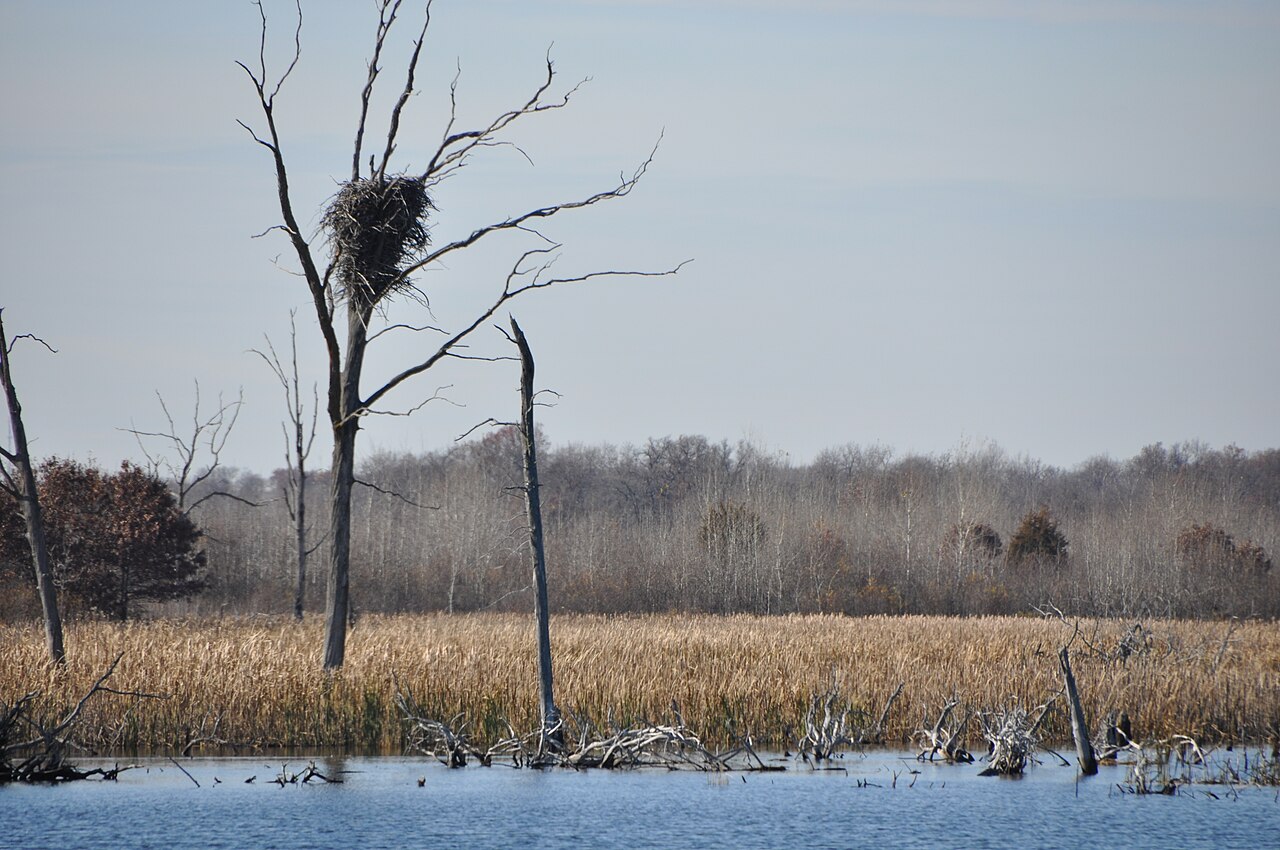
Most of the mass is uric acid, the white part, which birds excrete instead of dissolving nitrogen waste in water. The dark center is digested food: fish flesh, waterfowl, carrion, and the occasional small mammal. Near a lake in spring the smear often carries fine fish scales, visible only when the dropping is still wet.
What you will not find is the hard material that makes mammal scat easy to read. Hair, feather shafts, and bone fragments are packed in the gizzard and brought back up, so none of the clues used in cases like bear poop versus deer poop apply here. If you are looking at bone in a white splash, you are looking at an owl.
Where you find eagle poop
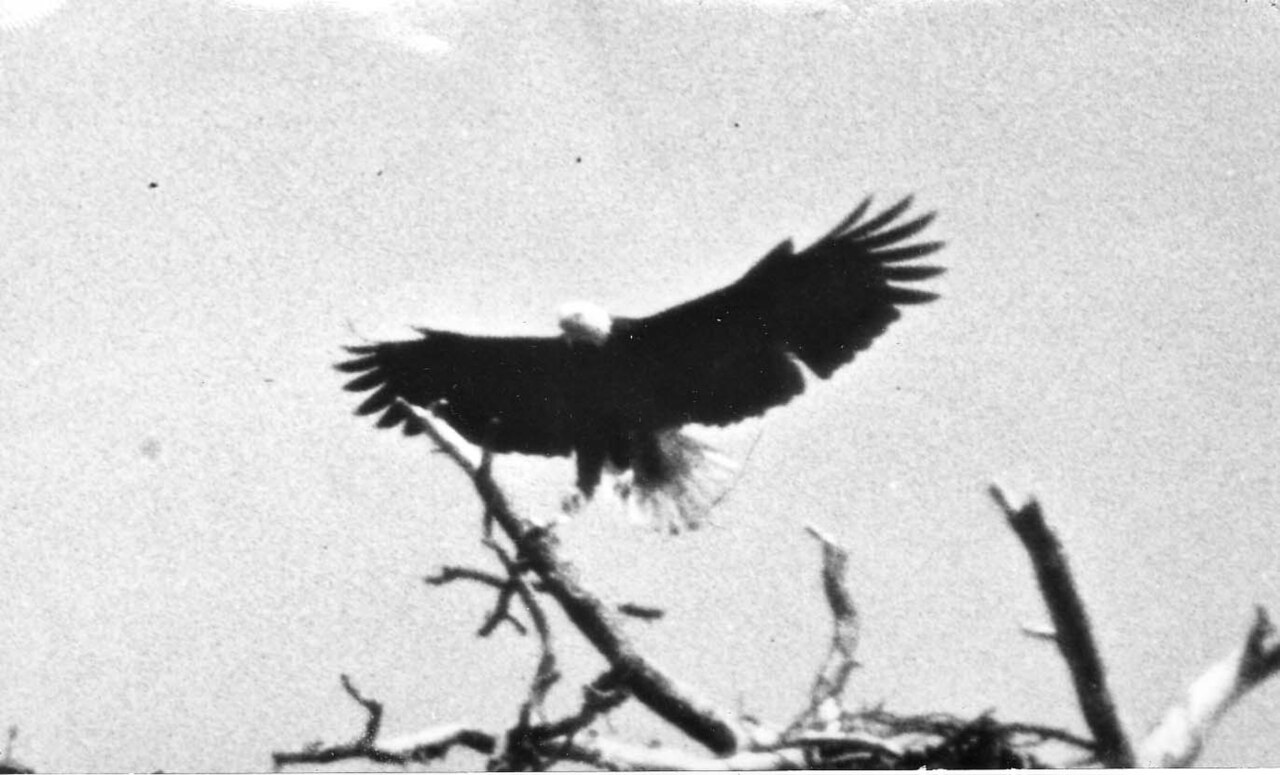
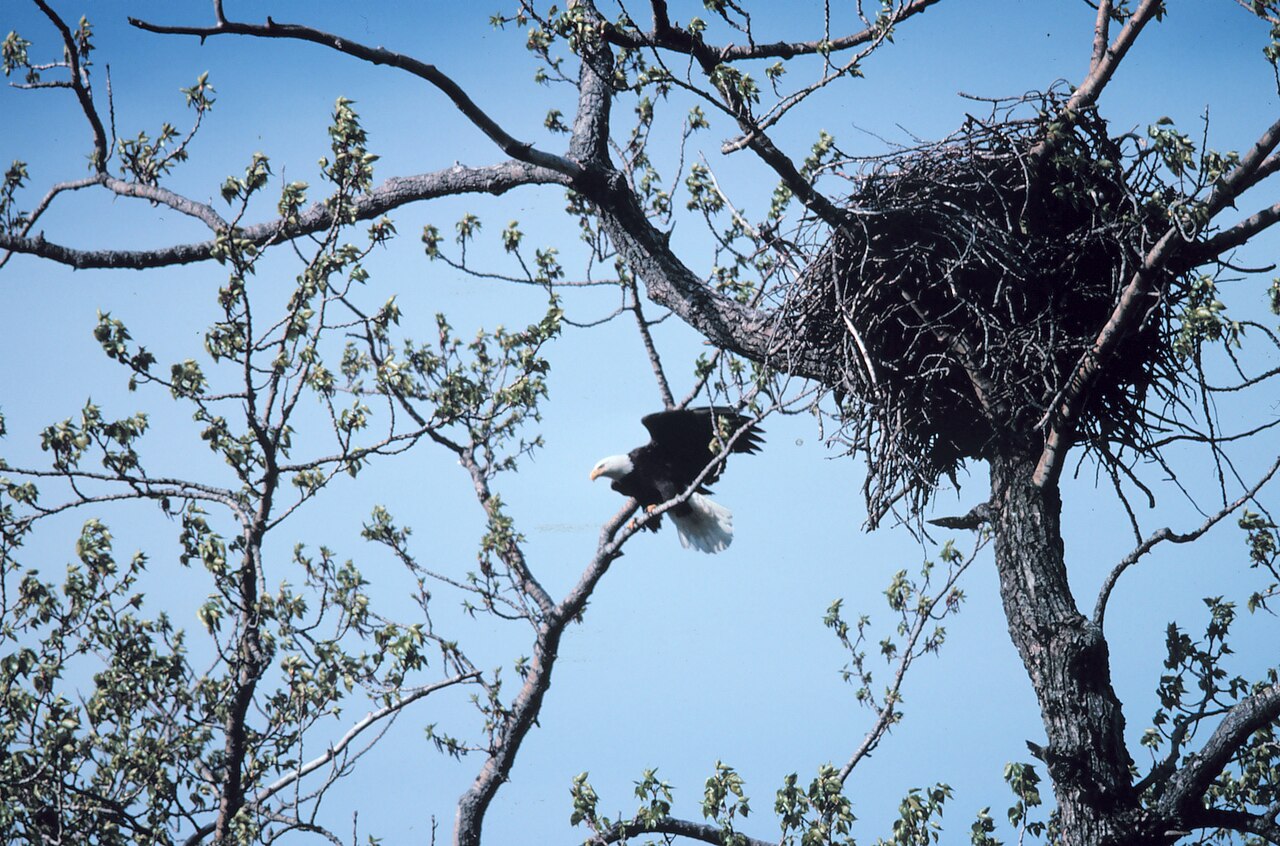
Look under structure, not along trails. Nest trees carry the heaviest whitewash, usually a ring of bleached ground 10 to 30 ft (3 to 9 m) from the trunk where thrown droppings land. Hunting perches over open water come second: dead snags, channel markers, bridge beams, pilings, and transmission poles.
Winter roosts concentrate the most material, because 20 or more birds may share a stand of conifers for weeks. The sign there is unmistakable: white branches, white ground, dead moss, and a sour fishy smell. Those sites are protected from disturbance under federal law, and the US Fish and Wildlife Service asks that you observe from a distance rather than walk in to look.
Eagle poop vs hawk poop
Both are liquid white splashes, and on a single dropping they are not reliably separable. Scale is the tell. A red tailed hawk voids roughly a quarter of an eagle’s volume, so its splash runs 1 to 4 inches (2.5 to 10 cm) and rarely drips far down a trunk.
Context finishes the call. Hawk whitewash shows up under hedgerow trees, fence lines, and highway poles across farmland. Eagle whitewash clusters near water with large fish or wintering waterfowl, and the perch above it is usually one of the tallest structures in sight.
Eagle poop vs owl poop
Owl whitewash looks much the same from a distance, but owls leave their bones at the base of the tree. Great horned and barred owls cast firm gray pellets 2 to 4 inches (5 to 10 cm) long, stuffed with intact rodent skulls and limb bones. Find a pile of those under the splash and the bird is an owl.
Owl droppings also tend to drop straight down into a tight zone rather than being thrown outward, so the stain sits directly beneath the branch. Hearing the bird settles it too, since eagles and owls sound nothing alike; compare the calls described in bald eagle sounds.
Eagle poop vs goose poop
Goose droppings are the opposite of eagle droppings in every way that matters. A Canada goose leaves a formed tube 2 to 3 inches (5 to 8 cm) long and about half an inch (1.3 cm) thick, green to olive from grass, with a white cap of urate at one end. It holds its shape and you can count the individual droppings.
Geese also leave them where they feed, which means lawns, parks, golf courses, and boat ramps, often 20 or 30 in a few square yards. Eagles do not feed on turf, so a lawn covered in formed green tubes is never eagle sign. The same formed versus sprayed test separates most mammal pairs as well, as in deer poop versus rabbit poop.
Do eagles regurgitate pellets?
Yes. Bald eagles cast pellets, though less predictably than owls do, because eagle stomach acid dissolves much of the bone they swallow. A cast eagle pellet is a loose gray or brown mass 1 to 3 inches (2.5 to 8 cm) long, built mostly of fur, feather, and fish scale, and it crumbles rather than holding a neat shape.
Captive birds typically cast one every day or two after a full meal. In the field pellets break apart quickly in rain, so most of what you find under a nest tree is whitewash plus prey remains: fish spines, duck wings, and the shells of turtles the pair carried in.
Is eagle poop dangerous to people and pets?
Treat it as you would any accumulation of bird droppings. The documented risks are bacterial and fungal rather than viral: Salmonella species on fresh droppings, and Histoplasma capsulatum, a soil fungus that grows where droppings build up for years and causes histoplasmosis when dried material is stirred into the air. The Centers for Disease Control and Prevention ties most reported cases to large roost sites, not to a single splash on a sidewalk.
Risk rises with volume and with dryness. One mark on a railing is a nuisance. A roost floor you are about to sweep is the real hazard, and dogs that eat fish remains under a nest are more likely to get sick from the carrion than from the droppings. Rodent sign carries its own separate concerns, which is why cases like rat poop versus mouse poop get handled differently.
How to clean eagle poop off a car, deck, or boat
Work wet and work fast. Uric acid is acidic enough to etch clear coat within a day or two in sun, so soak the spot with warm water for several minutes, then lift it with a soft cloth instead of scrubbing dry chalk across the paint. Wear disposable gloves for every one of these jobs.
For decks, docks, and concrete, wet the surface down first so nothing becomes airborne, then wash with detergent and rinse. Do not dry sweep or use a leaf blower on built up whitewash, and add an N95 respirator if you are clearing an old roost. The same gloves and wet cleanup rule applies to attic cases such as bat poop versus mouse poop.
Why eagles aim their droppings away from the nest
Nest hygiene is the reason the splash pattern looks the way it does. Eaglets as young as a few weeks back up to the rim, lift the tail, and shoot waste over the edge, a behavior falconers call slicing. It keeps the nest cup dry, which matters in a structure the pair reuses and rebuilds for years.
The side effect is a bleached halo on the ground that surveyors use to find nests from the air. Bark and ground vegetation under a long occupied nest often die back from the nitrogen load, the same effect seen under heron colonies. Squirrels nesting in the same trees leave a very different calling card, covered in squirrel poop versus rat poop.
Frequently Asked Questions
What is the #1 killer of bald eagles?
Human causes dominate. Trauma from collisions with vehicles, power lines, and turbines accounts for the largest share of recovered carcasses in most regional studies, with lead poisoning from ammunition fragments in gut piles and carrion close behind. Surveys disagree on which ranks first, partly because lead often weakens a bird before a collision kills it.
Why can’t you pick up a bald eagle feather?
The Bald and Golden Eagle Protection Act makes it illegal to possess any part of either species, including a feather you found on the ground, without a federal permit. The rule exists because a legal market in parts would create demand for killing birds. Leave the feather where it lies and report banded remains.
Who may legally possess an eagle feather?
Enrolled members of federally recognized tribes may apply for eagle parts for religious use through the National Eagle Repository, which distributes birds recovered dead. Permits also exist for scientific, educational, and falconry purposes. Anyone else, regardless of background, needs one of those permits to hold a feather lawfully.
What happens if you accidentally shoot a bald eagle?
Report it to your state wildlife agency or the nearest US Fish and Wildlife Service law enforcement office immediately. Penalties for a first offense run to fines and possible jail time, and they are applied far more harshly to people who hide the bird than to those who self report an accident.
Can you eat a bald eagle?
No. Killing, selling, or eating a bald eagle is a federal crime under the same protection act, with no exception for salvage from a road kill. Raptors also concentrate mercury and lead in their tissue, so the meat would be a poor idea even where the law allowed it.
Do birds pee and poop from the same hole?
Yes. Birds have a single opening, the cloaca, that passes waste, eggs, and sperm. Instead of liquid urine they excrete nitrogen as uric acid paste, which is the white part of every dropping. That is why bird waste arrives as one mixed splash rather than as separate urine and feces.