Chickadee Sounds: What Each Call Means
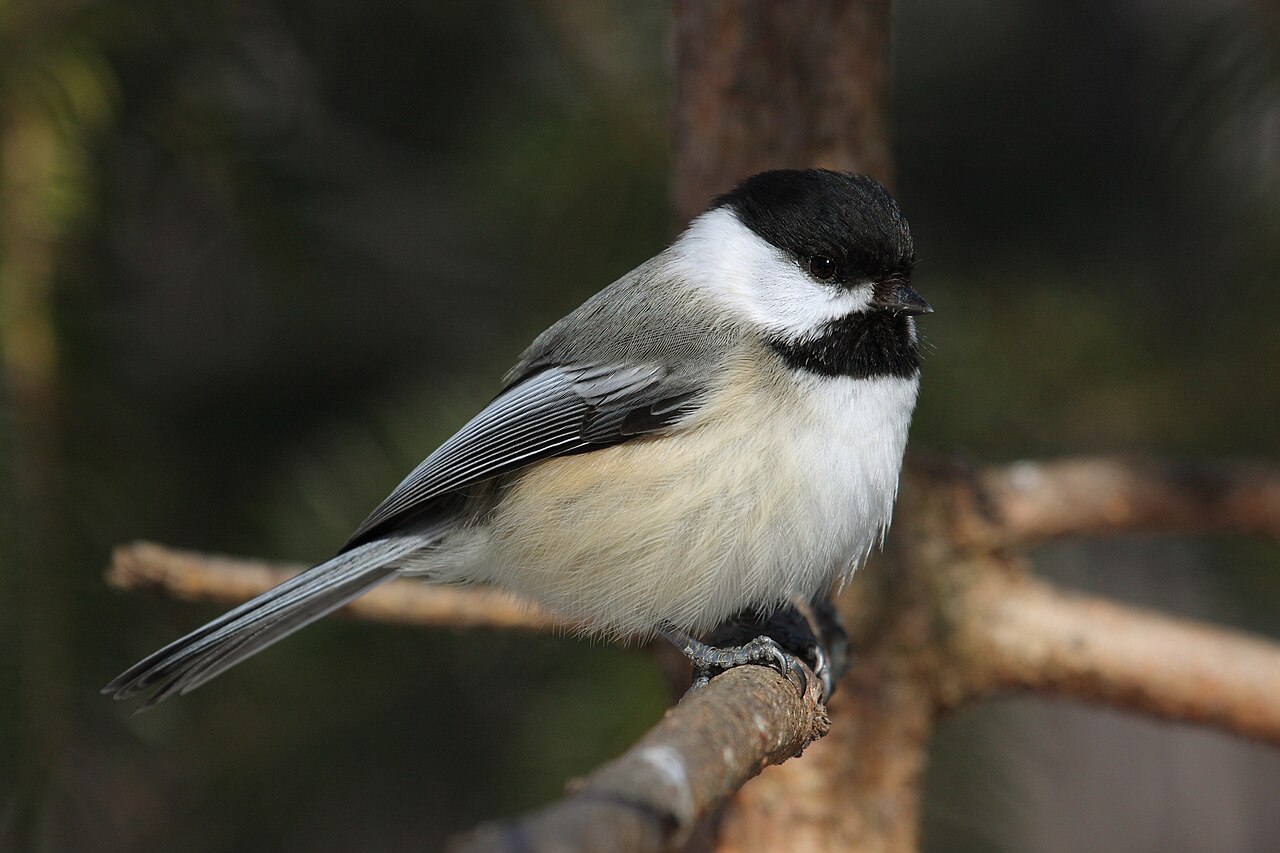
Chickadees make two sounds most people know: the chick-a-dee-dee-dee call that gives the bird its name, and a clear two-note whistle usually written as fee-bee and often heard as hey sweetie. Beyond those, black-capped chickadees produce at least 15 distinct vocalizations, including gargles, hisses, broken dees, and soft contact notes, making them one of the most vocally complex songbirds in North America.
The chick-a-dee call is far more than a name. Research has shown that chickadees encode information about predator threat in the number of dee notes they add, with more dees signaling a more dangerous predator, and other birds in the woods listen and respond accordingly. This guide covers each sound, what it means, how to tell chickadee species apart by voice, and what the famous warning call actually communicates.
Chickadees make a chick-a-dee-dee-dee call used for contact and alarm, and a clear fee-bee whistle, often heard as hey sweetie, used as the male’s song. The number of dee notes signals threat level: more dees means a more dangerous predator. Black-capped chickadees produce at least 15 distinct vocalizations in total.
| Sound | Meaning |
|---|---|
| Chick-a-dee-dee-dee | Contact call and alarm; dee count signals threat |
| Fee-bee whistle | Male song; territory and mate attraction |
| Gargle | Aggression between males at close range |
| Seet | High thin note warning of a flying hawk |
| Snarl or hiss | Female defending a nest cavity |
| Soft tseet | Contact between flock members |
| Broken dee | Given when startled at close range |
What Is the Chickadee’s Most Common Call?
The chick-a-dee call is the most frequently heard chickadee sound and the one the bird is named for. It consists of one or more introductory chick or chick-a notes followed by a variable number of buzzy dee notes, and chickadees use it constantly through the day to stay in contact with flock members, to coordinate movement, and to signal alarm.
What makes it remarkable is that the call is not fixed. The number of dee notes varies from one or two up to a dozen or more, and that variation carries meaning. Chickadees also change the introductory notes, add or drop elements, and adjust delivery speed, producing what researchers describe as one of the most complex signaling systems documented in any non-human animal.
The call is also used across species boundaries. Nuthatches, titmice, warblers, woodpeckers, and other small birds respond to chickadee alarm calls, and mixed-species winter flocks in North American woods are frequently organized around chickadees acting as the sentinel species. The black-capped chickadee guide covers the species that produces the classic version of the call.
What Does the Number of Dee Notes Mean?
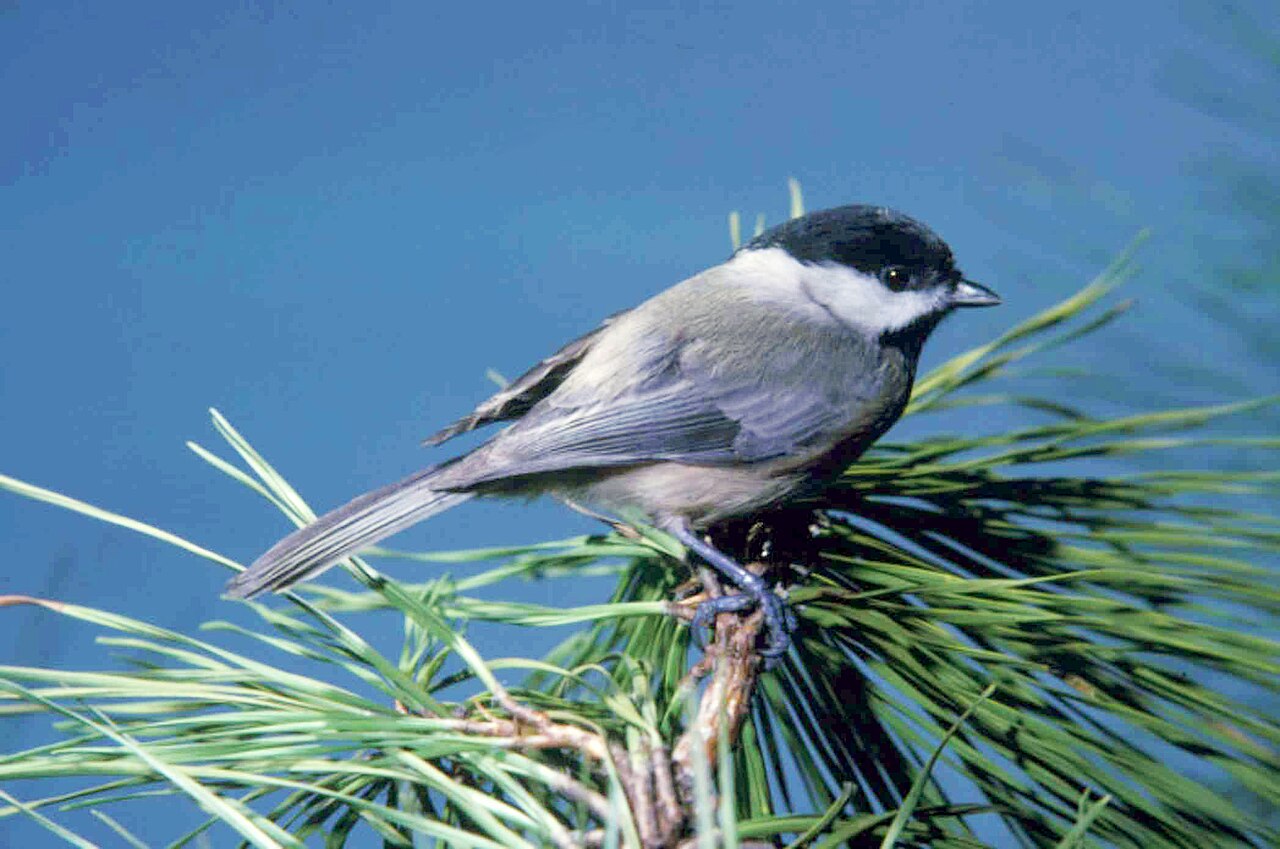
More dee notes means a more dangerous predator. This finding, published by Christopher Templeton and colleagues in Science in 2005, is one of the best-documented examples of a graded alarm signal in a bird. The researchers presented captive chickadees with fifteen different predator species and counted the dee notes in the resulting calls.
The pattern was consistent and counterintuitive: small, agile predators drew more dees than large ones. A pygmy owl or a northern saw-whet owl, which is small enough to maneuver through branches and catch a chickadee, produced calls with four or more dee notes. A great horned owl or a red-tailed hawk, too large to pursue a chickadee through dense cover, produced calls with just one or two. Threat is measured by maneuverability, not by size.
Other birds respond to the gradation. Playback experiments have shown that both chickadees and other species mob more intensely and approach more closely after hearing high-dee calls than low-dee calls, meaning the information is genuinely transmitted and acted on. A chickadee scolding rapidly with many dees is worth investigating: there is often an owl or a small accipiter sitting in the tree above.
What Bird Says Hey Sweetie?
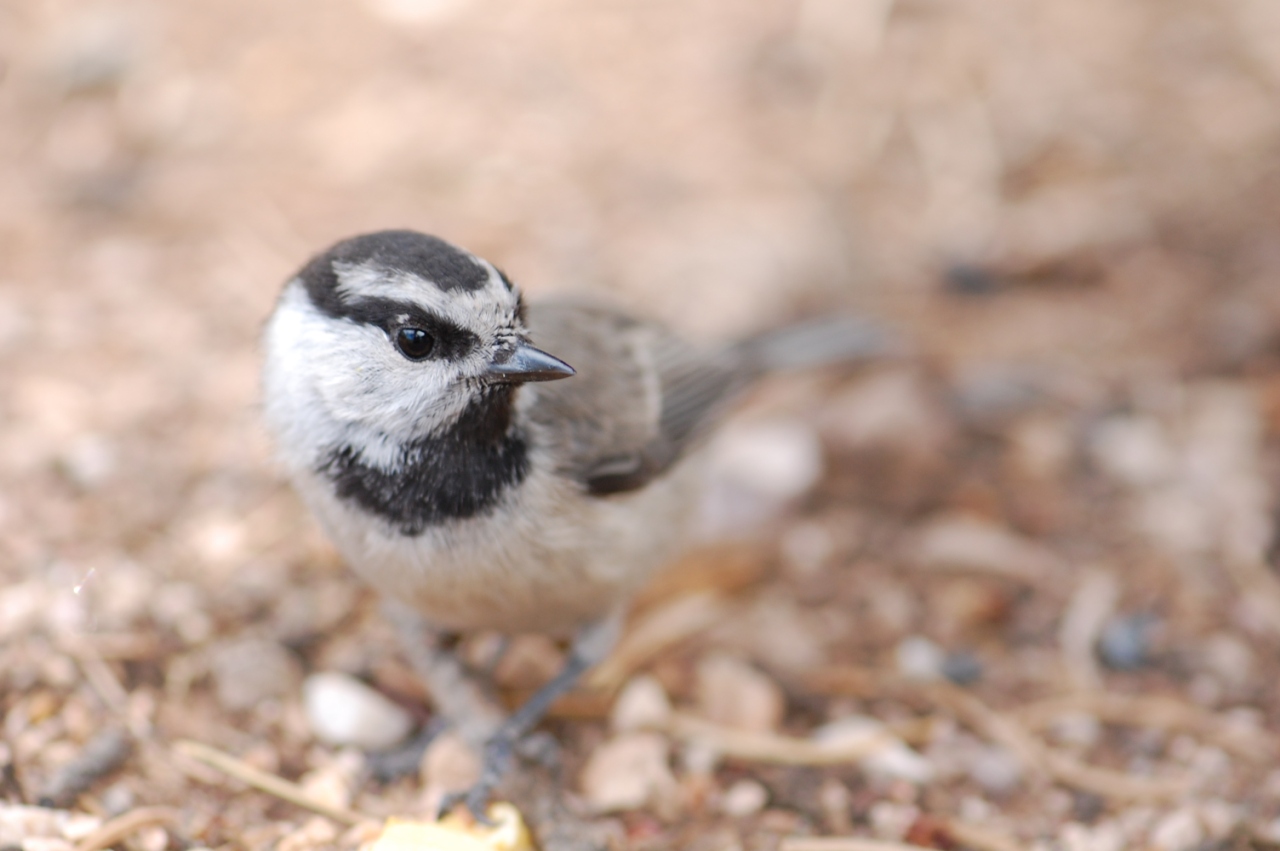
The black-capped chickadee. Its song is a clear two-note whistle with the first note higher than the second, written by ornithologists as fee-bee and heard by many people as hey sweetie or cheeseburger. It is one of the simplest and most recognizable bird songs in eastern and northern North America, and it carries a long way through bare winter woods.
Unlike the chick-a-dee call, the fee-bee whistle is a true song, given mainly by males to advertise territory and attract mates. Singing begins in late winter, often in January or February on the first mild days, well before other songbirds start, which is why the whistle is many people’s first sign that winter is turning. It continues through the breeding season.
Chickadees can shift the whistle up or down in pitch while keeping the interval between the two notes constant, a form of relative pitch that is rare in birds and lets males match or overshoot a rival’s song during countersinging contests. Carolina chickadees, the southeastern species, sing a four-note version instead, and the eastern phoebe guide covers a different bird whose raspier fee-bee is regularly confused with the chickadee whistle.
What Are the Other Chickadee Sounds?
The gargle is the aggressive call, a rapid jumble of notes given between males in close-range disputes over rank or territory, especially at feeders in winter. Chickadee flocks have a strict dominance hierarchy, and the gargle is how it gets enforced without fighting. Individual males have distinctive gargle repertoires, and neighbors learn to recognize each other by them.
The seet is the opposite kind of signal: an extremely high, thin, drawn-out note given when a hawk is spotted in flight. It is pitched at a frequency that is hard for raptors to locate, and it prompts other birds to freeze rather than to mob. This is the reverse of the chick-a-dee alarm, which calls other birds in to harass a perched predator. Which call a chickadee gives depends entirely on whether the threat is perched or flying.
Several quieter sounds fill in the rest. Soft tseet notes maintain contact between flock members moving through cover. A snake-like hiss combined with a lunge is given by a female startled on the nest inside a cavity, and it is startling enough to deter some predators. Broken dee calls come from birds startled at very close range, and various begging and courtship notes appear seasonally. The owl calls guide covers the predators that trigger most of the alarm repertoire.
How Do Chickadee Species Differ by Voice?
Black-capped and Carolina chickadees look nearly identical and are best separated by voice where their ranges meet across the mid-Atlantic and lower Midwest. The black-capped sings a two-note fee-bee; the Carolina sings a faster four-note song usually written fee-bee fee-bay. Carolina chick-a-dee calls are also higher and faster than the black-capped version.
The complication is hybridization. In the narrow zone where the two species overlap, they interbreed, and hybrids sing intermediate or mixed songs. Black-capped chickadees have also been documented learning Carolina songs and vice versa in the contact zone, which makes voice unreliable there and turns identification into a genuinely difficult problem that many birders simply record as chickadee species.
Other species are more distinctive. Mountain chickadees of the western mountains give a hoarser, raspier chick-a-dee and a three-note whistled song. Boreal chickadees have a slower, more nasal, drawling call. Chestnut-backed chickadees of the Pacific coast give a very fast, high, hoarse call with little of the clear whistle. The types of chickadees guide covers all seven North American species.
Do Chickadees Recognize People?
Yes, chickadees can distinguish individual humans, and this is well supported by research on related species. Studies on corvids established the phenomenon most clearly, and work on chickadees and other feeder birds shows they learn to associate specific people with food and with threat and behave differently toward them.
The practical experience many people have is real: chickadees are among the easiest wild birds to hand-tame in North America. A person who stands still at a feeder repeatedly, then holds out an open palm with sunflower seeds, can often get chickadees to land within days to a couple of weeks. Their boldness comes from their foraging strategy, since they take a single seed and fly off with it rather than sitting exposed at a feeder.
Chickadees also have exceptional spatial memory, caching thousands of individual seeds through autumn and relocating them months later. The hippocampus of a black-capped chickadee grows in autumn and shrinks in spring, with new neurons added seasonally, which is one of the clearest examples of adult neurogenesis linked to a specific cognitive demand in any vertebrate. The guide to attracting chickadees covers what brings them in.
What Does It Mean When a Chickadee Visits You?
In folklore, a chickadee visit is read as a message about cheerfulness, courage in small packages, and truthfulness, and the bird is associated with speaking honestly and with facing difficulty without losing good humour. The symbolism is unusually consistent and unusually positive, drawing directly on the bird’s behaviour in winter.
The behavioural basis is genuine. A black-capped chickadee weighs about 11 grams and survives nights at minus 40 degrees by entering regulated hypothermia, dropping its body temperature by 10 to 12 degrees Celsius overnight to conserve energy, and it must find enough food each short winter day to survive the next night. It does this while singing. Few animals make a better case for the symbolism attached to them.
Several Indigenous traditions across northern North America associate chickadees with truth-telling and with successful hunting, and the bird appears in stories as a small, clever figure. In modern symbolic usage the chickadee is widely read as an encouragement to stay positive through a difficult period. The bird symbolism guide covers how these readings are constructed across species.
Where Do Chickadees Sleep at Night?
Chickadees roost in tree cavities, dense conifer foliage, and sometimes in nest boxes, choosing a sheltered spot each night. In severe cold they excavate or use small cavities and roost alone rather than huddling, which distinguishes them from bluebirds and some other cavity users that pile in together for warmth.
The regulated hypothermia that gets them through the night is remarkable and comes at a cost: a bird in that state is slow to respond and vulnerable, which is one reason a secure cavity matters so much. Chickadees excavate their own nest cavities in soft rotten wood, unusual for a bird without a woodpecker’s equipment, and old cavities and nest boxes serve as winter roosts.
Providing a roost box, which is a nest box modified with the entrance near the bottom and interior perches, gives them shelter, though chickadees use them less readily than bluebirds. A more effective contribution is leaving standing dead wood and dying limbs where safe, since soft snags are what chickadees need to excavate in the first place. The chickadee nest box guide covers the specifications.
Frequently Asked Questions
What sounds do chickadees make?
The chick-a-dee-dee-dee call for contact and alarm, and a clear two-note fee-bee whistle as the male’s song. Black-capped chickadees produce at least 15 distinct vocalizations, including gargles, seets, and hisses.
What bird says hey sweetie?
The black-capped chickadee. Its two-note whistle, higher note first, is written fee-bee by ornithologists and heard by many people as hey sweetie or cheeseburger. Singing starts in January or February.
What do the different dee notes mean?
The number signals threat level. More dee notes means a more dangerous predator, and dangerous means small and maneuverable: a pygmy owl draws four or more dees, a great horned owl only one or two.
What does a chickadee warning call sound like?
Two different warnings exist. Rapid chick-a-dee calls with many dees mean a perched predator and recruit other birds to mob it. A very high thin seet means a hawk in flight and prompts birds to freeze instead.
Can chickadees recognize people?
Yes. They learn to associate specific individuals with food and threat, and they are among the easiest North American birds to hand-tame, often landing on an outstretched palm within days or weeks.
How can you tell black-capped from Carolina chickadees by sound?
Black-capped sings a two-note fee-bee; Carolina sings a faster four-note fee-bee fee-bay with higher, quicker dee calls. Where the ranges overlap they hybridize and learn each other’s songs, making voice unreliable there.
Where do chickadees sleep at night?
In tree cavities, dense conifers, and sometimes nest boxes, usually alone rather than huddled. They survive cold nights by dropping their body temperature 10 to 12 degrees Celsius in regulated hypothermia.