Chickadee Nest Box: Plans, Size, and Setup
A chickadee nest box should have a 1 and 1 eighth inch entrance hole, a 4 by 4 inch floor, be about 8 inches deep, and be filled with wood shavings. These small dimensions suit chickadees while excluding larger birds, and the shavings let them excavate as they would a natural cavity. Mount the box 5 to 8 feet high on a baffled pole in a spot with light cover. This guide covers the right box design, where and how to mount it, adding shavings, and how to monitor and protect it.
| Feature | Recommendation |
|---|---|
| Entrance hole | 1 and 1 eighth inches |
| Floor size | 4 by 4 inches |
| Box depth | About 8 inches |
| Mount height | 5 to 8 feet |
| Filling | Wood shavings or sawdust |
| Perch | None |
The Right Nest Box Design
Getting the dimensions right is the key to attracting chickadees and keeping them safe. The entrance hole should be about 1 and 1 eighth inches in diameter, which is small enough to admit chickadees while keeping out larger birds like house sparrows and starlings. The floor should be roughly 4 by 4 inches, and the box about 8 inches deep, giving the small clutch room without being cavernous. Use untreated wood for insulation, skip any perch since chickadees do not need one and perches help predators, and include ventilation gaps near the top and drainage holes in the floor. A side or front panel that opens allows monitoring and cleaning. These modest dimensions reflect the chickadee’s small size and cavity-nesting habits, and they are the difference between a box chickadees adopt and one they ignore.
Why Add Wood Shavings
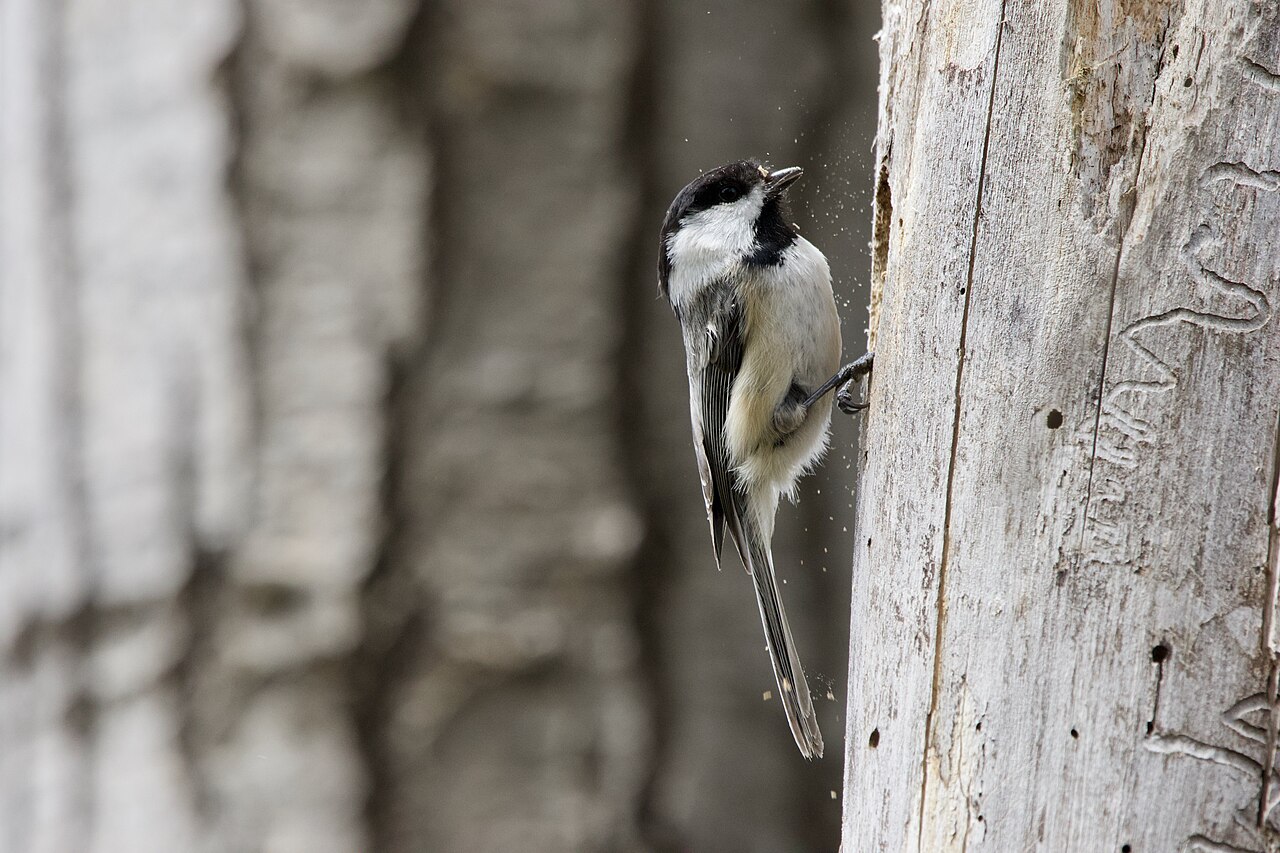
One detail sets chickadee boxes apart from many others: a layer of wood shavings inside. In nature, chickadees often excavate their own cavities in soft, rotting wood, and adding coarse wood shavings or sawdust to the box lets them dig and shape it as they would a real cavity, which can make the box far more attractive to a prospecting pair. Fill the box a few inches deep with shavings, not fine sawdust dust, and let the chickadees remove what they wish, since part of their nesting ritual is hollowing out the material. This mimics the natural process and satisfies the chickadee’s instinct to excavate. It is a simple, inexpensive step that noticeably increases the odds a chickadee pair will choose your box over an empty one.
Where to Place the Box
Location strongly affects whether chickadees adopt your box. Chickadees like some cover, so place the box at the edge of trees or shrubs or in a lightly wooded spot rather than in the wide open, since they favor areas with nearby vegetation for shelter and foraging. Mount it facing away from prevailing wind and driving rain, and avoid pointing the entrance into hot afternoon sun. Keep the box a bit away from busy feeders and human activity for a sense of security, but within a habitat rich in insects and cover. A quiet, partly sheltered spot near trees is ideal. The right placement, combined with the right box, gives chickadees exactly the setting they look for when choosing a nest site. For the wider setup, see our guide on how to attract chickadees.
How to Mount and Protect It
How you mount the box matters as much as where. The safest method is to mount it on a smooth metal pole rather than a tree or fence, since poles are far harder for predators to climb, and to add a predator baffle below the box to stop raccoons, snakes, and cats from reaching the nest. Mount the box about 5 to 8 feet above the ground, high enough for safety and low enough to monitor. Ensure it is secure and level. This combination of a pole and a baffle protects eggs and nestlings from the predators that cause many nest failures. Keeping cats indoors adds further protection for the nesting pair and the fledglings once they leave the box, giving your chickadees a genuine chance to raise a family successfully.
Monitoring and Maintenance
A chickadee box benefits from occasional, careful monitoring. Check it every week or so during the breeding season, opening it briefly to note eggs or young, since brief, gentle checks do not cause chickadees to abandon the nest and let you catch problems early. Watch for and remove aggressive house sparrows or wasps if they try to take over, though the small hole helps exclude sparrows. Chickadees typically raise one brood per season, laying a clutch of tiny, speckled eggs in a soft nest of moss and fur. After the young fledge, remove the old nesting material and refresh the shavings so the box is clean for next year. This light upkeep, along with the natural food from a bird-friendly yard, gives chickadees the best chance to thrive, as covered in our guide to what chickadees eat.
Attracting Chickadees to a New Box
Putting up a box is only the first step, and a few extra touches help chickadees actually adopt it. Offering their favorite foods nearby, especially sunflower seeds and suet, draws chickadees into the area so they notice the box, as covered in our guide on how to attract chickadees. A birdbath is another strong attractant that brings them into the yard. Keeping some trees and shrubs near the box gives chickadees the cover and foraging habitat they prefer, and a quiet location free of heavy disturbance makes them feel secure. Because chickadees are early nesters, having the box up and ready by late winter greatly improves your chances, since they begin scouting for cavities before many other birds, as noted in our feeder guide.
Chickadee Nesting Habits
Understanding how chickadees nest helps you support them. A chickadee pair looks for a suitable cavity or a box filled with soft material they can excavate, and the female builds a nest inside using moss, plant fibers, and soft animal fur, creating a snug cup for the eggs. She typically lays a clutch of six to eight tiny, reddish-speckled white eggs, which she incubates while the male brings food. Once hatched, both parents work tirelessly to feed the nestlings a caterpillar-rich diet until they fledge a couple of weeks later. Chickadees usually raise a single brood per season. Knowing this cycle helps you monitor respectfully and appreciate the busy weeks of activity a nesting pair brings, and it underscores why a nearby supply of insects and the black-capped chickadee habitat matters so much.
Common Chickadee Box Mistakes
A few avoidable mistakes keep chickadees from using a box. Using too large an entrance hole invites bigger, aggressive birds to take over, so the small 1 and 1 eighth inch hole is essential. Leaving the box empty rather than adding wood shavings misses the chance to satisfy the chickadee’s urge to excavate. Mounting on a tree or fence without a baffle exposes the nest to climbing predators, and placing the box in the wide open without nearby cover ignores the habitat chickadees prefer. Adding a perch only helps competitors. Finally, never monitoring can let wasps or house sparrows move in unnoticed. Avoiding these errors, and following the design and placement guidance above, gives chickadees the safe, inviting nest site they look for and greatly improves your odds of a successful brood.
Chickadee Range and Habitat
Knowing where chickadees live helps you understand whether a box is likely to attract them. According to the Cornell Lab of Ornithology, the black-capped chickadee ranges across the northern United States and much of Canada, while the closely related Carolina chickadee occupies the southeastern states, and other chickadee species fill different regions of the country. This means almost everywhere in North America has a chickadee species that will use a properly sized nest box. Chickadees favor mixed woodlands, forest edges, parks, and suburban yards with trees, so a box placed in or near this kind of habitat, with cover and foraging nearby, matches the settings chickadees naturally seek out for nesting.
Frequently Asked Questions
What size hole does a chickadee nest box need?
About 1 and 1 eighth inches in diameter. This admits chickadees while keeping out larger birds like house sparrows and starlings.
How big should a chickadee box be?
Roughly a 4 by 4 inch floor and about 8 inches deep, which suits the chickadee’s small size and clutch without being too large.
Should I put anything inside a chickadee box?
Yes, add a few inches of coarse wood shavings or sawdust. Chickadees like to excavate, and a box they can dig out is more attractive to them.
How high should a chickadee box be mounted?
About 5 to 8 feet above the ground, on a smooth metal pole with a predator baffle below it for protection against climbing predators.
Where should I put a chickadee nest box?
At the edge of trees or shrubs or in a lightly wooded spot with nearby cover, facing away from wind and hot afternoon sun.
When should I put up a chickadee box?
In late winter or very early spring, before the breeding season, so chickadees have time to find and choose it.
Do chickadee boxes need a perch?
No. Chickadees do not need a perch, and adding one only helps predators and competitors. Use a box with no perch.