Fastest Birds in the World: Speed Champions Ranked
The fastest birds in the world are led by one undisputed champion: the peregrine falcon, which reaches speeds over 200 miles per hour in its hunting dive, making it the fastest animal on the planet. But speed comes in different forms. The peregrine’s record depends on a gravity assisted plunge, while birds like swifts and needletails claim the crown for fastest level, self powered flight. This guide ranks the speed champions of the bird world, explains how they achieve such velocity, and reveals which fast fliers you might see in your own backyard.
| Fastest overall | Peregrine falcon, over 200 mph in a dive |
| Fastest level flight | Swifts and needletails, around 70 mph |
| Peregrine cruise speed | About 40 to 60 mph in level flight |
| Speed secret | Streamlined body, pointed wings, and gravity in the dive |
| Backyard speedsters | Cooper’s hawk, sharp shinned hawk |
| How measured | Radar, GPS trackers, timed dives |
The Peregrine Falcon: Fastest Animal on Earth
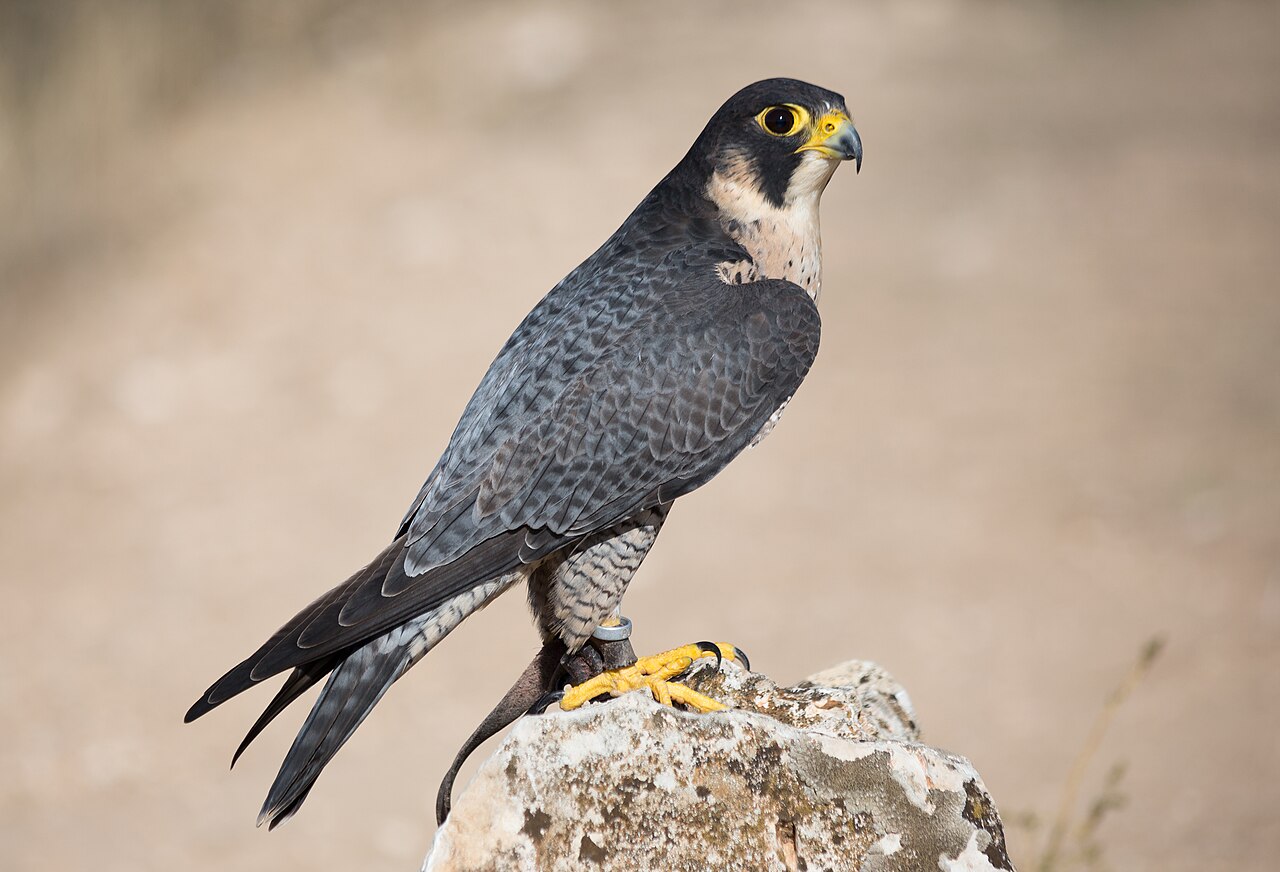
No bird, and indeed no animal, is faster than the peregrine falcon. When hunting, a peregrine climbs high above its prey and then folds its wings into a streamlined teardrop and drops in a controlled plunge called a stoop. In that dive it routinely exceeds 200 miles per hour, and the fastest measured stoops approach 240 miles per hour. At those speeds the falcon strikes flying prey with such force that the hit alone can be fatal. Special adaptations make this possible: baffles in the nostrils manage the air pressure of the dive, and a transparent third eyelid protects and cleans the eyes. According to the Cornell Lab of Ornithology, the peregrine’s stoop is the fastest movement in the entire animal kingdom. Peregrines have adapted to cities, where they nest on skyscrapers and hunt pigeons, so this record holder lives among us. See where it fits among our birds of prey.
Fastest in Level Flight: Swifts and Needletails
The peregrine’s record comes with an asterisk: it relies on gravity. For the title of fastest bird under its own power in level flight, the contenders are the swifts. The white throated needletail is often credited with level flight speeds around 70 miles per hour, and common swifts are extraordinarily fast and efficient fliers that spend almost their entire lives airborne, even sleeping on the wing. These birds have long, narrow, swept back wings and slim bodies built for rapid, sustained flight rather than the explosive one time dive of a falcon. Certain ducks, like the red breasted merganser, are also genuinely fast in powered flight. The distinction between diving speed and level speed is the key to understanding bird speed records.
How Do Birds Fly So Fast?
Extreme avian speed comes from a package of adaptations. Fast birds have streamlined, tapered bodies that cut air resistance, and pointed, swept back wings that reduce drag at high speed, much like the wings of a fighter jet. Powerful flight muscles anchored to a deep keel bone drive rapid wingbeats. In the peregrine’s case, the bird also harnesses gravity, converting a high climb into blistering speed on the way down. Swifts take the opposite approach, using long efficient wings to maintain fast speeds with minimal effort over huge distances. The physics of flight underlies all of it, a topic we cover in depth in our guide to how birds fly.
The Fastest Backyard Birds
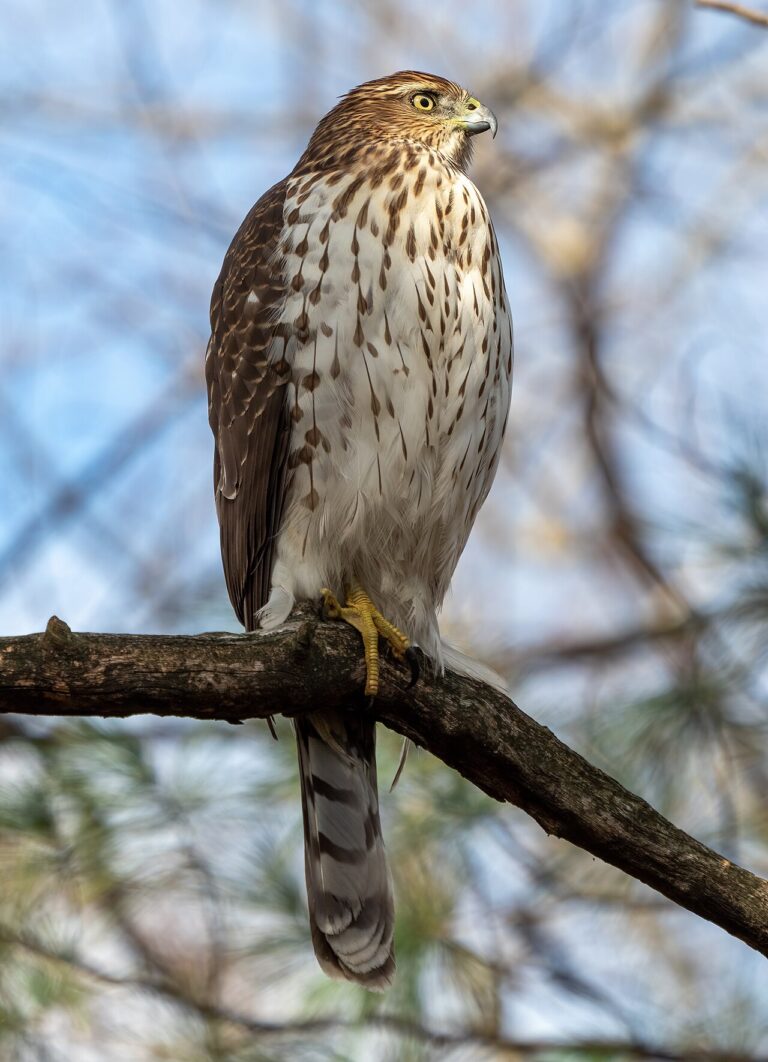
You do not need to visit a cliff to see speed. The fastest birds most people encounter are the accipiter hawks that hunt songbirds. The Cooper’s hawk and the smaller sharp shinned hawk are built for explosive bursts and tight maneuvering, dashing through yards and around trees in pursuit of feeder birds. Their acceleration is breathtaking, and a successful strike is over in a heartbeat. In cities, a peregrine falcon may hunt overhead, occasionally stooping on a pigeon in full view of astonished onlookers. So the speed champions of the bird world are not distant exotics; scaled down versions patrol backyards everywhere. Learn to recognize them with our hawk identification guide.
Measuring Bird Speed: Why Records Vary
Published top speeds differ between sources, and there is a good reason. Measuring how fast a bird flies is genuinely difficult, especially for a diving peregrine moving faster than a race car. Scientists use radar, tiny GPS and accelerometer tags, and carefully timed observations, but diving speeds in particular are hard to capture and depend on conditions like the angle and length of the dive. That is why you will see the peregrine’s top speed quoted anywhere from just over 200 to nearly 240 miles per hour. The exact number shifts with the method, but the ranking does not: the peregrine falcon remains the fastest bird on Earth. For more record setting species, see our companion guides on the smartest birds and smallest birds.
Speed in Migration and Everyday Flight
Top speed records grab headlines, but the everyday flight speeds of birds are interesting in their own right and more relevant to what you see in a yard. Most small songbirds cruise at around 20 to 30 miles per hour, fast enough to cross a yard in a blink but far from record territory. Ducks and shorebirds fly faster, often 40 to 50 miles per hour, which helps them cover the long distances of migration efficiently. During migration, birds generally fly at steady, sustainable speeds rather than sprinting, balancing speed against the energy they must conserve for journeys of hundreds or thousands of miles. Tailwinds can boost their ground speed dramatically, which is why migrating birds often wait for favorable winds before departing. So while the peregrine’s dive is the showstopper, the workaday flight of ordinary birds is a marvel of efficiency tuned for endurance rather than raw speed.
Speed as a Survival Tool
For most birds, speed is not about setting records; it is about staying alive. Prey birds use bursts of speed and agility to escape predators, jinking through cover where a pursuing hawk cannot follow. Predators like the accipiter hawks use acceleration and maneuverability rather than sustained top speed, ambushing prey with a short explosive dash. The peregrine’s extreme stoop is the ultimate expression of speed as a weapon, converting height into a strike so fast the prey never sees it coming. Even the fast level flight of swifts serves survival, letting them catch flying insects on the wing and outpace many threats. Understanding speed as a tool for the eternal contest between hunter and hunted makes it more than a trivia answer; it is a central fact of how birds live and die. See how the hunters operate in our guide to hawks and guide to owl hunting.
Speed You Can Watch in Your Own Yard
You do not have to travel to witness real avian speed. Watch a mourning dove burst from a feeder and its wings can carry it past 40 miles per hour within seconds, whistling as it goes. Chimney swifts and swallows carve tight, high speed arcs over yards and fields all summer as they snatch insects on the wing. Even a startled songbird diving for cover moves faster than most people expect. Keep a clear line of sight to open sky above your feeding station and you will regularly catch these quick fliers, no cliffs or open ocean required.
Frequently Asked Questions
What is the fastest bird in the world?
The peregrine falcon is the fastest bird and the fastest animal on Earth, reaching speeds over 200 miles per hour in its hunting dive, called a stoop. In level flight it is fast but not record breaking; the extreme speed comes during the dive.
How fast can a peregrine falcon fly?
In a hunting stoop, a peregrine falcon can exceed 200 miles per hour, with the fastest measured dives around 240 miles per hour. In ordinary level flight it cruises much slower, roughly 40 to 60 miles per hour.
What is the fastest bird in level flight?
In sustained level flight, birds like the white throated needletail and certain swifts and ducks are among the fastest, with some swifts credited with level flight speeds around 70 miles per hour or more, faster than most birds can manage without diving.
How do birds fly so fast?
Fast birds combine streamlined bodies, pointed swept back wings, powerful flight muscles, and in the peregrine’s case gravity. The stoop turns a dive into a high speed attack, while swifts rely on long narrow wings built for efficient, rapid, sustained flight.
Is the peregrine falcon faster than a cheetah?
Yes, by a wide margin. A cheetah tops out around 70 miles per hour on land, while a diving peregrine falcon exceeds 200 miles per hour. The falcon is far and away the faster of the two, though it achieves that speed by diving.
What is the fastest backyard bird?
Among common birds, hawks and falcons are the speed champions. The sharp shinned hawk and Cooper’s hawk dash through yards after songbirds with impressive bursts, and a peregrine may hunt over cities, making these the fastest birds most people can spot.
How is bird speed measured?
Bird speed is measured with radar, GPS trackers, and timed observations. Diving speeds like the peregrine’s are hardest to measure and require specialized equipment, which is why published top speeds vary somewhat between studies.