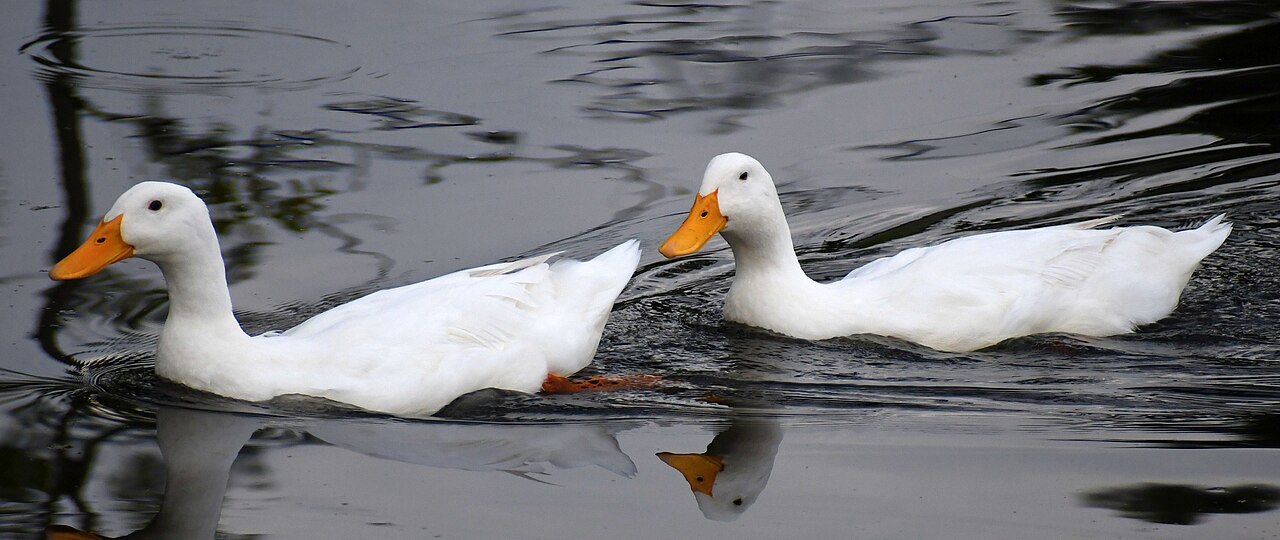
Pekin Duck: Keeping the Classic White Farm Duck
The American Pekin is the white farm duck almost everyone pictures when they think of a duck, and it accounts for the large majority of duck meat produced in the United States. It grows fast, lays 150 to 200 eggs a year, is calm and easy to handle, and cannot fly, which makes it the standard choice for a backyard flock.
It is also not the same thing as Peking duck the dish, which causes constant confusion in search results. The breed originated in China and reached the United States in the 1870s, and while the roast dish traditionally uses a different Chinese breed, the names have converged in English. This guide covers keeping Pekins: housing, feeding, eggs, meat, and the health issues that come with a bird bred to grow this fast.
| Quick Facts | American Pekin Duck |
|---|---|
| Weight | Drakes 9 to 11 lb, hens 8 to 9 lb |
| Eggs | 150 to 200 large white eggs per year |
| Flight | Cannot fly, too heavy |
| Lifespan | 5 to 10 years as pets, less in production |
| Market weight | Reached in roughly 7 weeks |
| Temperament | Calm, docile, noisy |
Origins and the Name Confusion
The breed developed in China and was imported to the United States in the 1870s, where selective breeding produced the American Pekin, a heavier, faster-growing bird than the original stock. It was admitted to the American Poultry Association standard in 1874.
The dish is a separate matter. Peking duck as served in Chinese restaurants traditionally uses specific Chinese breeds prepared by a particular roasting method, and while American Pekin meat is used for it commercially in the West, the dish and the breed are not the same thing.
Commercially the breed dominates. American Pekins account for the overwhelming majority of duck meat produced in the United States, valued for fast growth, white plumage that leaves no dark pin feathers in the carcass, and docility in confinement. Our guide to types of ducks covers the alternatives.
Size, Growth, and Why It Matters
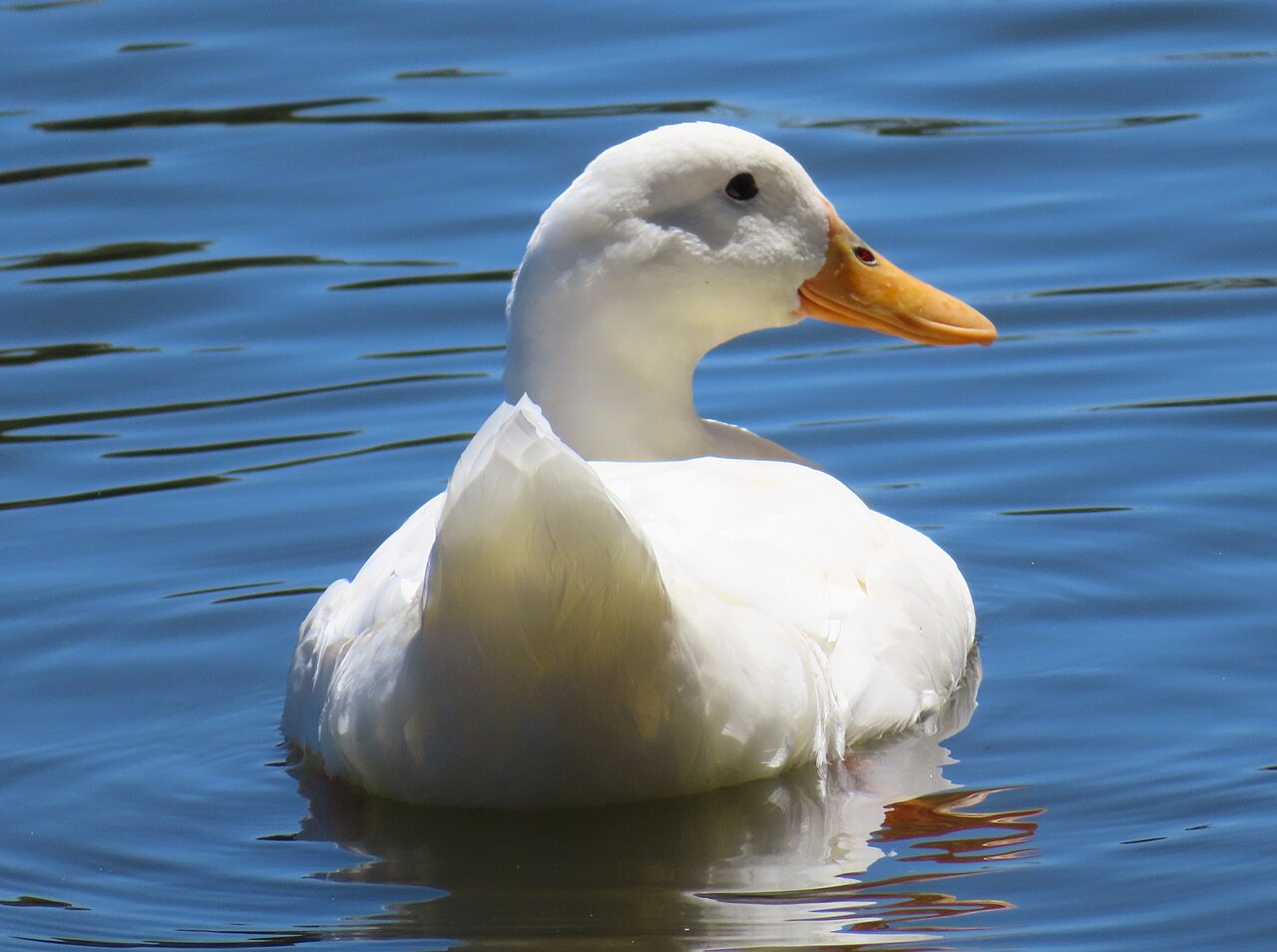
Pekins are large. Drakes reach 9 to 11 lb and hens 8 to 9 lb, and they carry themselves upright with a distinctive raised posture that distinguishes them from other white ducks.
Growth is extremely fast, and this is the breed’s defining commercial trait. Pekins reach market weight of around 6 to 7 lb in roughly seven weeks, which is comparable to a broiler chicken and far quicker than heritage duck breeds.
That speed carries a cost for birds kept beyond market age. Rapid growth on a heavy frame contributes to leg and joint problems, and Pekins kept as pets need careful management of body condition. A pet Pekin should not be fed for maximum growth, and adults benefit from a maintenance ration rather than the high-protein feed used for meat production.
Housing
The shelter requirements are modest but specific. Pekins need a predator-proof house with roughly 4 to 6 sq ft per bird, dry bedding, and good ventilation, and they do not need or use perches since they are ground birds.
They tolerate cold well thanks to dense down and a thick fat layer, and they generally prefer being outside in weather that sends chickens indoors. What they cannot tolerate is damp bedding, which causes foot and respiratory problems quickly, and their splashing makes keeping bedding dry the main daily challenge.
Fencing is easier than for most poultry because they cannot fly. A 2 to 3 ft fence contains them, which is a genuine advantage over chickens and over lighter duck breeds. Predator protection matters more than containment, since a flightless heavy bird has no escape from foxes, raccoons, or dogs, and secure locking at night is essential. Our guide to baby ducks covers the vulnerable early weeks.
Water Requirements
Pekins do not need a pond, which surprises people, but they do need enough water to submerge their entire bill and preferably their head. Ducks clear their nostrils and clean their eyes by dunking, and without deep enough water they develop eye infections and nostril blockages.
A bucket or a deep rubber pan works. It needs to be deep enough for head submersion, stable enough not to tip, and cleaned frequently since ducks foul water fast, and it must be available whenever they have feed, because ducks need water to swallow.
Swimming is a want rather than a need for adults. A kiddie pool provides genuine enrichment and improves feather condition, and Pekins use it enthusiastically, but they do not require it for health provided drinking and dunking water is available. If you do provide a pool, plan on emptying it regularly, because it becomes filthy within a day.
Feeding
Waterfowl feed is preferable to chicken feed, and the reason is niacin. Ducks require substantially more vitamin B3 than chickens, and standard chick starter causes leg problems in ducklings, which is fixed either by using a waterfowl formulation or by adding brewer’s yeast at roughly a tablespoon and a half per cup of feed.
Protein should step down with age. Around 18 to 20 percent for the first two to three weeks, then 15 to 16 percent as a grower, since excessive protein during later growth contributes to angel wing, a permanent deformity in which the wing twists outward. Laying hens then need a layer ration with adequate calcium.
Avoid medicated chick feed, since ducklings eat more by body weight than chicks and can overdose on the coccidiostat. Supplement with greens, peas, and insects, provide grit if they are not free-ranging on soil, and skip bread entirely, as our guides to what ducks eat and to whether chickens can eat bread both explain.
Eggs
Pekin hens lay 150 to 200 large white eggs per year, which is respectable though below the dedicated laying breeds. Khaki Campbells and Indian Runners both exceed 250 and are the better choice if eggs are the main goal.
Duck eggs differ from chicken eggs in useful ways. They are larger, with a proportionally bigger yolk and higher fat content, and many bakers prefer them for richer cakes and pastries. The shell is thicker and the membrane tougher, which extends shelf life.
Laying behavior is convenient. Ducks lay early, usually before mid-morning, and keeping them confined until then means you find the eggs rather than hunting for them. They are less consistent about using nest boxes than chickens and often lay in a corner of the bedding, so a nest area at ground level with deep straw works better than an elevated box.
Meat and Dual Purpose Use
Pekins are the standard meat duck for good reasons. They reach 6 to 7 lb in about seven weeks, the white plumage leaves no dark pin feathers in the skin, and the meat is milder and less gamey than that of Muscovy or wild duck.
The carcass differs from chicken in ways worth knowing. Duck carries far more fat under the skin, which renders during cooking and produces the crisp skin the bird is prized for, and the meat is all dark rather than divided into light and dark.
For a homestead flock the calculation is straightforward. Surplus drakes become genuinely worthwhile table birds rather than a disposal problem, hens lay usefully for several years, and the same flock does both jobs. Processing at seven to eight weeks avoids the pin feather stage that makes plucking difficult at intermediate ages.
Health Problems
Leg and joint problems top the list, driven by rapid growth on a heavy frame. Limping, reluctance to stand, and swollen joints all warrant attention, and prevention runs through appropriate feed for the bird’s age and purpose, dry soft bedding, and avoiding hard surfaces.
Bumblefoot is the specific foot condition to watch, a bacterial infection entering through a wound on the underside of the foot, appearing as a swollen pad often with a dark scab. Wet dirty bedding and rough surfaces are the usual causes, and early cases respond to cleaning and dressing while advanced ones need veterinary treatment.
Angel wing, wet feather, and respiratory infection round out the common problems. Angel wing results from excessive protein during growth and is permanent once the bones set. Wet feather occurs when a duck cannot waterproof properly, usually because of dirty water or lack of bathing opportunity, and leaves the bird waterlogged and chilled. All three are husbandry problems rather than bad luck.
Are Pekins Good for Beginners?
Yes, and they are the standard recommendation for a first duck. They are calm, easy to handle, hardy in cold and wet weather, contained by a low fence since they cannot fly, and productive enough for both eggs and meat.
The genuine drawbacks are noise and mess. Pekin hens are loud, giving the classic quack repeatedly and at volume, which matters in a suburban setting with close neighbors. And they are considerably messier than chickens, moving water everywhere and producing wet droppings that make bedding management a daily job.
Keep at least two, since ducks are intensely social and a single bird is stressed and constantly calling. If keeping a drake, allow four to six hens per drake, because a hen with too many males suffers physical injury from repeated mating. A flock of hens alone works perfectly well if fertile eggs are not the goal, which is the same consideration our guide to the female duck covers in more detail, and our guide to guinea fowl sets out a very different noise trade-off.
Related reading: Cayuga Duck.
Frequently Asked Questions
Is a Pekin duck the same as Peking duck?
Not quite. The American Pekin is a breed that originated in China and reached the United States in the 1870s. Peking duck is a dish traditionally made with specific Chinese breeds and a particular roasting method, though American Pekin meat is used for it commercially in the West.
Can Pekin ducks fly?
No, they are far too heavy. This is a practical advantage for keepers, since a 2 to 3 ft fence contains them, but it also means they have no escape from predators and need secure locking at night.
How many eggs do Pekin ducks lay?
Around 150 to 200 large white eggs per year, usually laid before mid-morning. Duck eggs have larger yolks and higher fat content than chicken eggs, which many bakers prefer. Khaki Campbells and Indian Runners lay considerably more if eggs are the priority.
Do Pekin ducks need a pond?
No, but they need water deep enough to submerge the entire bill and preferably the head, since they clear nostrils and clean eyes by dunking. A bucket or deep pan suffices. A pool is enrichment rather than a requirement, and it needs emptying often.
What should I feed Pekin ducks?
Waterfowl feed where available, since ducks need more niacin than chickens and chick starter causes leg problems. Otherwise add brewer’s yeast to chick starter. Step protein down from 18 to 20 percent to 15 to 16 percent after three weeks to avoid angel wing.
Why does my Pekin have leg problems?
Usually rapid growth on a heavy frame combined with feed intended for meat production, hard surfaces, or wet bedding. Pet Pekins should be on a maintenance ration rather than high-protein grower feed, with dry soft bedding and soft ground.
Are Pekin ducks loud?
The hens are, giving the classic loud quack repeatedly, while drakes produce only a quiet raspy call. This is worth considering in a suburban setting. They are also considerably messier than chickens, since they move large volumes of water into their bedding.