Guinea Fowl: Tick Control, Noise, and What Keeping Them Involves
Guinea fowl are African game birds kept for pest control, alarm calling, and meat, and they behave nothing like chickens. They fly well, roost in trees given the chance, forage over acres rather than yards, and produce a repetitive metallic alarm call loud enough to end friendships with neighbors.
They also eat ticks in quantity, which is the reason many people acquire them. A flock working a property removes ticks, beetles, grasshoppers, and other insects without scratching up garden beds the way chickens do, since guineas pick from the surface rather than digging. This guide covers what keeping them actually involves, the noise, the training required to keep them home, egg and meat production, and where they go wrong.
| Quick Facts | Guinea Fowl |
|---|---|
| Species | Helmeted guinea fowl, Numida meleagris |
| Weight | Roughly 3 to 4 lb |
| Eggs | About 100 per year, seasonal, hard-shelled |
| Lifespan | 10 to 15 years |
| Main draw | Tick and insect control without garden damage |
| Main drawback | Noise, and they must be trained to come home |
What Guinea Fowl Are
The birds kept worldwide are helmeted guinea fowl, native to sub-Saharan Africa, where they live in large flocks in open grassland and scrub. Domestication is ancient but incomplete, and guineas retain far more wild behavior than chickens do.
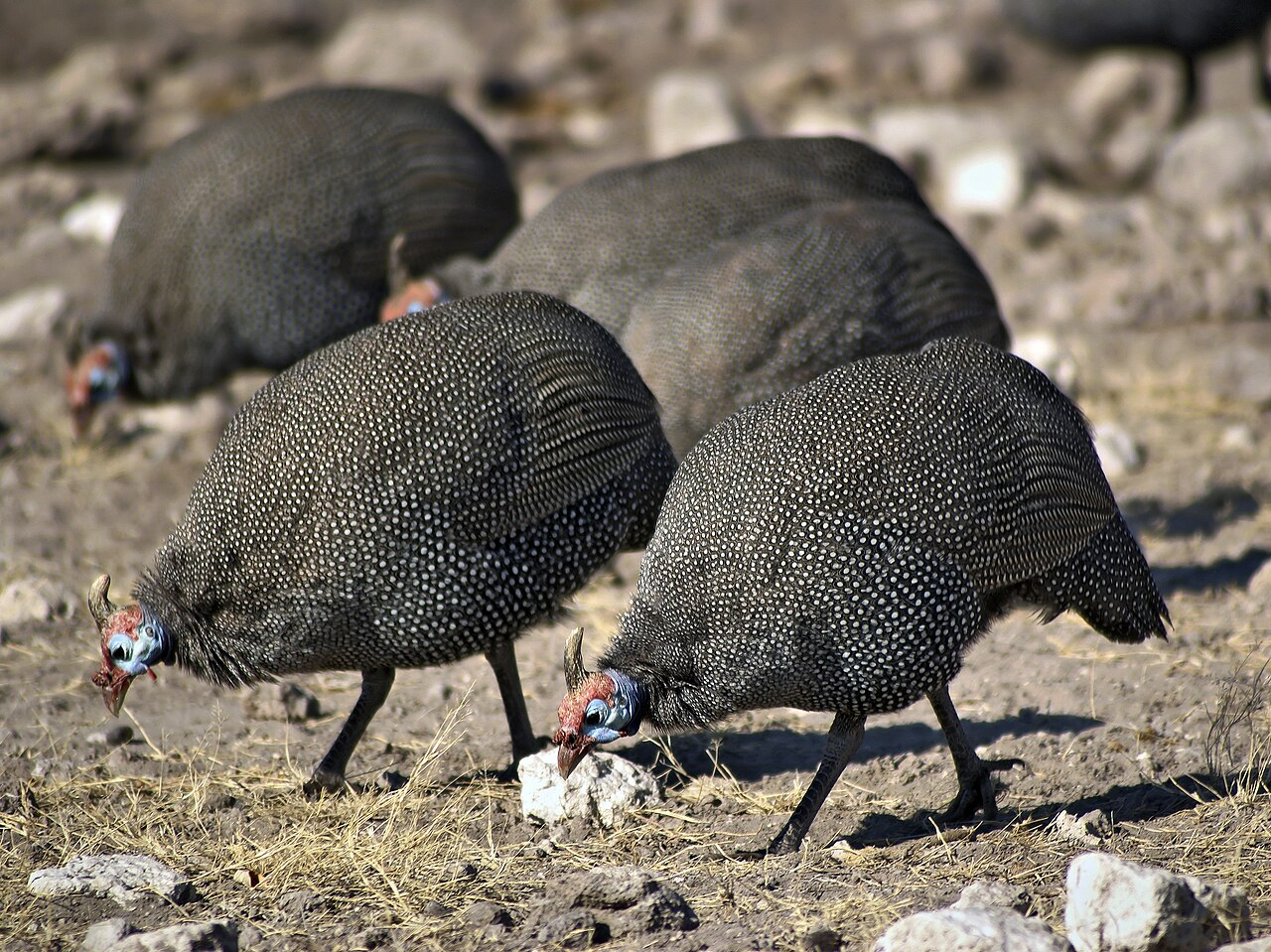
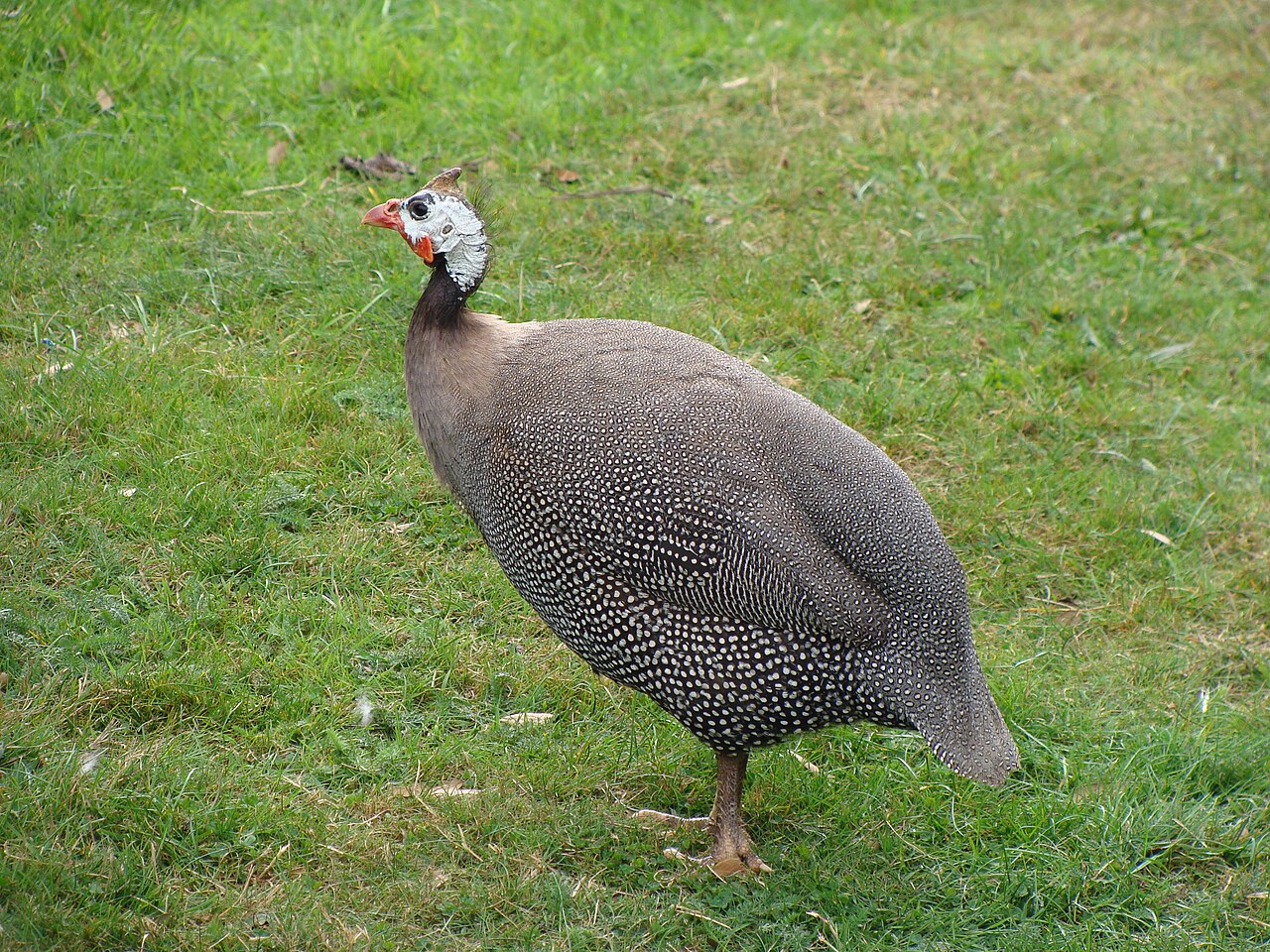
The appearance is distinctive. Adults have a bare blue-grey head with a bony casque, red wattles, and dark grey plumage covered in fine white spots, and the standard color is called pearl. Selective breeding has produced lavender, royal purple, coral blue, white, and pied varieties.
They are gregarious to an unusual degree. A guinea flock moves as a unit, roosts together, and reacts collectively, and a single guinea kept alone is stressed and constantly vocal. Six is a reasonable minimum, and larger groups behave more calmly.
Tick and Pest Control
This is the practical case for keeping them. Guinea fowl forage constantly across a wide area, taking ticks, beetles, grasshoppers, crickets, flies, wasps, and other insects from vegetation and the ground surface.
The key difference from chickens is method. Guineas pick rather than scratch, so they work through a garden bed without excavating it, and many keepers who cannot free-range chickens near plantings can free-range guineas. They also cover far more ground, ranging over several acres rather than staying near the coop.
The tick claim needs a realistic frame. Guineas genuinely eat ticks and a flock reduces tick numbers on a property, but they are not a complete solution and they will not clear a heavily infested woodland. They work best in open and semi-open ground, and combining them with habitat management does more than either alone. Our guide to ticks versus bed bugs covers the tick side, and our guide to crickets versus grasshoppers the insects they take most readily.
The Noise
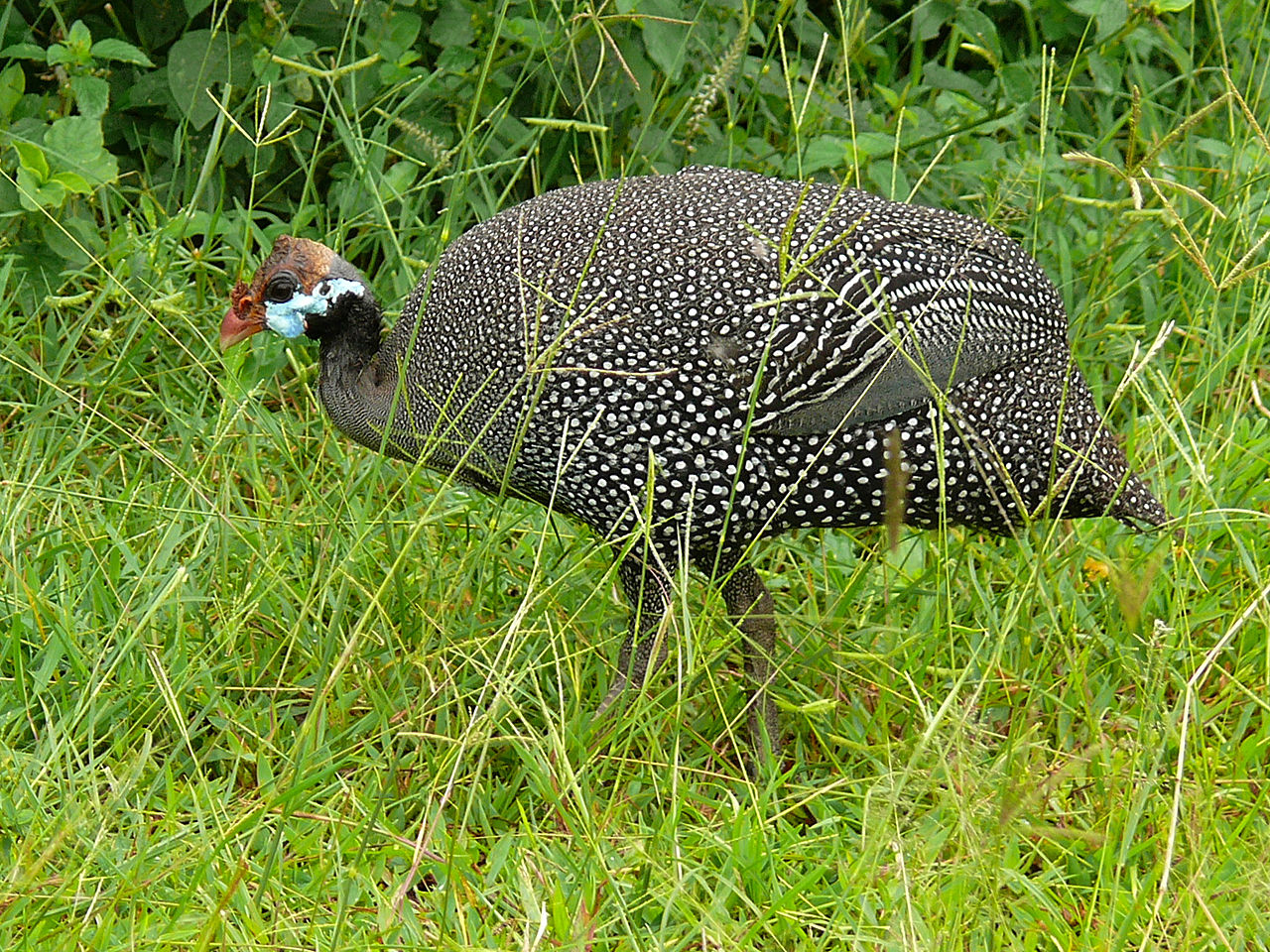
Guinea fowl are loud, and this is the single most common reason people give them up. The alarm call is a repetitive metallic chattering that carries a long distance and is triggered by anything unfamiliar: a visitor, a delivery van, a hawk overhead, a deer at the fence line, or nothing identifiable at all.
Once one bird starts, the whole flock joins. The call can continue for several minutes after the trigger has gone, and the birds are active from first light, which is earlier than most neighbors appreciate in summer.
Females and males sound different, which is also how the sexes are told apart. Hens produce a two-syllable call often written as buck-wheat or come-back, while males give a single-syllable chirping. That difference is the most reliable sexing method, since the physical differences in wattle size and helmet shape are subtle and unreliable until birds are mature.
Keeping Them Home
Guineas do not naturally return to a coop, and a flock released without training simply leaves. This is the second most common failure mode and it is entirely preventable.
The standard approach is confinement first. Keep new birds fully confined in the coop for two to six weeks so they identify it as home, then release one or two birds at a time while the rest remain inside, which keeps the released birds nearby. Only release the whole flock once the first birds reliably return.
Then use food as the anchor. Feed a small amount of scratch grain or millet in the coop at the same time each evening and call the birds with a consistent sound, and they learn to come in for it. Guineas prefer roosting in trees given any choice, so consistent evening feeding is what overcomes that preference, and a flock roosting in trees loses birds to owls and raccoons steadily.
Eggs
Guinea hens lay roughly 100 eggs per year in a defined season, typically spring through early autumn, which is far less than a production chicken and much more seasonal. Eggs are smaller than chicken eggs, roughly two guinea eggs to one large chicken egg.
The shell is the notable feature. Guinea eggshells are markedly thicker and harder than chicken eggshells, which makes them awkward to crack but gives them excellent keeping qualities, and they are pointed at one end with a light brown to cream color, often speckled.
Finding them is the challenge. Guinea hens hide their nests, laying communally in dense cover well away from the coop, and a hidden nest is often only discovered when a hen appears with keets or when someone stumbles on it. Keepers who want the eggs generally keep the birds confined until midmorning, since most laying happens early, and that single practice recovers most of the crop.
Raising Keets
Young guinea fowl are called keets and they are notably more fragile than chicks in their first weeks. They need a brooder at around 95 F for the first week, reduced by about five degrees weekly, and they are highly susceptible to chilling and dampness.
Feed a high-protein game bird or turkey starter at 24 to 28 percent rather than chick starter, since guineas grow fast and need more protein than chickens. Keets also drown easily, so waterers need marbles or pebbles in the base for the first weeks.
Guinea hens are poor mothers, which is the reason most keets are raised artificially or under broody chickens. Hens lead their keets through wet grass, where the young chill and die, and they abandon stragglers rather than waiting. Many keepers collect eggs and incubate them or slip them under a broody chicken hen, which produces far better survival than leaving the guinea hen to it.
Guineas With Chickens
Mixed flocks work, with caveats. Guineas and chickens can share a coop and run, and many smallholdings keep both, but the guineas will dominate at feeders and can harass chickens, particularly during the breeding season when males become assertive.
Space reduces the friction. Multiple feeding stations, plenty of room, and separate roosting areas within the coop all help, and problems concentrate where birds are crowded. Raising keets and chicks together produces the calmest mixed flocks.
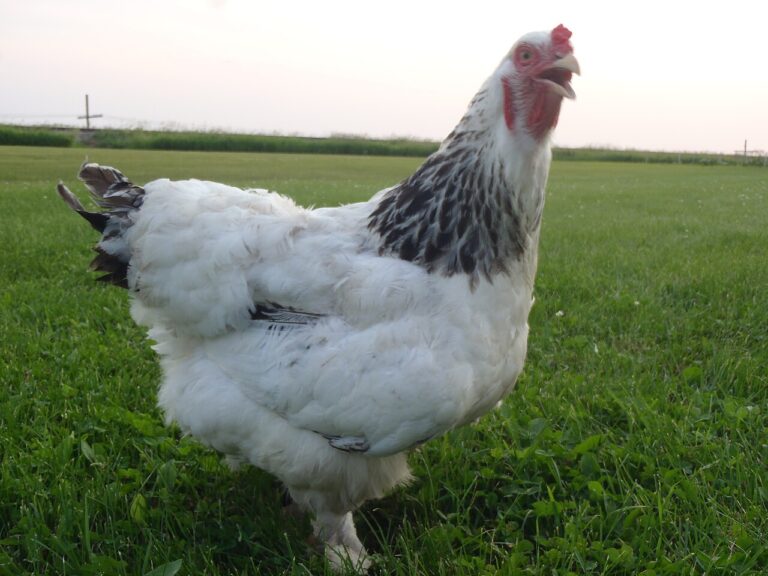
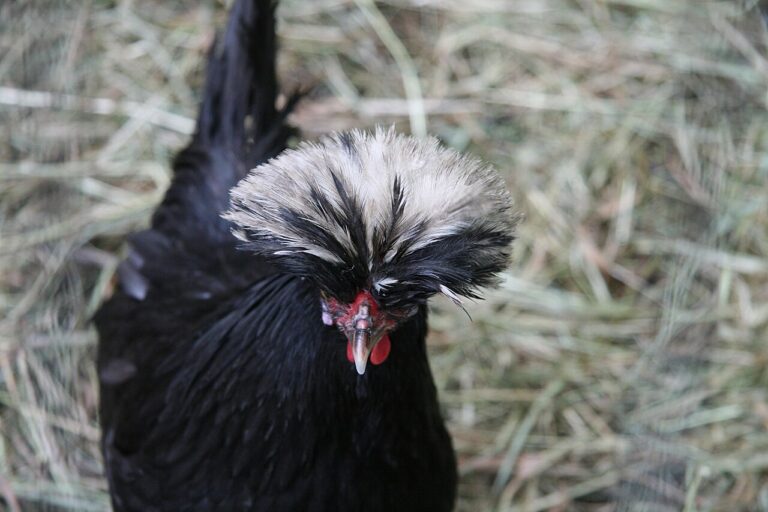
Guinea males can be genuinely aggressive toward roosters in spring, and a small or docile breed of chicken suffers most. The heavy calm breeds covered in our guides to the Brahma chicken and the Polish chicken are both poor matches for that reason, since Brahmas will not assert themselves and Polish cannot see the aggressor coming.
Housing and Fencing
The coop needs to be secure and, above all, tall. Guineas roost high given any option, so perches near the ceiling suit them better than the low roosts appropriate for heavy chicken breeds, and they will use the highest available point.
Allow around 3 to 4 sq ft per bird inside, with good ventilation and dry bedding. Guineas are hardy in cold weather but their bare heads and wattles are susceptible to frostbite, so a draft-free coop matters more than supplemental heat.
Fencing is largely futile. Guineas fly well, clear a 6 ft fence without difficulty, and range over acres regardless of what you build, so most keepers accept free ranging as the model rather than attempting containment. If confinement is necessary, a fully covered run is the only reliable option, and clipping one wing helps but reduces their ability to escape predators.
Are Guinea Fowl Worth Keeping?
They suit a specific situation well and are a poor fit outside it. The right circumstances are acreage, no close neighbors, a genuine tick or insect problem, and tolerance for birds that operate on their own terms.
The benefits are real. Effective pest control without garden damage, an alarm system that reliably announces hawks, foxes, and strangers, meat that is lean and flavorful and commands good prices, and hardy birds that live 10 to 15 years with minimal care once established.
The costs are equally real. Noise that ends neighborly relations, birds that wander onto roads and get killed, poor mothering that means keets need artificial rearing, seasonal and hard-to-find eggs, and a general refusal to be managed the way chickens can be. Anyone whose main goal is eggs should keep chickens, and anyone whose main goal is ticks over open ground and who has the space should consider guineas seriously. Our guides to coturnix quail and what peacocks eat cover other non-chicken poultry with their own trade-offs.
Related reading: Guinea Fowl Sounds.
Frequently Asked Questions
Do guinea fowl really eat ticks?
Yes, and a flock measurably reduces tick numbers on a property, but they are not a complete solution and will not clear heavily infested woodland. They work best on open and semi-open ground, and they pick from the surface rather than scratching, so they do not damage garden beds.
How loud are guinea fowl?
Very. The alarm call is a repetitive metallic chattering that carries several hundred yards, triggers at anything unfamiliar, and continues for minutes after the trigger has gone. They start at first light. Noise complaints are the most common reason flocks are rehomed.
How do you keep guinea fowl from wandering off?
Confine new birds to the coop for two to six weeks so they identify it as home, then release one or two at a time while the rest stay inside. Feed scratch grain in the coop each evening at the same time with a consistent call to anchor the routine.
How many eggs do guinea fowl lay?
Roughly 100 per year in a spring to autumn season, smaller than chicken eggs with markedly thicker shells. Hens hide their nests in dense cover, so keeping birds confined until midmorning recovers most of the crop since laying happens early.
Can guinea fowl live with chickens?
Yes, with caveats. They dominate at feeders and males can harass roosters in the breeding season, so provide multiple feeding stations and plenty of space. Raising keets and chicks together produces the calmest mixed flocks. Docile chicken breeds suffer most.
How do you tell male and female guinea fowl apart?
By the call. Hens give a two-syllable call often written as buck-wheat, while males give a single-syllable chirp. Physical differences in wattle size and helmet shape are subtle and unreliable until the birds are mature.
Are guinea fowl good mothers?
No. Hens lead keets through wet grass where the young chill and die, and they abandon stragglers. Most keepers incubate the eggs or slip them under a broody chicken hen, which produces far better survival rates.