Angelfish: Size, Lifespan, Tank Setup and the Two Fish Sharing the Name
Angelfish are tall, laterally compressed cichlids from the Amazon basin, sold in nearly every US aquarium store and kept by more freshwater hobbyists than almost any other cichlid. The name covers two completely unrelated groups of fish, and knowing which one you are looking at decides everything from tank size to price.
Freshwater angelfish belong to the genus Pterophyllum, three species of South American cichlids that reach about 6 in (15 cm) long and 8 in (20 cm) tall. Marine angelfish belong to the family Pomacanthidae, live on coral reefs and include species that grow past 18 in (46 cm) and cost hundreds of dollars. The fish most people mean is the freshwater one.
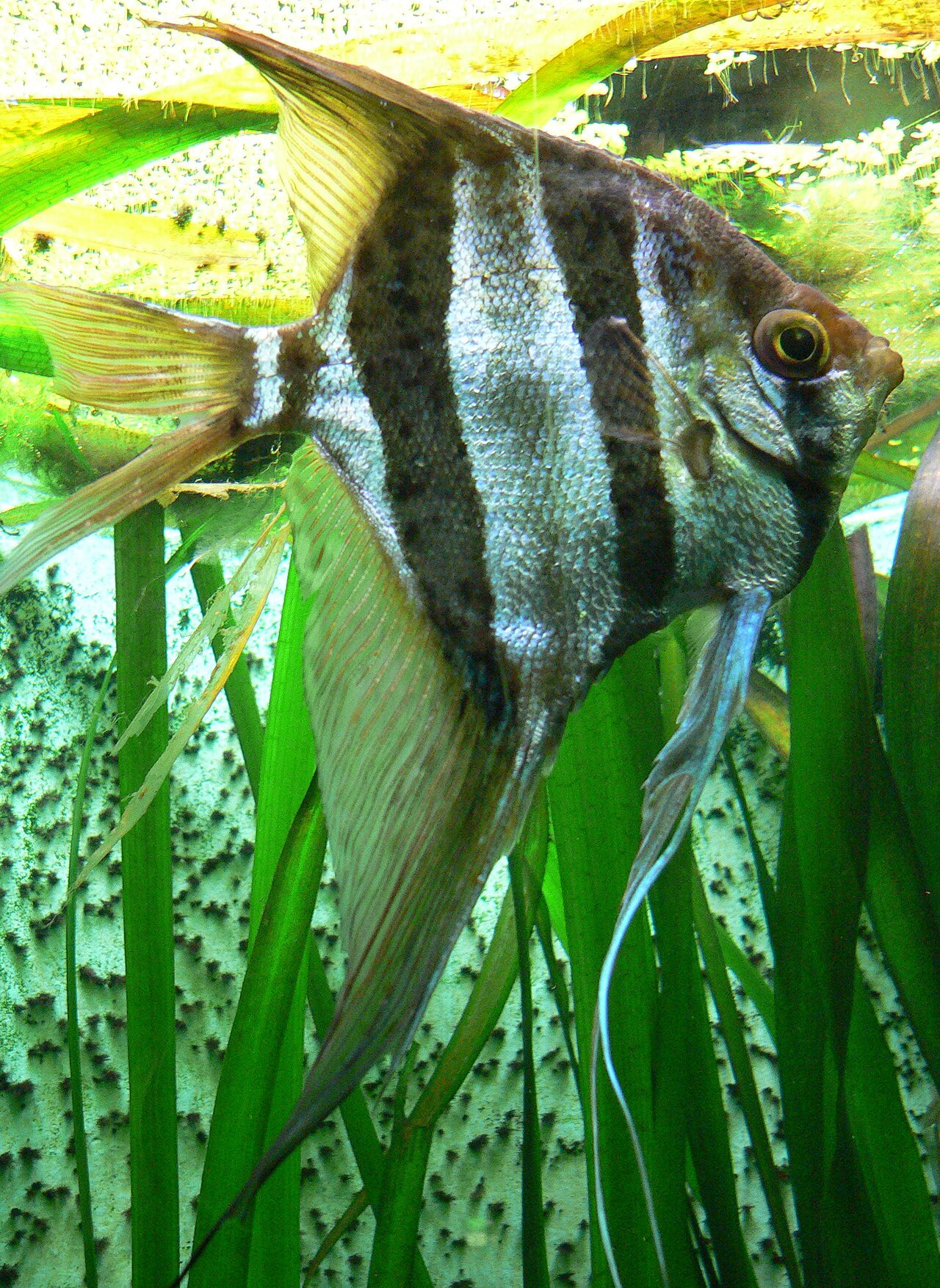
Freshwater angelfish (Pterophyllum scalare) are Amazonian cichlids that grow 6 in (15 cm) long and 8 in (20 cm) tall, live 8 to 10 years, and need a tall tank of at least 29 gallons kept at 78 to 84 degrees F (26 to 29 C). They are semi aggressive, pair off as adults and will eat any fish small enough to swallow.
| Attribute | Freshwater angelfish | Marine angelfish |
|---|---|---|
| Family | Cichlidae, Pterophyllum | Pomacanthidae |
| Origin | Amazon basin | Tropical reefs worldwide |
| Adult size | 6 in long, 8 in tall | 3 to 24 in (8 to 61 cm) |
| Lifespan | 8 to 10 years | 10 to 20 years |
| Minimum tank | 29 gallons | 70 to 220 gallons |
| Typical price | 5 to 40 dollars | 60 to 20,000 dollars |
| Difficulty | Intermediate | Advanced |
What Is an Angelfish?
A freshwater angelfish is a cichlid built for life among flooded tree roots. The disc shaped body and long trailing fins let it slip vertically between submerged branches in the slow blackwater tributaries of the Amazon, Orinoco and Essequibo, where the species has been collected commercially since the 1920s.
Three species make up the genus. Pterophyllum scalare is the common aquarium angelfish and the parent of every domestic strain. Pterophyllum altum, the altum angelfish, is taller, wilder and far more demanding. Pterophyllum leopoldi is smaller, rarer and the most aggressive of the three.
Marine angelfish share only the name and the general body shape. They graze sponges and algae on coral reefs, carry bright banded or spotted patterning, and many change color dramatically between juvenile and adult. Reference databases like FishBase list well over 80 pomacanthid species, none of them related to the Amazonian fish.
Freshwater vs Saltwater Angelfish
The two groups cannot be kept together or interchanged in any way. Freshwater angelfish need soft acidic water in a tall community tank; marine angelfish need a mature reef or fish only system with stable salinity, and most eat sponge material that is hard to replicate in captivity.
Cost separates them just as sharply. A domestic freshwater angelfish runs 5 to 15 dollars at a chain store and up to 40 dollars for a good quality strain. Marine angelfish start around 60 dollars for a dwarf species and climb into the thousands for deepwater rarities collected by submersible.
Difficulty follows the same pattern. Freshwater angelfish suit an aquarist who has already run a stable community tank for a year. Marine angelfish, particularly the large Pomacanthus species, are a project for experienced reef keepers with large systems and the patience to handle a fish that may nip corals.
Angelfish Size and Growth
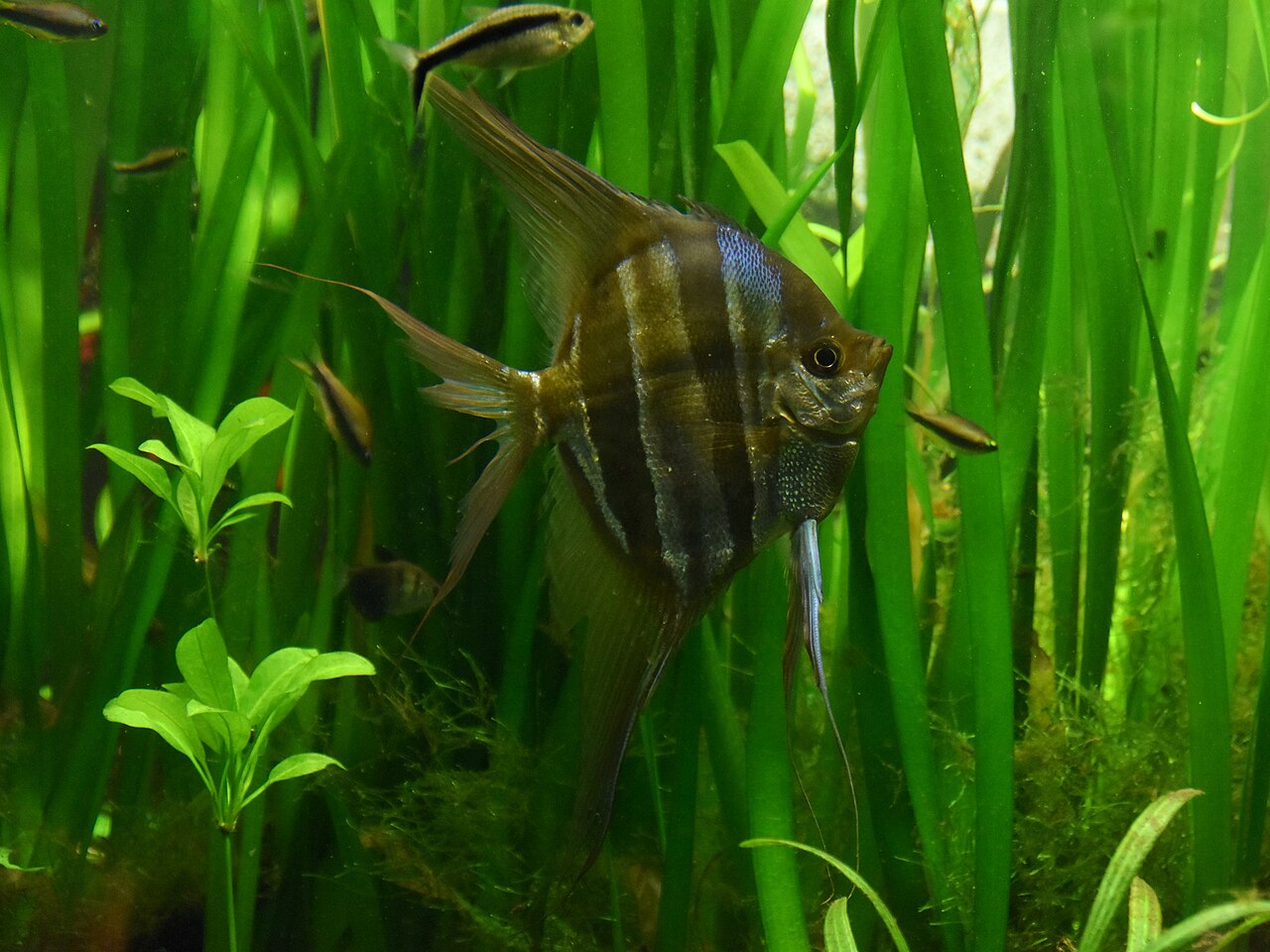
A domestic freshwater angelfish reaches about 6 in (15 cm) in body length and 8 in (20 cm) from dorsal tip to anal fin tip. Wild caught P. altum is substantially larger, with a vertical span that can exceed 13 in (33 cm) in a mature specimen.
Growth is quick. A dime sized juvenile reaches quarter size in about two months and approaches adult dimensions within eight to twelve months under good conditions. The height develops faster than the length, which is why a young angelfish looks gangly before it fills out.
Vertical space is the constraint that catches new keepers out. A standard 20 gallon long tank is only 12 in (30 cm) tall, which leaves an adult angelfish no clearance above or below. Tank height of at least 18 in (46 cm) should be treated as a hard requirement rather than a preference.
Angelfish Lifespan
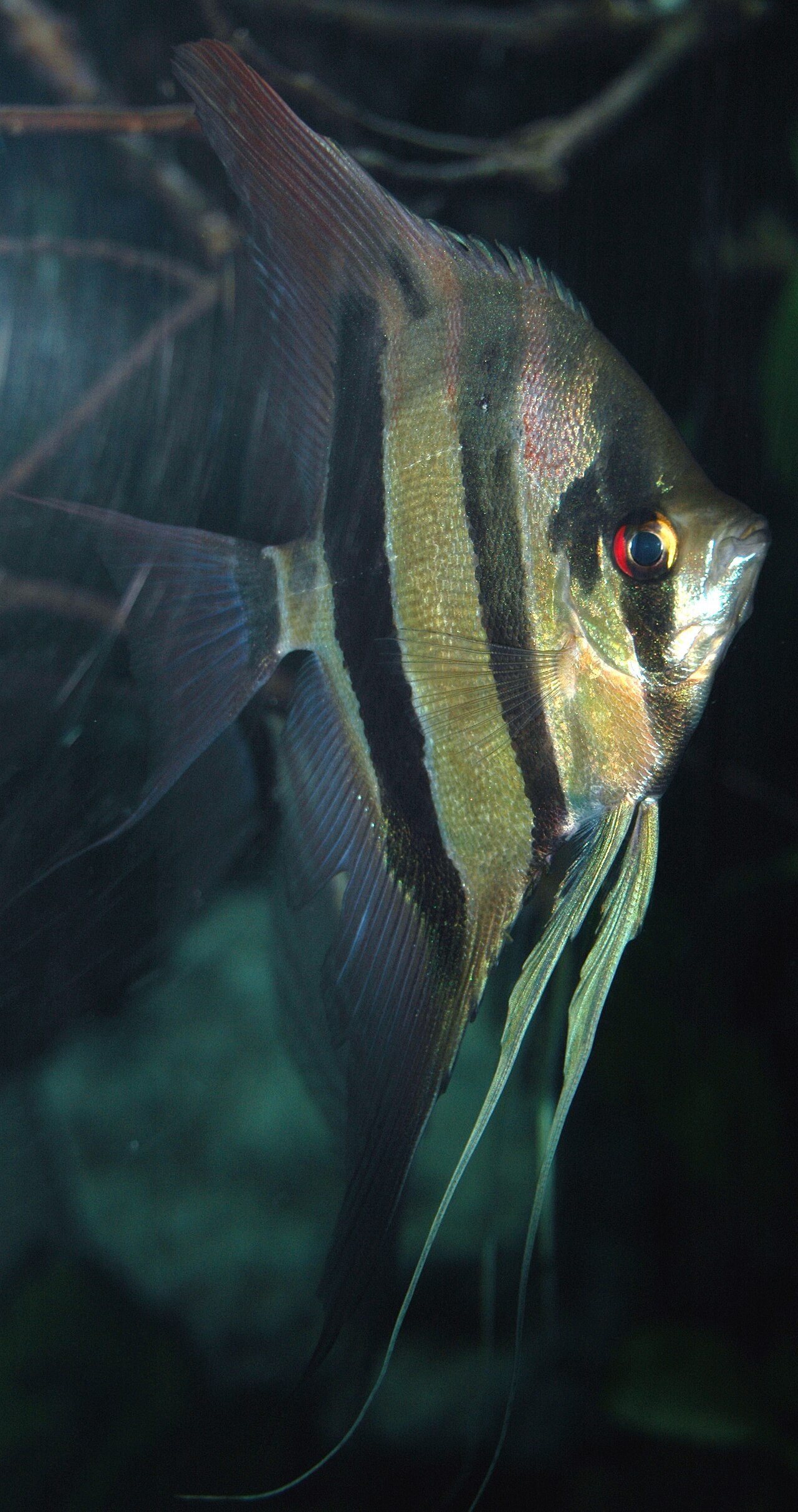
Freshwater angelfish live 8 to 10 years in a well maintained aquarium, and individuals reaching 12 years are documented. That is long for a mid sized community fish and comparable to what a fancy goldfish manages in a coldwater setup.
Line breeding has costs. Heavily selected strains such as some veil tails and koi patterns show weaker immune responses and shorter lives than standard silver angelfish, which remain the hardiest option available. If longevity matters more than appearance, a plain silver is the better buy.
Most premature deaths trace to water quality and disease rather than aging. Angelfish are sensitive to nitrate accumulation and are a common early victim of hole in the head disease in tanks with neglected maintenance. Weekly water changes do more for lifespan than any supplement.
Is Angel Fish a Beginner Fish?
Angelfish are not a true beginner fish, though they are often sold as one. They are hardy against water chemistry swings but semi aggressive, territorial when breeding, and predatory toward anything small enough to fit in their mouths. Those behaviors surprise keepers who bought them as peaceful community fish.
The realistic prerequisite is one successfully run community tank. Someone who understands the nitrogen cycle, tests water and has watched a tank mature for six months will do fine with angelfish. Someone setting up their first aquarium is better served by tetras or a coldwater setup while they learn.
The other beginner trap is buying six juveniles because they look good as a group. As they mature, two will pair off and claim the tank, and the remaining four become targets. Planning for that outcome from the start is what separates a working angelfish tank from a stressful one.
Tank Size and Setup
A single angelfish needs 20 gallons, a pair needs 29 gallons, and a small group needs 55 gallons or more. Height matters as much as volume, so a 29 gallon tall tank beats a 40 gallon breeder for this species despite the smaller number on the box.
Aquascape for vertical structure. Tall plants such as Amazon sword, vallisneria and jungle val, plus driftwood arranged upright, recreate the flooded forest habitat and give angelfish sight breaks that reduce territorial conflict. Open horizontal swimming lanes matter far less than they do for most fish.
Lighting should be moderate rather than intense, and floating plants help. Angelfish come from tannin stained water and show better color and less skittish behavior under dimmer light. A tight lid is worth having, since startled angelfish can jump.
Water Parameters
Keep angelfish at 78 to 84 degrees F (26 to 29 C), pH 6.5 to 7.5, and soft to moderately hard water. Domestic strains bred in Florida and southeast Asia for decades tolerate harder tap water than wild fish, so exact chemistry matters less than stability.
Wild caught altums are the exception and demand soft acidic water near pH 5.5 with very low conductivity. Attempting altums on untreated municipal water is the single most common reason expensive imported fish die within weeks of arrival.
Ammonia and nitrite must read zero and nitrate should stay below 30 ppm. Angelfish are more sensitive to chronic nitrate than tetras or barbs, and long term elevated readings are strongly associated with head and lateral line erosion. A 25 to 30 percent weekly change on a moderately stocked tank keeps you clear.
What Is Angelfish’s Favorite Food?
Angelfish favor live and frozen protein above all else, with bloodworms and brine shrimp drawing the strongest feeding response. In the wild they take insect larvae, small crustaceans and tiny fish, so they are functionally micropredators rather than the omnivores the label on a flake tub suggests.
Build the diet on a quality cichlid pellet or flake sized for the fish’s mouth, then supplement with frozen bloodworms, brine shrimp or daphnia two or three times a week. A small amount of plant matter rounds it out, though angelfish show far less interest in vegetables than a goldfish does in its greens.
Feed once or twice a day, only what the fish clear in about 30 seconds. Angelfish will keep eating well past satiation and grow visibly bloated. Skipping one day a week does no harm and helps in a tank where waste is building faster than the filter can process it.
How Many Angelfish Should Be Kept Together?
Keep either one angelfish, one bonded pair, or a group of five or more. The numbers in between are the problem: three or four adults produce a dominant pair plus one or two fish with nowhere to escape, and sustained harassment follows.
Juveniles shoal peacefully and can be raised together in reasonable numbers. Aggression begins at sexual maturity, usually between six and twelve months, when pairs form and claim a vertical surface such as a leaf or a piece of slate for spawning.
A group of five or more works because aggression spreads across many targets rather than concentrating on one. That approach needs real volume, 55 gallons at minimum and ideally 75, along with structure that breaks up sight lines. In a smaller tank, a single fish or one pair is the honest answer.
What Fish to Avoid with Angelfish?
Avoid fin nippers and anything small enough to be eaten. Tiger barbs, serpae tetras and most puffers will shred trailing angelfish fins, while neon tetras, ember tetras, chili rasboras and shrimp fry get eaten by any adult angelfish that can catch them.
Also avoid fish with conflicting needs. Goldfish are coldwater and incompatible on temperature alone, which rules out pairing angelfish with a black moor or any other fancy variety no matter how similar the two look in a photograph. Fast aggressive cichlids like convicts outcompete and bully angelfish in a shared tank.
Workable tank mates include corydoras catfish, bristlenose plecos, larger tetras such as black skirts and lemon tetras, rummynose tetras, and peaceful gouramis. The detailed compatibility list is in our guide to angelfish tank mates, including which species work only in larger tanks.
Angelfish Types and Colors
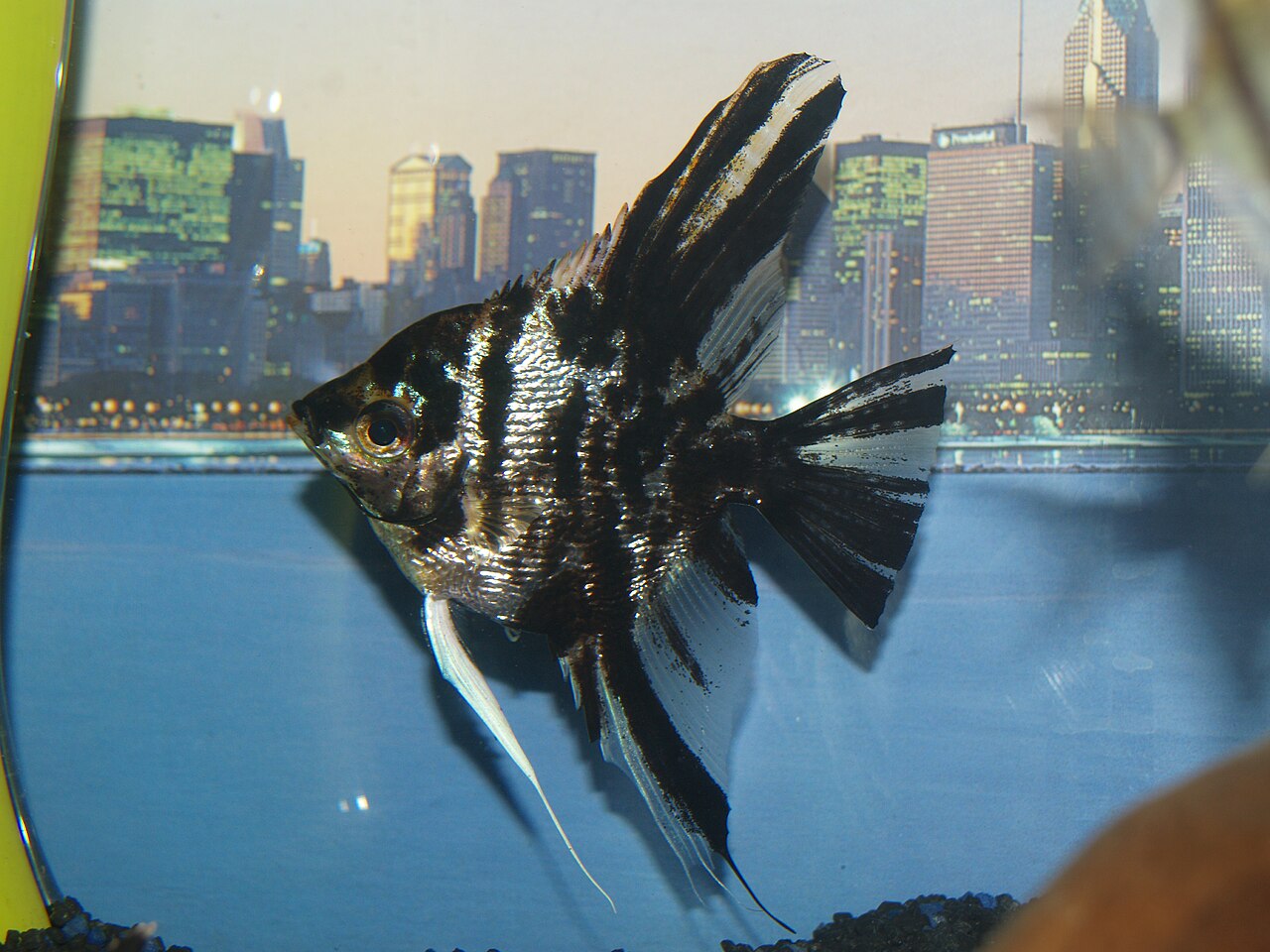
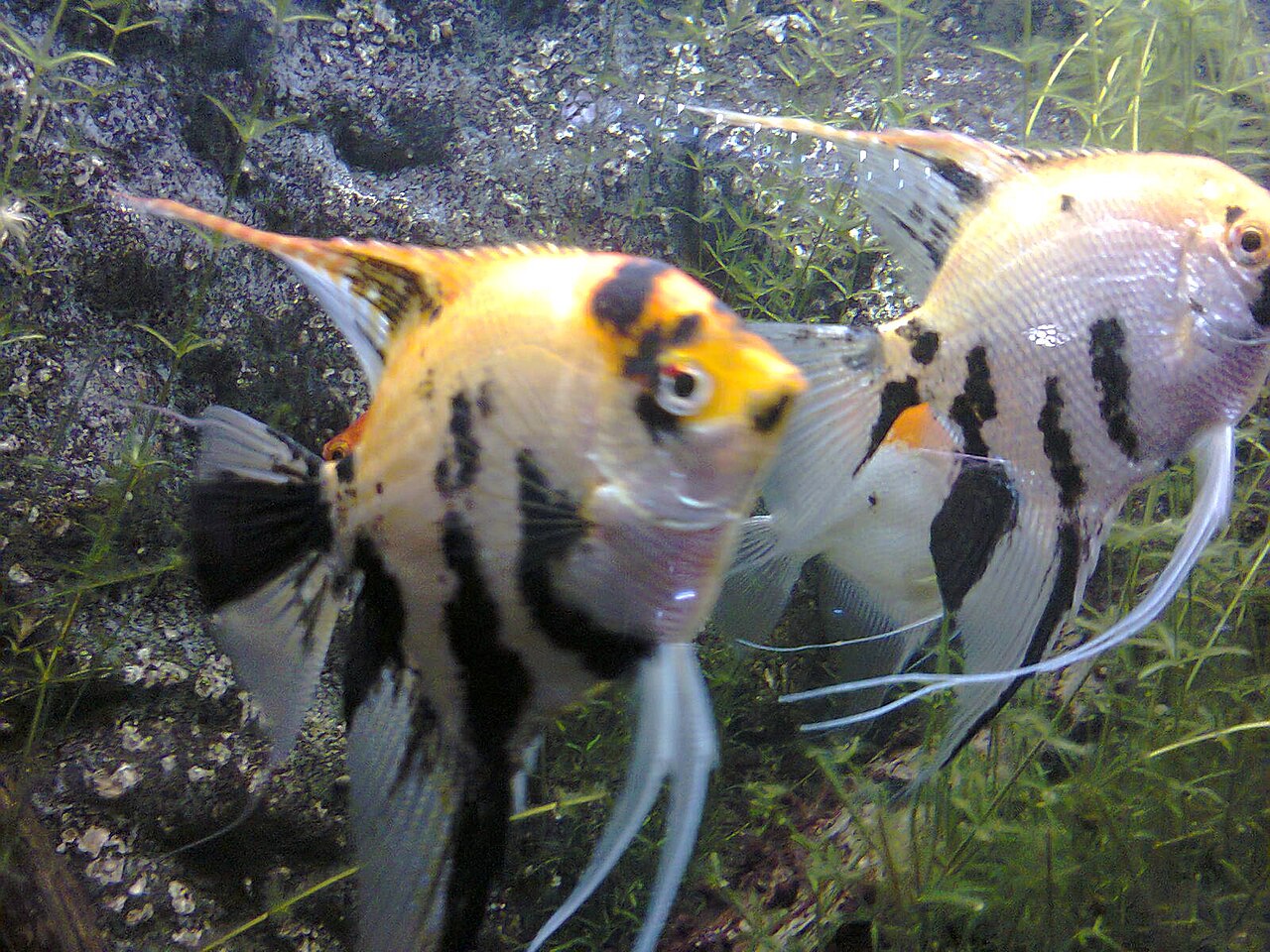
Domestic angelfish come in dozens of strains built from a handful of genes. Silver is the wild type. Zebra adds vertical stripes, marble produces irregular black and white patterning, koi adds orange to a marble base, and platinum and gold remove dark pigment entirely.
Fin type is a separate axis. Veil tail angelfish carry extended dorsal, anal and caudal fins, and super veils extend them further still. The long fins are striking and also a liability, since they slow the fish down, invite nipping and tear more easily on decor.
Among marine species, the regal angelfish, emperor angelfish and flame angelfish are the most sought after for color. The queen angelfish and French angelfish are the big showpieces of Caribbean reefs, and the peppermint angelfish is famous mainly for its price.
Breeding Angelfish
Angelfish are among the easiest cichlids to breed and often spawn without any encouragement. A bonded pair cleans a vertical surface, lays 200 to 400 eggs in neat rows and guards them together. Eggs hatch in about 60 hours, and fry become free swimming around day five.
Sexing is difficult outside of breeding. Males often develop a more pronounced forehead nuchal hump, but the reliable indicator is the breeding tube: blunt and wide in females, narrow and pointed in males, and visible only in the day or two around spawning.
First time parents commonly eat their eggs, sometimes through several clutches, before settling into reliable care. Breeders who want the fry usually pull the spawning slate to a separate container with an airstone and a drop of methylene blue, then raise the fry on baby brine shrimp from free swimming onward.
Frequently Asked Questions
What are fun facts about angelfish?
Freshwater angelfish are cichlids, not relatives of marine angelfish. They form monogamous pairs that can last for years, both parents guard the eggs, and they recognize their keeper at feeding time. Their tall compressed body evolved to slip between flooded tree roots, not for display.
What is the prettiest angelfish?
Among freshwater strains, koi, platinum and blue zebra angelfish draw the most attention, while wild Pterophyllum altum is the connoisseur’s pick for its sheer height. Among marine species the regal and emperor angelfish are the usual answers, with the emperor’s juvenile to adult color change especially dramatic.
What is the best fish to put with an angelfish?
Corydoras catfish are the safest choice. They occupy the bottom of the tank, share the same warm soft water preferences, are too large and armored to be eaten, and ignore angelfish entirely. Bristlenose plecos and larger peaceful tetras are the next best options.
What fish cost $10,000?
The peppermint angelfish (Centropyge boylei) has sold for around 30,000 dollars, and several deepwater marine angelfish trade in the 10,000 dollar range because they must be collected by submersible. Freshwater angelfish never approach these prices; even premium show strains stay well under 100 dollars.
How often should you feed angelfish?
Feed adult angelfish once or twice daily, offering only what they finish in about 30 seconds. Juveniles under six months benefit from three smaller feedings to support growth. Overfeeding is the most common angelfish keeping mistake and drives both bloating and nitrate buildup.
Do angelfish need a heater?
Yes. Angelfish are tropical fish that need 78 to 84 degrees F (26 to 29 C) year round, and most US homes do not hold that range without help. A reliable adjustable heater sized to the tank is essential, and a second thermometer at the opposite end catches heater failures early.